• العربية
  • فارسی
BrandBrand
  • Iran Insight
  • Politics
  • Economy
  • Analysis
  • Special Report
  • Opinion
  • Podcast
  • Live TV
  • Iran Insight
  • Politics
  • Economy
  • Analysis
  • Special Report
  • Opinion
  • Podcast
  • Live TV
  • Theme
  • Language
    • العربية
    • فارسی
  • Iran Insight
  • Politics
  • Economy
  • Analysis
  • Special Report
  • Opinion
  • Podcast
  • Live TV
All rights reserved for Volant Media UK Limited
volant media logo
INSIGHT

A test of power: Who will control Iran's state TV?

Behrouz Turani
Behrouz Turani

Iran International

Nov 19, 2026, 17:27 GMT+0
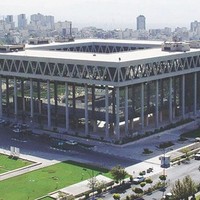
File photo: The headquarters of Iran's state broadcaster IRIB in northern Tehran

Nearly two months after the expiration of Iranian state broadcaster chief Peyman Jebelli's term, it remains unclear whether he will stay in office or be replaced, fueling speculation about a struggle over control of one of the country's most influential institutions.

His five-year term, which began in September 2021, ended on September 29 amid criticism over declining audiences, political imbalance and the perceived domination of the broadcaster by figures associated with the ultrahardline Paydari Front.

The eventual appointment, which must be made by Supreme Leader Mojtaba Khamenei, could signal whether the leadership intends to curb the influence of hardline factions associated with Saeed Jalili or preserve their dominance over the Islamic Republic of Iran Broadcasting (IRIB), which holds a constitutional monopoly over domestic radio and television broadcasting.

Jalili, who has promoted the idea of a “shadow government,” is a key member of the Supreme National Security Council. His brother, Vahid Jalili, serves as the broadcaster's deputy chief and oversees much of its content.

Several other figures associated with the hardline faction were appointed to senior positions across the broadcaster's channels after 2021.

IRIB is a central instrument for agenda-setting, elite messaging and crisis management, and one of the principal platforms through which the Supreme Leader's office communicates with the public.

Its leadership also controls a vast patronage network encompassing thousands of managerial, editorial and production appointments.

How an IRIB chief is selected

Unlike ministers or executives of state-owned companies, the head of IRIB is not selected by parliament, the government or the broadcaster's supervisory council.

Under Article 175 of the Iranian Constitution, the head of IRIB is appointed directly by the Supreme Leader.

The six-member supervisory council, whose members are drawn from the executive, legislative and judicial branches, oversees the organization but does not choose its chief executive and generally exercises little influence over day-to-day management.

In practice, informal consultations take place among key political, security and cultural actors. The Supreme Leader's office assesses potential candidates, while factional lobbying emerges through media leaks and elite networks.

Ultimately, the Supreme Leader issues a decree either appointing a new chief or extending the incumbent's term.

Why the appointment remains unresolved

The political realignment following the crises of 2025–26 has made the succession unusually consequential.

In mid-October, Jomhouri Eslami, citing unofficial sources, reported that the decision to replace Jebelli had already been made and that several names were under consideration. Yet no announcement has followed.

One possible explanation is factional deadlock. Reappointing Jebelli would likely upset parts of the establishment that have criticized his tenure, while removing him could provoke resistance from Jalili's supporters.

Another factor may be uncertainty over decision-making authority under Mojtaba Khamenei. More than eight months after becoming Supreme Leader, he has made no public appearance, and no authenticated audio or video recording of him has been released. Whether this has contributed to the delay remains unclear.

Delays in senior appointments also occurred under Ali Khamenei. Yet the contrast with other recent decisions is notable. Mojtaba Khamenei reappointed Judiciary Chief Gholamhossein Mohseni-Ejei in June, just three days after the expiration of his previous term.

A similar institutional limbo has surrounded the Intelligence Ministry for more than eight months since the death of former Intelligence Minister Esmaeil Khatib.

The prolonged silence over IRIB may therefore reveal something about the new Supreme Leader's authority and decision-making style, particularly his ability or willingness to resolve competing demands within the political establishment.

What the appointment could signal

Under Jebelli, the broadcaster became a stronghold of the anti-negotiation camp. For years, hardline factions skeptical of engagement with the United States have used IRIB as a platform to undermine pragmatic efforts to improve relations with Washington.

The next appointment could therefore serve as an early indicator of the postwar balance between advocates of confrontation and supporters of diplomacy, as well as the new leadership's broader orientation toward negotiations with the United States.

Other factors heighten the importance of the decision, including significant audience erosion and IRIB's strained relationship with President Massoud Pezeshkian's administration.

Several senior officials, including Pezeshkian, have publicly criticized aspects of its coverage, while critics argue that IRIB has increasingly functioned as a platform for specific ideological factions rather than a genuinely national broadcaster.

Although Iranian media outlets have identified several potential successors, most speculation remains tentative. Few observers have a clear understanding of Mojtaba Khamenei's views, making predictions particularly difficult.

Three scenarios

Broadly speaking, three scenarios could shape the broadcaster's future.

The first is that Jebelli remains in office, suggesting that the leadership is broadly satisfied with the current direction despite mounting criticism.

The second involves appointing a successor from the Jalili network. Selecting someone already serving within IRIB's senior leadership would signal continuity with the ideological transformation that began after 2021.

The third is the emergence of a consensus candidate with a more institutional profile. Appointing someone such as former IRIB Deputy Chief Ali Darabi, a pragmatic conservative, or another veteran administrator could indicate an effort to broaden the broadcaster's appeal, reduce factional tensions and address audience decline.

Such a move would not necessarily represent liberalization, but it could signal a managerial recalibration.

Ultimately, the most important question is not which individual prevails, but which political tendency does. The succession has become a proxy struggle over control of the Islamic Republic's most influential domestic media institution.

One particularly useful indicator may be the subsequent selection of key deputies and channel heads.

Positions such as the political and cultural deputies, the heads of prominent channels One and Three and the news network IRINN may provide a clearer indication of IRIB's future editorial direction than the formal appointment decree alone.

Historically, these secondary appointments have often revealed more about the broadcaster's strategic trajectory than the choice of chief executive itself.

Most Viewed

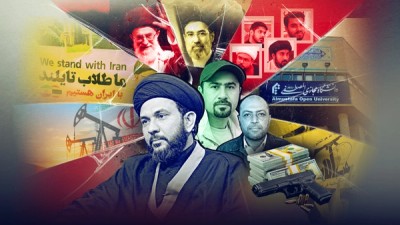
How Thai clerics in Iran were recruited to attack Israeli embassy in Bangkok
1
EXCLUSIVE

How Thai clerics in Iran were recruited to attack Israeli embassy in Bangkok

2

Iran's wartime rallies turn against officials, fuel political feuds

3

Killing of Iranian schoolgirl sparks calls for legal reform

4
ANALYSIS

A tough winter for Iran's cement industry, a tougher one for steel

5
INSIGHT

Ayatollah's death at 105 sparks ridicule over clerics' longevity

Banner

Spotlight

  • A test of power: Who will control Iran's state TV?
    INSIGHT

    A test of power: Who will control Iran's state TV?

  • GTA 6 costs, slow internet frustrate Iranian gamers, fuel satire

    GTA 6 costs, slow internet frustrate Iranian gamers, fuel satire

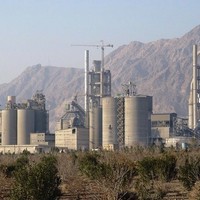
  • A tough winter for Iran's cement industry, a tougher one for steel
    ANALYSIS

    A tough winter for Iran's cement industry, a tougher one for steel

  • Tehran seizes on NYT dam report to widen retaliation threats

    Tehran seizes on NYT dam report to widen retaliation threats

  • How Iranians are turning grief into defiance
    OPINION

    How Iranians are turning grief into defiance

  • Iran could launch dirty-bomb attack, but risks make it unlikely
    ANALYSIS

    Iran could launch dirty-bomb attack, but risks make it unlikely

Banner
Banner
Banner
Banner
Banner
Banner
•
•
•

More Stories

Tehran seizes on NYT dam report to widen retaliation threats

Nov 18, 2026, 20:56 GMT+0
•
Maryam Sinaiee
100%
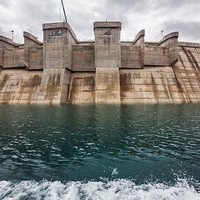
File photo: The Karun-4 Dam on the Karun River in southwestern Iran.

Iranian officials have seized on a controversial New York Times report about the possible military use of dams to broaden their threats of retaliation against US and Israeli infrastructure.

The November 16 report, titled “War May Answer Longtime Riddle of Iranian Dams Built for No Clear Reason,” raised the possibility that some Iranian water projects could support underground missile bases, citing geographical similarities between the projects and missile sites targeted in US and Israeli strikes.

The newspaper emphasized that the alleged connection remained speculative. But the report prompted a backlash on social media, with users and some experts accusing the newspaper and its authors of providing a justification for attacks on dams.

Parliament Speaker Mohammad-Bagher Ghalibaf, who is also Iran's chief negotiator, described the report on X on Tuesday as “setting the stage for the next round of attacks on civilian infrastructure.”

“Well, new rule: We apply your own logic in the same way,” he wrote. “Any dam, port, or power plant located near an American or Israeli base has a dual use.”

Iranian Foreign Ministry spokesman Esmail Baghaei described the report in a post on X on Tuesday as “yet another example of a malicious campaign to manufacture propaganda and security pretexts aimed at justifying attacks on a country's vital infrastructure.”

He warned that Iran “knows well how to respond to any act of aggression and ensure that it is met with an unforgettable response,” adding that such attacks “will have devastating consequences — not merely for the region, but for humanity as a whole.”

The New York Times has rejected the accusations, saying the article was intended to examine Iran's investment in water projects and the impact of US and Israeli strikes on civilians.

‘Tangible and intangible assets’

Hardliners have welcomed Ghalibaf's threat to apply the same logic to American and Israeli infrastructure.

Vahid Khazab, a military analyst appearing on a panel discussion titled “Will the War Be Brought to Iran's Dams?” on Iranian state television's Be Vaght-e Iran (Iran Time) program Tuesday night, described Ghalibaf's response as an appropriate and proportionate threat.

Khazab argued that the credibility of Iran's retaliation threats could deter attacks on its dams.

“What will prevent them from hitting Iran's dams? They know these threats are real,” he said, arguing that Ghalibaf's warning was backed by Iran's armed forces.

He also referred to statements by Iran's new Supreme Leader, Mojtaba Khamenei, that there would be no geographical limitations on potential targets and that American “tangible and intangible assets” could be struck. Khazab said Iranians could be confident that their infrastructure would remain safe.

Threats beyond Iran

The hardline Hamshahri newspaper, published by Tehran Municipality, described Ghalibaf's warning as demonstrating Iran's determination to deliver a “deterrent reciprocal response” to any attack on its infrastructure.

Shuaib Bahman, an international relations analyst, told Nour News, an outlet close to Iran's Supreme National Security Council, that the United States and its regional allies could not insulate themselves from the consequences of an expanding war.

He warned that American investments, commercial interests and infrastructure in the region could be affected, even if US territory was not directly involved in the conflict.

Some pro-government social media users have circulated images of the Hoover Dam in the United States, accompanied by nearly identical messages and slogans such as “Death to America.”

The posts suggested that an attack on Iranian dams could trigger retaliation against the American facility, potentially disrupting electricity supplies and causing widespread casualties.

Criticism and rebuttal

The controversy has also drawn criticism from political activists and environmental experts outside Iran.

Kaveh Madani, director of the United Nations University's Institute for Water, Environment and Health, who was quoted in the New York Times report, described the newspaper's account on X as “reductionist” and an example of “irresponsible journalism.”

He warned that such a narrative could have dangerous consequences for civilian water infrastructure.

Sanam Mahoozi, one of the report's authors, reposted the newspaper's statement defending its reporting on X.

“Neither I nor our reporting advocate or justify attacks on dams or other civilian infrastructure,” she wrote. “As a journalist, I welcome rigorous criticism, but believe it should be grounded in a fair and accurate reading of our work.”

Ayatollah's death at 105 sparks ridicule over clerics' longevity

Nov 18, 2026, 14:33 GMT+0
•
Hooman Abedi
100%
Hossein Vahid Khorasani, the senior Iranian Shiite cleric who died at 105.

The death of Iranian Shiite cleric Hossein Vahid Khorasani at 105 has drawn ridicule and anger on social media, with Iranians questioning the longevity of prominent religious authorities and criticizing perceived clerical privilege following his death on Tuesday.

Responses to Iran International's post on X ranged from jokes about the ayatollah's advanced age to criticism of the religious establishment, with some contrasting his long life with their own health and economic difficulties.

“How did this bastard live to be 105? I'm 23 and there isn't a healthy part left in my body. I feel like I won't make it past 30,” one person wrote, adding laughing emojis.

The frustration comes against a backdrop of economic hardship, with some Iranians offering their organs for sale to pay debts and cover basic living expenses.

A recent Iran International examination of more than 600 online organ-sale advertisements found that roughly one-third offered multiple organs or body tissues, including kidneys, liver tissue and bone marrow. Some prospective sellers described struggling to afford housing, support their children or repay debts.

  • Cash-strapped Iranians put multiple organs up for sale

    Cash-strapped Iranians put multiple organs up for sale

The longevity of senior clerics also stands in contrast to the lives of young Iranians killed during the Islamic Republic's January crackdown on nationwide protests. More than 36,500 people were killed by security forces on January 8 and 9, according to an Iran International

Vahid Khorasani died on November 17 after being hospitalized. Born in 1921, he spent decades teaching Islamic jurisprudence in the religious city of Qom.

Social media reactions target clerical privilege

Several comments portrayed Vahid Khorasani's long life as a reflection of the comfortable conditions associated with senior religious figures.

“From day one, all he did was live in idleness and comfort, without working, while benefiting from ordinary people's money,” one X account wrote.

Other responses used sarcasm to express resentment toward the clerical establishment.

“You finally managed it, Angel of Death! Congratulations!” read another post, accompanied by dancing emojis.

“The only useful thing the men of the seminary do is die, and they don't even do that on time,” another commenter wrote.

The announcement of a weeklong closure of the religious seminary also drew a celebratory response from one account, which welcomed both the cleric's death and the suspension of classes.

“Then why didn't your prayers to keep this mullah alive work?” another person asked.

One post joked that Vahid Khorasani had survived until the final moments of the Islamic Republic.

Why do some ayatollahs live so long?

Vahid Khorasani was among several prominent Shiite religious authorities who reached an advanced age.

Grand Ayatollah Lotfollah Safi Golpayegani died in 2022 at 102. Other senior Iranian clerics include Nasser Makarem Shirazi, 99, Hossein Nouri Hamedani, 101, and Ahmad Jannati, 99, who remains secretary of the Guardian Council, a powerful body that vets election candidates and reviews legislation.

  • 97-Year-Old Iranian Cleric To Serve 32nd Year In Key Office

    97-Year-Old Iranian Cleric To Serve 32nd Year In Key Office

Jannati, who has held the position since 1992, has become a frequent target of jokes about longevity in Iran. His advanced age and continued presence in power have repeatedly drawn ridicule on social media.

Iran's life expectancy at birth was approximately 78 years in 2024, according to World Bank figures. However, that figure does not represent the expected lifespan of people who have already reached old age.

While genetics and lifestyle can influence longevity, the advanced ages of prominent clerics have also drawn attention to their access to healthcare and relatively secure living conditions.

  • Inside Qom Seminary, Iran’s political and spiritual powerhouse

    Inside Qom Seminary, Iran’s political and spiritual powerhouse

Senior Shiite clerics often spend decades within established religious institutions, where they are not required to undertake conventional employment and their standing can provide financial stability and institutional support.

For Iranians reacting to Vahid Khorasani's death at 105, his longevity highlighted the contrast between the lives of senior clerics and the hardships facing ordinary people, fueling criticism of the religious establishment and its perceived privileges.

Iran's wartime rallies turn against officials, fuel political feuds

Nov 18, 2026, 09:02 GMT+0
•
Maryam Sinaiee
100%
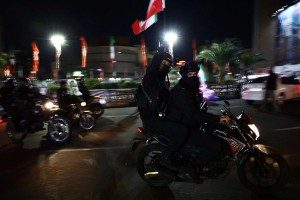
Supporters of the Islamic Republic wave Iranian flags during a nighttime rally.

Iran's nightly rallies by Islamic Republic loyalists have become platforms for opposing negotiations with Washington and targeting senior officials, drawing criticism over their political agenda, use of public resources and disruption to daily life in recent months.

The gatherings began in early March after the announcement that Supreme Leader Ali Khamenei had been killed in US and Israeli strikes. Supporters of the Islamic Republic took to streets and squares across the country and have continued gathering nightly.

Calls for revenge over Khamenei's killing and opposition to an agreement ending the war have become prominent features of the rallies, alongside attacks on officials involved in diplomatic efforts.

“A minority in the streets wants war, but the majority of people, who have no voice, just want to live their lives,” Mohammad-Ali Abtahi, a former first vice president under President Mohammad Khatami, said in an interview with Hamshahri television.

Abtahi's remarks circulated widely on social media and drew a backlash from supporters of the gatherings. Some Iranian media have also reported declining attendance, raising questions about the rallies' appeal beyond their most committed participants.

Khorasan newspaper, which is close to Parliament Speaker Mohammad-Bagher Ghalibaf, accused speakers of exploiting the gatherings for political score-settling.

“Turning an atmosphere of solidarity into an arena for political score-settling has not only reduced public participation but also endangered national cohesion,” the newspaper wrote.

  • Iran’s nightly pro-state rallies become factional battleground

    Iran’s nightly pro-state rallies become factional battleground

During an online debate on the Azad platform, economist Mousa Ghaninejad challenged philosophy professor Bijan Abdolkarimi, who opposes negotiations with Washington, over the significance of the nightly crowds.

Ghaninejad argued that gathering in the streets did not make participants' positions correct and accused them of presenting themselves as the sole representatives of what was right while dismissing opposing views.

Protesters target senior officials

The rallies have increasingly targeted President Masoud Pezeshkian, Foreign Minister Abbas Araghchi and Ghalibaf, who is Iran's chief negotiator.

Placards have accused the officials of being too accommodating toward the enemy, with some demonstrators demanding their dismissal or resignation.

  • Iran ultra-hardliners accuse Ghalibaf, Pezeshkian of ‘coup’ over US deal

    Iran ultra-hardliners accuse Ghalibaf, Pezeshkian of ‘coup’ over US deal

Organizers have also staged smaller daytime protests outside government and military institutions, extending their pressure beyond the nightly gatherings.

The conservative Jomhouri Eslami newspaper last week described the protests as unjustifiable, arguing that they threatened national interests and prevented Iran from “translating its military achievements into diplomatic gains.”

The newspaper wrote that the United States and Israel had infiltrated the gatherings, turning slogans against Washington and Israel into calls for the deaths of current and former Iranian officials.

It urged the judiciary and security agencies to intervene against those it accused of undermining national unity.

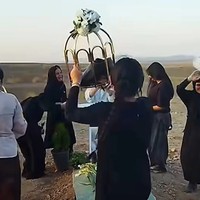
Khorasan also demanded judicial action after women wearing burial shrouds gathered outside the Armed Forces General Staff headquarters and accused military commanders of compromising with the enemy.

Khorasan urged the judiciary to take action against the protesters and organizers, as well as those it said had encouraged accusations of betrayal against military commanders and senior officials.

Public funding faces scrutiny

The rallies have also raised questions about the use of public resources to support political mobilization.

Rouydad24 news website last week described the gatherings as an “electoral campaign for the ultra-hardline faction,” questioning the use of public facilities to advance a particular group's political agenda.

The website highlighted the role of Tehran Mayor Alireza Zakani and his political allies in organizing and promoting the demonstrations.

It said no transparent financial information was available about their costs or the extent of direct funding by Tehran Municipality.

Residents complain of disruption

Beyond political infighting, residents have complained on social media about loudspeakers, traffic congestion and the nightly occupation of streets and public squares.

  • Armed patrols and nightly pro-government rallies spread fear across Iranian cities

    Armed patrols and nightly pro-government rallies spread fear across Iranian cities

Some rally supporters have dismissed these objections, portraying participation as a wartime duty and criticism as disloyalty.

“The nightly gatherings are Iran's defensive shield, like air defenses, fighter jets and missiles whose noise we hear and fear, but they are on our side,” Kobra Asoupar, a journalist and defender of the nightly gatherings, wrote on X.

“If someone says during a war that we should not defend ourselves because we are being disturbed, that person is either an idiot or a traitor,” she added.

Daily reports secret bread rationing in two Iranian provinces

Nov 17, 2026, 10:37 GMT+0
100%
File photo: People queue to buy bread outside a bakery in Iran.

Bread rationing has been introduced without public notice in two Iranian provinces, triggering queues and disputes at bakeries, the hardline daily Kayhan reported, as government officials confirmed a nationwide bread purchase management system on Tuesday, November 17.

Kayhan, published under the supervision of a representative of Iran's Supreme Leader, reported that the restrictions had been introduced in Khuzestan province in southwestern Iran and Zanjan province in the northwest without informing bakers or consumers in advance.

The measures prompted residents to rush to bakeries and led to verbal confrontations, the newspaper reported.

Under the system described by Kayhan, each person receives a monthly allocation equivalent to approximately eight kilograms of subsidized flour, priced at 23,000 rials ($0.009) per kilogram.

Purchases exceeding the allocation are charged at the commercial rate of 126,500 rials ($0.047), more than five times the subsidized price, with the additional payments transferred to government accounts, Kayhan reported.

The newspaper questioned why the measures had been introduced without informing bakers or consumers and accused “elements within the government” of contributing to “public anxiety” through simultaneous changes affecting bread, gasoline and electronic food vouchers.

Local media had previously reported restrictions in Shadegan, Andimeshk, Omidiyeh and Zeydun in Khuzestan province, where daily bread allocations were set at between two and 2.5 loaves per person.

Purchases exceeding those amounts were priced at 131,500 rials ($0.049), according to the local reports.

Officials confirm nationwide rollout, deny household restrictions

The bread purchase management system is being implemented across Iran, but ordinary households face no restrictions on their daily purchases, Omid Jahannejadian, director-general of Khuzestan's Grain and Commercial Services Department, told the official IRNA news agency on Tuesday.

The program is intended to regulate subsidized flour consumption, prevent potential misuse and identify purchases exceeding normal household needs, Jahannejadian said.

Consumption thresholds are calculated using purchasing data collected over the past two years, taking account of differences between urban and rural areas.

The system calculates allocations at the household level, with purchases by family members counted toward a combined household allowance, Jahannejadian added.

100%
File photo: A baker prepares traditional bread at a bakery in Iran.

In Zanjan province, Ali Eyvazi, director-general of the provincial Grain and Commercial Services Department, also confirmed that unusually large bread purchases would be charged at commercial rates.

Ordinary household purchases would not face higher prices, Eyvazi told IRNA.

The guidelines were issued on November 15, with the system subsequently updated at bakeries and flour mills.

Although the average monthly flour allocation per Iranian is approximately eight kilograms, applying an identical limit to every person without accounting for household circumstances and regional differences would be inaccurate, Eyvazi said.

The program was initially tested in Markazi province before authorities decided to expand its implementation to other provinces following an evaluation.

In a separate interview with the Mehr news agency, Eyvazi rejected descriptions of the measures as a two-tier bread pricing system, saying ordinary household consumption would remain unrestricted despite the introduction of purchasing thresholds.

Supermarkets must obtain bread from bakeries operating without government subsidies, while commercial purchases from subsidized bakeries must comply with the new rules, Eyvazi added.

Rising food costs put pressure on households

The introduction of bread purchase controls comes as Iranians face increasing difficulties affording basic food products.

Iran's minimum monthly base wage stands at about 166 million rials ($62), following a 60 percent increase in March. The cost of a basic monthly basket of goods for a working-class family had reached approximately 906 million rials ($337) by July, more than five times the minimum base wage, according to calculations cited by Iranian media.

Accounts sent to Iran International describe households turning to installment payments to purchase essential items, including bread, meat, chicken and eggs.

  • Inflation pushes Iranians to buy food in installments

    Inflation pushes Iranians to buy food in installments

In a video showing a bakery queue in Tehran, one resident described shortages alongside rising prices and shrinking loaf sizes.

"Bread has become scarce, and we have to stand in line to buy it. At the same time, the loaves have become smaller and more expensive. Can someone tell us how we are supposed to feed our children?" the resident said.

Other citizens have described reductions in flour allocations and changes in the taste and color of bread.

  • Flour shortages force bakeries to close across Iran

    Flour shortages force bakeries to close across Iran

Economic hardship is also affecting social relations as more households struggle to meet their basic needs, sociologist Hossein Ghazian told Iran International.

When survival becomes people's primary concern, competition increasingly replaces cooperation, potentially contributing to domestic violence, street confrontations and crime, Ghazian said.

The economic pressures can also contribute to depression, suicide, declining marriage and birth rates, and migration, reflecting diminishing confidence in the future, Ghazian added.

  • Food, medicine, hope: what Iran's economic crisis is costing its people

    Food, medicine, hope: what Iran's economic crisis is costing its people

The nationwide bread controls introduce new purchasing thresholds for a staple food even as officials insist that ordinary household consumption will remain unaffected.

'Our turn to play': Iran hardliners call for breaking US blockade

Nov 17, 2026, 04:29 GMT+0
•
Maryam Sinaiee
100%
Smoke rises from the stern of a St. Kitts-flagged cargo vessel following what US Central Command says was a strike on Saturday to disable the vessel, which was trying to break the US blockade of Iran, at a location given as the Gulf of Oman, in this still image taken from video released November 7, 2026.

Iranian hardliners are urging a more confrontational response to a tightening US blockade, arguing that Tehran must raise the economic and military costs for Washington to prevent the pressure from becoming permanent.

Participants in a roundtable discussion titled “How to Break the Blockade?” broadcast on state television on Saturday, said the prospects for a political agreement with Washington had diminished. They argued that while the United States was maintaining its military readiness for a possible resumption of hostilities, its main strategy had shifted toward intensifying economic pressure on Iran.

Citing statements by President Donald Trump, participants also suggested that Washington might be moving away from direct military confrontation and efforts to restrict Iran's nuclear program toward a combination of economic pressure, security operations and attacks on Iranian infrastructure, potentially aimed at overthrowing the Islamic Republic.

Vahid Khazab, a military analyst appearing on the program, Be Vaght-e Iran, said Trump had "gone back from the nuclear issue to the subject of regime change — regime change that would put the country's resources under his control."

He said economic pressure, alongside security and military operations, would be the instruments used to pursue that objective.

Breaking the blockade becomes the priority

Trump's refusal to accept conditions Tehran insists must be met before any agreement with Washington to end the war, combined with the continuation of a neither-war-nor-peace situation and the widening economic blockade, put breaking the restrictions at the center of hard-liners' agenda.

They argue that Iran should respond by increasing pressure in the Strait of Hormuz and preventing a return to normal conditions in the region. Their proposed strategy involves continuing military operations to disrupt oil flows to international markets and increase economic pressure on the United States and Europe.

Despite repeated predictions by hardliners that oil prices would climb to $150 a barrel and cripple the American and European economies, crude prices have moved in the opposite direction in recent weeks, falling again slightly in Monday's trading.

Khazab described what he called "impact-oriented [military] operations" designed to prevent oil from passing through the Strait of Hormuz as a way to influence global oil markets and alter Washington's economic and political calculations. Such operations, he argued, would increase the costs of maintaining the blockade for the United States and its allies.

Several tankers have encountered incidents in the Persian Gulf and the Strait of Hormuz in recent days. In statements, Iran's Islamic Revolutionary Guard Corps (IRGC) and the Army have claimed that the vessels were "violating" ships that struck naval mines and caught fire.

On Sunday, the IRGC also claimed to have successfully carried out drone a attack against a US. radar installation at the Riffa helicopter base in Bahrain. In its statement, the force warned: "The Strait of Hormuz is closed, and any aggression by the American enemy will be met with an even harsher and more crushing response."

The attack appeared intended to signal that Tehran would not accept a prolonged neither-war-nor-peace situation or the consolidation of the blockade.

The argument for a more aggressive response has also appeared in commentary by prominent conservative figures.

Mohammad Imani, a member of the editorial board of the hardline Kayhan newspaper, wrote in an article published Saturday on the Nameh News website that Iranian officials should concentrate on "a plan to break the blockade and make it costly for the enemy," regardless of the extent of Tehran's engagement with mediators or the messages conveyed through them.

"Strikes against the enemy's vulnerabilities must certainly be carried out through a combination of methods to force it to retreat," he wrote.

Referring to recent threats by Mohsen Rezaei, secretary of Iran's Supreme National Security Council, and senior military commanders to expand the geographical scope of the conflict if the United States attacks, Imani argued that the more pressing question was no longer how Iran would respond to another American strike.

"The real and immediate issue today is not what our response would be if America attacks," he wrote. "The more important issue is that, after its failure in the war, its request for a ceasefire and its pretense of seeking an understanding, America has launched another game in the form of a naval, aerial and land blockade. Now it is Iran's turn to play."

Imani accused Washington of trying to disrupt Tehran's response through threats and diplomatic overtures, including sending intermediaries, so that Iran would refrain from taking what he described as a "corresponding and offensive" response, keeping Iran on the defensive.

He also argued that the United States wanted to distract Iranian officials from immediately planning and implementing "symmetric and asymmetric methods of breaking the blockade" by keeping Iranian decisionmakers occupied with mediators, the details of possible responses and the terms of a potential agreement.

An article published Saturday in Sobh-e No, a newspaper supportive of parliamentary speaker Mohammad-Bagher Ghalibaf, similarly argued that the current neither-war-nor-peace situation kept the threat of conflict hanging over Iran's politics and economy, allowing Washington to use the uncertainty as leverage.

"The end of the neither-war-nor-peace game will come when the threat can no longer be used as a permanent instrument for imposing one's will without incurring serious costs," the article said. "Sustainable deterrence will be achieved when war becomes costly for the other side and endless pressure proves fruitless."

Hossein Ghatib, a political commentator who publishes under a pseudonym on social media platform X, also warned against allowing the blockade to become normalized.

"The greatest danger for Iran is the normalization of the blockade and its transformation into the region's new status quo," he wrote. "If this situation becomes entrenched, the blockade will turn from a temporary measure into a permanent instrument for imposing political demands. Preventing such an outcome must be at the center of Iran's military strategy."

Warnings against further escalation

Not all commentators have endorsed a more confrontational approach. Some have warned that escalating tensions could leave Iran facing prolonged economic pressure without securing a political or military breakthrough.

Kourosh Ahmadi, a former Iranian diplomat, wrote in an article published Saturday in the reformist Shargh newspaper that Trump's recent statements indicating he did not currently intend to launch another full-scale war against Iran, as well as the removal of Vice President JD Vance from responsibilities related to negotiations with Tehran, should be taken seriously.

"Now we are left with a naval blockade, continued American pressure on our neighbors to close their land borders, and the possibility of limited and intermittent attacks on the southern coasts and islands in connection with the Strait of Hormuz," Ahmadi wrote.

He also pointed to the roughly $20 decline in oil prices, which he said appeared to be linked to reduced fears of war, as an important indication of the changing calculations.

"If the threat of war is completely ruled out — which has not yet happened — oil prices could fall below $90 a barrel," he wrote. "In that case, the United States would have no problem with the continuation of this neither-war-nor-peace situation."

Ahmadi concluded that the only hope was for both sides to show flexibility and allow negotiations to reach a conclusion.