• العربية
  • فارسی
BrandBrand
  • Iran Insight
  • Politics
  • Economy
  • Analysis
  • Special Report
  • Opinion
  • Podcast
  • Live TV
  • Iran Insight
  • Politics
  • Economy
  • Analysis
  • Special Report
  • Opinion
  • Podcast
  • Live TV
  • Theme
  • Language
    • العربية
    • فارسی
  • Iran Insight
  • Politics
  • Economy
  • Analysis
  • Special Report
  • Opinion
  • Podcast
  • Live TV
All rights reserved for Volant Media UK Limited
volant media logo

GTA 6 costs, slow internet frustrate Iranian gamers, fuel satire

Hooman Abedi
Hooman Abedi

Iran International

Nov 19, 2026, 13:01 GMT+0
Promotional displays for the upcoming video game "Grand Theft Auto VI" (GTA 6) ahead of its scheduled release on November 19 inside a Saturn electronics store in Berlin, Germany, November 17, 2026

The release of Grand Theft Auto VI has sparked excitement, frustration and political satire among Iranian gamers, who face soaring prices, slow internet speeds and barriers to international payments, according to social media reactions.

For many Iranian gamers, the challenge goes beyond affording the game, with slow internet connections making downloading its roughly 200 gigabytes another obstacle.

"I really want to buy and download GTA, but when I think about having to download 200 gigabytes with this miserable internet speed and all the frustration that comes with it, I give up for now," one user wrote on X.

Another joked about the time required to download the game.

"With Iran's internet speed, I think my 200-gigabyte GTA download will finish by the time the next GTA comes out," the user wrote.

A game priced beyond many gamers' reach

GTA 6 costs an estimated 210 million rials in Iran, compared with 1.9 million rials for GTA 5 in 2013 and just 400,000 rials for GTA 3 in 2001.

That makes the latest installment more than 110 times as expensive as GTA 5 was 13 years ago and over 500 times the price of GTA 3 in 2001.

The increase largely reflects the rial's depreciation against the dollar. The US currency has risen from around 8,000 rials to 2.66 million rials on Iran's free market, an increase of more than 33,000%, while the game's international price has risen by just 60%, from $50 to $80.

For some gamers, purchasing the game is only part of the financial challenge.

"I want to play GTA, but I don't have the console. I'm just 1.9 billion rials short," one user joked, posting a bank account number alongside the message.

Another described the difficulties of buying the game legally through a gift card because Iranian consumers lack ordinary access to international credit cards and payment networks.

"I really went through hell to buy it. I wish we could use credit cards and the global financial system as easily as everyone else," the user wrote.

100%
Promotional displays for the upcoming video game "Grand Theft Auto VI" (GTA 6) ahead of its scheduled release on November 19 inside a Saturn electronics store in Berlin, Germany, November 17, 2026

The gamer said the purchase had eventually succeeded after a complicated process, adding that alternatives existed but they wanted to experience buying a game the way people with international credit cards do.

Download speeds expose digital divide

The game's large download size has also highlighted the difference between internet access inside Iran and abroad.

One Iranian user living outside the country posted that downloading approximately 210 gigabytes had taken just 32 minutes.

The post prompted a wave of responses from gamers inside Iran comparing their much longer download times.

"My download speed is great too," one user joked, sharing a screen showing 15 hours remaining.

Another user said downloading the game over an ADSL connection would take 72 hours, while a third reported an estimated 27 hours.

Gamers turn frustration into political satire

The excitement surrounding GTA 6 has also inspired digitally created images combining the game's release with jokes about Iran's political leadership and internet restrictions.

One satirical image shows Mojtaba Khamenei, Iran's supreme leader, reflected in a television displaying a PlayStation download screen for GTA 6.

Another manipulated screenshot replaces the game's estimated download time with the words "Until Mojtaba shows up," referring to new supreme leader’s continued absence from public view since the death of his father, Ali Khamenei, and his subsequent rise to power.

Other posts focused on the country's internet speeds, including a fabricated download screen estimating that the game would take 86 years and 22 days to download.

"I think the timing is perfect. By then, I'll have saved enough money to buy it, and we can play together," one commenter responded.

"Maybe in the next life, God willing," another wrote.

Excitement meets frustration

Despite the financial and technical barriers, anticipation for the game has remained high among Iranian social media users.

Some celebrated finally purchasing it, while others expressed disappointment at being unable to afford the necessary hardware or even watch gameplay videos online.

"The whole world is playing GTA 6 and having fun," one user wrote, describing their frustration with internet access in Iran.

"I don't even have enough internet to watch it in 240p," the user added.

Most Viewed

How Thai clerics in Iran were recruited to attack Israeli embassy in Bangkok
1
EXCLUSIVE

How Thai clerics in Iran were recruited to attack Israeli embassy in Bangkok

2

US strikes Qeshm Island after Iran drone attack on American base in Bahrain

3

Iran's wartime rallies turn against officials, fuel political feuds

4

Killing of Iranian schoolgirl sparks calls for legal reform

5
INSIGHT

Ayatollah's death at 105 sparks ridicule over clerics' longevity

Banner
Banner
Banner
Banner
Banner
Banner
Banner

Spotlight

  • GTA 6 costs, slow internet frustrate Iranian gamers, fuel satire

    GTA 6 costs, slow internet frustrate Iranian gamers, fuel satire

  • A tough winter for Iran's cement industry, a tougher one for steel
    ANALYSIS

    A tough winter for Iran's cement industry, a tougher one for steel

  • Tehran seizes on NYT dam report to widen retaliation threats

    Tehran seizes on NYT dam report to widen retaliation threats

  • How Iranians are turning grief into defiance
    OPINION

    How Iranians are turning grief into defiance

  • A cow's sit-in: why a comedy sketch struck a nerve in Iran

    A cow's sit-in: why a comedy sketch struck a nerve in Iran

  • Iran could launch dirty-bomb attack, but risks make it unlikely, experts say
    ANALYSIS

    Iran could launch dirty-bomb attack, but risks make it unlikely, experts say

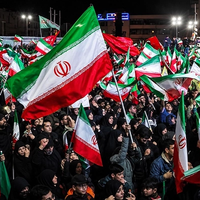
  • Iran's wartime rallies turn against officials, fuel political feuds

    Iran's wartime rallies turn against officials, fuel political feuds

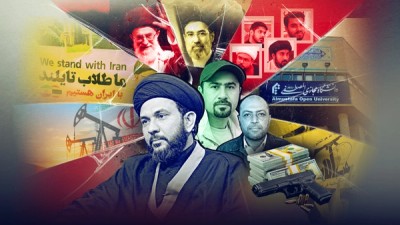
  • How Thai clerics in Iran were recruited to attack Israeli embassy in Bangkok
    EXCLUSIVE

    How Thai clerics in Iran were recruited to attack Israeli embassy in Bangkok

•
•
•

More Stories

Iranian students report heating restrictions despite cold weather

Nov 19, 2026, 10:20 GMT+0
100%
An empty classroom in an Iranian school, with a radiator alongside rows of desks.

Students in Iran have reported restrictions on heating in schools despite cold weather, forcing some to bring electric heaters into classrooms, according to messages sent to Iran International.

One student said education authorities had issued a directive prohibiting schools from switching on heating systems until mid-December.

“The weather is very cold, and nobody is responding. The principal and deputy principal just tell us to wear more clothes,” the student said.

“We had to bring an electric heater into the classroom to keep ourselves a little warmer, although it barely makes a difference,” the student added.

  • Students shiver in classrooms as Iran government warns of gas cuts

    Students shiver in classrooms as Iran government warns of gas cuts

The complaints come as Iran faces renewed pressure on its energy supplies ahead of winter, with natural gas shortages affecting industrial production and raising concerns about heating and fuel availability.

Gas shortages affect schools and industries

Iran International has recently reported on gas supply problems affecting the steel and cement industries, where restrictions have disrupted production.

Authorities have also warned of possible gas cuts during the winter if consumption rises sharply, with officials estimating a potential daily supply deficit of up to 430 million cubic meters.

  • Gas-rich Iran turns to Russia for an energy lifeline

    Gas-rich Iran turns to Russia for an energy lifeline

The country's heavy reliance on natural gas for residential heating, electricity generation and industrial production means that shortages can affect several sectors simultaneously as temperatures fall.

Gasoline shortages have also disrupted road transport, with truck drivers forced to wait overnight at fuel stations for their next fuel allocation, a citizen told Iran International in a message.

The person said truck drivers were parking overnight near roadside fuel stations because they could not obtain enough diesel to continue their journeys.

The account comes after recent reports of long queues at gasoline stations across Iran, including in Shiraz, Asaluyeh, Genaveh, Gerash and Jam.

Food prices and bread restrictions add to household pressures

Messages from residents across Iran also described rising food prices and restrictions on bread purchases.

A resident of Malard near Tehran said the price of a cream cheese product had increased from 1.6 million rials ($0.60) to 2.5 million rials ($0.94) within a week, an increase of more than 56 percent.

The increases come as Iran's statutory minimum monthly base wage stands at approximately 166 million rials ($62), excluding allowances, leaving low-paid workers particularly exposed to rising food prices.

Bread shortages have added to the financial pressure on households, with residents in Ghiamdasht, southeast of Tehran, Qazvin, parts of the northern province of Mazandaran, and Khorramabad, the capital of western Lorestan province, reporting flour shortages and restrictions on bread purchases.

  • Daily reports secret bread rationing in two Iranian provinces

    Daily reports secret bread rationing in two Iranian provinces

A resident of Ghiamdasht said a bakery was limiting customers to two loaves of sangak traditional bread because of flour shortages. In Mazandaran, another resident said purchases of subsidized bread were restricted to six loaves per national identification number.

In Qazvin, a resident described flour rationing at bakeries, while a resident of Khorramabad said bread was being distributed according to household size and that flour purchased for home baking was of poor quality.

Hundreds of writers urge Iran to halt poet's execution

Nov 19, 2026, 09:27 GMT+0
100%
Peyman Farahavar, an Iranian poet sentenced to death on charges of armed rebellion and waging war against God.

Hundreds of poets and prominent literary figures worldwide have joined an international campaign calling on Iran to halt the execution of imprisoned poet Peyman Farahavar, whose death sentence has been upheld and referred for enforcement.

“Nowhere in the world should words and poetry be punishable by hanging,” the signatories said in a joint statement urging international action to save his life.

Among those backing the campaign are Goncourt Prize winners Leila Slimani and Marie NDiaye, International Booker Prize winner David Diop, American poet Charles Bernstein and French writer Daniel Pennac.

  • Iranian poet faces execution after review of death sentence denied

    Iranian poet faces execution after review of death sentence denied

Iranian poets and writers, including Hafez Mousavi, Fatemeh Ekhtesari, Fatemeh Shams, Mehdi Moosavi and Ziba Karbassi, also signed the appeal.

Death sentence upheld

The Writers' Association of Iran announced on November 15 that Farahavar's death sentence on charges of baghi (armed rebellion) and moharebeh (waging war against God) had been finalized.

Nobel Peace Prize laureate Narges Mohammadi said the same day that his case had been referred to the sentence enforcement department.

Human rights news agency HRANA reported on November 11, citing a source close to Farahavar's family, that he had informed relatives by telephone on November 9 that he had received official notification that his death sentence had been referred for enforcement.

100%
Peyman Farahavar, an Iranian poet sentenced to death on charges of armed rebellion and waging war against God.

Farahavar was sentenced to death in May 2025 by Branch One of the Revolutionary Court in Rasht. The Supreme Court upheld the sentence later that year and rejected his request for a retrial in April 2026.

Writers denounce forced confessions

Farahavar was arrested in 2022 over protest poetry, videos of poetry readings shared online and a solitary street demonstration, according to the campaign statement.

“His initial trial was conducted without a lawyer, and confessions extracted under duress formed the basis of his death sentence,” the signatories said.

The writers described the sentence as “manifestly unjust and contrary to recognized human rights standards and the principles of a fair trial.”

The statement also highlighted broader concerns about executions in Iran, particularly those involving protesters and people prosecuted for exercising freedom of expression.

“We, the poets signing this letter, call on the Iranian public, the media and international organizations, in the name of freedom and justice, to use every means at their disposal to compel the authorities of the Islamic Republic to immediately halt Peyman Farahavar's execution,” the statement said.

  • Jailed Iranian poet's death sentence upheld by Supreme Court

    Jailed Iranian poet's death sentence upheld by Supreme Court

The Writers' Association of Iran also said at least 20 writers and poets were serving prison sentences or being held in prolonged detention, with several facing serious charges.

The campaign called for an end to death sentences imposed for peaceful expression, warning that Farahavar's case reflected wider concerns over the treatment of writers and dissenting voices in Iran.

A tough winter for Iran's cement industry, a tougher one for steel

Nov 19, 2026, 04:13 GMT+0
•
Umud Shokri
100%
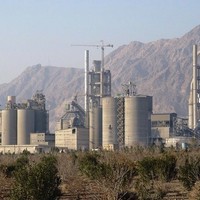
File photo: Tehran Cement factory has faced restrictions because of environmental concerns over air pollution in nearby populated areas of Iran's capital

The question facing Iran’s steel and cement industries this winter is not simply whether their gas supplies are cut, but how much they can continue producing afterward.


Iran faces a peak gas deficit of about 430 million cubic meters daily, compared with 300 million before US-Israeli strikes damaged its energy infrastructure.

Households take priority, but how much of the shortfall will fall on either industry remains uncertain.

Cement needs heat, which can come from alternative fuels. Much of Iranian steelmaking, however, needs gas to transform iron ore itself.

A cement factory that loses natural gas may still have a working kiln tomorrow. A steel plant that loses the gas feeding its iron-reduction unit may not.

Cement: The challenge of getting fuel

Iran's grey-cement producers were receiving only five to eight million cubic meters of gas daily against normal industry demand of 28 million before losing the remainder in late October, according to Tasnim. Most had already turned to mazut, a heavy fuel oil.

Iran nevertheless produced 6.44 million tonnes of clinker in October. That provides a baseline before the cutoff, not evidence that production continued at the same rate afterward.

Using the International Energy Agency's energy benchmark, maintaining October's clinker output without gas would require approximately 19 million liters of mazut daily, equivalent to about 760 deliveries by 25,000-liter tankers.

These are estimates, not forecasts. Kilns differ in efficiency, and the fuel must actually arrive. Losing 200 tanker deliveries would mean losing enough heat to produce roughly 54,000 tonnes of clinker daily, assuming no backup fuel.

Cost is another obstacle. Tasnim reported mazut transport charges of 2,000–2,500 tomans per liter. At 19 million liters, trucking alone would cost 38–47.5 billion tomans daily, excluding fuel purchases. Power plants also compete for the same tankers and mazut.

Iran International reported that 22 cement factories stopped their kilns in December 2024. Tehran Cement could not burn mazut because of pollution restrictions near populated areas. A 2026 report described Lamerd Cement operating at around 60 percent of capacity over the preceding two years because its distance from fuel suppliers made reliable mazut deliveries uneconomic.

Having an alternative fuel, in other words, does not guarantee that a factory can use it.

Cement can outlast its kilns, briefly

Even when a kiln stops, a grinding mill can turn stored clinker into finished cement, provided electricity remains available. This can conceal the scale of disruption.

In July, clinker production fell nearly 39 percent year-on-year, while cement production rose 5 percent.

October cement output averaged approximately 214,000 tonnes daily. Assuming clinker accounts for 80 percent of finished cement, sustaining that rate with every kiln stopped would consume about 171,000 tonnes of stored clinker each day.

At that pace, one million tonnes of accessible clinker would last fewer than six days. Maintaining production for a month would require more than five million tonnes. National inventories are not publicly verified.

October's exports included 668,000 tonnes of cement and 285,000 tonnes of clinker, adding to competition for available supplies. Slower production can stretch stocks but reduces sales, while electricity shortages can stop grinding mills even sooner.

Steel: Gas is an ingredient

Iran's electric-furnace steel industry is particularly exposed because much of it relies on direct-reduced iron, also known as sponge iron.

In these plants, natural gas is converted into hydrogen and carbon monoxide to remove oxygen from iron ore.

Iran produced about 14 million tonnes of sponge iron during January–June 2026. Using a published benchmark of 265 cubic meters of gas per tonne of sponge iron, maintaining that production rate would require approximately 20.5 million cubic meters of gas daily.

A daily gas reduction of five million cubic meters could put roughly 19,000 tonnes of sponge-iron production at risk; a ten-million-cubic-meter cut could put 38,000 tonnes at risk.

These are estimates of potential exposure, not predictions of actual production losses.

Plants also cannot necessarily operate at half capacity when their gas supply is halved. Iron-reduction units require specific gas flows, temperatures and chemical conditions. Below certain levels, an entire unit may have to shut down.

Where the alternatives run out

Steelmakers can keep their furnaces running for a time by using stored sponge iron, purchasing other iron materials or increasing their use of scrap metal. Iran's smaller blast-furnace operations also rely on a different production process.

Replacing just ten days of Iran's recent sponge-iron output would require around 770,000 tonnes of suitable material. Finding that much would be difficult when supplies are tight, prices are high and electricity shortages are already disrupting operations.

Some steel production could therefore continue after gas supplies are cut, but maintaining normal output would become difficult as available materials run low.

Cement producers have more flexibility, but their experience shows that fuel substitution depends on delivery, cost and permission to burn alternative fuels. Neither industry's losses can be reliably forecast without knowing how much fuel and material individual factories have in reserve.

Both industries may continue producing after gas supplies are cut, but their output will depend on the availability and cost of alternative fuels and raw materials.

What matters this winter is not simply whether factories remain open, but how much they can produce, at what cost and for how long.

How Iranians are turning grief into defiance

Nov 18, 2026, 17:50 GMT+0
•
Saeid Golkar, Kasra Aarabi
100%
Family members dance beside the grave of Alireza Raeisi, a 21-year-old Iranian protester executed on October 5, 2026, in connection with the January protests in Isfahan.

Iranian families are turning funerals for slain protesters into acts of defiance, using music and dance to challenge the Islamic Republic's use of mourning rituals and symbols to reinforce its authority.

A father and mother dance in the center as crowds cheer and clap to upbeat music. They are outside, surrounded by bouquets of colorful flowers and white doves. From a distance, the scene could easily be mistaken for a wedding or a birthday celebration. But it is neither. It is a funeral, taking place at the grave of their child, who was killed in the Islamic Republic's crackdown on protesters.

This seeming contradiction gives the scene its political force: while the family grieves, they refuse to do so in the language of mourning expected by the country's religious and political establishment.

“This cheering [at the grave] is not mourning; it is a ritual of revenge.”

That line, written by Iranian songwriter Mona Borzouee and performed by legendary Iranian pop star Ebi, speaks directly to the scene captured in a video circulating online.

The song and music video “Bego be Donya” (“Tell the World”) mourn the thousands of Iranian protesters killed during the January 2026 protests. But throughout the song, mourning is not simply an expression of sadness. It becomes memory, anger and, most importantly, resistance.

The song evokes images of the dead, grieving parents, graves and dancing bodies, transforming personal loss into a public act that demands to be seen and remembered. Parents confront the unbearable pain of losing a child, refusing to let death have the final word.

At funerals and 40-day memorials for protesters killed in the streets, families have begun dancing, playing music, clapping, reading poetry and celebrating the lives of their children rather than expressing grief through traditional Islamic mourning rituals.

One of the most powerful expressions of this shift came from Majid-Reza Rahnavard, a 23-year-old Iranian protester detained during the 2022 protests and subsequently executed by the Islamic Republic.

Surrounded by masked guards and blindfolded, Rahnavard appeared on state television shortly before his execution. His final words were: “I don't want anyone to mourn upon my grave. I don't want them to read the Quran or pray. Just celebrate and play celebrating, happy music.”

Rahnavard's words challenged the symbolic structure of official mourning. Through music, dance and celebration, grieving families affirm the lives of their loved ones.

In this context, the phrase “a ritual of revenge” carries a deeper symbolic and political meaning: refusing to submit, preserving the memory of the dead and continuing to live despite the government's attempts to instill fear and silence.

Historically, Shia Islam has placed great emphasis on mourning and lamentation to commemorate the deaths of its religious leaders, particularly the Imams. For some, mourning is central to Shia identity.

While the Islamic Republic did not create Shia mourning traditions, it politicized, institutionalized and incorporated them into its political identity and survival strategy.

In the run-up to the 1979 revolution, fortieth-day mourning ceremonies for protesters killed by the Shah's security forces became occasions for renewed mobilization. Since coming to power, the Islamic Republic has used this tradition to galvanize supporters and reinforce its authority.

Lamentation and the symbols of death have become part of what critics describe as the “politics of sadness and grief,” or siasat-e gham-o ghoseh in Persian.

This historical context helps explain why contemporary scenes of dancing at protesters' graves carry such political significance. Families are reclaiming mourning from a state that has long sought to dominate the interpretation of martyrdom and sacrifice.

The Islamic Republic has built a significant part of its political identity around death, martyrdom and endurance. Many ordinary Iranians, in contrast, emphasize life, joy, music, dignity and the right to choose one's path.

The protest slogan “Woman, Life, Freedom” was important partly because its central emphasis was not only politics, but life itself.

The reconceptualization of mourning is not simply a rejection of religion or tradition. It is part of a broader pattern of identity-based resistance in Iran, where resistance is expressed not only through elections, demonstrations or political slogans, but also through clothing, the body, music, social relations, humor, language and even rituals surrounding death.

These practices are political because the state has spent decades regulating and politicizing many areas of everyday life. Ideological power weakens when people reject not only a government's policies, but also the language through which that government explains the world.

A political system may retain coercive power even as its influence over ideas of virtue, sacrifice and grief fades. Dancing at a grave sends a powerful message of defiance: you may have taken this life, but you will not decide how that life is remembered.

A cow's sit-in: why a comedy sketch struck a nerve in Iran

Nov 18, 2026, 16:00 GMT+0
•
Behrouz Turani
100%
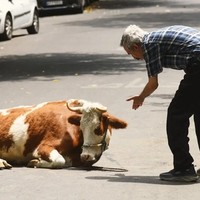
A man gestures toward a cow sitting in the middle of a Tehran street in a scene from the Iranian comedy series Taxi

A cow that has fled a slaughterhouse in Tehran sits in the middle of a busy street to protest the killing of her mate. What might otherwise pass for absurdist comedy has stirred controversy in Iran, where images of street protests carry painful memories.

The scene appears in an episode of the Iranian comedy series Taxi, written by well-known comedy writer and director Soroush Sehat.

Sehat and the series' other creators have faced accusations of ridiculing protesters, particularly those who have taken to the streets against the Islamic Republic in recent years.

The criticism comes as many Iranians are still living with the trauma of losing loved ones in the bloody crackdown on protests in January 2026.

The backlash gathered momentum after Khashayar Sepehri, an Iranian YouTuber and film critic, posted a video sharply criticizing the scene, arguing that it could be interpreted as insulting to protesters.

Bitter memories

At the center of the controversy is the cow's resemblance to a widely circulated photograph of a lone Iranian protester sitting in the road in front of security forces.

The photograph, taken during protests in Tehran, became a symbol of individual resistance, its composition recalling the iconic image of the Tank Man confronting Chinese tanks in Tiananmen Square in 1989.

In both images, a solitary figure occupies the middle of a street, refusing to move.

There is no established evidence that the filmmakers deliberately sought to belittle Iranian protesters. The episode's storyline, however, leaves the door open to that interpretation.

After the cow brings traffic to a standstill, an elderly woman approaches and offers her some vegetables, persuading her to get up and abandon her protest.

‘Sincere apology’

In a later scene, the woman appears on her balcony, seemingly satisfied with the outcome, while looking after the animal.

Critics argue that the cow's abandonment of her protest in exchange for a paltry reward diminishes the dignity of demonstrators and trivializes the sacrifices of those who have lost loved ones.

Writing in the film publication Bani Film, critic Jabbar Azin said he doubted that Sehat or producer Majid Salehi had deliberately set out to humiliate protesters, but criticized their poor judgment and lack of sensitivity to the public mood.

Even assuming the scene was not politically motivated, he wrote, a “sincere apology” from the creators was the least they could offer.

Some have defended Sehat by arguing that the sketches on which Taxi is based were written nearly two decades ago, long before January's protests.

Critics counter that Iran has a long history of anti-government demonstrations and that, regardless of when the sketch was written, its creators chose to bring it to the screen now, selecting it from dozens of others.

‘Worse than wrong’

Some defenders have also pointed to another scene in which a passenger in a taxi caught in the traffic jam asks why the cow took to the street when she knew she would eventually be slaughtered herself.

“Because she wanted to have an active part in choosing her destiny,” another passenger replies.

From that perspective, the scene could be understood as a portrayal of resistance, though the cow's eventual abandonment of her protest in exchange for food complicates that interpretation.

The filmmakers' intentions and the audience's interpretation often differ, even clash.

A solitary figure sitting in the road may be an ordinary comic device in one setting and a painful political reference in another.

But the setting here is Iran in 2026, months after a bloody crackdown on nationwide protests.

For critics, the suggestion that the creators failed to consider how the scene might be received amounts to what a Persian expression calls “an excuse worse than the wrong.”