The panel, moderated by Iran International’s Bozorgmehr Sharafedin, brought together Danielle Pletka of the American Enterprise Institute and Jon Alterman of the Center for Strategic and International Studies to discuss what comes after a ceasefire that has not ended the wider confrontation.
The debate, held on May 14, came a month after the US naval blockade of Iranian ports began on April 13, intensifying pressure on Tehran’s economy and maritime trade. But the blockade has also pushed shipping, insurance risk and control of Hormuz to the center of the conflict.
A regime under pressure, but not necessarily near collapse
Alterman said the Iranian regime has changed since the war began, but “not in a positive way.” He warned that the war may not have pushed the Islamic Republic toward compromise, but further into the hands of its security establishment.
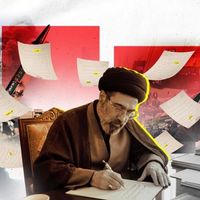
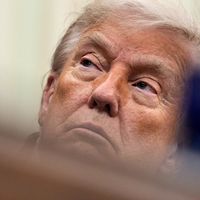
With Mojtaba Khamenei less visible and Revolutionary Guard hardliners appearing more influential, he said Tehran’s instinct seems to be to “hunker down and wait out” President Donald Trump.
“It feels like the default is toward confrontation rather than compromise,” Alterman said.
For Alterman, that does not necessarily mean the regime is closer to falling. It may instead mean Tehran is more likely to absorb pressure and wait for Trump’s political calendar to become more difficult.
Pletka also warned against assuming that a weakened regime automatically produces a better outcome. She said Washington often frames Iran’s power struggle as one between hardliners and moderates, but the reality is more complicated.
“These are all people who support the system of the Islamic Republic of Iran,” she said. “Some of them want to kill fewer people. Some of them want to kill more people.”
The danger, she suggested, is that US and Israeli strikes weaken Iran militarily while empowering the most repressive factions at home. Alterman put the question more starkly: does the pressure lead to regime collapse, or “just lead to more Iranians suffering for a longer period of time”?
Hormuz changes the balance
The clearest divide between the two experts came over the Strait of Hormuz.
Alterman argued that the war has revealed an uncomfortable truth for Washington: even a damaged Iran can still disrupt one of the world’s most important energy chokepoints.
“Even a weak Iran, a battered Iran, can control the strait,” he said.
It only needs to create enough fear to alter the behavior of shipping companies, insurers, and neighbouring Arab states and energy markets. In that sense, the threshold for disruption is lower than many had assumed.
Pletka sharply disagreed with the idea that Iran truly controls the strait.
“The reason the Iranians control the Strait of Hormuz right now is because we’re letting them,” she said. “We can take control of it. We can do what we want. We can move traffic through.”
She said the issue is no longer only military. It is also about risk, insurance and the willingness of shipowners to send vessels into waters where even a single strike, mine or ambiguous threat can have major consequences.
The result is a paradox: Iran may be weaker than before the war, but it may have discovered a tool it can use more confidently than before.
No clear road to victory or a deal
Both experts were skeptical that the current diplomatic track can quickly produce a comprehensive settlement.
Alterman said the two sides have persuaded themselves that they are excellent negotiators, which makes compromise harder. The best Washington may get, he argued, is not a grand bargain but a framework for drawn-out talks.
“The best-case scenario from a US perspective is locking yourself into negotiations with the Iranians through the end of the Trump administration,” he said.
Such a process could include talks over the nuclear file, missiles and freedom of navigation, but it would likely remain incremental and fragile, with both sides preserving the option to resume escalation.
Pletka said Trump appears most focused on removing Iran’s fissile material and its ability to produce more. But she warned that narrowing the issue to the nuclear file would repeat a familiar mistake.
“Everybody focuses on the nuclear when they need to focus on all of it at once,” she said, pointing to missiles, proxies and Iran’s regional conduct as inseparable parts of the challenge.
That leaves the conflict suspended between competing assumptions. Trump appears to believe economic pressure will force Iran to blink. Alterman suggested Tehran may believe it can outlast him by enduring pain, repressing dissent and waiting for US domestic politics to intervene.