• العربية
  • فارسی
Brand
  • Iran Insight
  • Politics
  • Economy
  • Analysis
  • Special Report
  • Opinion
  • Podcast
  • Iran Insight
  • Politics
  • Economy
  • Analysis
  • Special Report
  • Opinion
  • Podcast
  • Theme
  • Language
    • العربية
    • فارسی
  • Iran Insight
  • Politics
  • Economy
  • Analysis
  • Special Report
  • Opinion
  • Podcast
All rights reserved for Volant Media UK Limited
volant media logo

Iran executes man as January protest crackdown continues

Apr 21, 2026, 07:29 GMT+1
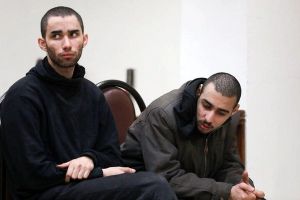
Amirali Mirjafari during a court hearing in Tehran

Iran executed a man on Tuesday over accusations that he set fire to a mosque and what authorities described as anti-security activities, according to the judiciary, in a case tied to anti-establishment protests earlier this year.

Judiciary-affiliated media identified the man as Amirali Mirjafari and said his death sentence had been upheld by the Supreme Court before being carried out early on Tuesday.

State media said Mirjafari had set fire to the Gholhak Grand Mosque in Tehran and acted as a leader of a network accused of links to Israel’s Mossad intelligence service, framing the case as part of efforts against foreign-backed activity.

Authorities said he had confessed after his arrest to taking part in protests in January, damaging public property, including phone booths and buses, and setting fire to motorcycles using gasoline-filled bottles.

Amnesty and other rights groups have repeatedly said Iranian courts rely on confessions obtained under duress in such cases.

Iran has used broad security charges to prosecute people detained during the January protests, which followed a new wave of anti-government demonstrations and a widening crackdown by authorities that became one of the most extensive in recent years.

Tehran has not released official nationwide arrest figures, but Iran International reported earlier this year that the number exceeds 36,500, based on internal security briefings the channel obtained and reviewed.

Earlier this month, Iran executed 18-year-old Amirhossein Hatami, who had been convicted in the same case linked to the nationwide anti-government protests that the Islamic Republic repressed in what became its broadest crackdown to date.

In a recent report, Amnesty International said 11 men were at risk of imminent execution over participation in the protests. The rights group said they had been subjected to torture and other ill-treatment in detention before being convicted in grossly unfair trials based on forced confessions.

Most Viewed

Ghalibaf defends Iran-US talks amid hardline backlash
1
INSIGHT

Ghalibaf defends Iran-US talks amid hardline backlash

2
INSIGHT

Iran diplomacy wobbles as factions compete to avoid looking soft on US

3
VOICES FROM IRAN

Bread shortages, soaring prices strain households in Iran, residents say

4
ANALYSIS

The politics of pink: how Iran uses cuteness to rebrand violence

5

War-hit homeowners feel abandoned as Iran’s reconstruction aid fades

Banner
Banner

Spotlight

  • Lights out, then gunfire: Witnesses recount Mashhad protest crackdown
    VOICES FROM IRAN

    Lights out, then gunfire: Witnesses recount Mashhad protest crackdown

  • Family told missing teen was alive, then received his body 60 days later
    EXCLUSIVE

    Family told missing teen was alive, then received his body 60 days later

  • Is Iran entering its Gorbachev moment?
    INSIGHT

    Is Iran entering its Gorbachev moment?

  • Iran crackdown reaches cemeteries as graves of slain protesters defaced
    EXCLUSIVE

    Iran crackdown reaches cemeteries as graves of slain protesters defaced

  • Iran diplomacy wobbles as factions compete to avoid looking soft on US
    INSIGHT

    Iran diplomacy wobbles as factions compete to avoid looking soft on US

  • The politics of pink: how Iran uses cuteness to rebrand violence
    ANALYSIS

    The politics of pink: how Iran uses cuteness to rebrand violence

  • Bread shortages, soaring prices strain households in Iran, residents say
    VOICES FROM IRAN

    Bread shortages, soaring prices strain households in Iran, residents say

  • Iran refuses to return body of executed teen protester to family

    Iran refuses to return body of executed teen protester to family

  • Iran executes two men as protest-related hangings continue

    Iran executes two men as protest-related hangings continue

  • Iran crackdown reaches cemeteries as graves of slain protesters defaced

    Iran crackdown reaches cemeteries as graves of slain protesters defaced

•
•
•

More Stories

Iran crackdown reaches cemeteries as graves of slain protesters defaced

Apr 21, 2026, 03:53 GMT+1
•
Azadeh Akbari

Iranian authorities have stepped up pressure on families of those killed in January protests, defacing, destroying or covering graves with cement in the northern city of Rasht and the capital Tehran, local sources told Iran International.

In Section 20 of Bagh Rezvan cemetery in Rasht, thick layers of cement had been poured over part of the graves of slain protestors, creating a uniform surface higher than the surrounding gravestones.

In some areas of the cemetery, the cemented section was so large that it was unclear how many graves lay side by side, the sources added.

Some graves showed no names or dates of birth or death, only a grey surface that appeared intended to erase all trace of them. Several others had small headstones roughly the size of an A4 sheet of paper, with only the deceased’s first and last names engraved in small script.

Witnesses said the graves were defaced and damaged in the presence of government agents and plainclothed security forces.

Graves levelled in Tehran

At Tehran’s main cemetery, Behesht Zahra, some graves of those killed were levelled with the ground and covered with cement after third-day mourning ceremonies, a memorial traditionally held three days after burial.

Sources said the graves were covered in a way that made it impossible to determine from a distance how many had been newly dug.

In Section 329 of the cemetery, families also said some gravestones were destroyed or broken in the days following Feb. 11, the anniversary of Iran's 1979 revolution.

Only a small number of families of slain protestors have so far managed to install gravestones, sources told Iran International.

Families said they were pressured to alter inscriptions on the stones.

In some cases, the use of the Persian term Javidnam—meaning eternally remembered and widely used for slain protestors—or the phrase Farzand-e Iran (“Child of Iran”) drew objections from state bodies and threats that the stones would be destroyed.

‘Too costly’

Families also reported threats to destroy the gravestones of Mojtaba Karabi and Azra Bahaderi-Nejad in the northeastern city of Sabzevar. They said paint had been sprayed on the gravestone of Arman Gorjian and a metal plaque at the grave of Maryam Ebrahimzadeh had been defaced.

Some families temporarily removed gravestones to prevent further damage and said they would not reinstall them until restrictions were lifted.

Gravestone sellers advised families to install stones only for the 40th-day memorial ceremony and remove them afterwards to avoid destruction, sources said, adding that many could not afford the cost of reinstalling headstones and its psychological impact.

Iran International previously received an image showing the broken gravestone of slain protestor Behnam Darvishi.

Darvishi was killed on Jan. 8 after being struck by live ammunition on Persian Gulf Boulevard in Tehran and was buried in Nahavand in western Iran.

Precedents

Damage to graves of people killed in the 2022 protests has also been reported in previous years, including those of Majidreza Rahnavard, Siavash Mahmoudi, Kian Pirfalak, Zakaria Khial and Aylar Haghi.

The broader protest movement followed the September 2022 death in custody of Mahsa Jina Amini, which triggered nationwide anti-government demonstrations.

In earlier cases, gravestones were broken while inscriptions were altered or removed.

In August 2023, Amnesty International said it had documented the destruction of graves belonging to more than 20 victims across 17 cities.

The group said graves had been damaged with tar, paint and arson, headstones had been broken, and phrases describing victims as martyrs or stating they died for freedom had been forcibly erased.

Bread shortages, soaring prices strain households in Iran, residents say

Apr 20, 2026, 21:24 GMT+1
•
Hooman Abedi

Bread shortages and steep price hikes are undermining access to a key staple for many in Iran, with citizen accounts received by Iran International describing long lines, flour shortages and prices far exceeding official rates.

“Many bakeries are facing flour shortages and cannot keep up with long lines of customers,” a resident from Malard west of Tehran said.

Another account said: “Right after the war, bread prices doubled. Barbari (a type of Iranian bread) is now 250,000 rials and Sangak is 350,000. Subsidized flour has been removed.”

The reported prices are far above official rates, with the latest approved price for Sangak at about 76,000 rials and Barbari around 55,000.

April 20 marks National Wheat and Bread Day in Iran, meant to highlight the central role of wheat in daily life, but accounts point to worsening conditions for a basic staple.

Conflicting claims on wheat supply

Wheat self-sufficiency has long been a goal promoted by many officials of the Islamic Republic. The first celebration of wheat self-sufficiency was held on November 16, 2004, during the presidency of Mohammad Khatami.

However, this self-sufficiency did not continue in subsequent years for various reasons, including water shortages, and Iran remained reliant on wheat imports. Still, the aspiration for self-sufficiency has continued to be repeated in officials’ statements.

Now, 22 years after the first “self-sufficiency celebration,” as buying bread is becoming an economic challenge for citizens, Ataollah Hashemi, head of the National Wheat Farmers Foundation, has once again reiterated the goal. Speaking on Saturday, April 18, he said: “The country will not need to import wheat this year.”

Yet official customs data shows Iran imported about 2.75 million tons of wheat worth nearly $1 billion in the 10 months to February 2026. The imports were sourced largely from Russia, as well as through intermediaries such as the United Arab Emirates and Turkey.

The reliance on intermediaries, which are not major wheat exporters themselves, points to complications tied to banking restrictions and payment channels, increasing costs through additional transport and fees.

The gap between official statements and import figures raises questions about the sustainability of domestic production and the credibility of self-sufficiency statements.

File photo of a baker handing stacks of Sangak flatbread to customers at a neighborhood bakery.
100%
File photo of a baker handing stacks of Sangak flatbread to customers at a neighborhood bakery.

Rising costs and policy pressures

Bread prices have increased across provinces in the current Iranian year that began on March 21, following subsidy cuts and the move toward a single flour pricing system. Prices now vary depending on flour type and region, with some bakeries selling above official rates.

Despite parliament approving a budget that allocates more than 5,000 trillion rials (over $3 billion) for bread subsidies, no new national price list has been issued for the current year. As a result, last year’s rates remain in effect, while enforcement appears inconsistent.

Inflation and shortages

Before the latest conflict and US-Israeli strikes, annual inflation had already exceeded 70 percent, with food inflation reaching triple digits. Official data shows bread and cereals recorded year-on-year inflation of about 140 percent.

The removal or reduction of subsidized flour in parts of the market has added to the pressure, with more bakeries operating under higher-cost “free flour” systems.

Citizen reports suggest the combined impact of shortages and rising prices is becoming more visible. Long queues at bakeries and inconsistent supply have emerged alongside sharp increases in retail prices.

For many households, bread remains a primary food source, making these changes particularly significant.

The accounts from Tehran and other areas point to a broader strain across the country, where access to basic goods is increasingly shaped by rising costs, uneven supply, and policy shifts that have yet to stabilize the market.

100 days on: the anatomy of Iran’s January crackdown

Apr 20, 2026, 04:02 GMT+1
•
Naeimeh Doostdar

One hundred days after protests erupted across Iran in January 2026, the events still stand out as one of the most widespread and violent protest waves the country has seen in recent years.

What began as an economic protest quickly evolved into a nationwide political crisis, prompting one of the most intense crackdowns in the Islamic Republic’s history.

What distinguishes the January protests from earlier waves is the simultaneous appearance of three dynamics: broad social mobilization, a highly concentrated burst of lethal repression over a very short period, and an organized effort to conceal the scale of the violence.

Unlike some earlier protest waves that were concentrated in specific regions, these demonstrations appeared simultaneously across multiple urban centers, suggesting a buildup of dissatisfaction across different layers of society.

At their peak on January 8, the protests were likely among the largest episodes of social mobilization since the 1979 revolution. The scale of participation appears to have played a key role in shaping the government’s response.

A bloody turning point

The crackdown on January 8 and 9 was unprecedented. Reports and documentation indicate widespread killings during this brief period—violence that can be described as the most concentrated episode of repression in the history of the Islamic Republic.

What made these days particularly notable was not only the number of casualties but the speed with which they occurred.

In earlier protests—such as the November 2019 unrest or the 2022 uprising—violence was spread across several days or weeks. In January 2026, however, a significant portion of the deaths occurred within roughly forty-eight hours.

This “compression of violence” suggests a shift in repression strategy: an effort to break the protest wave quickly before it could consolidate.

Reports by international organizations, including Amnesty International and Human Rights Watch, as well as medical accounts and eyewitness testimony have provided a clearer picture of how the crackdown unfolded.

According to these reports, security forces used live ammunition and lethal firearms extensively and directly against protesters. Weapons reported in use included assault rifles, shotguns and in some cases heavy machine guns.

Witnesses also described the presence of snipers positioned on rooftops and elevated locations, firing deliberately at protesters’ heads, chests and other vital organs.

Alongside these weapons, so-called “less-lethal” tools such as pellet guns and tear gas were also used. Amnesty International reported that pellet rounds were frequently fired at close range or aimed at sensitive parts of the body, causing blindness and permanent injuries.

Taken together, the evidence suggests that the tools used during the crackdown went well beyond standard riot-control measures and approached the use of battlefield weaponry against civilians.

A war of numbers

One of the most contested aspects of the January protests remains the number of people killed.

Government officials have acknowledged roughly three thousand deaths. Rights groups have suggested at least double that. Iran International says the number exceeds 36,000, based on internal security briefings obtained and reviewed by the channel.

Additional reports mention thousands of unidentified victims whose identities have yet to be confirmed.

International bodies, including the United Nations special rapporteur on Iran, have noted that severe restrictions on information have made independent verification difficult. Even so, they say the true number of victims is likely significantly higher than official figures.

The gap between these estimates is not simply a numerical dispute. It reflects the broader environment in which the crackdown unfolded—one where repression was accompanied by efforts to control the narrative and obscure the scale of events.

A multi-layered crackdown

The repression in January 2026 extended far beyond the streets.

Reports indicate that security forces entered hospitals during the peak of the crackdown and detained wounded protesters, effectively turning medical treatment into a security risk.

Such actions not only increased fear among the injured but also discouraged people from seeking medical care.

The management of victims’ bodies and mourning ceremonies also became part of the repression apparatus. Families often struggled to locate the bodies of relatives among large numbers of victims held in forensic facilities.

In many cases bodies were released only after delays or under strict conditions, and funerals were closely monitored or restricted.

These practices suggest that controlling the social and emotional consequences of the killings became nearly as important as suppressing the protests themselves.

The internet blackout

Internet shutdowns played a critical role during the protests.

Unlike the blackout during the November 2019 protests, which followed the expansion of demonstrations, the restrictions in January 2026 appeared closely synchronized with the crackdown itself.

Connectivity disruptions lasted longer and were implemented in a more targeted and controlled manner.

The restrictions severely limited the flow of information, the sharing of images and videos, and even everyday communication between citizens.

As a result, documenting events and verifying reports became extremely difficult, while emergency coordination and independent reporting were also constrained.

If the 2019 protests symbolized repression under a nationwide internet blackout and the 2022 uprising represented the persistence of protest under sustained pressure, the events of January 2026 may mark a new stage where repression operates simultaneously across multiple layers.

The protests themselves may have subsided. But the scale of the violence—and the unanswered questions surrounding it—continue to shape Iran’s political landscape.

100 days on: why Iran’s January protests spread across social classes

Apr 20, 2026, 02:12 GMT+1
•
Ata Mohamed Tabriz

One hundred days after protests erupted across Iran in January 2026, the events continue to reveal something fundamental about Iranian society: many people now fear silence more than they fear protest.

The protests were the result of several crises converging at once. Economic collapse, political exclusion and a growing sense of humiliation pushed society beyond its tolerance threshold and created a shared feeling across social groups that life in Iran had become increasingly unlivable.

When demonstrations erupted across the country, many slogans targeted the Islamic Republic itself.

The roots of the unrest run deep in provinces that host major oil and industrial projects but have long seen little improvement in living standards.

From Abadan to Bushehr and from Kangan to Gilan-e Gharb, many of the cities that first erupted in protest are places where people have spent years asking the same question: where did the country’s oil wealth go?

President Masoud Pezeshkian’s government attempted to calm tensions by announcing direct cash payments to households after eliminating subsidized exchange rates. The payment amounted to about one million tomans—roughly seven dollars.

The gesture came at a time when food prices were soaring. Cooking oil prices had risen more than 200 percent, eggs were more than twice as expensive as a year earlier, and some shopkeepers had begun selling basic dairy products on installment plans.

For many Iranians the payment symbolized not relief but humiliation.

The middle class and the bazaar

One of the defining features of the January protests was the erosion of the social distance between Iran’s middle class and its poorer citizens.

Historically, Iran’s middle class has been a carrier of civil and political demands. But by early 2026 many middle-class families were struggling simply to avoid falling into poverty.

Political sociologists have long argued that revolutions are rarely led by the poorest members of society. They tend instead to emerge among groups that once enjoyed relative stability but now feel they are falling.

In Iran, the middle class had not only lost income but also social status. That loss helped create an unwritten alliance between middle-class citizens and poorer groups, both of whom felt they were suffering under the same policies.

Another signal that the unrest had entered new territory came when parts of Tehran’s Grand Bazaar closed on January 7.

The bazaar has historically been one of the most cautious institutions in Iran’s political life. Even during severe economic crises it has often preferred negotiation and indirect pressure to open confrontation. During the 2009 protests many merchants stayed silent, and in 2022 they largely remained on the sidelines. This time was different.

Currency volatility made supply chains chaotic and pricing unpredictable. A product purchased in the morning could be worth something entirely different by the afternoon. Many traders said they could no longer price goods reliably, and keeping shops open risked losses rather than gains.

When sections of the bazaar shut their doors, it signaled that dissatisfaction had spread beyond traditional protest groups. A conservative economic institution had concluded that the existing order itself had become a source of instability.

The collapse of reformist hopes

For some voters, President Pezeshkian had represented a final opportunity for reform and for avoiding war.

As protests intensified, however, he adopted increasingly hardline rhetoric. On January 11 he described protesters as “terrorists” and called on security forces to respond decisively.

Even some reformist figures who had supported him began to express frustration.

The shift reinforced a broader perception among many Iranians that the political system was incapable of meaningful change.

Combined with the economic crisis and the aftermath of the 12-day war, this sense of political closure deepened public despair.

From scattered anger to mass protest

The January protests also unfolded against a tense geopolitical backdrop.

Statements from foreign political figures—including remarks by Donald Trump warning Tehran against violent repression—were widely circulated among Iranian audiences. At the same time, Iran’s exiled prince Reza Pahlavi called for coordinated demonstrations and nightly slogans across the country.

Such messages helped focus attention on specific moments of protest. But they did not create the anger that drove people into the streets. That anger had been building for years.

The protests occurred as the Islamic Republic appeared to be shifting toward what might be described as a more defensive style of governance.

In this approach, economic grievances and social demands are increasingly treated as potential security threats. Limited cultural concessions—such as relaxing enforcement of the hijab law or allowing controlled concerts—serve mainly as tools for managing pressure rather than as signs of genuine reform.

The January protests tested this model. The state ultimately suppressed the demonstrations. Yet repression alone cannot address the deeper structural tensions that produced the uprising in the first place.

The streets may have emptied. But many Iranians now believe that the country cannot return to the conditions that existed before January.

From instability to influence: Pakistan’s pivotal role in US-Iran diplomacy

Apr 19, 2026, 11:16 GMT+1
•
Mahboob Shah Mahboob

Despite deep political turmoil, economic distress, militant violence, and a fraying security landscape at home, Pakistan has unexpectedly emerged as the publicly acknowledged central mediator between Washington and Tehran.

Since late February 2026, the war involving the United States, Israel, and Iran has widened, with traffic through the Strait of Hormuz becoming a major pressure point for the global economy.

Under that pressure, a temporary ceasefire was first announced with Pakistani mediation. That was followed by rare direct talks between the United States and Iran in Islamabad.

Pakistan’s role was publicly acknowledged by both Washington and Tehran, each of which described it as the “central mediator.”

The talks held in Islamabad on April 11-12 lasted more than 20 hours and ended without an immediate agreement. Even so, the channel remained open, and efforts to prepare a second round have continued.

That process has raised a central question: was Pakistan merely passing messages, or was it managing a broader peace process?

Although the direct US-Iran talks took place in Islamabad, Pakistan’s role can be seen across several parallel tracks.

Hidden channels of communication

From the beginning of the war, Pakistan helped facilitate the exchange of messages between Washington and Tehran.

A number of Pakistani politicians have openly acknowledged that US proposals – at times in the form of specific points or clauses – were conveyed to Iran through Pakistan, and that Iran’s responses were then relayed back to Washington.

That role became particularly important at a moment when some of the Persian Gulf’s traditional mediators, including Qatar, were themselves under severe security pressure and were being targeted daily by Iran.

Structuring the agenda of the talks

By hosting the talks, Islamabad took three practical steps.

First, it provided a secure environment and the necessary logistics for both sides, which trusted Pakistan’s capacity in that area.

Second, it separated the negotiations into distinct tracks: the nuclear program, sanctions, frozen assets, the Strait of Hormuz, and regional security.

Third, it pressed for a timetable and a mechanism for a “second phase” of talks and for dialogue to continue.

Although the talks ended without an immediate outcome, Pakistan succeeded on the first two fronts. That is why it did not remain passive afterward and continued its mediation efforts in preparation for a second round.

Coordination with regional partners

Pakistan has also sought to widen support for a ceasefire and renewed talks by securing broader backing – especially from Saudi Arabia, Turkey, Egypt.

That coordination matters because it allows each side to use its influence and reduces the likelihood of disruptive action by spoilers.

Why trusting Pakistan?

Although there are countries in the region more powerful than Pakistan – India being the clearest example – trust in Pakistan has not stemmed from moral authority. It has come from necessity, leverage, and calculation.

Pakistan has long-standing security ties with the United States, as well as neighborly and working relations with Iran. Together, those ties provide a minimum level of mutual trust for both sides.

For Washington, the need was for a country able to transmit messages within a framework aligned with US interests and to provide a negotiating venue acceptable to Donald Trump’s administration.

In that context, India was not a suitable choice for the United States, because the degree of influence and leverage the Trump administration has over Pakistan does not exist in the same way over India.

At the same time, America’s Arab allies are not only under intense pressure, but are also seen by Iran as direct partners of Washington and therefore lack the credibility needed for mediation. The United States also needed an Islamic country with nuclear capability to play that role. From that perspective, Pakistan was the best available option.

Pakistan also has workable relations with Saudi Arabia, Qatar, and the United Arab Emirates, and its trust-building efforts during the talks could prove useful.

Pakistan depends on the Persian Gulf and the wider Middle East for energy, labor remittances, and regional stability. A prolonged war would therefore carry domestic economic and security costs. Those costs, in turn, increase Islamabad’s incentive to preserve the ceasefire and keep negotiations alive.

There is also a domestic political calculation. Pakistan’s government is trying to ease both internal and external pressure, particularly amid the country’s political crisis and the imprisonment of former prime minister Imran Khan. By taking part in a process in which the United States is one of the parties, Islamabad may hope to reduce pressure on Shehbaz Sharif’s government.

Economic distress is another dimension. Pakistan hopes that these talks may help it secure US economic support as well as financial aid and loans from Arab states – a need Islamabad understands well.

At the same time, Pakistan has security and defense agreements with Saudi Arabia and could, if the war dragged on, come under pressure to support Riyadh. That concern appears to have pushed Pakistan to avoid direct entry into the conflict: first by opening confrontations in Afghanistan to signal to its allies that internal instability left it unable to cooperate militarily against Iran, and then by presenting itself as a mediator for peace.

For Iran, too, Pakistan may not be the ideal mediator, but in practice there are few alternatives. Tehran has targeted many Arab countries, while Qatar – which had previously played a mediating role – has itself become a casualty of the war. That leaves Pakistan, as an Islamic country, as the remaining option. For that reason, Tehran has also welcomed Pakistani mediation.

The role of the security institutions and the army

In a crisis of this kind, guaranteeing a ceasefire and ensuring the safe passage of messages is difficult without the involvement of security institutions.

According to reports, Pakistan’s army chief is seen in Washington as a reliable channel for direct contact, and that has accelerated decision-making.

Pakistan has also previously hosted and facilitated confidential contacts between major powers, including during the period of rapprochement between China and the United States. That history suggests Islamabad has experience in closed-door diplomacy.

Reports further indicate that direct contact between the Trump administration and General Asim Munir helped smooth the decision-making process, and that Washington believes Pakistan has practical influence over security commitments, can preserve its relationship with Iran, maintain its ties to the Arab world, and is itself affected by instability in the Middle East.

Why is the army chief at the center of this diplomacy?

In this mediation effort, it has been not the prime minister or foreign minister, but Pakistan’s military chief, Field Marshal Asim Munir, who has emerged as the main figure in the negotiations.

Pakistan’s military has more than 51 years of experience dealing with US and Iranian security and military circles. Pakistani officials say responsibility for maintaining confidential channels with the political and military leadership in Tehran and Washington has been placed in Munir’s hands. In a crisis like this, security guarantees carry greater weight than purely political commitments.

Prime Minister Shehbaz Sharif said in a speech that Munir had played an especially prominent role in the talks. He added that Munir received the Iranian delegation in full field marshal dress and welcomed the American delegation in formal Western attire – a symbolic message suggesting that Pakistan was guaranteeing the process not only at the level of the civilian government, but at the level of the state and security establishment.

After the imprisonment of Imran Khan, public discontent with the army in Pakistan had risen sharply, and many came to see the military as the root of the country’s crises. Munir appears to have understood that mood clearly, and by accepting a mediating role at such a sensitive moment, he has, to a considerable extent, managed to rebuild some of the public trust that had been lost.

According to a source in the Pakistani prime minister’s office, Trump’s office contacted Munir directly 12 times after the first round of talks.

That suggests Pakistan’s army chief is effectively acting as an indirect representative of the United States while also handling the transmission of messages.

Political parties and civilian institutions in Pakistan, however, are unhappy with that role and worry that, if the talks succeed, the army’s power will grow further and the already weakened political sphere will fall more deeply under military influence.

After the first round ended, Munir traveled to Tehran to prepare the ground for a second round of talks and to convey Washington’s messages and proposals to the Iranian side. The trip was directly linked to efforts to shape the next phase and extend the ceasefire.

The prospects for success in talks

Although the first round ended without a final result, the repeated trips by Pakistan’s army chief and the pressure created by the situation in the Strait of Hormuz – on both the United States and global markets – have increased the chances of at least a partial agreement.

The path ahead, however, is far from straightforward, because the disagreements are more structural than merely technical.

Several difficult but essential steps could improve the prospects for success.

  • A step-by-step agreement: first, an extension of the ceasefire, a temporary mechanism for Hormuz, and limited sanctions relief; then deeper discussions on nuclear and regional issues.
  • A package of guarantees: balanced guarantees – rather than automatic snapback mechanisms –in the event of a ceasefire breach, with Pakistan seeking to underpin those guarantees through security channels.

Statements by Pakistani officials suggest they are trying to lay the groundwork for those two stages and hope that Islamabad will reap what they describe as “the sweetest fruit” from both Washington and Tehran.

That expectation rests on a broader calculation. Tehran no longer has the capacity for a long war and wants relief for its weak economy from sanctions pressure, while the United States has shown signs of willingness to ease some of those sanctions.

On the other side, the Trump administration is facing rising domestic political and economic pressure, while Iran has sent positive – though conditional – signals on the nuclear file.

For those reasons, hopes for the success of the talks have increased.