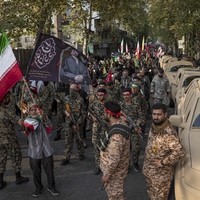
One hundred days after protests erupted across Iran in January 2026, the events still stand out as one of the most widespread and violent protest waves the country has seen in recent years.
What began as an economic protest quickly evolved into a nationwide political crisis, prompting one of the most intense crackdowns in the Islamic Republic’s history.
What distinguishes the January protests from earlier waves is the simultaneous appearance of three dynamics: broad social mobilization, a highly concentrated burst of lethal repression over a very short period, and an organized effort to conceal the scale of the violence.
Unlike some earlier protest waves that were concentrated in specific regions, these demonstrations appeared simultaneously across multiple urban centers, suggesting a buildup of dissatisfaction across different layers of society.
At their peak on January 8, the protests were likely among the largest episodes of social mobilization since the 1979 revolution. The scale of participation appears to have played a key role in shaping the government’s response.
A bloody turning point
The crackdown on January 8 and 9 was unprecedented. Reports and documentation indicate widespread killings during this brief period—violence that can be described as the most concentrated episode of repression in the history of the Islamic Republic.
What made these days particularly notable was not only the number of casualties but the speed with which they occurred.
In earlier protests—such as the November 2019 unrest or the 2022 uprising—violence was spread across several days or weeks. In January 2026, however, a significant portion of the deaths occurred within roughly forty-eight hours.
This “compression of violence” suggests a shift in repression strategy: an effort to break the protest wave quickly before it could consolidate.
Reports by international organizations, including Amnesty International and Human Rights Watch, as well as medical accounts and eyewitness testimony have provided a clearer picture of how the crackdown unfolded.
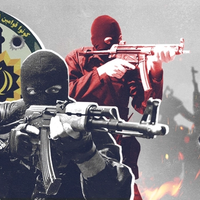
According to these reports, security forces used live ammunition and lethal firearms extensively and directly against protesters. Weapons reported in use included assault rifles, shotguns and in some cases heavy machine guns.
Witnesses also described the presence of snipers positioned on rooftops and elevated locations, firing deliberately at protesters’ heads, chests and other vital organs.
Alongside these weapons, so-called “less-lethal” tools such as pellet guns and tear gas were also used. Amnesty International reported that pellet rounds were frequently fired at close range or aimed at sensitive parts of the body, causing blindness and permanent injuries.
Taken together, the evidence suggests that the tools used during the crackdown went well beyond standard riot-control measures and approached the use of battlefield weaponry against civilians.
One of the most contested aspects of the January protests remains the number of people killed.
Government officials have acknowledged roughly three thousand deaths. Rights groups have suggested at least double that. Iran International says the number exceeds 36,000, based on internal security briefings obtained and reviewed by the channel.
Additional reports mention thousands of unidentified victims whose identities have yet to be confirmed.
International bodies, including the United Nations special rapporteur on Iran, have noted that severe restrictions on information have made independent verification difficult. Even so, they say the true number of victims is likely significantly higher than official figures.
The gap between these estimates is not simply a numerical dispute. It reflects the broader environment in which the crackdown unfolded—one where repression was accompanied by efforts to control the narrative and obscure the scale of events.
A multi-layered crackdown
The repression in January 2026 extended far beyond the streets.
Reports indicate that security forces entered hospitals during the peak of the crackdown and detained wounded protesters, effectively turning medical treatment into a security risk.
Such actions not only increased fear among the injured but also discouraged people from seeking medical care.
The management of victims’ bodies and mourning ceremonies also became part of the repression apparatus. Families often struggled to locate the bodies of relatives among large numbers of victims held in forensic facilities.
In many cases bodies were released only after delays or under strict conditions, and funerals were closely monitored or restricted.
These practices suggest that controlling the social and emotional consequences of the killings became nearly as important as suppressing the protests themselves.
Internet shutdowns played a critical role during the protests.
Unlike the blackout during the November 2019 protests, which followed the expansion of demonstrations, the restrictions in January 2026 appeared closely synchronized with the crackdown itself.
Connectivity disruptions lasted longer and were implemented in a more targeted and controlled manner.
The restrictions severely limited the flow of information, the sharing of images and videos, and even everyday communication between citizens.
As a result, documenting events and verifying reports became extremely difficult, while emergency coordination and independent reporting were also constrained.
If the 2019 protests symbolized repression under a nationwide internet blackout and the 2022 uprising represented the persistence of protest under sustained pressure, the events of January 2026 may mark a new stage where repression operates simultaneously across multiple layers.
The protests themselves may have subsided. But the scale of the violence—and the unanswered questions surrounding it—continue to shape Iran’s political landscape.