• العربية
  • فارسی
Brand
  • Iran Insight
  • Politics
  • Economy
  • Analysis
  • Special Report
  • Opinion
  • Podcast
  • Iran Insight
  • Politics
  • Economy
  • Analysis
  • Special Report
  • Opinion
  • Podcast
  • Theme
  • Language
    • العربية
    • فارسی
  • Iran Insight
  • Politics
  • Economy
  • Analysis
  • Special Report
  • Opinion
  • Podcast
All rights reserved for Volant Media UK Limited
volant media logo

Iran steps up pressure on women prisoners after June war, source says

Dec 18, 2025, 21:16 GMT+0Updated: 22:44 GMT+0
The visitation area of the women’s ward at Evin Prison in Tehran - Photo by Maggie Parvaneh

Rights abuses against women political prisoners in Tehran’s notorious Evin Prison have intensified since a 12-day war with Israel, an informed source told Iran International, with an inmate's suicide attempt highlighting mounting pressure in the ward.

Around 20 political prisoners in Evin’s women ward have repeatedly gathered in the head warden’s office over the past week, demanding an end to what they describe as deliberate obstruction by prison officials, a halt to guards’ violence and proper access to medical treatment, the source said on Thursday.

The prisoners have also called for improvements in food and hygiene inside the ward, saying basic standards have sharply deteriorated since the new security team from Qarchak prison took over.

The source, herself a political prisoner, said inmates have since been sent to solitary confinement on various pretexts, while family visits and phone calls are frequently cut off as punishment.

Suicide attempt

The source said one political prisoner in the women’s ward recently attempted suicide after officials repeatedly blocked the implementation of her release order.

Cellmates intervened and saved her before asking the duty officer for help, but the guard refused to assist despite the emergency, the source said.

The prisoner, whose name Iran International is withholding for security reasons, is said to be in a deeply fragile psychological state.

According to her fellow inmates, prison authorities keep finding pretexts to prevent her release despite repeated protests over the refusal to carry out a lawful decision.

Denial of care

In the absence of proper medical care, the prayer room of the women’s ward has effectively been turned into a makeshift space to hold sick prisoners, the source told Iran International.

The source accused prison officials of obstructing the implementation of laws on medical furloughs and conditional release on bail for inmates with serious illnesses, despite clear legal provisions allowing such measures.

According to the source, political prisoner Aida Najafloo, who underwent surgery for a fractured vertebra, was returned to prison before completing treatment and is now suffering from a severe infection and critical physical condition.

Najaflou is among five Christians handed combined prison terms totaling more than 50 years.

The source also cited the case of Masoumeh Sadr Eshkevari, who suffers from lung, respiratory, heart and mobility problems and breathes with the help of an oxygen device.

Despite doctors’ emphasis on the need for treatment outside prison, she has been denied medical furlough as well as her legal right to release her on bail, with fellow inmates left to push her wheelchair and help her use the bathroom and shower.

New charges

The source said that the release orders for two political prisoners, Baha’i community leader Fariba Kamalabadi and labor activist Narges Mansouri, have not been implemented since October because of obstruction by prison authorities.

Narges Mansouri, 46, is a member of the Syndicate of Workers of the Tehran and Suburbs Bus Company and the mother of a 13‑year‑old child.

Instead, they and five other women now face new charges after they protested officials’ role in the death of political prisoner Somayeh Rashidi, who passed away in Qarchak following alleged medical neglect.

Somayeh Rashidi died after several days in hospital following her transfer from Qarchak prison in September.

All seven have been charged with “insulting the Supreme Leader” and “disturbing prison order,” with courts setting bail of 80 million tomans for each, the source said. Some of the women have also faced weeks‑long bans on visits and phone calls as additional pressure.

According to Amnesty International, Iranian authorities have executed more than 1,000 people so far this year, the highest annual figure recorded by the group in at least 15 years.

Most Viewed

Iran negotiators ordered to return after internal rift over Islamabad talks
1
EXCLUSIVE

Iran negotiators ordered to return after internal rift over Islamabad talks

2
INSIGHT

Iran's digital economy battered by prolonged blackout

3
ANALYSIS

US blockade enters murky phase as tankers spoof signals and buyers hesitate

4
ANALYSIS

Why the $100 billion Hormuz toll revenue is a myth

5

US tightens financial squeeze on Iran, warns banks over oil money flows

Banner
Banner

Spotlight

  • Hardliners push Hormuz ‘red line’ as US blockade tests Iran’s leverage
    INSIGHT

    Hardliners push Hormuz ‘red line’ as US blockade tests Iran’s leverage

  • Ideology may be fading in Iran, but not in Kashmir's ‘Mini Iran'
    INSIGHT

    Ideology may be fading in Iran, but not in Kashmir's ‘Mini Iran'

  • War damage amounts to $3,000 per Iranian, with blockade set to add to losses
    INSIGHT

    War damage amounts to $3,000 per Iranian, with blockade set to add to losses

  • Why the $100 billion Hormuz toll revenue is a myth
    ANALYSIS

    Why the $100 billion Hormuz toll revenue is a myth

  • US blockade targets Iran oil boom amid regional disruption
    ANALYSIS

    US blockade targets Iran oil boom amid regional disruption

  • Iran's digital economy battered by prolonged blackout
    INSIGHT

    Iran's digital economy battered by prolonged blackout

•
•
•

More Stories

Iranian prisoner at imminent risk of execution on Israel espionage charges

Dec 18, 2025, 19:40 GMT+0

A death row prisoner accused by Tehran of spying for Israel has been transferred to solitary confinement, a step that typically precedes executions, informed sources told Iran International.

Aqil Keshavarz, a student from Isfahan, was moved from the general ward to a solitary cell on December 17, sources said, adding that the transfer was carried out to prepare for the implementation of his death sentence.

Keshavarz was arrested in June during the twelve-day war between Israel and Iran and was later convicted of spying for Israel by Iran’s judiciary.

Until now, there had been no public reporting on his case, and his name had not appeared in media coverage or human rights reports.

The Kurdistan Human Rights Network identified Keshavarz as an architecture student at Shahroud University. According to the group, he was detained by agents of the Islamic Revolutionary Guard Corps Intelligence Organization while traveling to Urmia.

A source familiar with the case said Keshavarz was held for about a week at an IRGC intelligence detention facility in Urmia, where he was interrogated and tortured in an effort to extract a forced confession. He was later transferred to Tehran’s Evin prison.

The source added that Keshavarz was being held in Evin at the time the prison was bombed by Israel, after which he was moved to another detention center and eventually transferred to Urmia Central Prison.

In late summer, Branch One of the Urmia Revolutionary Court, presided over by Judge Sajjad Dousti, sentenced him to death on charges of espionage for Israel, the source said. The ruling was later upheld by a special court handling espionage cases.

According to the source, Keshavarz and his family had remained silent about the case due to threats from security interrogators. In recent days, authorities informed him that his sentence had been finalized and summoned his family for a final visit.

Iranian authorities have carried out a wave of arrests, trials and executions on espionage and security-related charges following the punishing conflict with Israel, which was capped off by US airstrikes on Iranian nuclear facilities.

Officials have said more than 700 people were detained on suspicion of spying or cooperating with Israel.

Human rights groups and the UN special rapporteur on Iran say at least twelve people have been executed this year on espionage charges, warning that many such cases lack fair trial guarantees.

Rights organizations say dozens of political prisoners in Iran currently face a serious risk of execution.

'Fearing the people': a Jewish outsider recalls encounters with Iran’s rulers

Dec 18, 2025, 15:35 GMT+0

A Jewish woman who says she spent years engaging with senior figures linked to Iran’s ruling establishment has shared what she describes as insider accounts from those interactions in a sit-down interview with Iran International.

Catherine Perez-Shakdam, a French-born Jewish woman, offers a portrait of a political system she says is driven less by confidence than by a fear of collapse.

She says she gained rare access to Iran’s political and ideological circles after presenting herself as a sympathetic Western voice critical of the United States and Israel.

Over time, she says, that posture opened doors to senior officials in Tehran, including the late president Ebrahim Raisi, senior commanders of the Revolutionary Guards and Supreme Leader Ali Khamenei.

Perez-Shakdam said her access was neither incidental nor accidental, but carefully cultivated.

“(I wanted) to make myself into somebody that the regime would want to invite, someone that they would see as useful and an asset for them.”

‘Nobody stopped me’

Much of that access, she said, flowed through the late filmmaker and propagandist Nader Talebzadeh, a central figure in Tehran’s state-aligned media and conference circuit.

According to Perez-Shakdam, Talebzadeh’s patronage effectively removed institutional barriers.

“So Nader gave me, you know, the absolute pass in that I had been vetted by him and therefore nobody could touch me,” she said. “Nobody could stop me at the airport. I could do whatever. I mean, whatever.”

That freedom, she said, allowed her to move through Iran in ways rarely permitted to Westerners, even those with journalistic credentials, and offered a window into Tehran’s power politics.

The structure of the Islamic Republic, Perez-Shakdam argues, reflects deep insecurity within the leadership, particularly since repeated waves of mass protest have challenged its legitimacy.

‘They fear the people’

She said that fear was most visible in what she was told about the 2009 Green Movement, when millions of Iranians took to the streets to protest the disputed re-election of Mahmoud Ahmadinejad.

Perez-Shakdam said an insider described to her a moment during that unrest when Supreme Leader Ali Khamenei appeared visibly emotional in public, pointing to footage from the period as the state faced what he described as an existential crisis.

“He told me that it was the day that the regime almost fell,” she said. “That they were so close and that the people did not realize just how close (Khamenei) was from losing everything.”

She said the episode left a lasting psychological imprint on Iran’s leadership.

“They are terrified of the people, which is why you see the repression that you see in the streets,” Perez-Shakdam said.

‘A god among men’

Perez-Shakdam also recalled being brought into the presence of Supreme Leader Ali Khamenei, describing the encounter as carefully staged to project dominance rather than invite dialogue.

She said Khamenei did most of the talking and appeared intent on asserting intellectual and moral authority.

“I think he just wanted to impress upon me that, you know, he was a god among men.”

One exchange, she said, left a particularly lasting impression.

“The first thing he asked me was whether or not I thought that God was genocidal,” she said. “I looked at him and I was like, no, obviously not.”

She said Khamenei then compared deaths ordered by the state to a natural cycle of life, suggesting that killing in service of the Islamic Republic should not be considered genocide—a comparison she described as deeply disturbing.

Looking at Iran today, Perez-Shakdam argued that fear of popular revolt remains the leadership’s defining trait, particularly when it comes to women. Iranian women, she said, pose the greatest challenge to the system’s ability to control future generations.

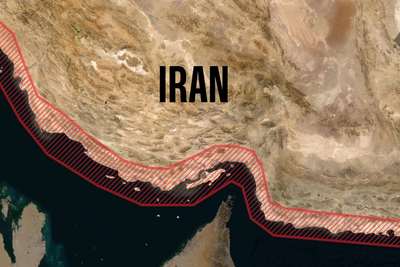
Pezeshkian says Israel held missile advantage in 12-day war

Dec 18, 2025, 13:11 GMT+0

Iranian President Masoud Pezeshkian has acknowledged that Israel held a missile advantage during the June conflict between the two foes, while reaffirming Tehran’s commitment to maintaining and expanding its missile program.

Speaking on Thursday during a visit to South Khorasan province, Pezeshkian said that although Iran had launched missiles during the fighting, Israel’s arsenal proved superior in both quantity and capability.

“It is true that we had missiles, but their missiles were more numerous, more powerful, more precise and easier to deploy,” Pezeshkian said.

He added that it was the people who ultimately frustrated Israel, without elaborating.

Pezeshkian rejected calls for Iran to curb its missile program, framing it as essential to national defense.

“They tell us not to have missiles, while they arm Israel to the teeth so it can come here whenever it wants, raze everything and leave,” he said. “I will not accept that.”

  • Iran's buoyant missile arsenal vexes Israel, analysts say

    Iran's buoyant missile arsenal vexes Israel, analysts say

US officials have said any talks with Tehran would hinge on sweeping conditions that include Iran ending uranium enrichment and dismantling key parts of its nuclear program, curbing or accepting limits on its missile program, and rolling back support for regional proxy forces.

The missile issue is politically charged in Tehran after the June conflict, in which Israel relied heavily on layered air and missile defenses – alongside US support – to blunt waves of Iranian ballistic missiles and drones, while still suffering some strikes that penetrated defenses.

Iran looks to Tunisia as it seeks new regional footholds - Atlantic Council

Dec 18, 2025, 11:38 GMT+0

Iran is seeking to deepen ties with Tunisia as it looks to rebuild regional influence after recent setbacks, according to an Atlantic Council analysis published on Wednesday.

The report said an expansion of relations in North Africa would strengthen Tehran at a time when it has been weakened by losses to its leadership and regional allies, adding that closer ties would reinforce “the Iranian regime and its so-called Axis of Resistance, now looking for avenues to rebuild its regional standing and power.”

It said Tunisia’s leadership also sees political benefit in closer alignment with Iran, noting that deepening relations would serve President Kais Saied’s agenda by allowing him to “retain legitimacy while continuing his wide-scale crackdown on Tunisia’s institutions,” while reinforcing his anti-West posture.

  • Iran sought to surveil Israeli embassies in Africa for potential attacks

    Iran sought to surveil Israeli embassies in Africa for potential attacks

  • Iran-linked network in Chad trained Africans to target Israelis - Infobae

    Iran-linked network in Chad trained Africans to target Israelis - Infobae

The analysis said Tunisia could also offer strategic value for Iran beyond economic ties, warning that Tunis “may represent a safe haven for Iran-supported Hamas operatives” if pressure increases on other countries hosting the group’s leadership.

In September, Israeli broadcaster i24 reported that the US and Israel were holding discussions, with indirect involvement from Iran and other states, over a possible plan to relocate senior Hamas leaders from Gaza to Tunisia, citing security sources, though the talks and their scope have not been independently confirmed.

Iran uses covert networks to evade aviation sanctions - report

Dec 18, 2025, 10:33 GMT+0

Iran has built a covert network to keep its aviation sector operating despite sweeping international sanctions, using front companies, smuggling routes and deceptive flight practices, according to a joint report by the Institute for National Security Studies and ColEven.

The report said Iran operates “a sophisticated, law-evading mechanism to support its aviation industry,” relying on shell and front companies in countries with limited transparency, including parts of Africa, Southeast Asia and Central Asia, to acquire aircraft and components and transfer them rapidly to avoid detection.

Aircraft are moved through layered ownership structures and “burst activity” transfers before filing flight plans that pass near Iran, allowing planes to enter Iranian airspace and make “fabricated critical malfunction” emergency landings, after which they are absorbed into Iranian fleets, the report said.

It said airlines such as Mahan Air and Qeshm Fars Air function as logistical arms of the Islamic Revolutionary Guard Corps, operating under the Quds Force to move weapons, equipment and funds to regional proxy groups, adding that the sector has shifted “from a civilian transportation tool to a core component of the regime’s economic and security strategy.”

  • Iran adds 11 aircraft to civil aviation fleet - IRGC media

    Iran adds 11 aircraft to civil aviation fleet - IRGC media

  • Leaked Russian files show Iran’s €6bn plan to buy 48 Russian fighter jets

    Leaked Russian files show Iran’s €6bn plan to buy 48 Russian fighter jets

  • Iran receives Russian MiG-29 jets, expects more advanced systems, lawmaker says

    Iran receives Russian MiG-29 jets, expects more advanced systems, lawmaker says

The report said sanctions have severely degraded Iran’s civil aviation, with about 60% of passenger aircraft grounded and the average fleet age at around 28 years, forcing airlines to cannibalize planes for spare parts and rely on smuggling networks to remain operational.

It added that the aviation sector illustrates “a sophisticated integration of state, market, and underground networks that operate in regulatory gray zones and disrupt efforts to globally enforce the sanctions,” even after the UN Security Council reimposed sanctions under the snapback mechanism and the US maintained broad restrictions under laws such as IFCA, ISA and CAATSA.