• العربية
  • فارسی
Brand
  • Iran Insight
  • Politics
  • Economy
  • Analysis
  • Special Report
  • Opinion
  • Podcast
  • Iran Insight
  • Politics
  • Economy
  • Analysis
  • Special Report
  • Opinion
  • Podcast
  • Theme
  • Language
    • العربية
    • فارسی
  • Iran Insight
  • Politics
  • Economy
  • Analysis
  • Special Report
  • Opinion
  • Podcast
All rights reserved for Volant Media UK Limited
volant media logo

Iran looks to Tunisia as it seeks new regional footholds - Atlantic Council

Dec 18, 2025, 11:38 GMT+0
 Iranian Foreign Minister Abbas Araghchi and Tunisian Foreign Minister Mohamed Ali Nafti, September 2025.
Iranian Foreign Minister Abbas Araghchi and Tunisian Foreign Minister Mohamed Ali Nafti, September 2025.

Iran is seeking to deepen ties with Tunisia as it looks to rebuild regional influence after recent setbacks, according to an Atlantic Council analysis published on Wednesday.

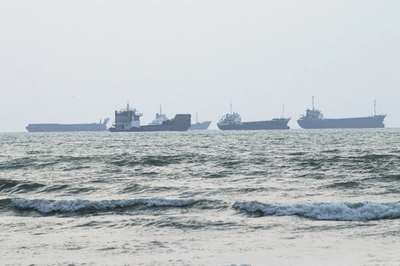
The report said an expansion of relations in North Africa would strengthen Tehran at a time when it has been weakened by losses to its leadership and regional allies, adding that closer ties would reinforce “the Iranian regime and its so-called Axis of Resistance, now looking for avenues to rebuild its regional standing and power.”

It said Tunisia’s leadership also sees political benefit in closer alignment with Iran, noting that deepening relations would serve President Kais Saied’s agenda by allowing him to “retain legitimacy while continuing his wide-scale crackdown on Tunisia’s institutions,” while reinforcing his anti-West posture.

The analysis said Tunisia could also offer strategic value for Iran beyond economic ties, warning that Tunis “may represent a safe haven for Iran-supported Hamas operatives” if pressure increases on other countries hosting the group’s leadership.

In September, Israeli broadcaster i24 reported that the US and Israel were holding discussions, with indirect involvement from Iran and other states, over a possible plan to relocate senior Hamas leaders from Gaza to Tunisia, citing security sources, though the talks and their scope have not been independently confirmed.

Most Viewed

Iran negotiators ordered to return after internal rift over Islamabad talks
1
EXCLUSIVE

Iran negotiators ordered to return after internal rift over Islamabad talks

2
INSIGHT

Iran's digital economy battered by prolonged blackout

3
ANALYSIS

US blockade enters murky phase as tankers spoof signals and buyers hesitate

4
ANALYSIS

Why the $100 billion Hormuz toll revenue is a myth

5

US tightens financial squeeze on Iran, warns banks over oil money flows

Banner
Banner

Spotlight

  • Hardliners push Hormuz ‘red line’ as US blockade tests Iran’s leverage
    INSIGHT

    Hardliners push Hormuz ‘red line’ as US blockade tests Iran’s leverage

  • Ideology may be fading in Iran, but not in Kashmir's ‘Mini Iran'
    INSIGHT

    Ideology may be fading in Iran, but not in Kashmir's ‘Mini Iran'

  • War damage amounts to $3,000 per Iranian, with blockade set to add to losses
    INSIGHT

    War damage amounts to $3,000 per Iranian, with blockade set to add to losses

  • Why the $100 billion Hormuz toll revenue is a myth
    ANALYSIS

    Why the $100 billion Hormuz toll revenue is a myth

  • US blockade targets Iran oil boom amid regional disruption
    ANALYSIS

    US blockade targets Iran oil boom amid regional disruption

  • Iran's digital economy battered by prolonged blackout
    INSIGHT

    Iran's digital economy battered by prolonged blackout

  • Iran-linked network in Chad trained Africans to target Israelis - Infobae

    Iran-linked network in Chad trained Africans to target Israelis - Infobae

  • Iran sought to surveil Israeli embassies in Africa for potential attacks

    Iran sought to surveil Israeli embassies in Africa for potential attacks

•
•
•

More Stories

Iran uses covert networks to evade aviation sanctions - report

Dec 18, 2025, 10:33 GMT+0

Iran has built a covert network to keep its aviation sector operating despite sweeping international sanctions, using front companies, smuggling routes and deceptive flight practices, according to a joint report by the Institute for National Security Studies and ColEven.

The report said Iran operates “a sophisticated, law-evading mechanism to support its aviation industry,” relying on shell and front companies in countries with limited transparency, including parts of Africa, Southeast Asia and Central Asia, to acquire aircraft and components and transfer them rapidly to avoid detection.

Aircraft are moved through layered ownership structures and “burst activity” transfers before filing flight plans that pass near Iran, allowing planes to enter Iranian airspace and make “fabricated critical malfunction” emergency landings, after which they are absorbed into Iranian fleets, the report said.

It said airlines such as Mahan Air and Qeshm Fars Air function as logistical arms of the Islamic Revolutionary Guard Corps, operating under the Quds Force to move weapons, equipment and funds to regional proxy groups, adding that the sector has shifted “from a civilian transportation tool to a core component of the regime’s economic and security strategy.”

  • Iran adds 11 aircraft to civil aviation fleet - IRGC media

    Iran adds 11 aircraft to civil aviation fleet - IRGC media

  • Leaked Russian files show Iran’s €6bn plan to buy 48 Russian fighter jets

    Leaked Russian files show Iran’s €6bn plan to buy 48 Russian fighter jets

  • Iran receives Russian MiG-29 jets, expects more advanced systems, lawmaker says

    Iran receives Russian MiG-29 jets, expects more advanced systems, lawmaker says

The report said sanctions have severely degraded Iran’s civil aviation, with about 60% of passenger aircraft grounded and the average fleet age at around 28 years, forcing airlines to cannibalize planes for spare parts and rely on smuggling networks to remain operational.

It added that the aviation sector illustrates “a sophisticated integration of state, market, and underground networks that operate in regulatory gray zones and disrupt efforts to globally enforce the sanctions,” even after the UN Security Council reimposed sanctions under the snapback mechanism and the US maintained broad restrictions under laws such as IFCA, ISA and CAATSA.

‘No future at home': Iranians weigh migration as survival strategy

Dec 18, 2025, 09:34 GMT+0

Iranians across generations increasingly see migration not as a dream but as an escape from a future that feels out of reach, a survival strategy driven by economic collapse, shrinking opportunities, and a sense of confinement they say follows them both at home and abroad.

Ahead of International Migrants Day, Iran International asked its audience to submit messages responding to questions about migration: the challenges, opportunities, and lessons it has brought, and whether – if they could go back – they would choose migration again.

Many respondents described leaving Iran not as a free decision but as a reaction to conditions they say have stripped away the possibility of a normal life.

One respondent rejected the term “migration” outright, writing that leaving Iran was “an escape from the prison of the mullahs’ regime” and “the prison of the Islamic Republic government.”

Another, a 51-year-old specialist doctor, said that if he had known how bad conditions would deteriorate and how far the status of doctors would fall, he would “definitely” have considered emigrating.

Some contrasted today’s crises with memories of a more prosperous past, citing Canada as one of the top destinations for Iranians and arguing that “the conditions Canada has today, we had in our country 50 years ago, with every comfort and excellent facilities.”

Others described migration through direct comparisons between life inside and outside Iran, focusing on differences in standards of living, prices, and the quality of goods.

  • Iran's president warns of brain drain as youth look abroad

    Iran's president warns of brain drain as youth look abroad

Youth without prospects

Younger voices described a generation stuck between an unlivable economy at home and closed doors abroad, as the rial’s collapse and soaring prices erase prospects for housing, cars, further study, and family life.

One 35-year-old who once studied in Spain but was forced back as the euro jumped from 4,000 to about 130,000 rials said life in Iran has become “hell,” that he suffers severe depression, and that “we young people in Iran no longer have any motivation to continue.”

He said the exchange-rate shock effectively closed the path to migration and spoke of an economic dead end and an inability to buy a home, continue studying, or build a future – an outcome he said led to “severe depression.”

Several respondents said they would migrate “without a second’s hesitation” if they had the money, while others said they were planning to move to the UK or Nordic countries.

Some emphasized that money is central to the decision, saying they cannot afford to migrate even though they want to.

Others, unable to leave, spoke of holding university degrees while working as street vendors and pleaded for their voices to reach the world, saying the youth have been the main victims of the current system – in line with reports of rising anxiety and hopelessness among Iran’s educated middle class.

Among the messages, regret and longing featured prominently.

Several respondents said that if they could return to the past, they would have migrated decades earlier to secure their children’s futures.

One said waiting for “promises” had ended in what he called “valleys of misery.”

Internal migration also appeared in the accounts, with moves from smaller towns to major cities described by some as improving children’s education and quality of life – though others said such moves would only be truly desirable if resources and opportunities were distributed more evenly across the country.

“In 2001, I migrated within the country to a bigger city and, despite the initial difficulties, I am very satisfied. It had a profound impact on my children’s education and other aspects,” one respondent said.

No easy way back

Those who did leave described the shock of adapting to new countries but also the relief of everyday freedoms, like going out with friends without fearing that police or security forces will stop them or harass women over hijab.

Others said migration, while an opportunity for some, was experienced by many as coercion, a forced choice, and an escape from daily crises under the shadow of the Islamic Republic, while for another group it remained an unattainable dream that grows more distant under economic and political pressure.

“I’ve wanted to leave for many years, but from what I’ve heard, many people have died on the way. Going illegally has many troubles, and there’s always the risk of being deported,” another respondent said.

One said that seeing officers mistreat women fuels fantasies of violent revenge, yet concern for family holds them back, another sign of the psychological toll of living under constant pressure.

Some who had migrated described it as a difficult path with no return.

“Migration is not a good thing; it’s a hard experience. As for me, I’m never going back,” one respondent said.

US senate passes intelligence bill with measures targeting Iran threats

Dec 18, 2025, 02:59 GMT+0

The US Senate on Wednesday passed the Fiscal Year 2026 Intelligence Authorization Act as part of the National Defense Authorization Act, sending it to President Trump for signature.

The bipartisan bill includes provisions to counter Iranian threats, such as increased congressional transparency on Iran's uranium enrichment activities and potential weaponization decisions.

“I am also pleased that this bill... includes directing necessary resources towards defending our nation from the threats posed by Iran,” Republican senator Tom Cotton said in a joint statement with ranking member Senator Warner.

The intelligence bill requires US intelligence to warn American citizens of lethal threats from Iran and directs resources to defend against “Iranian threats.”

It also codifies travel restrictions on Iranian diplomats in the US, alongside those for Chinese, Russian, and North Korean diplomats.

Additional resources are directed toward defending the United States against various Iranian threats, including cyberattacks, proxy militias, and assassination plots.

Democratic Senator Mark Warner praised the overall bill for providing essential resources, authorities, and robust congressional oversight to the intelligence community.

“I thank my colleagues and am glad to see this bill pass once again on a strong bipartisan basis,” Senator Warner said in the joint statement.

The National Defense Authorization Act funds US defense for 2026, while Intelligence Authorization Act embedded within ensures intel focus on global threats like Iran and China.

Jailed Nobel laureate's lawyer says she will refer Iran to ICC

Dec 18, 2025, 01:03 GMT+0

The France-based lawyer for jailed Nobel laureate Narges Mohammadi said on Wednesday she will ask the International Criminal Court to investigate alleged crimes by Iran including the sudden death of a rights lawyer this month.

Mohammadi herself is in Iranian custody after she was arrested at the memorial ceremony for Khrosrow Alikordi in Mashhad last week, who long campaigned against executions and prison mistreatment before his death.

Shirin Ardakani, her lawyer in France, told Iran International on Wednesday she is preparing to send a report to the ICC prosecutor in The Hague, urging an inquiry into what she described as serious violations committed by Iranian authorities.

Ardakani said the submission will highlight Alikordi’s death as part of a wider pattern of abuses targeting dissidents, prisoners and their legal representatives.

According to a post on Mohammadi's official X account, she was able to reach supporters during a brief phone call from prison in which she saidshe was beaten with batons during her arrest on Friday and has since been taken to the emergency room twice due to the severity of her injuries.

Alikordi, 46, was found dead under unclear circumstances, prompting some attorneys and activists to suggest possible Iranian government involvement.

Officials have suggested he suffered a heart attack, but relatives, colleagues, and rights groups have raised doubts, pointing to reports of injuries, blood at the scene, and removed security cameras.

Fellow lawyer Marzieh Mohebbi wrote on X that Alikordi died from a blow to the head, according to what she called trusted contacts. Security officers, she said, removed cameras from the area and that access to his family had become impossible.

“The ultimate goal is for Iran to one day be held accountable for these crimes,” Ardakani said. “Exposing crimes is not a crime. Arbitrary arrests, blinding protesters, using the death penalty to silence dissent and systematic violence are part of Iran’s record over decades – and those who speak about this reality are innocent.”

The Norwegian Nobel Committee condemned Mohammadi’s arrest last week and called on Tehran to specify Mohammadi’s place of detention, ensure her safety and well-being, and release her unconditionally.

Israel’s Bennett confirms Telegram account hacked but phone not breached

Dec 17, 2025, 23:17 GMT+0

Former Israeli prime minister Naftali Bennett confirmed that his Telegram account was hacked but insisted his phone was not accessed, the Jerusalem Post reported on Wednesday.

Bennett said in a statement that the device linked to the compromised account is no longer in use, according to the report.

Earlier in the day, the group, calling itself “Handala” and linked to Iran’s intelligence ministry, alleged it had hacked what it described as Bennett’s iPhone 13 as part of what it called “Operation Octopus.”

It went on to publish a link it said reveals a trove of private communications it extracted from his device.

The name appears to reference Bennett’s own long-standing description of Iran as “the head of the octopus,” with regional allied militant groups as its arms.

In an open letter, the group taunted Bennett, writing: “You once prided yourself on being a beacon of cybersecurity ... Yet, how ironic that your own iPhone 13 has fallen so easily to the hands of Handala.”

“Consider this a warning and a lesson. If your personal device can be compromised so effortlessly, imagine the vulnerabilities that lurk within the systems you once claimed to protect,” the group added.

Handala published a series of files on its website and Telegram channel that it said were taken from the compromised device.

The group claimed it had gained access to private correspondence and contact information, publishing what it said were phone numbers linked to Bennett and to Avia Sassi, whom it described as a close associate.

Handala further claimed that the materials included private chats spanning several years, covering political coordination, candidate selection and, later, security-related concerns following the October 7 attack by Hamas militants on Israel.

Before the statement by Bennett’s office was released, Israel Hayom reported that Bennett’s office initially told the paper that it was "unaware of such an event." According to the report, Bennett’s security team said the matter is being handled by Israeli security and cyber authorities, that the device in question is not currently in use.

The report quoted Shai Nahum, a cyber warfare expert who reviewed the materials released by the group, said the data was unlikely to have originated from Bennett’s personal phone.

"According to forensic analysis of the leaked files, there is a high probability that this is not Bennett's phone, but apparently that of one of his associates," Nahum said.

Handala's claim comes a day after the group said it was offering a $30,000 reward for information related to Israel’s military sector after releasing material it said identified people involved in designing Israeli missile defense systems.

Who is Handala?

Handala is widely described by cybersecurity researchers and Western officials as tied to Iran’s Ministry of Intelligence.

It derives its name from a character created by Palestinian cartoonist Naji al-Ali. A barefoot boy in patched trousers, Handala represented Palestinian dispossession.

Researchers say the group operates as part of a broader cyber unit known as Banished Kitten, also referred to as Storm-0842 or Dune, which they link to the ministry’s Domestic Security Directorate.

The group has been linked to cyber operations against Israeli infrastructure and public institutions for around two years.

In January, it claimed responsibility for a cyberattack on Israeli kindergartens that disrupted public address systems at about 20 locations. In August, the group was linked to hacks targeting multiple Israeli entities, including academic institutions, technology firms, media outlets and industrial companies.

Handala has also been linked to cyber operations targeting Iran International, a London-based Persian-language broadcaster.