Iran-linked network in Chad trained Africans to target Israelis - Infobae
Iranian ambassador Ali Tiztak presents his credentials to Chadian President Mahamat Déby on June 25, 2025
Interrogations of rebels detained in Chad uncovered an Iran-backed network recruiting and training Africans to target Western and Israeli interests, Argentina's Infobae online newspaper reported citing Chadian officials.
Chad dismantled two networks accused of being tied to Iran, the report said quoting Chadian security forces.
Officials described a strategy of infiltration, indoctrination and promises of support for coups aimed at expanding Tehran’s influence in Africa.
According to Infobae, the interrogations detailed how the Revolutionary Guard's Quds Force and Iran’s Ministry of Intelligence and Security (MOIS) allegedly recruit and train African citizens for operations targeting Western and Israeli interests.
Déby visited Israel to open Chad’s new embassy in the country, where he also made a rare stop at Mossad headquarters, a signal that the renewed ties carry national-security weight.
The alleged push for influence in Chad is not an isolated case, as Iran has been reportedly sending military equipment to Chad's eastern neighbor Sudan whose army is fighting against the UAE-backed Rapid Support Forces.
Iran's alleged recruitments in Chad
The Infobae report says one of those detained by Chadian authorities admitted to investigators that he had been recruited by Iran's intelligence ministry. The detaine, identified as Ali Abdoulaye Mahamat, said the process began after studying at the Al-Mustafa International University in Iran's Qom.
Mahamat told authorities he met Iranian intelligence officers in hotels in 2022 and 2023. He said he was instructed to identify American, Israeli and French activity, recruit new members and map links between local rebel groups and Iranian handlers, according to the report.
He also described an intelligence officer named Karim, who he said escorted him to hotels, restaurants and secret locations and confiscated his phone. Mahamat told officials Karim demanded detailed information on foreign military movements and intelligence services operating in Chad.
•
•
Pressed by his handlers, Mahamat said he eventually provided names of Chadian intelligence officers and individuals allegedly in contact with Israelis.
Chad’s authorities say another detainee, Abdoulaye Ahmat Sheikh Alamine, confessed to being recruited by the Quds Force. During his interrogation, he said the cell he belonged to was directed by Department 400, which operates in Iraq, Africa and other regions.
He told investigators he received weapons training — including Kalashnikovs, RPGs and KFX systems — and traveled to Iraq under the guise of religious trips, where the group met Iranian contacts and trained alongside Shia militias, according to the report.
Mahamat also told investigators that MOIS officers posing as Iranian Foreign Ministry representatives instructed him to collect information on international presence in Chad, recruit assets for military training and assess the needs of rebel groups such as FACT.
According to Infobae, Chad’s security services say the revelations show a coordinated Iranian approach combining religious indoctrination, military training and promises of political power in exchange for attacks on Western and Israeli interests.
Chadian officials told the outlet their operations disrupted, at least temporarily, what they describe as Tehran’s efforts to expand influence and destabilize the region.
Last month, Iran International revealed an alleged Iranian plot targeting the Israeli embassy in Senegal and Israeli personnel in Uganda, which were thwarted by Mossad.
The operation was directed by the Quds Force, the IRGC’s overseas arm, which relied on a proxy network of Pakistani and Bangladeshi nationals based in Iran, alongside locally recruited operatives in Africa — many of whom were said to have been enlisted through social media.
Gulf Cooperation Council Secretary-General Jasem Mohamed Albudaiwi urged Iran to take to build trust with its neighbors and stop policies that undermine stability in the Middle East.
“Nobody in the GCC wants Iran to go down the drain,” Albudaiwi said at a panel titled Iran and the Changing Regional Security Environment during the Doha Forum 2025.
“We are here to talk about the present and the future – how to make our region as peaceful, as stable, as prosperous as possible along with our brothers and sisters in Iran.”
He said the GCC seeks a cooperative relationship with Iran based on dialogue, respect for the UN Charter, and non-interference in regional affairs. “We need to take the right steps towards trust-building measures,” he said.
“But there are really serious measures that we would like our brothers in Iran to take. The policies that Iran sometimes take really shake the stability of the region.”
Albudaiwi cited Iran’s support for Yemen’s Houthi group as an example of destabilizing activity and said Arab states astride the Persian Gulf had already taken steps toward de-escalation, including Saudi Arabia’s 2023 normalization agreement with Tehran and mediation efforts by Oman.
“We have put the right steps toward Iran,” he said. “What the GCC wants from Iran is simple and basic – like any normal neighborhood.”
He described Iran as part of the region’s shared culture and history but said progress required concrete change. “Iran is our neighbor, our history, our culture,” Albudaiwi said. “We have so much to share with Iran. It’s the present and the future that we should concentrate on.”
Meanwhile former Iranian foreign minister Mohammad Javad Zarif said Iran remains resilient despite recent challenges, stressing that the country has endured hardship throughout its history.
“We’ve had our ups, and certainly today is not one of our ups,” Zarif said at the Doha Forum. “Iran has gone through storms for almost seven millennia – we’ve been invaded, we’ve been occupied, but we never went down the drain. We are still standing up and we will continue to stand up.”
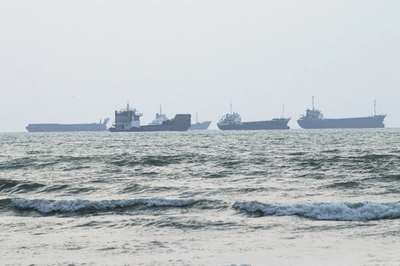
The commander of Iran’s Revolutionary Guard Navy said a new missile tested during this week’s naval exercises has a range exceeding the length of the Persian Gulf, without specifying the exact distance.
“The Persian Gulf is 1,375 kilometers long – this missile’s range is beyond that,” Rear Admiral Alireza Tangsiri said in an interview with state television. He added that the weapon, built by the IRGC Navy, is fully indigenous and “can be guided after launch.”
His remarks came as the IRGC carried out the second phase of its naval drill, which began Thursday with ballistic and cruise missile fire at targets in the Oman Sea. State media said the exercise also included drone operations and air defense maneuvers around the Strait of Hormuz and Iran’s southern islands.
Tangsiri said all weapons used in the drill were domestically made, including a new ballistic missile with “very high precision.” “Our enemies have seen its accuracy,” he said.
Iran’s missiles have a declared range of up to 2,000 kilometers, which officials say is sufficient for deterrence and covers Israel. The United States and its allies have called on Tehran to restrict missile development to under 500 kilometers, a demand Iran has repeatedly rejected.
The editor-in-chief of Iran’s hardline daily Kayhan, overseen by Supreme Leader Ali Khamenei, said Bahrain’s “main demand” is reunification with Iran, stepping up Tehran’s response to a recent GCC statement on the three disputed Persian Gulf islands.
Hossein Shariatmadari wrote that Bahrainis seek a “return to the main and mother homeland,” going beyond Iran’s usual rejection of GCC references to Abu Musa and the Greater and Lesser Tunbs.
“This undeniable right of Iran and the people of its separated province cannot and should not be ignored,” he said.
His remarks followed a GCC communiqué issued Wednesday that reaffirmed support for Emirati claims over the islands and called for negotiations or referral to the International Court of Justice. Such statements often prompt formal Iranian protests or diplomatic summonses.
Kayhan links GCC stance to foreign alignment
Shariatmadari accused Persian Gulf states of acting under Western pressure and cited 19th-century British maps to argue Iran’s continuous sovereignty over the islands. He described Bahrain’s separation as a result of foreign intervention and said consultations with tribal leaders did not amount to a true referendum.
His remarks ventured beyond standard Iranian diplomatic messaging, which generally restricts itself to sovereignty claims dating to 1971 and rejects third-party arbitration. By reviving the Bahrain question – largely absent from formal diplomacy for decades – the column broadened the dispute at a moment when GCC statements increasingly pair the islands with Saudi-Kuwaiti positions on the offshore Arash/Durra gas field.
GCC communiqués regularly reprise both issues, while Iran emphasizes territorial “red lines” and warns neighbors against what Tehran describes as misreading its posture in the Persian Gulf.
A senior foreign policy adviser to Iran’s Supreme Leader Ali Khamenei on Friday questioned whether a military offensive by Yemeni allies of the United Arab Emirates served the United States and accused Abu Dhabi of imperialist aggression.
Ali Akbar Velayati's remarks on X were a rare sharp public rebuke to one of Iran's Arab neighbors across the Persian Gulf, with whom Tehran has long feuded but has shifted toward detente in recent years as pressure from the United States and Israel mounted.
The Southern Transitional Council, a separatist force in Yemen which has long been backed by Abu Dhabi, jolted the stalemated conflict in that country this week.
Their surprise march on oil-rich southeastern territory aims to strengthen their bid to revive an independent state of South Yemen.
The armed Houthi movement, a foe of the STC, is not directly challenged by the latest fighting but their patrons in Tehran appear rattled.
"The government of the UAE must be asked: What were you doing in Yemen?" Velayati wrote. "Are you also interested in claiming ownership of the Bab al-Mandeb Strait? Why did you occupy the island of Socotra, and what was its connection to America’s maritime ambitions? Do you also claim ownership over this island and over the Strait of Hormuz?"
Ali Akbar Velayati, a senior adviser to Iran's supreme leader Ali Khamenei, who served as first foreign minister after the 1979 Revolution.
Velayati is a veteran stalwart of high level decision-making circles in the Islamic theocracy and his statements are widely viewed to reflect Khamenei's thinking.
The oil-rich Emirates, a tourism and trade hub, sees itself as a rising regional power and has backed allies in conflicts marring Libya, Sudan, Somalia and Yemen.
It maintains a military presence on the remote Arabian Sea island of Socotra and has economic interests in ports in Djibouti and the breakaway republic of Somaliland.
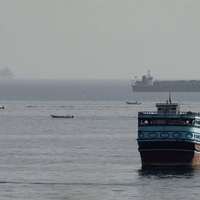
Joining a regional conflagration pitting Iran's armed allies against Israel, the Houthis in Yemen launched attacks on international shipping for two years until a Gaza ceasefire in October in the Red and Arabian seas connected by the Bab al-Mandab strait.
The United States and its Persian Gulf allies viewed the attacks as a bid to expand Iranian hegemony in the strategic chokepoint leading to the Suez Canal.
Washington, in an annual national security assessment released earlier on Friday, downplayed the threat from Iran after US attacks on its nuclear facilities in June but vowed to keep the Straight of Hormuz open.
Tehran officials have repeatedly vowed to close the waterway, through which much of the world's energy exports from both Iran and the Arabian Peninsula flows, in the event of a conflict.
'Fantastical transnational empire'
Velayati went on to accuse Abu Dhabi of killing Muslims in a bid to build a regional empire in connivance with a Western colonial agenda.
"The blood of tens of thousands of Muslims in Yemen — and now in Sudan — has been spilled as a result of your expansionist policies. It must now be asked: What does the UAE want from Sudan," he said. Will you answer whether you are cooperating with Britain in Sudan or not?
"Why, in the view of many analysts, do your actions raise suspicions of an attempt to build a 'fantastical transnational empire'?" he added.
Sun sets over Iran's island of Abu Musa in the Persian Gulf
Tehran and Abu Dhabi have long been at loggerheads over three Persian Gulf islands controlled by Iran since 1971 but claimed by the United Arab Emirates.
Greater Tunb, Lesser Tunb and Abu Musa islands have been held by Tehran since they were seized by the Shah after the withdrawal of British forces from the region. Voices across the fractured Iranian political spectrum reject UAE claims, which are backed by Europe and the United States.
"Are your repeated empty claims regarding the Iranian islands also part of this cooperation with colonial powers?" Velayati continued. "How can anyone claim ownership of Abu Musa, which belonged to Iran thousands of years before the formation of the United Arab Emirates?"
"The patience of the Iranian people is not unlimited."
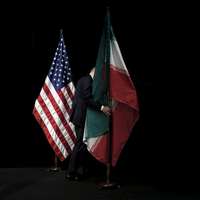
US Special Envoy for Syria Tom Barrack said that Washington did not seek to overthrow Iran's ruling system in a wide-ranging interview published on Friday in which he called on Tehran to restart talks over its nuclear program.
“My bosses, President Trump and Secretary Rubio, are not into regime change. They are into a regional solution left to the region itself. That issue was Israel’s. What President Trump stepped in to do in that 12-day war ending was historic. It was amazing,” Barack said.
He was speaking in an interview with the UAE-based IMI Media Group, published on The National newspaper website on Friday.
The envoy, a former real estate investor of Lebanese ancestry, said the Trump administration wants Tehran to engage in a genuine dialogue on its disputed nuclear program and suggested Iran had stalled an agreement.
“I think our president has been clear. He is open to real discussions. He is not open to senselessly kicking the can down the road, and he knows the program,” Barrack added.
“If the Iranians want to listen to what this administration is saying on enrichment, on stopping funding of the proxies, it is the answer.”
Donald Trump has set three conditions for Iran to meet before starting negotiations with Washington: zero uranium enrichment, an end to backing Tehran's armed allies in the region and curbs to its missile program. Tehran sees the terms as a non-starter.
“Our president is smart enough to know that baiting him just to get a dialogue and continuing this senseless killing through surrogates is not going to happen. So I think he is 100% available to it,” Barrack said. “We have the hope that Iran is available to it. Either way, it’s the fastest road to a solution in this region.”
'No regime change'
Barrack criticized the past pro-regime change policy in the region, saying that since 1946 there have been 93 regime changes and coups, none of which succeeded, including two in Iran.
“For (Trump) then to be imputed with regime change, we had two regime changes in Iran already. Neither one worked. So I think wisely leave it to the region to solve. Why is it Israel did not finish the job? We are not at the end yet. It is chapter five, and we have five more chapters to go.”
The United States held five rounds of negotiations with Iran over its nuclear program earlier this year, for which Trump set a 60-day deadline.
When no agreement was reached by the 61st day on June 13, Israel launched a surprise military offensive, followed by US strikes on June 22 targeting key nuclear facilities in Isfahan, Natanz and Fordow.
Both Israeli and Iranian officials have vowed a devastating military effort against their foe in the event of a renewed conflict.