Tehran media break silence on war’s toll on livelihoods
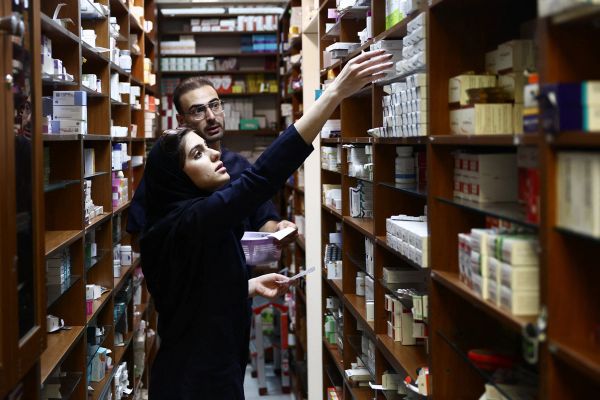
Iranian media are now openly discussing the war’s impact on livelihoods—a subject largely avoided until recently, when journalists resorted to indirect language to navigate censorship.

Iranian media are now openly discussing the war’s impact on livelihoods—a subject largely avoided until recently, when journalists resorted to indirect language to navigate censorship.

US intelligence agencies assess that recent military action has caused only limited additional damage to Iran’s nuclear program, Reuters reported Monday, leaving Tehran’s potential timeline to produce a weapon largely unchanged.

Exclusive information obtained by Iran International points to a growing clash between Iran’s President Masoud Pezeshkian and its military leadership over Monday’s escalation in the Persian Gulf and attacks on the United Arab Emirates.

Iran has paired a sharp escalation on the water with increasingly explicit threats, signaling what appears to be a deliberate move to deter further US attempts to reopen shipping through the Strait of Hormuz.

Iran's security agents secretly buried the body of Iranian-Swedish citizen Kourosh Keyvani in the Khavaran area outside Tehran after he was executed in March on charge of spying for Israel, sources familiar with the matter told Iran International.

British couple Lindsay and Craig Foreman, sentenced to 10 years in prison on espionage charges in Iran, have been barred from visiting each other in Tehran’s Evin prison for three weeks, sources familiar with the matter told Iran International.

US President Donald Trump could pursue major military action against Iran if talks do not soon produce the outlines of an achievable deal, Axios reported on Monday, citing a senior US official.

As Iran has experienced a systematic disruption of the international internet for 65 days, access to the free flow of information has turned into a luxury and a symbol of structural inequality, a crisis that has triggered a new wave of migration – migration for internet access.

One thing never stops here: executions. War or no war, talks or no talks, crisis or calm, the machinery moves at its own pace: steady and unbroken, as if insulated from everything else.

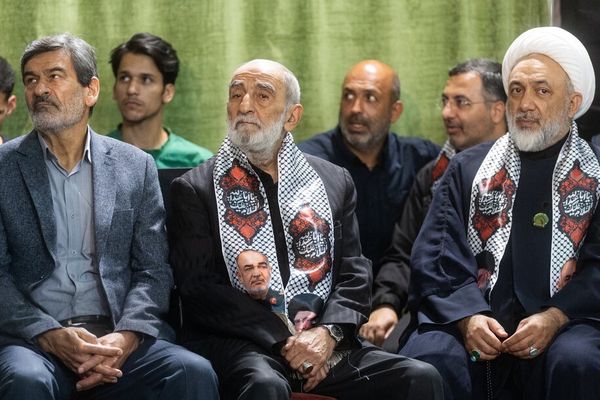
The war with the United States and Israel has exposed unusually open divisions within Iran’s clerical establishment, with hardline calls for escalation clashing with warnings over the cost of continued conflict.

The Islamic Republic executed another political prisoner in Urmia prison on Sunday, the judiciary reported, identifying him as Mehrab Abdollahzadeh.

Iranian lawmakers say Israeli vessels will be permanently barred from the Strait of Hormuz and ships from the United States and its allies would be allowed through only if they pay war reparations, under a proposed plan to place the waterway under Iranian “management.”

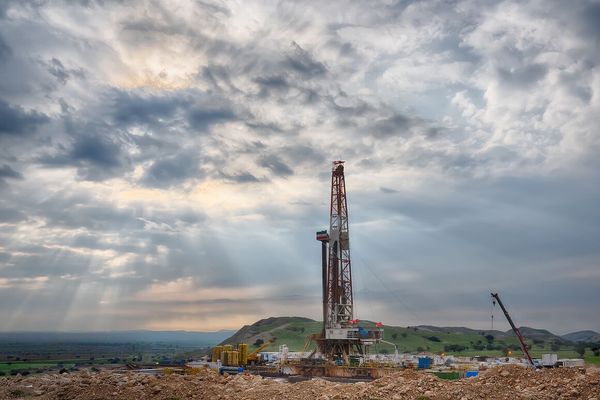
Iran has begun curbing oil production as the US naval blockade tightens around its oil trade, with exports plunging, storage filling and tankers gathering near the country’s main export hub, Bloomberg reported.

Iran is facing accusations of supplying attack drones to Sudan’s army as the country’s civil war enters its fourth year, with US officials and analysts warning that drone strikes are increasingly hitting civilians, hospitals, schools and aid operations, Fox News reported.

The most important question in Tehran may also be the one least possible to answer with confidence: who is making decisions?

The Canadian opposition has accused the government of bypassing its own rules after Iran International reported that an IRGC-linked Iranian football official was granted special permission to enter the country despite being inadmissible.

Iran executed two more men on Saturday after the Supreme Court upheld their death sentences for spying for Israel and cooperating with the Mossad intelligence service.

Iran’s leadership is hardening its stance on the Strait of Hormuz, framing the waterway as a strategic and non-negotiable asset amid rising tensions and US pressure.

Any settlement of the Iran war that leaves the Revolutionary Guards in control would preserve the Islamic Republic's core of power and risk turning a military advantage for the US and Israel into a strategic defeat.

Iranian Nobel Peace Prize laureate Narges Mohammadi was urgently transferred from Zanjan Prison to a hospital on Friday after losing consciousness twice and suffering a severe deterioration in her health, her lawyer and the Narges Foundation said.

Rising prices for essential goods, inflation above 73%, and a surging dollar amid a fragile “no war, no peace” environment, US naval pressure, and political divisions have heightened concerns among some officials about internal instability.