• العربية
  • فارسی
Brand
  • Iran Insight
  • Politics
  • Economy
  • Analysis
  • Special Report
  • Opinion
  • Podcast
  • Iran Insight
  • Politics
  • Economy
  • Analysis
  • Special Report
  • Opinion
  • Podcast
  • Theme
  • Language
    • العربية
    • فارسی
  • Iran Insight
  • Politics
  • Economy
  • Analysis
  • Special Report
  • Opinion
  • Podcast
All rights reserved for Volant Media UK Limited
volant media logo

Israel’s military says it struck 15 weapons sites in Tehran overnight

Apr 1, 2026, 18:11 GMT+1

The Israeli military said on Wednesday its air force struck around 15 Iranian weapons production sites in Tehran overnight, including what it described as a central complex of the defense ministry used to develop advanced anti-aircraft missiles.

It said the strikes also targeted air defense systems, launch sites and facilities for the manufacturing and storage of ballistic and anti-aircraft missiles.

The military added that it has carried out more than 400 strikes across Iran in the past two days, using over 650 munitions.

Most Viewed

Ghalibaf defends Iran-US talks amid hardline backlash
1
INSIGHT

Ghalibaf defends Iran-US talks amid hardline backlash

2
INSIGHT

Iran diplomacy wobbles as factions compete to avoid looking soft on US

3
VOICES FROM IRAN

Bread shortages, soaring prices strain households in Iran, residents say

4
ANALYSIS

The politics of pink: how Iran uses cuteness to rebrand violence

5

War-hit homeowners feel abandoned as Iran’s reconstruction aid fades

Banner
Banner

Spotlight

  • Lights out, then gunfire: Witnesses recount Mashhad protest crackdown
    VOICES FROM IRAN

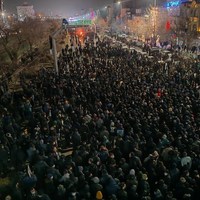
    Lights out, then gunfire: Witnesses recount Mashhad protest crackdown

  • Family told missing teen was alive, then received his body 60 days later
    EXCLUSIVE

    Family told missing teen was alive, then received his body 60 days later

  • Is Iran entering its Gorbachev moment?
    INSIGHT

    Is Iran entering its Gorbachev moment?

  • Iran crackdown reaches cemeteries as graves of slain protesters defaced
    EXCLUSIVE

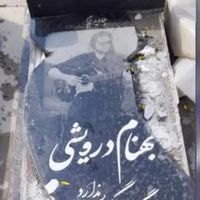
    Iran crackdown reaches cemeteries as graves of slain protesters defaced

  • Iran diplomacy wobbles as factions compete to avoid looking soft on US
    INSIGHT

    Iran diplomacy wobbles as factions compete to avoid looking soft on US

  • The politics of pink: how Iran uses cuteness to rebrand violence
    ANALYSIS

    The politics of pink: how Iran uses cuteness to rebrand violence

  • Bread shortages, soaring prices strain households in Iran, residents say
    VOICES FROM IRAN

    Bread shortages, soaring prices strain households in Iran, residents say

•
•
•

More Stories

US allies weigh sanctions on Iran if Hormuz remains closed - Bloomberg

Apr 1, 2026, 17:43 GMT+1

A coalition of US allies is preparing a diplomatic push to persuade Iran to reopen the Strait of Hormuz and is weighing potential sanctions if the waterway remains closed, Bloomberg reported.

British Foreign Secretary Yvette Cooper is set to chair a virtual meeting on Tuesday with counterparts from around 35 countries to discuss plans to restore freedom of navigation in the strait, the report said.

The United States is not expected to attend the meeting, it added.

When Iran’s war images become a battle of belief

Apr 1, 2026, 17:42 GMT+1

Aheated online dispute over photographs showing civilian victims of strikes in Iranian cities has exposed both the deep mistrust many Iranians feel toward official information and a widening rift among the public itself over how to interpret images emerging from the war.

As photos of wounded civilians circulated widely on social media, some users accused photographers and authorities of staging scenes for propaganda, claiming that individuals depicted in widely shared images were actors and that injuries, dust and distress visible in the photos had been artificially created using makeup and staged scenes.

The accusations spread quickly across Persian-language social media, with skeptics pointing to perceived similarities between people appearing in images linked to separate incidents as supposed evidence.

Even the Persian-language account of Israel’s foreign ministry weighed in on the controversy by reposting one of the disputed images and writing: “If they call the Gaza filmmaking industry ‘Pallywood’, what do they call this?”

Continue reading

US says 3,500 troops aboard USS Tripoli remain mission ready

Apr 1, 2026, 17:26 GMT+1

US Central Command said on Wednesday that daily operations and training are continuing for the 3,500 sailors and Marines aboard the USS Tripoli in its area of responsibility.

CENTCOM added that the forces are maintaining readiness and staying prepared for potential missions.

When Iran’s war images become a battle of belief

Apr 1, 2026, 17:21 GMT+1
•
Maryam Sinaiee

A heated online dispute over photographs showing civilian victims of strikes in Iranian cities has exposed both the deep mistrust many Iranians feel toward official information and a widening rift among the public itself over how to interpret images emerging from the war.

As photos of wounded civilians circulated widely on social media, some users accused photographers and authorities of staging scenes for propaganda, claiming that individuals depicted in widely shared images were actors and that injuries, dust and distress visible in the photos had been artificially created using makeup and staged scenes.

The accusations spread quickly across Persian-language social media, with skeptics pointing to perceived similarities between people appearing in images linked to separate incidents as supposed evidence.

Even the Persian-language account of Israel’s foreign ministry weighed in on the controversy by reposting one of the disputed images and writing: “If they call the Gaza filmmaking industry ‘Pallywood’, what do they call this?”

But the claims were soon challenged by fact-checkers and other users, and in some cases the accusations were later withdrawn.

Iran’s independent fact-checking platform Factnameh said a review of several of the controversial images found no evidence supporting claims that they had been staged or taken at different times and locations as alleged.

“Given the presence of debris and victims, the idea that actors were staged in such a scene is highly unlikely,” the platform said, noting that the individuals in the images show clear differences in facial features and body structure despite some similarities.

Mehdi Ghasemi, one of the photographers whose work came under scrutiny, rejected the allegations and defended his work.

“I’m 47 years old, and it’s been 33 years since I received my first documentary photography award, and I haven’t taken a single reconstructed or manipulated frame,” he wrote on X.

One user who had asserted that a woman in a widely circulated photograph was an actress later deleted the post and issued an apology after acquaintances identified the woman and her husband as real individuals whose home had been destroyed in the strikes.

The controversy has unfolded amid tight wartime restrictions on reporting and photography in Iran.

Critics argue that permits to document sensitive scenes are tightly controlled and often granted only to photographers seen as aligned with the authorities, making independent documentation of chaotic strike sites difficult.

Combined with broader limits on information flow during the conflict, those restrictions have left social media as one of the primary arenas for competing narratives about events on the ground.

The dispute reflects how deeply distrust of official narratives has taken root in Iranian society after decades of censorship and propaganda. In such an environment, even genuine documentation can quickly become the subject of suspicion.

“The issue is exactly like the story of the boy who cried wolf,” one user wrote online.

“When a government lacks legitimacy to this extent and has always chosen to lie at every step, eventually no one believes the truth either. Now factor in cutting off communication channels on top of that, and you end up with the situation we are in.”

For others, however, the rush to dismiss images of civilian suffering as staged propaganda risks deepening divisions at a moment when the war itself is already reshaping daily life across the country.

Israel says strikes targeted Hezbollah financing linked to Iran

Apr 1, 2026, 16:29 GMT+1

The Israeli military said on Wednesday that it had struck two money exchange offices in Beirut that were used to finance Hezbollah and were linked to Iran.

In a statement, the Israel Defense Forces said the sites were used to transfer and conceal funds, including Iranian money, for Hezbollah’s activities.

“Hezbollah’s systematic use of money exchange offices for terror financing and money laundering, which was uncovered by the IDF a year ago, is one of the primary methods for Hezbollah to finance and conceal Iranian funds,” the IDF said.

It added that the offices, named “Boa Chance” money exchange office and the “Trade Point International” money exchange office, were targeted after identifying that they continued transferring funds used for attacks against Israel.