• العربية
  • فارسی
Brand
  • Iran Insight
  • Politics
  • Economy
  • Analysis
  • Special Report
  • Opinion
  • Podcast
  • Iran Insight
  • Politics
  • Economy
  • Analysis
  • Special Report
  • Opinion
  • Podcast
  • Theme
  • Language
    • العربية
    • فارسی
  • Iran Insight
  • Politics
  • Economy
  • Analysis
  • Special Report
  • Opinion
  • Podcast
All rights reserved for Volant Media UK Limited
volant media logo

Khamenei gives green light to compact nuclear warheads - report

Dec 24, 2025, 12:08 GMT+0
Iran’s Supreme Leader Ali Khamenei visits an exhibition of missile and drone systems operated by the Aerospace Force of the Islamic Revolutionary Guard Corps in Tehran, 2023.

Iran’s Supreme Leader approved the development of compact nuclear warheads for ballistic missiles in October, reversing years of restraint after Iran’s June war with Israel, the Italian Institute for International Political Studies said in a report on Wednesday.

“Our sources in Tehran now tell us that, in October, Khamenei decided to give the green light to the development of compact warheads for ballistic missiles,” the report said.

The report said Khamenei had previously blocked any move to enrich uranium to weapons-grade levels or to develop deliverable nuclear warheads, despite pressure from within Iran’s security establishment, particularly the Revolutionary Guards.

It said the June conflict with Israel marked a turning point, exposing weaknesses in Iran’s air defenses and allied forces, while highlighting the limits of its missile arsenal in a prolonged conflict.

“The only true deterrent that could save the Iranian regime in the event of a conflict against Israel and its US allies would be nuclear weapons,” the report said.

Enrichment still capped, for now

“At the same time, however, Khamenei would still not have authorised uranium enrichment beyond 60%,” the report said, adding that rumors persist of an undisclosed enrichment effort at a covert site not declared to the International Atomic Energy Agency.

It said Iran appears to be prioritizing warhead design over enrichment to reduce the risk of exposure to military strikes.

The report said that even if Iran chose to move quickly on enrichment, developing a deliverable warhead would take far longer.

“While enrichment to 90% would require only a few weeks if there were still enough working centrifuges, compact warheads remain a far more complex challenge,” it said, citing Pakistan’s experience in the 1990s, when years of testing and design work were needed before a viable compact warhead was achieved.

Missiles at core of deterrence

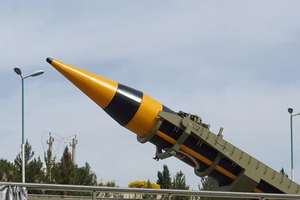
Iran’s focus on compact warheads is tied to its medium- and long-range missile force, which the report said proved decisive in forcing a ceasefire with Israel in June, even as Israel destroyed a significant number of Iranian missiles and launchers.

Recent contradictory reports over possible missile activity in Iran, later denied by state television, underscore the sensitivity around the country’s missile program and its role in deterrence.

The report said Iran could seek external assistance to shorten the timeline for developing compact warheads, noting persistent rumors within the Revolutionary Guards of cooperation with North Korea.

“Even access to previously tested warhead schematics would represent a major shortcut,” it said, while adding that cooperation beyond missile technology remains impossible to verify.

Iran has long said its nuclear program is peaceful and defensive, while Western governments accuse Tehran of keeping open the option of developing nuclear weapons.

Most Viewed

Iran negotiators ordered to return after internal rift over Islamabad talks
1
EXCLUSIVE

Iran negotiators ordered to return after internal rift over Islamabad talks

2
INSIGHT

Iran's digital economy battered by prolonged blackout

3
ANALYSIS

US blockade enters murky phase as tankers spoof signals and buyers hesitate

4
ANALYSIS

Why the $100 billion Hormuz toll revenue is a myth

5

US tightens financial squeeze on Iran, warns banks over oil money flows

Banner
Banner

Spotlight

  • Hardliners push Hormuz ‘red line’ as US blockade tests Iran’s leverage
    INSIGHT

    Hardliners push Hormuz ‘red line’ as US blockade tests Iran’s leverage

  • Ideology may be fading in Iran, but not in Kashmir's ‘Mini Iran'
    INSIGHT

    Ideology may be fading in Iran, but not in Kashmir's ‘Mini Iran'

  • War damage amounts to $3,000 per Iranian, with blockade set to add to losses
    INSIGHT

    War damage amounts to $3,000 per Iranian, with blockade set to add to losses

  • Why the $100 billion Hormuz toll revenue is a myth
    ANALYSIS

    Why the $100 billion Hormuz toll revenue is a myth

  • US blockade targets Iran oil boom amid regional disruption
    ANALYSIS

    US blockade targets Iran oil boom amid regional disruption

  • Iran's digital economy battered by prolonged blackout
    INSIGHT

    Iran's digital economy battered by prolonged blackout

  • Iranian nuclear scientists made covert visit to Russia for laser tech - FT

    Iranian nuclear scientists made covert visit to Russia for laser tech - FT

  • Iran has built missile power beyond pre-war levels, foreign minister says

    Iran has built missile power beyond pre-war levels, foreign minister says

  • Iran's buoyant missile arsenal vexes Israel, analysts say

    Iran's buoyant missile arsenal vexes Israel, analysts say

•
•
•

More Stories

Iran Revolutionary Guards plan military drill in Tehran province

Dec 24, 2025, 08:55 GMT+0

Iran’s Revolutionary Guards said they will hold a military drill on Thursday and Friday in Tehran province, warning residents they may hear loud sounds during the exercise.

“Any sounds of explosions or gunfire heard during these two days will be related to the drill and will be fully controlled,” Ghorban Valizadeh said, according to Mehr news agency. He urged residents to remain calm.

Valizadeh, commander of the Sayyed al-Shohada Guards unit in Tehran province, said the exercise, known as “Beit al-Moqaddas 16,” will include staged scenarios and will be carried out by ground units.

He said the drill is held every year under the same name by ground forces of the Revolutionary Guards in different parts of the country, framing it as a standard exercise rather than a new development.

The Guards’ ground forces are tasked with homeland defense and the suppression of internal threats.

  • False report on downing Israeli F-35 hit credibility, state TV chief says

    False report on downing Israeli F-35 hit credibility, state TV chief says

  • Iran holds missile drills in multiple cities as Tehran defends weapons program

    Iran holds missile drills in multiple cities as Tehran defends weapons program

  • State TV and Guards outlet at odds over Iran missile test reports

    State TV and Guards outlet at odds over Iran missile test reports

Contradictory reports on missile activity

The announcement follows contradictory reports earlier this week after an IRGC-aligned outlet reported missile tests over several Iranian cities, including Tehran, Isfahan and Mashhad. State television later denied that any missile launches had taken place, saying circulating images were not linked to a test.

Israel’s Prime Minister Benjamin Netanyahu said on Monday that Israel was aware Iran was conducting military exercises and was making preparations.

Defense analyst Farzin Nadimi told Iran International that the reported drills could be read as a signal, saying the Guards were showing they could carry out coordinated military activity across different parts of Iran.

Iranian officials have repeatedly said the country’s military activities are defensive. Earlier this week, Foreign Ministry spokesperson Esmaeil Baghaei said Iran’s defense capabilities were not open to discussion.

Zarif blames others for Iran’s path, but falls short

Dec 24, 2025, 01:44 GMT+0
•
Bozorgmehr Sharafedin

Mohammad Javad Zarif’s latest Foreign Affairs article follows a familiar pattern in his narrative: recasting Tehran’s militarization and domestic repression as reactive responses to external pressure rather than deliberate internal choices.

Zarif argues that relations between Iran and the United States have long been trapped in a cycle of “securitization,” in which each side responds defensively to the other’s actions.

The Islamic Republic, he writes, has been “forced” to prioritize military spending over development because of attacks by Iraq, Israel, and the United States.

The argument downplays Iran’s own role in shaping that trajectory.

Contrary to Zarif’s account, the theocracy’s turn toward securitization gained pace in the aftermath of the Iran–Iraq war, particularly under the late President Ali Akbar Hashemi Rafsanjani, who helped embed the military in politics and the economy as a pillar of postwar reconstruction and state survival.

But Zarif shifts responsibility for Iran’s unbalanced development outward.

Western pressure, not decisions taken by Iran’s leadership, is blamed for a system in which missile programs expanded while welfare sectors such as housing, employment, and healthcare stagnated.

The implication is that Iran’s strategic priorities were imposed rather than chosen.

Zarif further suggests that reduced pressure from Washington would lead Tehran to de-escalate. Yet this claim sits uneasily with his own account of events following the 2015 nuclear deal.

One of the achievements Zarif frequently cited was the lifting of sanctions not only on Iran’s nuclear program but also on arms-related restrictions, including sanctions on Iran Air, allowing the airline to modernize its fleet.

By Zarif’s own account, however, the easing of sanctions did not lead to restraint.

In a 2021 interview with the economist Saeed Leylaz, Zarif acknowledged that Iran Air flights were used by the Islamic Revolutionary Guard Corps to transfer weapons to Syria, with such flights increasing sharply after the nuclear deal. When Zarif raised concerns with Qassem Soleimani, the then-commander of the Quds Force, he said Soleimani replied that “Iran Air is safer.”

Zarif later described this dynamic as the “dominance of the battlefield over diplomacy,” an admission that key decisions about militarization were made within Iran’s power structure, not imposed from abroad.

Indeed, the period following the nuclear deal saw expanded investment in missile programs and a deepening of Iran’s regional proxy network, financed in part by newly available resources.

Yet in the Foreign Affairs article, Zarif presents increased uranium enrichment and the repression of domestic protest as reactions to Western pressure—once again shifting responsibility for violent crackdowns repression away from the rule in Tehran.

“The external securitization of Iran has fed into a parallel dynamic at home,” he writes, “as the state adopted a stricter approach in dealing with domestic social challenges, responding to these challenges with tighter restrictions.”

A similar pattern appears in Zarif’s account of Iran’s role in Syria.

In the same 2021 interview, he suggested that Iran’s direct military involvement followed a visit by Soleimani to Moscow, framing the escalation as the product of Russian strategy to undermine the nuclear deal rather than a decision taken by Iran’s leadership.

The role of Supreme Leader Ali Khamenei and Iran’s own security institutions is largely absent from this narrative.

The tendency to externalize responsibility extends to other areas as well.

After the nuclear deal, the release of several dual nationals and the unfreezing of Iranian assets raised expectations of de-escalation. Instead, a new wave of arrests of dual nationals followed, a pattern widely seen as deliberate leverage rather than a response to external pressure.

Zarif’s article also describes Israeli strikes in June 2025 as “unprovoked,” without reference to decades of official Iranian rhetoric calling for Israel’s destruction or the expansion of armed proxy groups along Israel’s borders.

The broader context of the current confrontation—including Hamas’s October 7, 2023 attack on Israel, praised by Iranian officials—is notably absent.

Iran has had multiple opportunities to break the cycle Zarif describes, from the early years after the revolution to the post-nuclear-deal period. Each time, its leadership made choices that reinforced militarization and repression rather than curbing them.

The question raised by Zarif’s essay is not whether external pressure mattered—but why internal agency continues to be written out of the story.

UN experts demand Iran to halt execution of female political prisoner

Dec 23, 2025, 23:26 GMT+0

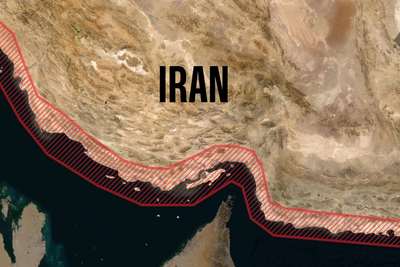
A group of UN human rights experts and more than 400 prominent women from around the world on Tuesday urged Iran to halt the execution of political prisoner Zahra Shahbaz Tabari held in Lakan Prison in Rasht.

“Ms. Tabari’s case shows a pattern of serious violations of international human rights law regarding fair trial guarantees and the inappropriate use of capital punishment for broad and ill-defined national security offences,” the UN experts said.

The statement adds that under the International Covenant on Civil and Political Rights, which Iran ratified in 1975, the death penalty must be limited to the “most serious crimes”, understood as involving intentional killing.

“This case involves no intentional killing and contains numerous procedural violations. To execute Ms. Tabari under these circumstances would constitute arbitrary execution,” the experts said.

UN human rights experts, who monitor states’ compliance with international law and regularly brief UN bodies and governments, said the case highlights a wider pattern of abuses in Iran’s use of the death penalty

The experts said she was sentenced to death on the charges of baghi (armed rebellion) in October based on two pieces of evidence, including a piece of cloth bearing the slogan “Woman, Resistance, Freedom,” a popular slogan from the 2022 protests, and an unpublished audio message.

“What we see here is a mockery of justice that falls far short of the most basic international standards,” they said, urging Iran to halt the execution and bring its use of the death penalty in line with its international obligations.

Prominent women worldwide urge Iran to stop Tabari's execution

More than 400 prominent women from around the world also urged Iran to halt the execution of Tabari in an appeal that denounces her death sentence as the outcome of an unjust trial.

Among the signatories are prominent Iranian women in exile as well as international feminists and human rights defenders, bolstering the appeal’s call for global pressure on Tehran to stop Tabari’s execution.

Some of the most high-profile signatories include Nobel Peace Prize laureate Shirin Ebadi, Republican US Congresswoman Nancy Mace of South Carolina, and Samantha Power, the former US ambassador to the UN.

The appeal is also signed by former Ukrainian Prime Minister Yulia Tymoshenko and other senior former officials, including ex-ministers and ambassadors.

"Tabari as a 67-year-old mother and engineer who was sentenced to death in October on national security charges after a brief remote hearing held by videoconference," the statement said.

“Our colleague’s death sentence was handed down in a sham 10-minute trial, held remotely via videoconference without her chosen legal representation,” the signatories said, calling the proceedings a violation of Iran’s obligations under international law.

“For four decades, Iranian authorities have enforced brutal gender apartheid and institutionalized misogyny including through forced veiling,” the statement added.

The appeal urges the Iranian authorities to immediately quash Tabari’s death sentence and release her, warning that her hanging would amount to a further crime under international law.

“We demand Zahra’s immediate release, and we call on governments worldwide to stand with the women of Iran in their quest for democracy, equality, and freedom,” the signatories said, calling for concerted diplomatic pressure and engagement with UN mechanisms to prevent the execution.

Iraq says Iranian gas supplies stop completely

Dec 23, 2025, 13:12 GMT+0

Iraq’s electricity ministry said on Tuesday that Iranian gas supplies had stopped entirely, cutting between 4,000 and 4,500 megawatts from the national power grid and reducing supply hours.

“The flow of Iranian gas has stopped completely,” ministry spokesman Ahmed Mousa said, adding that some power units were shut while others were forced to cut output.

Mousa said Tehran had informed Baghdad of the halt due to “emergency conditions,” without giving further details.

He said the Iraq Electricity Ministry had switched to domestic alternative fuel in coordination with the oil ministry, and that generation remained “under control” despite the shortfall.

Iranian gas exports to Iraq had declined sharply this year after the US tightened sanctions enforcement and revoked a long-standing waiver that allowed Iraq to pay for Iranian electricity and gas imports.

Between April and August, Iranian gas exports to Iraq fell by about 40%, according to regional trade data, as Baghdad struggled to navigate sanctions while seeking alternative supplies.

Iraq’s power sector has also faced security disruptions. In November, a rocket strike forced the shutdown of the Khor Mor gas field in northern Iraq, cutting about 3,000 megawatts from regional supply.

Local Kurdish officials blamed Iran-backed armed groups for the attack, which targeted energy infrastructure critical to electricity generation.

The electricity ministry said Iraq had prepared for peak winter demand through maintenance and upgrades at power stations, and that coordination with the oil ministry would continue until Iranian gas flows resume.

Iranian drugmakers warn illicit exports to Afghanistan are rising

Dec 23, 2025, 12:37 GMT+0

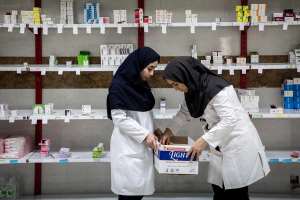
Iranian pharmaceutical industry figures warned that illicit Iranian-made medicines are increasingly appearing in Afghanistan, undercutting legal exports and deepening shortages at home.

Pharmaceutical sector representatives say the flow has accelerated after Pakistan curtailed drug exports to Afghanistan, turning Iran’s subsidized market into an attractive source for traffickers.

They argue that wide price gaps between Iran and neighboring countries have made smuggling structurally profitable, sidelining legal export channels.

Drug production has increased by around 50% but shortages persist, Mohsen Abdollahzadeh, a board member of the Drug Distributors Syndicate said on Tuesday.

“Drug smuggling from Iran to Iraq and Afghanistan is so extensive that traders in those countries are unable to import medicines legally and cannot compete with smuggled Iranian drugs,” he added.

  • Iran health officials flag price rises as shortages loom over currency crunch

    Iran health officials flag price rises as shortages loom over currency crunch

  • Iran drug stocks under two months, 800 medicines at risk as FX delays bite

    Iran drug stocks under two months, 800 medicines at risk as FX delays bite

  • Iran medical suppliers warn of worsening drug shortages

    Iran medical suppliers warn of worsening drug shortages

Food and Drug Administration of Iran has conceded that so-called “reverse smuggling” exists, driven by sharp price differences with neighboring markets.

However, spokesperson Mohammad Hashemi disputed a widespread surge, saying documented cases remain limited. Continued leakage, he warned, could trigger intermittent shortages and place further strain on an already fragile supply chain.

Recent talks with an Afghan delegation, Hashemi said, focused on expanding formal pharmaceutical exports and improving monitoring, a move critics say reflects belated damage control rather than a solution to entrenched enforcement gaps.

Food market shows same fault lines

The controversy mirrors developments in food markets, where currency policy shifts and the removal of subsidized exchange rates have driven sharp increases in staple prices.

Analysts say both sectors show the same pattern: multiple pricing regimes and weak oversight have encouraged arbitrage and cross-border leakage.

For consumers, the result has been recurrent shortages and rising costs, as subsidized goods – whether medicine or food – slip out of regulated channels faster than authorities can contain them.

Authorities say medicines are still available for now, but concede that delays in transferring allocated foreign exchange, mounting arrears to suppliers and dwindling inventories have pushed the sector to the brink, increasing the risk of shortages in the final months of the Iranian year, which ends on March 20.

In an economy battered by chronic inflation and currency volatility, officials say, keeping drug prices frozen shifts the burden onto manufacturers and ultimately jeopardizes national drug supply chain.