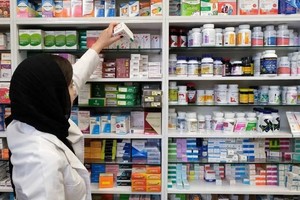
Iranian health officials warned that foreign currency bottlenecks and unpaid state debts are straining the drug supply chain, with the Food and Drug Administration chief signaling possible price rises for medicines and medical equipment to keep producers operating.
While authorities say medicines remain available for now, they acknowledge that delays in transferring allocated foreign exchange, growing arrears to suppliers and shrinking inventories have pushed the sector close to a breaking point, raising the risk of shortages in the final months of the year.
Mehdi Pirsalehi, head of Iran’s Food and Drug Administration, said on Tuesday that worsening currency constraints in recent months had left the industry in a sensitive position.
“There are significant foreign-currency debts to overseas suppliers, and resolving them requires serious cooperation from the government, parliament and other decision-making bodies,” he said, according to ISNA.
Pirsalehi apologized to the public for shortages of even “a single item” of medicine and said the agency considered itself accountable.
He added, however, that without adjusting drug and medical equipment prices in an inflationary environment, “it is not possible for manufacturers to sustain stable operations.”
He said that if prices had not been increased last year, “a significant part of the country’s pharmaceutical industry would have exited the production cycle by now.”
Officials argue that in an economy grappling with chronic inflation and currency volatility, holding drug prices steady shifts pressure onto manufacturers and ultimately threatens national drug security.
Price adjustments, they say, are an economic necessity to prevent factory shutdowns and protect domestic production, a move that could nonetheless increase pressure on patients unless insurers reimburse costs on time.
According to ILNA on Tuesday, a month-on-month rise in medicine prices, uneven insurance approvals and gaps in access to original drugs are pushing patients toward out-of-pocket purchases, leaving wealthier households able to buy on the open market while poorer patients increasingly walk away empty-handed.
Debts, FX delays and thinning stocks
Alongside currency shortages, accumulated government and insurance arrears have emerged as one of the most serious challenges facing the market.
Ebrahim Hashemi, chairman of the board of the Association of Pharmaceutical Distribution Companies, said recently that debts to drug distributors had reached 1.57 quadrillion rials (about $1.2 billion at today’s rates) by November 2024, warning that failure to settle them could severely disrupt the production and import of essential medicines.
According to figures cited by industry representatives, distributors’ claims on medical universities alone exceed 31 trillion rials ($240 million), while total government liabilities – including those linked to social security and insurance funds – amount to about 47 trillion rials ($360 million).
“Which economic sector can survive more than a year without receiving its payments?” Hashemi asked, warning that the final three months of the year (ending on March 20) would be among the toughest for the drug sector.
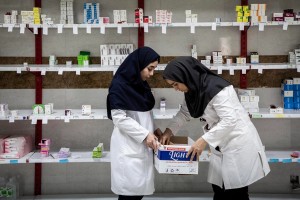
Pharmacies, the frontline of access for patients, are also under acute liquidity pressure. Shahram Kalantari, head of Iran’s Pharmacists Association, has said insurers owe private pharmacies, and warned that each wave of currency volatility inflicts tens of trillions of rials in fresh losses, sharply reducing pharmacies’ ability to restock.
Kalantari said shelves and warehouses had grown “thinner” in recent months, with strategic reserves steadily eroding – a development he described as an early alarm for broader shortages.
Abdollah Abdollahi Asl, director general for medicines and controlled substances at the Food and Drug Administration, said inventories had fallen below critical thresholds: less than one month at factories, under two months at distribution companies and under three months at pharmacies, compared with a recommended minimum of three to four months.
He said around 800 of the roughly 3,000 medicines on Iran’s official list are in a shortage warning status, awaiting foreign exchange and liquidity. He added that 21 essential hospital medicines and 56 essential non-hospital drugs are already in short supply.
The warnings echo recent statements by industry figures who say Iran could face a sharp deterioration in drug supplies within months if current conditions persist.
Alireza Chizari, head of Tehran province’s association of medical and pharmaceutical equipment producers, said earlier this month that the crisis had not yet fully hit society because regulators were managing depleted warehouses, but warned the situation could become “disastrous within one or two months.”
Iran’s pharmaceutical sector has been squeezed by foreign exchange shortages, sanctions-related payment hurdles and rising costs. Drug prices, medical equipment and healthcare expenses have jumped by about 70% since the government removed a subsidized exchange rate for medicine imports earlier this year, while insurance coverage has lagged behind.
Medical specialists have cautioned that sudden switches from imported medicines to domestic alternatives can pose risks for some high-risk patients, even though local drugs are effective in most cases.