• العربية
  • فارسی
Brand
  • Iran Insight
  • Politics
  • Economy
  • Analysis
  • Special Report
  • Opinion
  • Podcast
  • Iran Insight
  • Politics
  • Economy
  • Analysis
  • Special Report
  • Opinion
  • Podcast
  • Theme
  • Language
    • العربية
    • فارسی
  • Iran Insight
  • Politics
  • Economy
  • Analysis
  • Special Report
  • Opinion
  • Podcast
All rights reserved for Volant Media UK Limited
volant media logo

Exclusive: Iranian Regime Eying Venezuela As Sanctuary For Leaders

Iran International Newsroom
Dec 7, 2022, 22:06 GMT+0Updated: 17:27 GMT+1
 Venezuelan President Nicolás Maduro and President Ebrahim Raisi during a meeting in Tehran in June 2022
Venezuelan President Nicolás Maduro and President Ebrahim Raisi during a meeting in Tehran in June 2022

Dead worried about their fate in case of a revolution in Iran, the Islamic Republic’s officials have started looking for safe havens, especially Venezuela, their close ally. 

Western diplomatic sources told Iran International that the Islamic Republic has started negotiations with its Venezuelan allies to ensure they'd offer asylum to regime officials and their families should the situation worsen, and the possibility of a regime change increases. 

According to these sources, a delegation of four high-ranking regime officials visited Venezuela in mid-October for negotiations to ensure that the Caracas government would grant asylum to high-ranking officials and their families in case "the unfortunate incident" happens. 

In early-November, an unnamed source at Tehran's Imam Khomeini Airport told Kayhan-London that three flights a day were taking off with "a considerable amount of cargo" bound for Venezuela, adding that "these people get their suitcases out in hours, with fewer passengers and flights. This began about two weeks ago, and we see these movements about two or three times a day."

"Initially, my colleagues and I thought these were embassy employees, though we noticed their car number plates didn't belong to any embassy. We don't know what they are transferring, and whether they are leaving the country with all the luggage or not. Because they won't let us examine closely. We just know that in past weeks, every day there are three to four flights to Venezuela," the source said. 

According to another report by the website of UK’s Daily Express in October, top officials of the Islamic Republic were reportedly attempting to secure British passports for their families to exit the country amid the uprising against the regime following the death of Mahsa Amini, a 22-year-old woman who was killed in police custody in September.

Iran’s Supreme Leader Ali Khamenei (left), Venezuelan President Nicolás Maduro (center) and President Ebrahim Raisi during a meeting in Tehran  (June 2022)
100%

Citing an unnamed Iranian source, the Daily Express also claimed that officials have been chartering up to "five flights a day" for their families, adding that some sections of “Tehran’s main airport” have been taken over as a fast-track area for their own family and friends to escape the country.

The source said things are moving fast at the airport, noting that “It started more than two weeks ago. The regime changed all security details at the airport. They were moving civilians (friends and family) from the back entrance of the airport directly to the airplanes for international flights.”

Social media users are reporting regular money transfers abroad by high-ranking officials of the regime. According to one account, former Foreign Minister Javad Zarif’s wife is said to have transferred €4 million to an ABC Bank account in Shanghai through some agencies in Dubai.

There are also unconfirmed reports that officials are transferring their assets to friendly countries and there are official reports that many high-priced and luxurious homes in the capital Tehran are being sold below market value, strengthening speculations that some of the rich are in a hurry to leave the country. A recent report by the government’s official news agency, IRNA, confirmed the sale of many apartments cheaper than their estimated prices, describing it as the result of lower purchasing power due to the economic crisis.
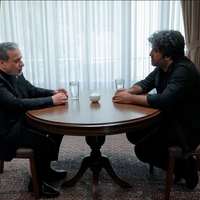
Venezuelan President Nicolás Maduro (left) and President Ebrahim Raisi during a meeting in Tehran  (June 2022)
100%
Venezuelan President Nicolás Maduro (left) and President Ebrahim Raisi during a meeting in Tehran

Most Viewed

Iran diplomacy wobbles as factions compete to avoid looking soft on US
1
INSIGHT

Iran diplomacy wobbles as factions compete to avoid looking soft on US

2
VOICES FROM IRAN

Bread shortages, soaring prices strain households in Iran, residents say

3
ANALYSIS

The politics of pink: how Iran uses cuteness to rebrand violence

4

Scam messages seek crypto for ships’ safe passage through Hormuz, firm warns

5
EXCLUSIVE

Family told missing teen was alive, then received his body 60 days later

Banner
Banner

Spotlight

  • Diplomacy tolls at Hormuz as conflict returns to its doorstep
    OPINION

    Diplomacy tolls at Hormuz as conflict returns to its doorstep

  • Opposition to US talks grows in Tehran as ceasefire deadline nears
    INSIGHT

    Opposition to US talks grows in Tehran as ceasefire deadline nears

  • Tehran moderates see ‘no deal–no war’ limbo as worst outcome
    INSIGHT

    Tehran moderates see ‘no deal–no war’ limbo as worst outcome

  • The future has been switched off here
    TEHRAN INSIDER

    The future has been switched off here

  • Lights out, then gunfire: Witnesses recount Mashhad protest crackdown
    VOICES FROM IRAN

    Lights out, then gunfire: Witnesses recount Mashhad protest crackdown

  • Is Iran entering its Gorbachev moment?
    INSIGHT

    Is Iran entering its Gorbachev moment?

•
•
•

More Stories

World Artists Urge Boycott Of Islamic Republic In Cultural Arenas

Dec 7, 2022, 18:39 GMT+0

Artists and writers have joined the international outcry of politicians and activists over the Islamic Republic’s crackdown on dissent, calling for a boycott of the regime in cultural arenas. 

Expressing solidarity with their Iranian colleagues, a group of over 500 artists, writers, academics, and cultural practitioners from across the world pledged in a statement Tuesday to do their utmost to boycott Iran’s governmental institutions and their covert affiliates, and prevent them from having any presence in international arenas of arts, culture, and education. 

They condemned “the violent crackdown of Iranian people by the Islamic state” in the strongest terms, and paid tribute to the women-led movement of Iranians who have “demonstrated determination in standing against state brutality in the past eighty days since the killing of 22-year-old woman, Zhina Mahsa Amini, at the hands of the Islamic state.” “What began as a protest against mandatory hejab (hijab) and decades of systemic human rights violations has now turned into the 'Woman, Life, Liberty' movement, demanding the end of the theocratic rule by an unelected clerical system in Iran.”

The signatories include high-profile artists and scholars from all over the globe, such as prominent photographer Cindy Sherman, influential philosopher and gender theorist Judith Butler, distinguished social artist and silhouettist Kara Walker, French critic Hélène Cixous, Turkish novelist and screenwriter Orhan Pamuk, German visual artist Hans Haacke, Greek economist and politician Yanis Varoufakis, Serbian conceptual and performance artist Marina Abramović, German-American artist Kiki Smith, Whitney Museum of American Art Director Adam Weinberg, and American actor Willem Dafoe. 

They also called on the world to “stand against the regime apologists who misappropriate anti-imperialist discourses in the west or other parts of the world to deflect attention away from the well-documented state violence committed against the people.”

The signatories also called for creating networks of support for dissidents and those who are being targeted, face intimidation, or risk harm at the hands of the regime, as well as raising awareness concerning the crimes against humanity committed by the regime.

They also expressed grave concern not only for their colleagues and students in the arts and cultural spheres who have stated their demands in several actions and open letters, including a recent statement signed by nearly 6,000 Iranian artists and scholars, but for citizens from all over the country “who face an increasingly brutal, violent, and deadly state crackdown, with kidnappings, disappearances, imprisonments, and multiple forms of physical, psychological, and sexual abuse, torture, and open threats of mass executions.”

Aida Amidi and Roozbeh Sohani (file photo)
100%
Aida Amidi and Roozbeh Sohani

In another statement on Tuesday, PEN America and PEN Sydney condemned the recent arrests of three Iranian writers Roozbeh Sohani, Aida Amidi, and Alireza Adineh, members of the Iranian Writers’ Association (IWA), a decades-old writers’ group that has been banned but steadfastly stands against state censorship. Raising alarm over the continued targeting of writers for their free expression, the statement, Karin Karlekar, PEN America’s director of Free Expression at Risk Programs, said “The violent and targeted arrests of the IWA’s board members are designed to intimidate and silence one of the leading independent civil society voices inside Iran.” She slammed the Iranian government’s “surge of baseless arrests and horrific record of mistreating political prisoners.”

Earlier in the month, more than 60 Iranian writers and poets announced they will publish their works without submission to Islamic Republic censors until such time when censorship stops in Iran.

Time Magazine Names Iranian Women As Heroes of 2022

Dec 7, 2022, 17:28 GMT+0

The Time magazine has crowned the women of Iran as heroes of the year in 2022 for their role as the pioneers of the uprising against the Islamic Republic.

The US magazine has described Iranian women as “educated, secular, liberal” who took to the streets after the death of the young Kurdish Mahsa Amini to say, “they have the freedom to say and wear anything.”

Former Time columnist Azadeh Moaveni in a tribute has written about women's roles in past protests in Iran that have built toward the current movement.

A number of photos of Iranian women have been mentioned for the tribute. A photo by a woman named Shima is captioned as "I am proud of myself and my country’s women who stand up for their rights in a braver manner than any man in the world.”

Moaveni says “when a generation’s aspirations for freedom appear tantalizingly within reach, the more humiliating the remaining restrictions seem, and the less daunting the final stretch of resistance feels.”

“At this writing, an estimated 400 Iranian protesters have been killed by security forces… Despite measures to block the internet, reports continue to surface of deaths and abuse in custody. After nearly three months, protests on college campuses are not letting up,” read’s the tribute.

Moaveni also adds what’s happening in Iran may look familiar, but it’s different because, today, the aspirations of all swirled into the chants of “women, life, freedom,” a feminist revolt carrying a whole society’s varied grievances.

Iran Intelligence Minister Berates Macron, Iranian women

Dec 7, 2022, 16:16 GMT+0
•
Iran International Newsroom

French President Emmanuel Macron takes orders from a low-level CIA operative, Iran’s Intelligence Minister Esmail Khatib told the official news website IRNA.

In an interview published on Wednesday, Khatib slammed Western leaders, especially Macron and Canadian Prime Minister Justin Trudeau for supporting Iranian protesters, and at one point implicitly called Macron a “clown”.

Iranian officials faced with the biggest popular protests in 43-year history of the Islamic Republic have been weaving a conspiracy theory that Western governments plotted to trigger protests in Iran, with the aim of weakening “the victorious” Islamic Republic.

Khatib, a hardliner cleric, ranted against the French president and claimed that Macron repeated whatever he was told by Iranian women’s rights activist Masih Alinejad, calling her an “addict” and a “woman of the street.” He also described Alinejad as a low-ranking agent of the US intelligence agency CIA, and claimed that she “dictates” Macron’s positions about the protests and how to express them. 

President Emmanuel Macron shaking hands with Iranian activist Masih Alinejad. (November 11, 2022)
100%
President Emmanuel Macron shaking hands with Iranian activist Masih Alinejad

Khatib was referring to a November meeting between Macron and Iranian female activists, in which the president hailed the antigovernment protests as a “revolution”. Macron has been one of the first presidents who recognized the uprising as a revolution. According to the Elysee, the delegation of exiled female Iranian rights activists included US-based Alinejad, Shima Babaei, and Ladan Boroumand, the co-founder of a Washington-based rights group. Earlier in the month, Marcon and US President Joe Biden reiterated in a joint statement their “respect for the Iranian people, in particular women and youth.”

Iran’s intelligence minister also claimed that Macron's stance against the Islamic Republic has another reason, and that is the "identification and arrest of two French intelligence agents" by his ministry, referring to Cécile Kohler, an educator who heads the teachers’ union National Federation of Education, Culture and Vocational Training (FNEC FP-FO) and her husband Jacque Paris. In a video of forced confessions aired by state media in October, Kohler said they were in Iran to “prepare the ground for the revolution and the overthrow of the regime of Islamic Iran.”

Iran’s state media are infamous for purported confessions by prisoners in politically charged cases. Such prisoners are held without due process of law and usually cannot choose their own defense attorney. The Islamic Republic has detained at least seven French nationals on different charges including “spying for foreign intelligence services.”

Human rights organizations accuse Iran of a systematic policy of hostage taking over four decades from the earliest period of the Islamic republic after the ouster of the Shah, starting with the 1979-1981 siege at the US embassy in Tehran. Tehran denies any policy of hostage taking and insists all foreigners are arrested and tried according to legal process. However, it has frequently shown readiness for prisoner exchanges and participated in swaps in the past. 

Earlier in the week, Macron denounced “lies” by Iranian authorities in face of the “unacceptable” imprisonment of French nationals.

Khatib also spoke out against Trudeau for saying that 15,000 people in Iran face the threat of execution, calling him an “immature” official for believing such allegations. However, the Canadian premier’s remark was a reaction to a call by Iranian lawmakers who urged the judiciary to sentence the arrested protesters – who were estimated to be about 15,000 at the time – to death. Although Trudeau deleted the tweet about the death sentence, the threat can still be regarded valid as leaked data indicate that authorities are really considering executing many protesters. About 80 people are facing charges that can lead to the death penalty. The number of the arrested protesters has increased to over 18,000. 

Khatib said such politicians “are no longer those independent and powerful leaders of first-class European countries,” adding that they are dependent on the US and Israel and follow their policies. 

“This means that the Americans have practically taken Europe, especially France and Germany, hostage,” Khatib said, claiming that his statement "is not only an analysis of obvious observations, but also based on secret information.”

‘Imposing Costs’: US Spokesman Explains Iran Policies

Dec 7, 2022, 14:37 GMT+0
•
Iran International Newsroom

State Department spokesman Ned Price Tuesday expressed US support for Iranians “exercising…universal rights” but said 'regime change' is for Iranians to decide.

Both at the UN Human Rights Council November 24, and in an interview this week with Iran International, United Nations special rapporteur Javaid Rehman had said he sought prosecutions over human rights violations in Iran under principles of universal jurisdiction either in national courts or outside Iran in international courts.

Asked by Iran International reporter Samira Gharaei Tuesday, Price explained steps the US would take over human rights in Iran. Washington, he said, would move a resolution December 14 to expel Iran from the UN Commission on the Status of Women and would continue “imposing costs on those responsible for the brutal crackdown… through multiple rounds of sanctions.” Price linked this to the UN investigation, which showed the “world is watching.”

Price also warned Iran over issuing death sentences for protesters. “Unfortunately, this is just really the latest tactic that we’ve seen from the Iranian regime…[against] individuals who are exercising their universal rights. These sentences, we know, are meant to intimidate people, to suppress dissent. They are – they simply underscore Iran’s leadership’s fears of its own people and the fact that Iran’s government fears the truth,” stated Price.

Asked if the United States would support a demand by protesters for “regime change” Price replied, “We support the ability of the Iranian people to exercise their rights, to demand what it is that they seek. These are questions that are up to the Iranian people.”

Asked about returning Iran’s nuclear program to the restrictions of the 2015 nuclear agreement, the JCPOA (Joint Comprehensive Plan of Action), Price repeated that “talks are not on the agenda right now” as the US “focused on…ways to support the protestors across Iran.”

Diplomacy, arming ‘partners’

Nonetheless, diplomacy was the best way to ensure “Iran will be permanently and verifiably barred once again from obtaining a nuclear weapon,” Price said. This had been the case, he noted, before the administration of President Donald Trump in 2018 withdrew the US from the JCPOA and imposed draconian sanctions against Iran, prompting Tehran by 2019 to begin exceeding the JCPOA nuclear limits.

Price said that Tehran would gain no leverage in talks by further expanding the nuclear program or by not satisfying the International Atomic Energy Agency (IAEA) “safeguards investigation,” a reference to the agency’s probe into uranium traces found at ‘non-nuclear’ sites.

Such actions would, the spokesman said, lead rather to “additional costs” on Iran. Price noted that the US had “worked very closely with partners in the region, partners beyond, regarding the challenge that’s presented by Iran’s nuclear program.”

Speaking to Iran International correspondent Arash Aalaei, US Republican Party Senator Josh Hawley, a close ally of Trump, said the Biden administration had made a mistake by negotiating with Iran and treating it as “a legitimate state.” Hawley called for “arming…partners and allies in the region…” This, he said, would “send the message of support to Iranian protesters and the folks who’re trying to stand up for some sense of liberty there.”

The Trump administration agreed over $400 billion in arms sales over ten years to Saudi Arabia, which is expected this week to sign weapons deals worth $30 billion with a Chinese delegation led by President Xi Jinping. Riyadh has already deployed Chinese ballistic missiles.

Fate Of Two Teenage Girls Unknown After Arrest During Iran Protests

Dec 7, 2022, 14:00 GMT+0

Reports from Iran say two teenage girls who were arrested in the cities of Hamadan and Shiraz amid the ongoing protests face uncertainty in Iran’s prison system.

The US-based Human Rights Activists News Agency (HRANA) announced Tuesday that Farnoush Esmi, an 18-year-old blogger from Hamadan in Iran’s west, was transferred to Evin prison in Tehran two weeks after her arrest, but there is no further news.

Reports on social media indicate the family of this teenager had refused to publish the news of her arrest during the last two weeks under security pressures.

Parya Faramarzi, a 16-year-old teenager from Pasargad in southern Fars province is also in Adelabad prison in Shiraz two months after arrest October 11 during a raid by security agents on her home. Reports say she has been taken to hospital twice during this period. Activists on twitter say she has suffered “eye stroke” twice due to interrogations.

Since the beginning of the protests after Mahsa Amini's death in the custody of ‘hijab police’, many protesting students and teenagers have been apprehended and interrogated. Some were found dead after security forces arrested them in the streets, or shot during demonstrations.

Female prisoners are reportedly threatened with rape in Iran prisons. Detainee have told activists that some protest prisoners are kept with criminals, and they have been sexually abused by them.

Over 18,000 people have been arrested during the recent protests. However, the Iranian regime denies providing any official information about the number of detainees.