‘Imposing Costs’: US Spokesman Explains Iran Policies

State Department spokesman Ned Price Tuesday expressed US support for Iranians “exercising…universal rights” but said 'regime change' is for Iranians to decide.
State Department spokesman Ned Price Tuesday expressed US support for Iranians “exercising…universal rights” but said 'regime change' is for Iranians to decide.
Both at the UN Human Rights Council November 24, and in an interview this week with Iran International, United Nations special rapporteur Javaid Rehman had said he sought prosecutions over human rights violations in Iran under principles of universal jurisdiction either in national courts or outside Iran in international courts.
Asked by Iran International reporter Samira Gharaei Tuesday, Price explained steps the US would take over human rights in Iran. Washington, he said, would move a resolution December 14 to expel Iran from the UN Commission on the Status of Women and would continue “imposing costs on those responsible for the brutal crackdown… through multiple rounds of sanctions.” Price linked this to the UN investigation, which showed the “world is watching.”
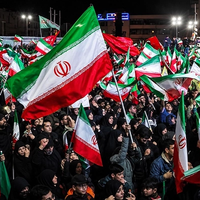
Price also warned Iran over issuing death sentences for protesters. “Unfortunately, this is just really the latest tactic that we’ve seen from the Iranian regime…[against] individuals who are exercising their universal rights. These sentences, we know, are meant to intimidate people, to suppress dissent. They are – they simply underscore Iran’s leadership’s fears of its own people and the fact that Iran’s government fears the truth,” stated Price.
Asked if the United States would support a demand by protesters for “regime change” Price replied, “We support the ability of the Iranian people to exercise their rights, to demand what it is that they seek. These are questions that are up to the Iranian people.”
Asked about returning Iran’s nuclear program to the restrictions of the 2015 nuclear agreement, the JCPOA (Joint Comprehensive Plan of Action), Price repeated that “talks are not on the agenda right now” as the US “focused on…ways to support the protestors across Iran.”
Diplomacy, arming ‘partners’
Nonetheless, diplomacy was the best way to ensure “Iran will be permanently and verifiably barred once again from obtaining a nuclear weapon,” Price said. This had been the case, he noted, before the administration of President Donald Trump in 2018 withdrew the US from the JCPOA and imposed draconian sanctions against Iran, prompting Tehran by 2019 to begin exceeding the JCPOA nuclear limits.
Price said that Tehran would gain no leverage in talks by further expanding the nuclear program or by not satisfying the International Atomic Energy Agency (IAEA) “safeguards investigation,” a reference to the agency’s probe into uranium traces found at ‘non-nuclear’ sites.
Such actions would, the spokesman said, lead rather to “additional costs” on Iran. Price noted that the US had “worked very closely with partners in the region, partners beyond, regarding the challenge that’s presented by Iran’s nuclear program.”
Speaking to Iran International correspondent Arash Aalaei, US Republican Party Senator Josh Hawley, a close ally of Trump, said the Biden administration had made a mistake by negotiating with Iran and treating it as “a legitimate state.” Hawley called for “arming…partners and allies in the region…” This, he said, would “send the message of support to Iranian protesters and the folks who’re trying to stand up for some sense of liberty there.”
The Trump administration agreed over $400 billion in arms sales over ten years to Saudi Arabia, which is expected this week to sign weapons deals worth $30 billion with a Chinese delegation led by President Xi Jinping. Riyadh has already deployed Chinese ballistic missiles.