• العربية
  • فارسی
Brand
  • Iran Insight
  • Politics
  • Economy
  • Analysis
  • Special Report
  • Opinion
  • Podcast
  • Iran Insight
  • Politics
  • Economy
  • Analysis
  • Special Report
  • Opinion
  • Podcast
  • Theme
  • Language
    • العربية
    • فارسی
  • Iran Insight
  • Politics
  • Economy
  • Analysis
  • Special Report
  • Opinion
  • Podcast
All rights reserved for Volant Media UK Limited
volant media logo

Iranians Debate If A Nuclear Deal Will End Their Economic Crisis
Iran International Newsroom
Aug 21, 2022, 20:59 GMT+1Updated: 17:37 GMT+1
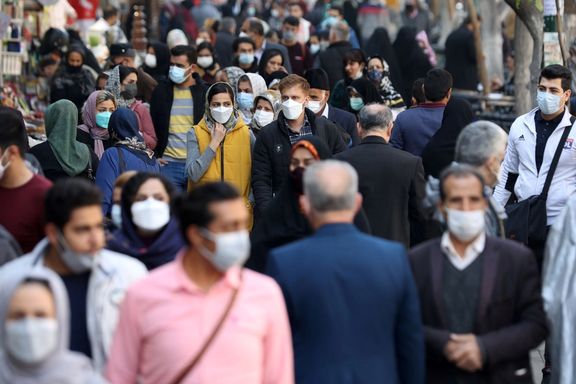
People in a busy Tehran Street in November 2021 amid economic crisis and nuclear talks

The most crucial issue for politicians, pundits and ordinary Iranians is whether a nuclear agreement with the West can solve their critical economic problems.

Reformist politician Fayyaz Zahed is concerned that a nuclear deal does not provide enough guarantees for strengthening Iran's ties with the West. What can help Iran boost relations with Western countries are project-based bilateral agreements, he said.

Zahed wrote in a commentary in the reformist daily Etemad that a nuclear agreement will pave the way for settling Iran's other international disputes. Meanwhile, he stressed that the JCPOA will be meaningful for Iran only if the country has a bigger plan for its development.

In a controversial part of the commentary he said that the United States is hated as Russia, China and the United Kingdom in Iran, however, he did not offer any proof for his statement. Nonetheless, he said Iran wishes to work with all of those countries.

US sanctions since 2018 have created a serious crisis for Iran's already weak economy, driving annual inflation to more than 50 percent and impoverishing ten of millions of people.

Referring to a statement by reformist commentator Saeed Laylaz during the past week, Zahed pointed out that one of the most important points was that Iran is suffering from systematic corruption and that it looks like a barrel with no bottom, so whatever investment you make in it will be lost.

Reformist politician Fayaz Zahed during his interview with Etemad
100%
Reformist politician Fayaz Zahed during his interview with Etemad

On the other hand, hardline conservative commentator Nasser Imani told reporters in Tehran that the United States will continue nuclear negotiations with Iran until the last moment but will refrain from making a final deal.

In his pessimistic analysis, Imani said that because of US behavior in the past when it withdrew from the 2015 nuclear deal, it will take a long time for major foreign companies to begin investing in Iran.

Shifting from pessimism to immature optimism, Imani said, "The negotiations finally reached positive results based on mutual understanding. As a result, the sanctions will be hopefully lifted. But the question is that to what extent the lifting of sanctions will lead to an improvement in Iran's economy?"

However, Imani said that in the short run, an agreement will lead to a drop in prices in Iran, but this is not going to be more than 10 to 15 percent. But in the long run, it is Iran's domestic problems that are responsible for some 80 percent of the country's economic crisis. Imani urged President Ebrahim Raisi to change his economic team at once.

Lawmaker Behrouz Mohebbi in an interview with Rouydad24 website complained that protesters gather outside the parliament daily demonstrating against economic hardships. He argued that Iranians are not feeling well under current economic pressures.

Mohebbi said that the government's slow reaction has annoyed the people to the extent that they travel from distant parts of the country to protest in front of the parliament.

He added that the government's attitude has also affected the parliament. Currently more than 60 bills are awaiting legislative action, and it takes a long time to examine all of them. Mohebbi particularly pointed out bills about pay adjustment for teachers and pensioners which regularly bring hundreds of people to the streets in protest. Salary increases for teachers have been delayed for 45 months now, he said, but the government has not taken any steps to address the issue as it is busy working on solutions for other problems.

Although the lawmaker did not mention it, but lack of money is the main reason why the government delays a pay raise, not only for teachers but a host of other government workers, except key security forces.


Most Viewed

Iran diplomacy wobbles as factions compete to avoid looking soft on US
1
INSIGHT

Iran diplomacy wobbles as factions compete to avoid looking soft on US

2
VOICES FROM IRAN

Bread shortages, soaring prices strain households in Iran, residents say

3
ANALYSIS

The politics of pink: how Iran uses cuteness to rebrand violence

4

Scam messages seek crypto for ships’ safe passage through Hormuz, firm warns

5
EXCLUSIVE

Family told missing teen was alive, then received his body 60 days later

Banner
Banner

Spotlight

  • Diplomacy tolls at Hormuz as conflict returns to its doorstep
    OPINION

    Diplomacy tolls at Hormuz as conflict returns to its doorstep

  • Opposition to US talks grows in Tehran as ceasefire deadline nears
    INSIGHT

    Opposition to US talks grows in Tehran as ceasefire deadline nears

  • Tehran moderates see ‘no deal–no war’ limbo as worst outcome
    INSIGHT

    Tehran moderates see ‘no deal–no war’ limbo as worst outcome

  • The future has been switched off here
    TEHRAN INSIDER

    The future has been switched off here

  • Lights out, then gunfire: Witnesses recount Mashhad protest crackdown
    VOICES FROM IRAN

    Lights out, then gunfire: Witnesses recount Mashhad protest crackdown

  • Is Iran entering its Gorbachev moment?
    INSIGHT

    Is Iran entering its Gorbachev moment?

•
•
•

More Stories

UAE Ambassador To Return Soon To Resume Duties In Tehran

Aug 21, 2022, 18:56 GMT+1

The United Arab Emirates says its ambassador to Iran, Saif Mohammed Al Zaabi, will resume his duties at the embassy in Tehran in the coming days.

The UAE's foreign ministry said in a statement on Sunday that the decision was made "in line with UAE efforts to strengthen relations with Iran and as part of a previous decision to increase diplomatic representation to the rank of ambassador.”

Noting that the decision followed a recent phone call between the two countries’ foreign ministers Sheikh Abdullah bin Zayed Al Nahyan and Hossein Amir-Abdollahian held on July 26, 2022, the ministry said the move contributes to “further advancing bilateral relations in cooperation with officials in Iran to achieve the common interests of the two countries and the wider region.”

The UAE had recalled its ambassador from Tehran in 2012 after the then-President Mahmoud Ahmadinejad visited Abu Musa island as part of a tour of Iran’s Persian Gulf coast. Located 60 kilometers off the UAE, the Persian Gulf country claims it as sovereign territory along with the Lesser and Greater Tunb Islands near the Strait of Hormuz. Iran, which claimed control of the islands in 1971, at various points provided documents that indicate the islands were rented out to Arabs during the British colonial period.

Earlier in the month, Kuwait also appointed an ambassador to Iran, more than six years after recalling its top envoy to Tehran in solidarity with Saudi Arabia after it severed ties with the Islamic Republic in 2016. Ambassador Bader Abdullah Al-Munaikh handed his credentials to Amir-Abdollahian on August 13, as Riyadh works to improve ties with the Islamic Republic. 

Reviving Nuclear Deal Will Lead To Spread Of Terrorism – Former US Official

Aug 20, 2022, 14:28 GMT+1

Former State Department Spokesperson Morgan Ortagus has denounced the Biden Administration for alleged concessions to Iran to revive the 2015 nuclear deal, JCPOA. 

Ortagus told Iran International on Friday that while the Iranian regime is in a bad situation, the Biden administration wants to provide money to the Islamic Republic which will lead to more terrorism across the Middle East and the world.

In the latest case of Congressional opposition to reviving the deal, a group of senators has introduced a bill making sanctions “permanent.” The Solidify Iran Sanctions Act 2022 would abolish the ‘sunset’ clauses in the 1996 Iran Sanctions Act (ISA) set to expire 2026.

A leaked report on alleged remarks by Iran's chief nuclear negotiator Ali Bagheri-Kani provides details on "concessions" Iran claims to have received from the US.

As part of the new deal, Iran reportedly will release all US prisoners once $7 billion of its assets frozen in South Korea are released. Bagheri said Iran and the US had earlier agreed on this, but US reneged on its promise, assuming that the money will give Iran financial breathing room to raise new demands.

US regional allies Israel and Arab Persian Gulf States were opposed to the original JCPOA and are concerned over its revival four years after former President Donald Trump withdrew from the agreement calling it a bad deal.

US Says Iran's Guards To Stay Sanctioned, But Questions Remain

Aug 20, 2022, 07:59 GMT+1
•
Mardo Soghom

An unnamed US official has told CNN that Iran has dropped one of its key demands in the nuclear talks, while leaks from Tehran portray extensive US concessions.

CNN quoted the US official late Friday that Iran’s thorny demand to remove its Revolutionary Guard (IRGC) from the US list of Foreign Terrorist Organizations is no longer mentioned by Tehran in its latest response to a European Union draft proposal.

Leaked information from Iran obtained Friday by Iran International corroborates this development, as Iran’s chief negotiator Ali Bagheri-Kani allegedly told reporters in a closed-door briefing this week that the IRGC issue will be taken up in separate future talks.

What remains unclear are dozens of companies and banks sanctioned by the United States that are affiliated with the IRGC. It is not clear if the US will remove sanctions on most or some of these entities.

The leaked information from Iran, although not specific, points to 17 banks and numerous companies and quasi-state institutions being relieved of sanctions, while the official speaking to CNN said Iran “also dropped demands related to delisting” several companies linked to IRGC.

Iran's chief negotiator Ali Bagheri-Kani meeting with Russia's Mikhail Ulyanov in the latest round of talks in Vienna, August 4, 2022
100%
Iran's chief negotiator Ali Bagheri-Kani meeting with Russia's Mikhail Ulyanov in the latest round of talks in Vienna, August 4, 2022

The apparent contradiction might be entirely an issue of numbers. While dozens of entities were sanctions by the Trump administration, a few might be kept on US sanctions, while many more might be removed. In a sense, at this point when there is no official details about the talks, both the leaked information from Tehran and the unnamed official in Washington might be semantically telling part of the truth.

Iran International reported on Thursday that information circulating among pro-government hardliners in Tehran said sanctions will be removed from 150 institutions or entities, all affiliated with the state or with centers of power such as “charitable” organizations linked to the office of the Supreme Leader and possibly the IRGC.

One name mentioned is a huge business conglomerate, presented as a charity, directly run by Supreme Leader Ali Khamenei’s office. The entity is called The Execution of Imam Khomeini's Order (EIKO), which is known in Persian simply as Setad, which was not sanctioned specifically for Iran’s nuclear program.

In this sense, the problem of whether to delist IRGC or not is clouding the main issue in the US negotiations policy. The Biden Administration has been claiming that it will not lift non-nuclear sanctions, such as those imposed for links to terrorism, Iran’s missile program or human rights violations. EIKO was sanctioned on January 13, 2021, days before President Trump left office, under the Executive Order (E.O.) 13876, which was imposed for Iran’s regional destabilizing activities and its missile program.

Therefore, the more important issue with US concessions to Iran is not merely keeping the IRGC and a few of its companies sanctioned, but more broadly what other regime-affiliated entities will be taken out of sanctions.

In the leak about Bagheri-Kani’s briefing, it is mentioned that the IRGC sanctions will remain in place, but they will have a more “symbolic” significance, since the US has agreed not to penalize other entities having interactions with the military-intelligence force dominating Iran’s political and economic landscape.

Info Leaked From Iran Details More 'Concessions' By Washington

Aug 19, 2022, 18:44 GMT+1
•
Iran International Newsroom

A leaked report on alleged remarks by Iran's chief nuclear negotiator obtained by Iran International, provides details on "concessions" Iran claims to have received from the US.

The leaked report is from a closed-door briefing Ali Bagheri-Kani provided to journalists in Tehran in recent days.

The length and breadth of points mentioned by Iran’s chief negotiator show a multitude of concessions by the United States, but it does not include references to what Iran has agreed to do, to return to compliance with 2015 nuclear deal, the JCPOA.

On Thursday, Iran International received information circulating among Iranian hardliners about alleged "concessions" offered by the United States, but the original source was not identified.

According to detailed leaked information, Bagheri Kani mentioned the following “concessions” Iran was able to extract from the US.

1- The amount of natural uranium Iran receives from Russia must be double the amount of yellowcake it is obligated to hand over to Russia according to the JCPOA.

2- Issue of removing IRGC from the US list of Foreign Terrorist Organization (FTO) will be discussed in negotiations that will follow the revival of JCPOA.

3- However, the US guarantees that its sanctions against IRGC would not affect other sectors and firms: e.g. a petrochemical company shouldn't be sanctioned by US because of doing business with IRGC. In other words, the FTO designation will have mostly a “symbolic” value.

Bagheri-Kani in Vienna as he starts his first roud of talks on November 29, 2021
100%
Bagheri-Kani in Vienna as he starts his first roud of talks on November 29, 2021

4- The US guarantees that its domestic laws like The Countering America's Adversaries Through Sanctions Act (CAATSA) and Patriot Act would not impact implementation of its obligations under JCPOA. This claim by Bagheri-Kani can have serious legal implications, since both deal with financial and other illegal activities in arms proliferation and terrorism.

5- In addition to the United States abrogating three Executive Orders issued by former President Donald Trump, Iran has received concessions from US on two other Trump EOs which deal with sanctions on Iranian entities tightly linked to the state and its military and clandestine projects. Bagheri-Kani said during the briefing that Iran has not given any concessions in return for annulment of these Eos.

6- Upon Russia's proposal, the deal says, "the participants note the firm commitment of the US President (not mentioning Joe Biden by name) for returning to JCPOA compliance as long as Iran remains committed to the deal." Bagheri says this means the US president guarantees implementation of JCPOA (even though it's not binding for any of the two sides).

Bagheri-Kani meeting with the Russian negotiator Mikhail Ulyanov, January 23, 2022
100%
Bagheri-Kani meeting with the Russian negotiator Mikhail Ulyanov, January 23, 2022

7- The UN Security Council’s snapback mechanism to be used in case of Iranian JCPOA violations can only be triggered based on an IAEA report. If one country triggers the mechanism unilaterally, other parties commit not to cooperate with it, and compensate the Iranian side.

8- The US guarantees that all foreign companies that would start working with Iran until the end of Joe Biden’s presidency, will remain exempted from possible reinstated US sanctions for 2.5 years after a US withdrawal. Bagheri- Kani explained that Iran demanded this clause in case if Republicans win the Whit House in 2024 and move to withdraw from the JCPOA. Although not binding once the US withdraws, but it would add more international political pressure on the United States.

9- US Secretary of State will publish a letter announcing the US participation in JCPOA.

10- In Doha talks in June, the US and EU accepted Iran's demand that the issue of IAEA probes are linked to JCPOA talks. Now the IAEA BoG is expected to end the the international nuclear watchdog’s probe into Iran’s past nuclear activites.

* Bagheri-Kani also claimed that he heard from Mora that Ulyanov had, in his talks with EU, expressed objection to closure of IAEA's Iran probe. But Bagheri says Mora must have been “lying” because Ulyanov always supported Iran's demand in his talks with the Iranian team.

Baqer and Siamak Namzi, father and son, held hostage in Iran since before the US exited the JCPOA
100%
Baqer and Siamak Namzi, father and son, held hostage in Iran since before the US exited the JCPOA

11- Iran will release all US prisoners once the $7 billion worth of its assets frozen in South Korea are released. Bagheri said Iran and the US had earlier agreed on this, but US reneged on its promise, assuming that the money will give Iran financial breathing room to raise new demands.

According to Bagheri, Iran refused to accept the following US demands:

1- Discuss Iran’s missile program in parallel with the JCPOA talks. In fact, this was dropped during the first weeks of the Vienna talks in 2021 when the previous Iranian administration was conducting the negotiations.

2- Discuss Iran’s regional policies and actions, which the US still insists on and might be tied to future talks on lifting the IRGC sanctions – if any such talks take place.

3- Discuss limiting Iran’s nuclear breakout time.

4- Destruction of Iran's uranium enrichment centrifuges. Bagheri-Kani said that the other side wanted Iran to destroy its IR-6 advanced centrifuges (around 100 machines), but they finally agreed that Iran keeps the machines in a warehouse under IAEA's watch.

5- Destruction of concrete platforms of for these and possibly other centrifuges.

6- A promise by the two countries' foreign ministry spokespersons that Iran and the US will not anymore seek to kill citizens of the other side. Iran refused to accept this, even though US law enforcement agencies say the Islamic Republic launched plots to kill former Trump administration officials on US soil.

Bagheri-Kani at one point also said that Iran used smart tactics to win points. One example was disregarding around 11 deadlines set by the West, and on one occasion dismissiing US Special Envoy Rob Malley's threat to leave Vienna, saying that in the end Malley stayed.

It is not clear if leaking the information from Bagheri-Kani’s alleged media briefing was an intentional act by Tehran.

What he claimed in the briefing could still damage the outcome of the talks, and it is possible the victorious claims were intended for domestic consumption, once media in Iran is allowed to publish them.

Iran’s Dilapidated Aviation Industry Declining In Quality, Quantity - MP

Aug 19, 2022, 17:09 GMT+1

An Iranian lawmaker says due to sanctions on the country the quantity and quality of Iran's aviation industry is decreasing day by day. 

According to Alireza Pakfetrat, the representative of Shiraz in the parliament, the number of passenger planes that remain operational have decreased as well as the number of flights in the country. 

He added that the quality and technical upkeep of the aircraft have also suffered significantly, causing flight delays. 

Criticizing Roads and Urban Development Ministry, he said it is spending most of its time and budget on housing projects and forgets that the aviation industry is also part of their responsibilities. 

He also proposed splitting the ministry in two: one for urban development and one for road and transportation, which was the case in the past.

According to Alireza Barkhor, the deputy chairman of the Association of Iranian Airlines, more than 50 percent of Iran’s passenger planes are grounded due to lack of spare parts, particularly engines.

Iran has suffered from shortages of civilian airliners since the 1990s and used a variety of ways to lease older planes or buy spare parts through intermediaries, but the technical state of its fleet has been deteriorating.

The 2015 nuclear agreement (JCPOA) suspended sanctions on purchases of Western aircraft and Iran began talks to buy new planes from Boeing and Airbus. A few airbus planes were delivered but the Trump administration never approved sale of US planes until Washington withdrew from the JCPOA in May 2018 and reimposed sanctions.