Iranian protesters outside the US Capitol in Washington DC on March 29, 2026
One hundred days after one of the deadliest crackdowns in modern history, Iran remains suspended between grief and uncertainty, with a fractured public mood as some see justice in recent blows to the regime, while others feel left behind with it still in place.
At least 36,500 Iranians were killed by the Islamic Republic during the January uprising, mostly on January 8 and 9, according to classified documents, field reports and witness accounts reviewed by Iran International, with the true toll believed by many to be far higher.
The dead included children, students and the elderly. Among the youngest victims frequently cited was three-year-old Melina Asadi.
Three-year-old child identified as Melina Asadi, from Kermanshah, was killed after being directly shot by forces of the Islamic Republic of Iran during popular protests on Tagh- Bostan Boulevard.
One image from the unrest remains etched in public memory: a bloodied older woman standing in the street, fist raised, saying, “I’m not afraid. I’ve been dead for 47 years.”
Another was the sight of body bags. Videos that emerged despite the blackout showed rows of black bags lining courtyards, makeshift morgues overflowing and desperate families searching among the dead for loved ones.
Some bodies appeared with catheters and breathing tubes still in place, reinforcing witness claims that wounded protesters were killed after reaching hospitals.
One eyewitness, Kiarash — whose surname is being withheld for security reasons — described Tehran’s main cemetery as a “warehouse of bodies,” saying trucks continued arriving to unload more corpses as families waited outside.
The protests, which erupted in early January, were met with overwhelming force. Demonstrators demanding freedom were confronted with live fire, blades and military-grade repression.
Witnesses also described hospitals turned into extensions of the crackdown. Doctors and healthcare workers were allegedly threatened, detained or attacked for treating the injured. Some families say loved ones who survived initial gunfire were later killed inside hospital wards.
One such case was 17-year-old Sam Afshari, whose father told Iran International that after being wounded during protests in Karaj, his son was taken to hospital alive, placed on a breathing tube and then fatally shot.
“They finished him off,” his father said.
Authorities and some outside observers initially portrayed the unrest as primarily economic. But many Iranians rejected that narrative.
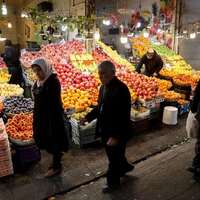
While anger first surfaced in the bazaars — historically seen as a pillar of the Islamic Republic’s support base — in late December, demonstrations quickly spread to universities, provincial towns and religious communities.
Unrest reached hundreds of cities and towns nationwide, according to reports reviewed by Iran International.
For many participants, this was not just another protest wave. It was the release of 47 years of accumulated pressure over repression, corruption, economic decline and personal freedoms.
Iranians were demanding a future not defined by compulsory social controls, state violence or a nuclear confrontation that repeatedly drags the country into crisis.
On January 8, authorities cut public access to the internet, triggering a 20-day digital blackout that rights groups say helped conceal the scale of the killings.
The blackout severely restricted access to independent information, communication with family abroad and documentation of abuses.
Iranian officials also acknowledged economic damage, with estimates placing losses in the tens of millions of dollars per day.
Trump support resonated with some protesters
During the uprising, support from US President Donald Trump drew significant attention.
For some Iranians, it mattered because memories of the 2009 Green Movement — the mass protest movement that erupted after disputed elections under President Barack Obama — still run deep. Many from that era felt the world did not do enough.
A few days after the January 8–9 massacre of protesters, Trump publicly backed demonstrators, writing: “Iranian patriots… KEEP PROTESTING… HELP IS ON ITS WAY.” He urged them to “take over your institutions” and warned the US was “locked and loaded.”
Despite mixed views on the effectiveness of a military campaign to topple the Islamic Republic, many Iranians felt so desperate that they wanted Trump to begin strikes as soon as possible.
He did so nearly 50 days after the massacre.
40-day war hits regime hard
On February 28, the United States and Israel launched a coordinated military campaign targeting the Islamic Republic’s leadership, nuclear infrastructure, missile systems, air defenses and internal security apparatus.
The operation included tens of thousands of strikes on military and strategic sites across Iran. Senior regime figures were killed, including Supreme Leader Ali Khamenei, in the most dramatic leadership blow since the 1979 revolution.
Other targets included IRGC commanders, Basij infrastructure, military production centers and strategic compounds tied to regime control. Iranian missile launchers and parts of the country’s strike capability were also heavily degraded.
For many Iranians who blamed these institutions for repression, torture and killings, the campaign was seen not simply as war, but as the first time the machinery used against them had itself come under sustained attack.
Videos reviewed by Iran International showed some Iranians thanking US President Donald Trump and Israeli Prime Minister Benjamin Netanyahu for the strikes. Others celebrated in homes and streets, with some dancing to YMCA — the song closely associated with Trump rallies — seeing the moment as symbolic justice after years of suffering.
Others hoped the weakening of the regime’s coercive apparatus could create space for future protest and political change, as promised by both Trump and Israeli Prime Minister Benjamin Netanyahu.
Yet even as parts of the repressive apparatus were hit, executions of prisoners and dissidents continued. Human rights groups say Iran carried out a record number of executions last year and warn the death penalty may be used even more aggressively after the war.
Diplomacy returns, questions remain?
The military campaign paused with the announcement of a two-week ceasefire on April 8, and the rhetoric has since shifted toward diplomacy: talk of deals, sanctions relief, frozen assets, and uranium transfers.
Iranian civil society groups have urged negotiators to include the release of political prisoners and prisoners of conscience in any agreement, arguing peace without human rights would leave thousands behind.
For many Iranians, the central question remains unchanged: where are the Iranian people in these negotiations?
Those killed in the streets, in detention and in hospitals did not die for another nuclear arrangement, many argue, nor to see one insider replaced by another such as Mohammad Bagher Ghalibaf.
One hundred days later, Iran remains suspended between grief and uncertainty.
Some feel partially avenged by the killing of Khamenei and his commanders, and by the weakening of the regime. Others still hold out hope that change may come. But many say they fear the world has moved on without them.
One hundred days after thousands of protesters were massacred on January 8 and 9, Iran's already fragile economy has sharply deteriorated, with millions feared to be unemployed as a devastating war compounds the crisis and accelerates economic collapse.
The protests that started in the Grand Bazaar of Tehran in late December and quickly spread across the country were followed by what has been described as the deadliest crackdown on protesters in Iran’s contemporary history in January.
Shortly thereafter, a war involving the United States and Israel began, compounding the country’s economic distress.
The service sector was hit hard during the protests. Advertising agencies, technical consulting firms, digital service providers, and hospitality and tourism businesses have since suffered further, and in many cases irreparable, damage because of the war.
Three weeks of internet disruptions during the protests, and over 1,100 hours since the beginning of the war on February 28, have effectively paralyzed large parts of the digital economy.
"According to official estimates released by Iranian authorities, more than 10 million people in Iran earn their income directly through the internet. As a result, any disruption or shutdown of internet services poses a serious threat to their livelihoods," Dadban, a legal advisory and training center for activists, said in a report.
"With the continuation of this situation, millions have faced a sharp drop in income or unemployment," Dadban added.
More significantly, the conflict has inflicted severe damage on critical economic infrastructure, including key petrochemical industries and steel production across multiple cities. These sectors, considered the backbone of Iran’s industrial economy, have suffered extensive losses.
The destruction of major industries has disrupted the supply of raw materials, triggering cascading effects across manufacturing and related sectors.
Widespread layoffs have followed, affecting not only workers in these industries but also those employed in dependent businesses.
At the same time, exports have declined sharply, further constraining an already limited flow of foreign revenue.
The scale of the economic shock is underscored by official estimates. A government spokesperson has put total war damages at around $270 billion—roughly 57 percent of Iran’s gross domestic product and several times larger than the country’s annual oil revenues.
The figure is estimated to be nearly three times the government’s general budget, highlighting the unprecedented fiscal strain facing the state.
Stagflation and rising risk of renewed unrest
Iran’s economy has now entered a period of stagflation, combining high inflation with economic stagnation and rising unemployment.
Even if the conflict were to end in the near term, economists warn that recovery will be protracted and uneven.
These worsening conditions have heightened the risk of renewed social unrest.
Without a political resolution—particularly an agreement with the United States—analysts suggest that further protests, potentially larger than those seen in December, are increasingly likely.
Public anger boils over online
Public sentiment, particularly on social media, reflects growing frustration and despair.
One user highlighted the desperation faced by unemployed citizens: “I live in Tehran, I’m married and renting. Since January I was working reduced hours, and I was officially laid off on March 25.”
Another user described the collapse of freelance work: “In this situation, most jobs have shut down, especially for people like us who worked freelance. Our income has dropped to zero, and we don’t know what we can do if the war and internet outages continue.”
A third user wrote: “Given the brutality of the clerical regime and its supporters, the skyrocketing prices of basic necessities, and the bizarre inflation that keeps getting worse… I think people are just waiting for a spark to come back to the streets. Death is no longer the issue—this situation is worse than death and must end.”
Inflation surges to historic highs
Inflation has risen dramatically over the past 100 days. Official data show point-to-point inflation, already above 50 percent at the end of December, climbed to over 70 percent by late February—before the war—reaching its highest level in decades.
In essential goods such as meat, dairy, oil, rice, fruits, and vegetables, inflation has exceeded 110 percent. Prices of critical medications, including some types of insulin, have multiplied several times—when they are available at all.
Although updated overall inflation figures have not been released, some experts believe the rate may already have entered triple digits, with further increases expected.
Survival economy takes hold
Some Iranians say the absence of severe shortages during the war reflects collapsing demand rather than stable or sufficient supply. With incomes sharply reduced, many households can no longer afford basic goods.
To cope, families are increasingly relying on savings, rental deposits, or loans from banks and relatives—placing them at risk of losing their homes. In some cases, household are selling personal belongings just to afford food.
Business owners are also under pressure. Many have begun selling equipment, with online marketplaces now flooded with listings for café and restaurant supplies and electronic devices—often with little or no buyer interest.
Meanwhile, the government faces mounting fiscal constraints. Even before the war, it struggled to meet budgetary obligations. Now, with millions feared to be unemployed, the government lacks the capacity to provide adequate unemployment benefits, and some workers report being unable to access them at all.
Iran International has received reports that an Iranian man was violently assaulted in central London. The Metropolitan Police are understood to be investigating.
The man has not been named. Sources say he was a professional working in the area and a peaceful opponent of the Iranian government.
The attack comes at a time of growing concern about threats, intimidation, and violence affecting people linked to Iran in Britain.
On Friday, British police charged three people over an attempted arson attack near the London offices of Iran International. Police said a burning container was thrown towards the broadcaster’s headquarters in north-west London. No one was injured, but the case has added to concerns about the safety of Persian-language media in Britain.
Before that, in March 2026, an Iran-aligned group was reported to have claimed responsibility for an arson attack on Jewish ambulances in Golders Green, north London.
In May 2025, three Iranian men were charged under the National Security Act after a major counter-terrorism investigation. Prosecutors said one of the men had carried out surveillance, reconnaissance, and online research with the aim of committing serious violence against a person in the UK.
The other two were accused of similar activity intended to help others carry out serious violence. The Home Secretary said the case was part of a broader response to threats linked to the Iranian state.
British authorities have warned for several years that Iran poses a serious threat on UK soil.
In October 2024, the head of MI5, Ken McCallum, said the security service and police had responded to 20 Iran-backed plots since January 2022 involving potentially lethal threats to British citizens and UK residents. He said many of the cases were linked to opponents of the Iranian state living in Britain.
The full circumstances of this latest assault are not yet public. But for many in the Iranian community, the message will already be clear. It will be seen as part of a wider climate of fear facing Iranians in exile, especially those who oppose the government in Tehran.
Two vessels, including an Indian-flagged supertanker, were forced back out of the Strait of Hormuz on Saturday after being approached by Iranian Revolutionary Guards’ naval units, shipping monitor TankerTrackers said.
The incident comes as India continues to buy Iranian crude, despite mounting tensions in the waterway. “Meanwhile, India is still importing Iranian oil. With friends like these,” TankerTrackers said.
The group said audio recordings indicated IRGC gunboats fired during the encounter as the ships were redirected westward.
One of the vessels was a very large crude carrier carrying about two million barrels of Iraqi oil, it said.
Meanwhile, Reuters reported, citing shipping sources that some merchant vessels received radio messages saying the Strait of Hormuz was shut again and that no ships were allowed to pass.
As Washington signals that a deal with Tehran may be close, a central question remains unresolved: who, if anyone, is actually winning?
US President Donald Trump said on Friday he expects an agreement with Iran “in the next day or two,” even claiming Iran has “agreed to everything,” including halting uranium enrichment and transferring its highly-enriched uranium stockpiles to the US.
The remarks came hours after Iran announced the reopening of the Strait of Hormuz following weeks of disruption, an announcement that sparked rare public criticism from within the Islamic Republic targeting the negotiating team.
Despite Tehran's declared reopening of the strait, Trump said the US will continue blockading Iranian ports until a final deal is achieved.
Speaking at Iran International's English podcast Eye for Iran, maritime sanctions expert Charlie Brown framed the strategy behind the current US blockade as one that could either be about pressure to deal or pressure to collapse.
“I think it’s clear that the goal would be, you know, the first case is pressure to come to negotiate, but the other case would be pressure to collapse the regime system and make space for a new system,” said Brown, a senior advisor at United Against Nuclear Iran who tracks Iran’s shadow fleet and illicit tanker networks.
That dual objective, forcing negotiations while simultaneously weakening the system sits at the heart of the current moment. But whether it is working remains far less clear.
Pressure campaign vs. economic reality
At the center of that uncertainty is the Strait of Hormuz, where a US-led pressure campaign has targeted Iran’s oil exports — the Islamic Republic's economic lifeline.
Both Brown and energy expert Dr. Iman Nasseri, Managing Director for the Middle East at FGE, agreed the impact is real, but warned it is too early to measure its effectiveness.
“The effects of a blockade will definitely take time,” Brown said, cautioning against drawing quick conclusions.
Nasseri, one of the leading experts on Iran’s oil flows and regional energy markets, echoed that view, emphasizing that even under ideal conditions, economic pressure unfolds slowly.
“In normal conditions three to four weeks but in Iranian situation and sanctions evasion it could take up to three months for a cargo to land in the destination market,” he said.
That delay means Iran can continue generating revenue in the short term, even as restrictions tighten.
“Iran is still selling oil which is out there at sea today without loading anything,” Nasseri explained, underscoring how existing cargoes can sustain income flows even as new exports are disrupted.
Shipping data reinforces that point. According to TankerTrackers.com, 633 Iran-linked tankers have been tracked globally, with 397 sanctioned by US authorities. Yet dozens continue operating, including at least 72 vessels currently moving freely in the Middle East.
The system — built on ship-to-ship transfers, AIS spoofing and shadow banking remains active, even under pressure.
That raises a broader question: whether global markets can absorb the disruption long enough for pressure on Iran to fully materialize.
While the economic battle unfolds at sea, the nuclear file remains central to any potential deal and to competing claims of success.
Trump’s assertion that Iran has agreed to halt enrichment would represent a major concession. But nuclear experts caution that the reality is more complex.
“I’d say the probability the regime would want to build the bomb has gone up, but the probability that they can succeed has gone down,” said David Albright, founder of the Institute for Science and International Security.
Albright also warned that focusing only on Iran’s most enriched uranium stockpiles risks missing the bigger picture. Iran possesses thousands of kilograms of lower-enriched uranium that could be further processed if enrichment continues — meaning any deal that does not fully end enrichment could leave a pathway intact.
Taken together, his assessment points to a paradox: Iran may be more motivated than ever to pursue nuclear capability, even as its ability to do so has been degraded by military strikes.
That tension complicates any claim that diplomacy alone has resolved the nuclear threat.
Regional shifts and Iran’s influence
Beyond the nuclear and economic fronts, regional dynamics suggest Iran’s position may be shifting — though not collapsing.
One of the most significant developments has been direct diplomatic engagement between Lebanon and Israel, a move that signals potential decoupling from Tehran’s influence.
“This was the first time that the United States recognizes that the government of Lebanon is sovereign enough and adult enough to sit in face-to-face talks bilaterally without Saudis or Iranians or Syrians or anybody else in the room,” said Hussain Abdul Hussain, a research fellow at the Foundation for Defense of Democracies and author of the Arab Case for Israel.
A newly agreed ceasefire between Israel and Lebanon is set to last 10 days, with the possibility of being “extended by mutual agreement” if negotiations show progress
That shift challenges one of Iran’s long-standing pillars of regional power: its network of proxy forces.
For years, Lebanon has effectively been treated as an extension of Iran’s regional strategy through Hezbollah. But the current talks — taking place independently of Tehran — suggest a possible shift toward decoupling.
Abdul Hussain underscored that divide more directly, describing how Lebanon’s leadership is increasingly asserting its independence from Iran’s negotiations.
“You do you, we do Lebanon,” he said, characterizing the government’s stance as separate from Tehran’s diplomatic track.
A moment of uncertainty
Taken together, the developments across Hormuz, the nuclear file and the regional landscape point to a single conclusion: it is too early to declare a winner.
The United States has demonstrated its ability to impose pressure — militarily and economically — while Iran has shown it can still adapt, sustain revenue and shape the narrative.
For now, the outcome is not defined by victory, but by how long each side can sustain the pressure before it breaks.
You can watch Eye for Iran on YouTube or listen on any podcast platform of your choosing
British police on Friday have charged three people over an attempted arson attack near the London offices of Iran International.
Oisin McGuinness, 21, Nathan Dunn, 19, and a 16-year-old boy were all charged with arson with intent to endanger life. McGuinness faces an additional charge of dangerous driving. All three suspects are British nationals and are scheduled to appear at Westminster Magistrates’ Court.
The incident occurred on Wednesday evening when an ignited container was thrown into a car park near the network’s studios in northwest London. There were no reports of injuries or damage following the attempted attack. Officers pursued a black SUV which later crashed on Ballards Lane in Finchley.
In a statement, Iran International said the attack highlights increasing pressure on its journalists and their families, particularly following the recent war involving Iran.
The broadcaster said its staff and their relatives have faced threats and harassment, describing the situation as an effort to silence independent reporting.