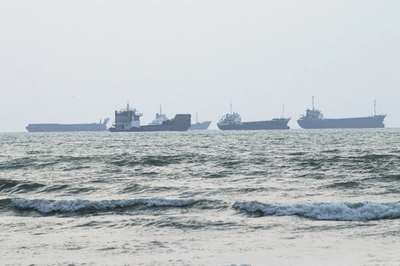
The ceasefire announced on April 7 has offered temporary relief to the United States and, by extension, the global economy. Oil prices have since fallen below $100 per barrel, the Strait of Hormuz may finally reopen, and global stock markets have rallied, recovering part of the losses recorded over the previous 40 days.
The coming days may prove crucial for stabilizing seasonal supply chains, particularly for fertilizer inputs transiting the strait during the peak planting period in the Northern Hemisphere.
Inside Iran, however, the outlook is far more complex.
The war effectively froze Iran's economic crises, shuttered markets, and halted price discovery. A similar pattern followed the 12-day conflict earlier in the war, when markets closed temporarily before reopening to renewed upward pressure as underlying imbalances reasserted themselves. This time, the damage is far greater.
During US-Israeli airstrikes on Iran’s strategic infrastructure, attacks on Mahshahr and Asaluyeh petrochemical facilities hit sites Iranian officials say account for 85% of the country’s petrochemical export capacity.
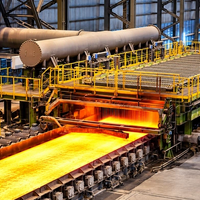
The steel industry was also hit. Since these sectors supply downstream industries from plastics to automotive manufacturing and construction, the full scale of disruption has yet to be assessed.
The Tehran Stock Exchange has been closed for more than 40 consecutive days.
The head of the Securities and Exchange Organization has indicated that war-damaged companies will return to trading at a later stage, meaning that even if the exchange reopens, a significant portion of major firms may remain inactive.
Reopening without viable export-oriented companies could trigger heavy selling pressure in a market where banks and automakers are already loss-making and reliant on state support.
Inflation remains the most pressing crisis. Before the US-Israeli airstrikes, annual inflation had surpassed 70 percent — the highest since World War II. Food inflation reached triple digits, with bread and grains rising by 140 percent and cooking oil by more than 200 percent.
The war temporarily suppressed these pressures: demand fell amid unemployment, banking disruptions reduced the velocity of money, and property and automobile transactions slowed sharply.
With the Pakistani-brokered ceasefire, that suppressed demand is likely to return.
The fiscal picture offers no relief. The approved budget included a 65-percent rise in taxes, but roughly 60 percent of working-age individuals are currently unemployed.
In effect, the government is attempting to tax its way out of a fiscal crisis in an economy where the majority of working-age adults have no income to tax. Post-war military expenditures and reconstruction obligations have increased sharply, with no significant new revenue streams available.
Compounding this is the disruption of Iran's primary financial channel through Dubai, which for years served as a central hub for trade and currency transactions worth $16 billion to $28 billion annually.
Following recent attacks on Dubai, Emirati authorities reportedly detained dozens of currency dealers linked to Iran's Revolutionary Guard and shut down associated front companies.
Alternative channels in Herat and Erbil remain active but lack Dubai's scale. When suppressed demand for foreign currency returns, it will hit a narrower, less efficient set of channels, amplifying exchange rate volatility.
The ceasefire offered the world a reprieve. For Iran, it removed the only thing suppressing a crisis that had been building for months. When markets reopen, they will price in not only pre-war imbalances but the destruction of the export capacity that once generated foreign currency.
The rial will face a market that has every reason to reprice it sharply downward, and a state with fewer tools than ever to intervene. Iran's economy has not returned to its pre-war condition. It has moved past it.
Yet the ceasefire itself is fragile, reportedly violated several times within its first 48 hours. Even in the best-case diplomatic scenario, the technology and capital required for reconstruction will not materialize within weeks, and as long as the risk of renewed conflict remains, investors are unlikely to commit long-term capital.
What comes next at the negotiating table will shape whether any of it matters.