• العربية
  • فارسی
Brand
  • Iran Insight
  • Politics
  • Economy
  • Analysis
  • Special Report
  • Opinion
  • Podcast
  • Iran Insight
  • Politics
  • Economy
  • Analysis
  • Special Report
  • Opinion
  • Podcast
  • Theme
  • Language
    • العربية
    • فارسی
  • Iran Insight
  • Politics
  • Economy
  • Analysis
  • Special Report
  • Opinion
  • Podcast
All rights reserved for Volant Media UK Limited
volant media logo
ANALYSIS

A truce for the world, a reckoning for Iran’s economy

Mohamad Machine-Chian

Iran International

Apr 9, 2026, 21:40 GMT+1

The ceasefire in the US-Israeli war on Iran eased global oil markets and may finally reopen the Strait of Hormuz. But for Iran, the truce exposes an economic crisis the war had temporarily masked, with weaker fundamentals and fewer tools to respond.

The ceasefire announced on April 7 has offered temporary relief to the United States and, by extension, the global economy. Oil prices have since fallen below $100 per barrel, the Strait of Hormuz may finally reopen, and global stock markets have rallied, recovering part of the losses recorded over the previous 40 days.

The coming days may prove crucial for stabilizing seasonal supply chains, particularly for fertilizer inputs transiting the strait during the peak planting period in the Northern Hemisphere.

Inside Iran, however, the outlook is far more complex.

The war effectively froze Iran's economic crises, shuttered markets, and halted price discovery. A similar pattern followed the 12-day conflict earlier in the war, when markets closed temporarily before reopening to renewed upward pressure as underlying imbalances reasserted themselves. This time, the damage is far greater.

During US-Israeli airstrikes on Iran’s strategic infrastructure, attacks on Mahshahr and Asaluyeh petrochemical facilities hit sites Iranian officials say account for 85% of the country’s petrochemical export capacity.

The steel industry was also hit. Since these sectors supply downstream industries from plastics to automotive manufacturing and construction, the full scale of disruption has yet to be assessed.

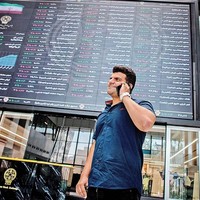
The Tehran Stock Exchange has been closed for more than 40 consecutive days.

The head of the Securities and Exchange Organization has indicated that war-damaged companies will return to trading at a later stage, meaning that even if the exchange reopens, a significant portion of major firms may remain inactive.

Reopening without viable export-oriented companies could trigger heavy selling pressure in a market where banks and automakers are already loss-making and reliant on state support.

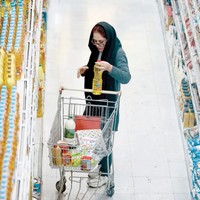
Inflation remains the most pressing crisis. Before the US-Israeli airstrikes, annual inflation had surpassed 70 percent — the highest since World War II. Food inflation reached triple digits, with bread and grains rising by 140 percent and cooking oil by more than 200 percent.

The war temporarily suppressed these pressures: demand fell amid unemployment, banking disruptions reduced the velocity of money, and property and automobile transactions slowed sharply.

With the Pakistani-brokered ceasefire, that suppressed demand is likely to return.

The fiscal picture offers no relief. The approved budget included a 65-percent rise in taxes, but roughly 60 percent of working-age individuals are currently unemployed.

In effect, the government is attempting to tax its way out of a fiscal crisis in an economy where the majority of working-age adults have no income to tax. Post-war military expenditures and reconstruction obligations have increased sharply, with no significant new revenue streams available.

Compounding this is the disruption of Iran's primary financial channel through Dubai, which for years served as a central hub for trade and currency transactions worth $16 billion to $28 billion annually.

Following recent attacks on Dubai, Emirati authorities reportedly detained dozens of currency dealers linked to Iran's Revolutionary Guard and shut down associated front companies.

Alternative channels in Herat and Erbil remain active but lack Dubai's scale. When suppressed demand for foreign currency returns, it will hit a narrower, less efficient set of channels, amplifying exchange rate volatility.

The ceasefire offered the world a reprieve. For Iran, it removed the only thing suppressing a crisis that had been building for months. When markets reopen, they will price in not only pre-war imbalances but the destruction of the export capacity that once generated foreign currency.

The rial will face a market that has every reason to reprice it sharply downward, and a state with fewer tools than ever to intervene. Iran's economy has not returned to its pre-war condition. It has moved past it.

Yet the ceasefire itself is fragile, reportedly violated several times within its first 48 hours. Even in the best-case diplomatic scenario, the technology and capital required for reconstruction will not materialize within weeks, and as long as the risk of renewed conflict remains, investors are unlikely to commit long-term capital.

What comes next at the negotiating table will shape whether any of it matters.

Most Viewed

Iran negotiators ordered to return after internal rift over Islamabad talks
1
EXCLUSIVE

Iran negotiators ordered to return after internal rift over Islamabad talks

2
INSIGHT

What the US naval blockade would mean for Iran’s economy

3
EXCLUSIVE

Iran’s central bank warns economy may take 12 years to rebuild after war

4
INSIGHT

Iran's digital economy battered by prolonged blackout

5
ANALYSIS

US blockade enters murky phase as tankers spoof signals and buyers hesitate

Banner
Banner

Spotlight

  • War damage amounts to $3,000 per Iranian, with blockade set to add to losses
    INSIGHT

    War damage amounts to $3,000 per Iranian, with blockade set to add to losses

  • Why the $100 billion Hormuz toll revenue is a myth
    ANALYSIS

    Why the $100 billion Hormuz toll revenue is a myth

  • US blockade targets Iran oil boom amid regional disruption
    ANALYSIS

    US blockade targets Iran oil boom amid regional disruption

  • Iran's digital economy battered by prolonged blackout
    INSIGHT

    Iran's digital economy battered by prolonged blackout

  • Iran-US ceasefire nudges sidelined Arab states toward Israel, expert says
    PODCAST

    Iran-US ceasefire nudges sidelined Arab states toward Israel, expert says

  • What the US naval blockade would mean for Iran’s economy
    INSIGHT

    What the US naval blockade would mean for Iran’s economy

  • Dollar-pegged pizza in Tehran points to a different kind of regime change

    Dollar-pegged pizza in Tehran points to a different kind of regime change

•
•
•

More Stories

Why the world failed to bypass the Strait of Hormuz

Apr 9, 2026, 20:28 GMT+1
•
Bozorgmehr Sharafedin

In 2019, while working on the energy desk at Reuters, I began reporting on a question that has shadowed global oil markets for decades: what would happen if the Strait of Hormuz were closed?

For me, the question was not abstract. I came from a country where, for more than half a century, leaders had repeatedly threatened to weaponize the Strait. As an energy correspondent, I wanted to understand whether the region had built credible alternatives, or the world was still exposed to a risk it preferred to ignore.

Routing oil supplies away from the Strait of Hormuz has been a recurring topic in the Middle East, especially since the “tanker wars” of the 1980s. Regional governments had long been reviewing and funding contingency plans to deal with a possible closure of the Strait and to reroute their oil and petroleum exports.

Yet most of these plans never moved beyond paper, even after cabinet approvals. Those that did remained underfunded, and the volumes they could carry were a drop in the bucket compared to the total flow through the Strait of Hormuz.

Analysts I spoke to at the time believed such plans were not economically feasible in the absence of a real disruption. The reality was that regional countries were reluctant to commit billions of dollars to precautionary infrastructure that might never be needed.

And even if disruption did occur, many of them believed it would be short-lived — that the United States would intervene militarily and reopen the waterway quickly.

The alternative routes

As a result, projects remained limited in scope. Saudi Arabia’s East-West Pipeline carried oil to the Red Sea, but its capacity increases remained modest relative to the scale of Hormuz. The UAE’s Fujairah terminal bypassed the Strait, but remained geographically too close to be fully secure.

Other routes were even more constrained. The Iraq–Turkey pipeline faced political disputes between Baghdad and the Kurdish region over oil rights and territory. The Iraqi Pipeline through Saudi Arabia (IPSA), built by Saddam Hussein in 1989 to bypass Hormuz, has been largely inactive since 1990. Plans for a pipeline to Jordan’s Aqaba port depended on fragile Iraqi-Jordanian relations.

Deep-seated rivalries across the region prevented the implementation of most cross-border projects. The alternative plans were small, and governments were so reluctant to share information that I abandoned the article.

Two winners

Only two countries took the threat seriously.

China diversified its energy sources over the past decade and worked to reduce its dependence on the Strait of Hormuz.

The second was Iran, which built the Goreh–Jask pipeline to bypass the strait altogether, and also invested heavily in its ability to affect alternative routes.

Tehran repeatedly reminded regional countries that these alternative routes were vulnerable. The 2019 attacks on oil tankers near Fujairah, the 2019 drone strike on Saudi Arabia’s East-West pipeline, and the 2023 attacks by the Houthis on shipping lanes in the Red Sea were direct challenges to efforts to secure alternative export routes.

The US-Israeli war against Iran in March was a sobering reminder to the global economy that the world had long neglected one of its most critical chokepoints.
Iran managed to wipe out trillions of dollars from global markets by closing the Strait and added inflationary pressure to economies already under strain.

The price of securing the Strait was now much higher than the price of alternative projects would have been if they had been taken seriously.

Alternative routes were a partial answer at that time, but now they are no answer at all. During the US-Iran war, the region began to realize that a lasting solution lies not in infrastructure, but in a new regional security framework that limits the weaponization of the Strait of Hormuz.

Islamic Republic loyalists protest ceasefire, attack negotiation push

Apr 9, 2026, 14:16 GMT+1
•
Hooman Abedi

Pro-government groups protested a ceasefire with the United States and planned negotiations, accusing officials of betraying the leadership and demanding continued confrontation, according to videos circulating on social media.

Footage shared on social media showed demonstrators gathering in the capital, where a speaker warned Parliament Speaker Mohammad Bagher Ghalibaf, reported to be leading upcoming talks with the United States, not to abandon retaliation after the killing of former Supreme Leader Ali Khamenei.

“Mr. Ghalibaf, whatever you have in this country is because of our martyred leader. Damn you if you want to trample on the blood of our leader,” the speaker said.

Other clips showed crowds chanting against “compromise” and calling for continued war with the United States and Israel. Some demanded allegiance to new leader Mojtaba Khamenei, while others questioned why earlier threats, including keeping the Strait of Hormuz closed, had not been carried out.

A woman in one video said, “We have not taken revenge for our leader. We want to remain enemies with America and Israel until the last drop of our blood. We do not want to negotiate.”

Hardline media rejects ceasefire

Hossein Shariatmadari, editor-in-chief of the hardline Kayhan newspaper, wrote on Wednesday that any temporary ceasefire or negotiation with the United States would only help Washington recover and prepare for further attacks.

Shariatmadari said even if the other side accepted all of Iran’s reported conditions, there was no reason to believe the United States would honor them.

State media debate exposes divisions

Disagreements over negotiations surfaced during live broadcasts on state television, where an analyst argued over whether to continue talks or escalate.

Mehdi Khanalizadeh, a commentator, said on Wednesday attacks had undermined the basis for diplomacy. “America and Israel have attacked the negotiating table and there is no longer a foundation for talks,” Khanalizadeh said.

This was not something new. On Saturday, hardline figures targeted officials who had advocated de-escalation, including former foreign minister Mohammad Javad Zarif and former president Hassan Rouhani.

  • Hardliners pile on 'traitor' Zarif, urge his arrest over call for end of war

    Hardliners pile on 'traitor' Zarif, urge his arrest over call for end of war

Hamid Rasaei, a lawmaker, called on the judiciary to detain both men after Rouhani urged preparations to end the war and Zarif proposed a negotiated settlement.

In an article in Foreign Affairs, Zarif argued Iran should use its position to “declare victory and make a deal,” proposing limits on the nuclear program and reopening the Strait of Hormuz in exchange for lifting sanctions.

Rouhani said ending the conflict in a way that protects national interests required policy changes and coordination to safeguard strategic areas.

At rallies, demonstrators burned images of Zarif and Rouhani, accusing them of serving US interests. Saeed Haddadian, a maddah (religious eulogist and chant leader) close to the establishment, issued a direct warning.

“I give Zarif three days. If he does not say he screwed up, on the fourth night we will gather and go to his house,” Haddadian said.

Islamic Republic marks Khamenei 40th day with burial still unclear

Apr 9, 2026, 11:06 GMT+1
•
Hooman Abedi

Fortieth-day ceremonies for Iran’s former Supreme Leader Ali Khamenei began on Thursday during a fragile two-week ceasefire with the United States and Israel, as authorities continued to withhold clear information about his burial 40 days after his killing.

State media reported that mourning processions started in the morning across several cities and would continue until 8 p.m. with organized groups moving through urban centers as part of coordinated nationwide commemorations.

Ali Khamenei was killed on February 28 minutes after the war began. Iranian state media confirmed his death the following day, and authorities announced 40 days of public mourning.

Pro-government women dressed in black beat drums during a procession marking the 40th day since the death of Iran’s Supreme Leader Ali Khamenei in Tehran on April 9, 2026.
100%
Pro-government women dressed in black beat drums during a procession marking the 40th day since the death of Iran’s Supreme Leader Ali Khamenei in Tehran on April 9, 2026.

Officials have not said where or how he was buried, leaving room for claims that the burial was conducted in secret – or even that his body has yet to be formally interred or recovered.

In Shiite tradition, the fortieth day after death is closely tied to visits to a grave and large public gatherings. The absence of a confirmed burial site has set this commemoration apart, raising questions among observers.

Clergy deliver remarks during a ceremony marking the 40th day since the death of Iran’s Supreme Leader Ali Khamenei at a church in Tehran on April 8, 2026.
100%
Clergy deliver remarks during a ceremony marking the 40th day since the death of Iran’s Supreme Leader Ali Khamenei at a church in Tehran on April 8, 2026.

Church ceremony triggers wave of mockery

A separate fortieth-day ceremony held at Tehran’s Saint Sarkis Church on Wednesday drew widespread attention and a flood of mocking reactions online.

The event, attended by Culture Minister Abbas Salehi, marked an unusual venue for a ceremony tied to a central figure in Shiite political and religious life.

“They held a fortieth in a church while his body has not even been buried,” one user wrote. “Someone who literally claimed to be the most devout Muslim still has not even had funeral prayers.”

Another comment took a more scathing tone: “Forty days have passed and his corpse is still lying around. The fortieth is a sacred day in Shiite tradition, when people gather at a grave for a proper ceremony. But for him, none of that is possible.”

Iran’s former intelligence minister Mahmoud Alavi (front row, left) and Culture Minister Abbas Salehi (front row, right) attend a memorial ceremony in a church in Tehran on April 8, 2026.
100%
Iran’s former intelligence minister Mahmoud Alavi (front row, left) and Culture Minister Abbas Salehi (front row, right) attend a memorial ceremony in a church in Tehran on April 8, 2026.

Several users framed the situation as symbolic retribution. “This is karma,” one wrote. “They insulted people and denied dignity to the dead for years, and now he has no grave, no ceremony.”

Others directly referenced past state restrictions on mourning for protesters. “They used to prevent families from holding funerals, demand payment for burial, and intimidate mourners,” one user wrote. “Now the same has come back to them.”

The choice of a church as a venue became a focal point of ridicule. “From fear of the followers of Moses to taking refuge with the followers of Jesus,” one comment read.

Another user wrote: “They are holding the ceremony in a church because they know it will not be targeted,” suggesting the decision was driven by security concerns.

Others highlighted what they described as contradiction. “These same authorities arrested and persecuted Christians, and now they are holding a ceremony in a church after keeping his body for 40 days,” one comment read.

Ceasefire backdrop and continued tensions

The commemorations come after 40 days of conflict that continued until Tuesday night, followed by a temporary halt in fighting.

  • Tehran factions jostle for credit as fragile ceasefire unfolds

    Tehran factions jostle for credit as fragile ceasefire unfolds

A two-week ceasefire between Tehran and Washington – with Israel backing it – was agreed after last-minute mediation led by Pakistan.

However, explosions and air defense activity were reported in multiple cities on Wednesday and Thursday night, according to local accounts, while strategic islands were targeted in strikes that some media attributed to regional actors.

Confident that US and Israeli strikes would avoid civilian areas, government supporters in recent weeks gathered at evening local events, repeating official narratives and calling for continued confrontation rather than negotiations.

The fortieth-day ceremonies have again provided a platform for such pro-government supporters.

Authorities emphasize continuity

The Islamic Revolutionary Guards Corps said in a statement marking the fortieth day that Khamenei’s death was as consequential as his life in advancing the Islamic Republic’s trajectory.

  • Ceasefire stirs anger, fragile hope among Iranians

    Ceasefire stirs anger, fragile hope among Iranians

“The loss of the leader is difficult, but enduring his absence is made possible through the continuation of his path and the realization of promised outcomes,” the Guards said.

Videos circulating online also showed a visible presence of Afghan immigrant participants in ceremonies in Tehran, highlighting the broader networks mobilized for the commemorations.

Costa Rica designates IRGC, 3 Iran-backed groups as terror organizations

Apr 9, 2026, 08:24 GMT+1

Costa Rica designated Iran’s Islamic Revolutionary Guards as a terrorist organization, the foreign ministry said on Thursday, in a move that also blacklisted three other Iran-backed groups in the region.

Hezbollah in Lebanon, Hamas in Gaza, and Houthis in Yemen were also designated.

The government made the decision on Monday, according to the ministry, which said the measure was taken in line with Costa Rica’s international commitments to combat terrorism and its financing.

The move will "allow intelligence authorities and judicial bodies to strengthen their prevention, investigation, and prosecution capabilities, acting more decisively against any logistical and financial support networks that may be operating within the country to sustain these organizations,” the foreign ministry said.

It added that the designation would help intelligence and judicial authorities strengthen their ability to prevent, investigate and prosecute logistical and financial support networks linked to the groups.

“The designation seeks to prevent any form of action or influence by these groups in Costa Rica, safeguarding the security of the population and integrity of our democratic institutions," according to the statement.

Several countries have moved in recent weeks to designate the IRGC as a terrorist organization, while the Trump administration has urged allies to take similar action against the IRGC and Hezbollah.

Iceland, Moldova, Bosnia and Herzegovina, Montenegro, North Macedonia, and Liechtenstein designated the terror group on March 20, followed by Argentina on March 31.

  • Argentina designates Iran's IRGC Quds Force as terrorist group

    Argentina designates Iran's IRGC Quds Force as terrorist group

Western governments have increasingly targeted the IRGC over its regional activities, support for armed groups and role in Iran’s security apparatus.

The Islamic Revolutionary Guards have been designated as a terrorist organization by the United States, Canada, the European Union, and Australia.

France gets two citizens back from Iran as questions linger over swap terms

Apr 8, 2026, 13:16 GMT+1

Iran has released French nationals Cécile Kohler and Jacques Paris after more than three and a half years in detention, closing one chapter of a case Paris has long held up as emblematic of what it calls Iran’s practice of detaining foreign nationals on politicized grounds.

The two left Iran on Tuesday and were received in France on Wednesday, after traveling via Azerbaijan, with President Emmanuel Macron saying their return marked the end of a “terrible ordeal.”

Kohler, 41, and Paris, 72, were arrested in May 2022 during a tourist trip to Iran and later accused of espionage and other national-security offenses, charges France said were unfounded.

They were held in Tehran’s Evin prison before being moved in November 2025 to the French embassy in Tehran under a form of house arrest that still left them unable to leave the country.

Macron’s office said the two left Iran by road “without any special coordination with the US and Israeli forces” operating in the region.

Their release appears to have come out of a broader understanding between Paris and Tehran, though both sides have publicly avoided describing it as a straightforward swap.

Iran’s official IRNA news agency said the two were freed under an understanding that France would in turn release Mahdieh Esfandiari, an Iranian student living in Lyon, and that France had earlier withdrawn its complaint against Iran at the International Court of Justice.

Reuters reported that Esfandiari, convicted in France in late February for glorifying terrorism in social media posts, had already been released after serving nearly a year and was appealing the conviction.

Le Monde, citing diplomatic and expert sources, reported that Esfandiari’s case had become tied in practice to the fate of the French pair: after she was released under judicial supervision in October 2025, Iran allowed Kohler and Paris to leave prison for the French embassy, but their full departure from Iran came only after Esfandiari’s house arrest in France was lifted.

There is also evidence of other concessions already on the table. The ICJ case France had filed against Iran over the detention of Kohler and Paris was formally removed from the court’s list in September 2025 at France’s request.

Reuters reported that French officials declined to spell out the full terms that secured the pair’s departure, while Le Monde said no explicit bargaining was publicly acknowledged by Paris even though the sequence of events pointed to a negotiated quid pro quo.

The timing has fueled debate in France over whether geopolitics also played a role.

Reuters wrote that the release came as Paris sought to distance itself from the US-Israeli war effort, while Le Monde quoted analysts who described the move as a calculated Iranian gesture toward France at a moment when Macron had criticized Washington’s approach and France had resisted force-based measures around the Strait of Hormuz.

Reuters reported that the release came as Paris was trying to put some distance between itself and the US-Israeli war effort, while Le Monde cited analysts who saw it as a calculated Iranian signal to France at a time when Macron had openly criticized Washington’s approach and Paris had opposed using force around the Strait of Hormuz.

French officials deny softening their position toward Tehran. But the case fits a broader pattern in which Iran has been accused by Western governments and rights advocates of using detained foreigners or dual nationals as leverage in disputes with other states.

France itself has repeatedly described Kohler and Paris as “state hostages,” a phrase that reflects that view, even as Iran rejects the accusation.