By Wednesday morning, several senior figures were already positioning themselves as the architects of the truce, and their competition quickly spilled into the Iranian media.
The pro-government ISNA news agency reported that parliamentary Speaker Mohammad Bagher Ghalibaf would lead Iran’s delegation to the talks scheduled to begin Friday in Islamabad, Pakistan. Within half an hour, the IRGC-linked Tasnim News Agency contradicted the report, saying the composition of the delegation had not yet been finalized by the “relevant institutions.”
The conflicting reports highlighted uncertainty over who would lead the delegation and underscored the rivalries that often shape decision-making in Tehran.
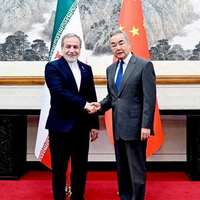
The first official statement on the ceasefire came from Foreign Minister Abbas Araghchi, a longtime diplomat with close ties to Iran’s security establishment.
In a post on X, he emphasized that he was speaking “on behalf of the Supreme National Security Council of the Islamic Republic of Iran,” and thanked Pakistani officials “on behalf of the Islamic Republic of Iran,” language that appeared to project broad institutional authority.
President Massoud Pezeshkian, who cannot join the negotiating team for protocol reasons, issued a largely symbolic statement—seemingly intended to remind the public that the country still has a president expected to lead the government. Like several other officials who had advocated a ceasefire from the outset, Pezeshkian framed the temporary truce as a “victory for Iran.”
Moments after Iran signaled its reluctant acceptance of the ceasefire, Nasim Online, an outlet close to the IRGC, published a statement from the Secretariat of the Supreme National Security Council.
The statement suggested that Security Chief Mohammad Bagher Zolghadr was also seeking to frame the agreement as a decisive achievement. It declared that “the enemy… has suffered an undeniable, historic, and crushing defeat,” and repeatedly urged the public to “celebrate the victory.”
Yet within minutes of the statement, Israel and Jordan reported intercepting Iranian missiles. Later on Wednesday, Kuwait came under drone and missile attack. The incidents highlighted the fragile nature of the ceasefire and the difficulty of enforcing it across multiple actors involved in the conflict.
Israel’s heavy strikes on Beirut later that day further underscored the instability of the truce. US Vice President JD Vance publicly described the ceasefire as “fragile.”
In the early hours of Wednesday, Iranian-aligned groups in Iraq initially appeared unwilling to honor the ceasefire. But when they released a female US journalist they had taken hostage earlier in the week, the move suggested Tehran still retains influence over some allied militias and could signal a willingness to ease tensions.
From the tone of several officials in Tehran, particularly those aligned with more pragmatic political currents, it appears that many believe President Trump has concluded the conflict has reached its limit and that he does not want further escalation.
Tehran appears to share that assessment. Both sides have claimed victory, a framing some politicians describe as a “win-win agreement.”