For many ordinary citizens, the psychological toll of constant airstrikes is profound. In the absence of an effective warning system, a near-permanent sense of insecurity dominates daily life.
Families—especially those with children or vulnerable members requiring medical care—have fled heavily targeted cities such as Tehran. Some of them have sought refuge in smaller towns and rural areas considered relatively safer from the repeated strikes that occur both day and night.
Those who have remained in their homes describe a life defined by constant anticipation of attacks.
Golshan, a woman living in Tehran with her two dogs, writes daily about her experiences on X. “Night is no longer a time for sleep—it is a field of waiting,” she wrote. “Waiting for a sound you don’t know where it will come from, but you are certain that when it does, something inside you will break.”
She added that she avoids using the elevator, fearing a sudden power outage could trap her and her pets during an attack.
Another user, Marzieh, described how even basic activities have become stressful. “Taking a shower has become anxiety-inducing for many,” she wrote, explaining that people fear being trapped mid-attack or losing water if the electricity is cut. “Every moment of their lives is filled with fear and worry.”
The International Committee of the Red Cross recently shared the account of a mother named Golnaz on X, describing the aftermath of an airstrike that cut off electricity and blew doors and windows off their hinges.
“After that, our home was no longer a safe place,” she said. She added that they had to move to her brother’s house, but even there her sons do not feel safe, so she is considering taking them somewhere far from the noise of war to recover from the shock.
Despite these conditions, some citizens say they are trying to preserve a sense of normalcy. They continue to visit cafés, walk in parks, and exercise outdoors whenever possible, attempting to maintain fragments of everyday life amid the uncertainty.
Reactions to the war’s broader implications remain deeply divided.
Supporters of the government describe the conflict as a “holy war” and insist it must continue until what they call “final victory.” Despite nightly bombardments, including during rainstorms, men and women who back the authorities continue to gather in city squares, chanting slogans and attending funerals for officials killed in the strikes.
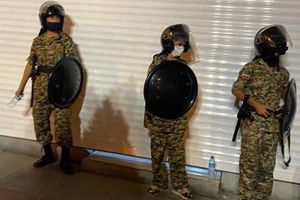
Their presence is not limited to such rallies. According to social media reports, groups of pro-government men, alongside members of the Basij militia—sometimes including teenagers—patrol neighborhoods at night on motorcycles and pickup trucks.
They broadcast slogans over loudspeakers or play religious mourning songs late into the evening, adding to the strain of already sleepless nights for many residents.
Some Iranians express hope that continued strikes and the killing of government officials could lead to the collapse of the current system. One user wrote that relatives in Tehran become anxious when attacks appear to decrease, fearing that the war might end and “they”—meaning the Islamic Republic—might survive.
A user, Elham, shared the words of an acquaintance: “When there are no attacks, I get stressed that we’re still here and these savages are still in power."
"When the strikes happen, I’m so afraid I can only cry and wish for it to end quickly. I don’t even know what I want anymore. I just want them gone—and the war gone too," she added. “This is not a life anyone deserves. We wanted nothing more than an ordinary life.”
Those who share this view warn that an inconclusive end to the war could bring severe consequences: intensified repression of dissent, continued sanctions, widespread unemployment, the collapse of businesses, rising inflation—particularly in food prices—and potential shortages of electricity, water, and essential goods such as medicine.
Yet there is also a third group—neither aligned with government supporters nor hopeful that war will bring political change. These individuals simply call for an immediate end to the conflict.
A woman named Somayeh, opposing the continuation of the war, addressed both sides in a post: “Do you know what it feels like to hang a whistle around your neck and your child’s before going to sleep at night? If you don’t, then don’t tell me that war is the best thing for me.”