• العربية
  • فارسی
Brand
  • Iran Insight
  • Politics
  • Economy
  • Analysis
  • Special Report
  • Opinion
  • Podcast
  • Iran Insight
  • Politics
  • Economy
  • Analysis
  • Special Report
  • Opinion
  • Podcast
  • Theme
  • Language
    • العربية
    • فارسی
  • Iran Insight
  • Politics
  • Economy
  • Analysis
  • Special Report
  • Opinion
  • Podcast
All rights reserved for Volant Media UK Limited
volant media logo

CENTCOM says IRGC claim of downing fighter jet over Hormuz is false

Apr 2, 2026, 21:58 GMT+1

US Central Command said Iran’s Islamic Revolutionary Guard Corps claim that it downed an “enemy” fighter jet over Qeshm Island in the Strait of Hormuz is false, adding that all US aircraft are accounted for.

Most Viewed

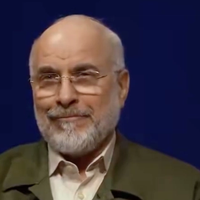
Ghalibaf defends Iran-US talks amid hardline backlash
1
INSIGHT

Ghalibaf defends Iran-US talks amid hardline backlash

2
INSIGHT

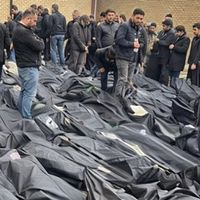
A nation in limbo: 100 days after the massacre, has the world moved on?

3
ANALYSIS

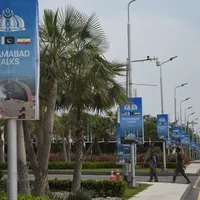
From instability to influence: Pakistan’s pivotal role in US-Iran diplomacy

4
ANALYSIS

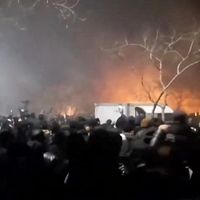
100 days on: why Iran’s January protests spread across social classes

5

War-hit homeowners feel abandoned as Iran’s reconstruction aid fades

Banner
Banner

Spotlight

  • Bread shortages, soaring prices strain households in Iran, residents say
    VOICES FROM IRAN

    Bread shortages, soaring prices strain households in Iran, residents say

  • War-hit homeowners feel abandoned as Iran’s reconstruction aid fades

    War-hit homeowners feel abandoned as Iran’s reconstruction aid fades

  • 100 days on: the anatomy of Iran’s January crackdown
    INSIGHT

    100 days on: the anatomy of Iran’s January crackdown

  • Ghalibaf defends Iran-US talks amid hardline backlash
    INSIGHT

    Ghalibaf defends Iran-US talks amid hardline backlash

  • 100 days on: why Iran’s January protests spread across social classes
    ANALYSIS

    100 days on: why Iran’s January protests spread across social classes

  • From instability to influence: Pakistan’s pivotal role in US-Iran diplomacy
    ANALYSIS

    From instability to influence: Pakistan’s pivotal role in US-Iran diplomacy

•
•
•

More Stories

Araghchi tells Lavrov UN Hormuz resolution would worsen crisis

Apr 2, 2026, 21:04 GMT+1

Iran’s Foreign Minister Abbas Araghchi said in a call with his Russian counterpart Sergei Lavrov that any UN Security Council resolution on the Strait of Hormuz would worsen the situation, according to a statement published on his Telegram channel.

“Issuing a resolution by the Security Council regarding the Strait of Hormuz will not only solve no problem, but will itself become part of the problem,” Araghchi said.

He added that the current insecurity in the Strait of Hormuz stems from US and Israeli military actions, and said vessels from countries not involved in attacks on Iran are continuing to transit the waterway in coordination with Iranian armed forces.

US firm backed by Trump's sons pitches drones to Arab states - AP

Apr 2, 2026, 20:47 GMT+1

A drone manufacturer backed by President Donald Trump’s two eldest sons is seeking to sell interceptor drones to countries astride the Persian Gulf facing attacks from Iran, the Associated Press reported.

Powerus, a Florida-based firm that recently brought on Eric Trump and Donald Trump Jr., is pitching its systems to countries reliant on US military support, the report said.

The report cited Powerus co-founder Brett Velicovich as saying that the company is making sales pitches that include drone demonstrations in several countries astride the Persian Gulf to show how its defensive drone interceptors could help them ward off Iranian attacks.

‘War must end—but so must the regime’: civilians speak from under fire

Apr 2, 2026, 20:45 GMT+1
•
Maryam Sinaiee

Relentless airstrikes by Israel and the United States have transformed life across Iran, reshaping cities and daily routines while leaving millions caught between fear, resilience, and deeply divided views on the war.

For many ordinary citizens, the psychological toll of constant airstrikes is profound. In the absence of an effective warning system, a near-permanent sense of insecurity dominates daily life.

Families—especially those with children or vulnerable members requiring medical care—have fled heavily targeted cities such as Tehran. Some of them have sought refuge in smaller towns and rural areas considered relatively safer from the repeated strikes that occur both day and night.

Those who have remained in their homes describe a life defined by constant anticipation of attacks.

Golshan, a woman living in Tehran with her two dogs, writes daily about her experiences on X. “Night is no longer a time for sleep—it is a field of waiting,” she wrote. “Waiting for a sound you don’t know where it will come from, but you are certain that when it does, something inside you will break.”

She added that she avoids using the elevator, fearing a sudden power outage could trap her and her pets during an attack.

Another user, Marzieh, described how even basic activities have become stressful. “Taking a shower has become anxiety-inducing for many,” she wrote, explaining that people fear being trapped mid-attack or losing water if the electricity is cut. “Every moment of their lives is filled with fear and worry.”

The International Committee of the Red Cross recently shared the account of a mother named Golnaz on X, describing the aftermath of an airstrike that cut off electricity and blew doors and windows off their hinges.

“After that, our home was no longer a safe place,” she said. She added that they had to move to her brother’s house, but even there her sons do not feel safe, so she is considering taking them somewhere far from the noise of war to recover from the shock.

Despite these conditions, some citizens say they are trying to preserve a sense of normalcy. They continue to visit cafés, walk in parks, and exercise outdoors whenever possible, attempting to maintain fragments of everyday life amid the uncertainty.

Reactions to the war’s broader implications remain deeply divided.

Supporters of the government describe the conflict as a “holy war” and insist it must continue until what they call “final victory.” Despite nightly bombardments, including during rainstorms, men and women who back the authorities continue to gather in city squares, chanting slogans and attending funerals for officials killed in the strikes.

Their presence is not limited to such rallies. According to social media reports, groups of pro-government men, alongside members of the Basij militia—sometimes including teenagers—patrol neighborhoods at night on motorcycles and pickup trucks.

  • Children as young as 12 can join war support, IRGC says

    Children as young as 12 can join war support, IRGC says

They broadcast slogans over loudspeakers or play religious mourning songs late into the evening, adding to the strain of already sleepless nights for many residents.

Some Iranians express hope that continued strikes and the killing of government officials could lead to the collapse of the current system. One user wrote that relatives in Tehran become anxious when attacks appear to decrease, fearing that the war might end and “they”—meaning the Islamic Republic—might survive.

A user, Elham, shared the words of an acquaintance: “When there are no attacks, I get stressed that we’re still here and these savages are still in power."

"When the strikes happen, I’m so afraid I can only cry and wish for it to end quickly. I don’t even know what I want anymore. I just want them gone—and the war gone too," she added. “This is not a life anyone deserves. We wanted nothing more than an ordinary life.”

Those who share this view warn that an inconclusive end to the war could bring severe consequences: intensified repression of dissent, continued sanctions, widespread unemployment, the collapse of businesses, rising inflation—particularly in food prices—and potential shortages of electricity, water, and essential goods such as medicine.

Yet there is also a third group—neither aligned with government supporters nor hopeful that war will bring political change. These individuals simply call for an immediate end to the conflict.

A woman named Somayeh, opposing the continuation of the war, addressed both sides in a post: “Do you know what it feels like to hang a whistle around your neck and your child’s before going to sleep at night? If you don’t, then don’t tell me that war is the best thing for me.”

Trump says Iran eager to make a deal to end the war - TIME

Apr 2, 2026, 20:30 GMT+1

Donald Trump said Iran was eager to make a deal to end the fighting, TIME reported citing an interview with the US president.

"Why wouldn't they call? We just blew up their three big bridges last night,” Trump said on Thursday.

"They’re getting decimated. They say Trump is not negotiating with Iran. I mean, it's sort of an easy negotiation,” he added.

Bahrain pushes UN vote on Hormuz shipping, China opposes use of force

Apr 2, 2026, 19:43 GMT+1

Bahrain said on Thursday it hopes for a UN Security Council vote on Friday on a resolution to protect commercial shipping in and around the Strait of Hormuz, but veto-wielding China made clear its opposition to any authorization of the use of force.

“We look forward to a unified position from this esteemed Council during the vote that will take place on the draft resolution tomorrow, God willing,” Bahrain’s Foreign Minister Abdullatif bin Rashid Al Zayani told the council.

The draft resolution, presented by Bahrain as current council chair, would authorize “all necessary means” to protect shipping, while specifying that such steps should be “defensive in nature.”

Bahrain had previously dropped an explicit reference to binding enforcement in a bid to overcome objections from other nations, particularly Russia and China.

Reuters reported that the latest draft sets a six-month time limit for the measures, citing the text of the draft resolution.

The latest Bahraini resolution had been placed under a so-called silence procedure until noon (1600 GMT) on Thursday, after which it would automatically have proceeded to a vote if there were no objections, the report said.

Reuters cited a Western diplomatic source as saying the silence had been broken, by China, ​Russia and France.

Speaking to the Security Council, China’s UN envoy Fu Cong made clear Beijing’s opposition to authorizing member states to use force.

“(This would be) legitimizing the unlawful and indiscriminate use of force, which would inevitably lead to further escalation of the situation and lead to serious consequences,” he said

A Security Council resolution requires at least nine votes in favor and no vetoes from its five permanent members — the United States, Russia, China, Britain and France — meaning any of those countries could block the measure.