Relentless airstrikes by Israel and the United States have transformed life across Iran, reshaping cities and daily routines while leaving millions caught between fear, resilience, and deeply divided views on the war.
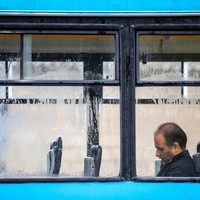
For many ordinary citizens, the psychological toll of constant airstrikes is profound. In the absence of an effective warning system, a near-permanent sense of insecurity dominates daily life.
Families—especially those with children or vulnerable members requiring medical care—have fled heavily targeted cities such as Tehran. Some of them have sought refuge in smaller towns and rural areas considered relatively safer from the repeated strikes that occur both day and night.
Those who have remained in their homes describe a life defined by constant anticipation of attacks.
Golshan, a woman living in Tehran with her two dogs, writes daily about her experiences on X. “Night is no longer a time for sleep—it is a field of waiting,” she wrote. “Waiting for a sound you don’t know where it will come from, but you are certain that when it does, something inside you will break.”
She added that she avoids using the elevator, fearing a sudden power outage could trap her and her pets during an attack.
Another user, Marzieh, described how even basic activities have become stressful. “Taking a shower has become anxiety-inducing for many,” she wrote, explaining that people fear being trapped mid-attack or losing water if the electricity is cut. “Every moment of their lives is filled with fear and worry.”
The International Committee of the Red Cross recently shared the account of a mother named Golnaz on X, describing the aftermath of an airstrike that cut off electricity and blew doors and windows off their hinges.
“After that, our home was no longer a safe place,” she said. She added that they had to move to her brother’s house, but even there her sons do not feel safe, so she is considering taking them somewhere far from the noise of war to recover from the shock.
Despite these conditions, some citizens say they are trying to preserve a sense of normalcy. They continue to visit cafés, walk in parks, and exercise outdoors whenever possible, attempting to maintain fragments of everyday life amid the uncertainty.
Reactions to the war’s broader implications remain deeply divided.
Supporters of the government describe the conflict as a “holy war” and insist it must continue until what they call “final victory.” Despite nightly bombardments, including during rainstorms, men and women who back the authorities continue to gather in city squares, chanting slogans and attending funerals for officials killed in the strikes.
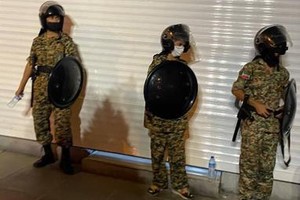
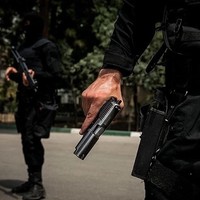
Their presence is not limited to such rallies. According to social media reports, groups of pro-government men, alongside members of the Basij militia—sometimes including teenagers—patrol neighborhoods at night on motorcycles and pickup trucks.
They broadcast slogans over loudspeakers or play religious mourning songs late into the evening, adding to the strain of already sleepless nights for many residents.
Some Iranians express hope that continued strikes and the killing of government officials could lead to the collapse of the current system. One user wrote that relatives in Tehran become anxious when attacks appear to decrease, fearing that the war might end and “they”—meaning the Islamic Republic—might survive.
A user, Elham, shared the words of an acquaintance: “When there are no attacks, I get stressed that we’re still here and these savages are still in power."
"When the strikes happen, I’m so afraid I can only cry and wish for it to end quickly. I don’t even know what I want anymore. I just want them gone—and the war gone too," she added. “This is not a life anyone deserves. We wanted nothing more than an ordinary life.”
Those who share this view warn that an inconclusive end to the war could bring severe consequences: intensified repression of dissent, continued sanctions, widespread unemployment, the collapse of businesses, rising inflation—particularly in food prices—and potential shortages of electricity, water, and essential goods such as medicine.
Yet there is also a third group—neither aligned with government supporters nor hopeful that war will bring political change. These individuals simply call for an immediate end to the conflict.
A woman named Somayeh, opposing the continuation of the war, addressed both sides in a post: “Do you know what it feels like to hang a whistle around your neck and your child’s before going to sleep at night? If you don’t, then don’t tell me that war is the best thing for me.”
An illustration showing an ancient Iranian soldier and a Revolutionary Guard member holding a weapon together, displayed during a November 7 ceremony in Tehran where a statue of pre-Islamic Persian King Shapur I was unveiled.
Tehran’s unveiling of a towering statue depicting the Roman Emperor Valerian kneeling before pre-Islamic Persian King Shapur I has renewed criticism of the Islamic Republic’s appeal to nationalist sentiment following the June war with Israel.
For over forty years, the theocracy purged ancient Persian history from schoolbooks, replacing it with post-Islamic narratives. But after the 12-day conflict with Israel, officials have turned to the distant pre-Islamic past to rally a divided society.
From murals of ancient kings and soldiers to patriotic songs added to Shi’ite mourning ceremonies performed before Supreme Leader Ali Khamenei, Tehran now embraces imagery once deemed heretical by its own revolutionary ethos.
The statue unveiled in Tehran's Revolution Square
'Kneel before Iran' campaign
Tehran’s Revolution (Enghelab) Square was the scene of an unusual spectacle on Friday as officials unveiled a massive bronze statue depicting Roman Emperor Valerian kneeling in submission before Sassanid King Shapur I, commemorating Iran’s victory at the Battle of Edessa (260 AD).
The event was held under the slogan “Kneel before Iran,” part of what authorities describe as a campaign to project “national unity and historical pride” following the June war with Israel.
Tehran Mayor Alireza Zakani, a staunch ultraconservative, said on X: “Enmity with Great Iran can only end in kneeling before this historic nation.”
Municipal official Davood Goodarzi said the installation would be accompanied by visual displays depicting “other victories of Iranians over foreign aggressors,” including the defeat of British forces by local commander Rais-Ali Delvari, Mirza Kuchak Khan’s resistance against Russian troops, and Surena’s triumph over Rome at the Battle of Carrhae in 53 BCE.
The goal, Goodarzi said, is “strengthening concepts such as national dignity, social unity, and Iranian identity.”
The statue, he said, would remain temporarily at Revolution Square before being moved to a city gateway “where it will stand as the first emblem of Iran before diplomats and foreign visitors.”
Unveiled women were allowed to attend the unveiling ceremony—an uncommon scene at events organized by Tehran’s ultra-hardline municipality.
The turn to the pre-Islamic past
The sharp reversal also recalls remarks once made by Khamenei. In a 2011 speech, he asserted that “all the great military victories of this nation came after Islam,” dismissing pre-Islamic accounts as “things that are not documented.”
In 1987, he had said that prophets triumphed over kings such as Cyrus and that “nothing remains of these monarchs in history but names remembered with derision.”
Nevertheless, pro-government social media accounts have now gone so far as to circulate posters equating Khamenei himself with Shapur, showing him standing with a staff as Benjamin Netanyahu and Donald Trump kneel before him. The caption reads: “You will kneel before Iran.”
Image circulating by hardliners on social media
'Hypocrisy'
Pro-government figures have hailed the move as a patriotic success. Conservative political reporter Hossein Saremi posted: “Today’s grand Iranian gathering showed that people and the state share one essence: Iran itself. Nothing can take our homeland away.”
Others, however, called the spectacle “hypocrisy.” Journalist Gholamhossein Pashaei wrote on X: “Every year you close Pasargadae to stop people from celebrating Cyrus Day, yet you unveil Shapur’s statue in Enghelab Square with drums and fireworks during Fatimiyya (mourning period)!”
Dissident commentator Hamid Asafi called the ceremony “a perfect snapshot of the Islamic Republic’s contradictions.”
On Telegram he wrote: “A week ago they closed Cyrus’s tomb out of fear of the crowds, and now they glorify Shapur in the same breath. The Islamic Republic fears living history but poses for selfies with its corpse.”
He added: “They know people no longer respond to rosaries and sermons. That’s why they’ve brought history back to the stage—in a controlled costume. If they can’t erase the past, they’ll try to own it.”
The irony deepened as UNESCO formally recognized Cyrus’s Charter as one of the earliest human-rights documents.
President Masoud Pezeshkian wrote on X: “Iran, the cradle of dialogue, justice, and coexistence, can still inspire peace today.”
Users swiftly replied, questioning how such pride could coexist with a government that blocks access to Cyrus’s tomb each year to those wishing to visit it on his birthday.