Iran and the United States were both present at the venue of indirect talks in Geneva at 10 a.m. local time, a reporter for Iran state television said.
Both sides have also held talks with International Atomic Energy Agency chief Rafael Grossi and Omani Foreign Minister Badr Albusaidi, the report said, adding that the negotiations have entered a technical phase.
Messages are being exchanged indirectly through Oman’s foreign minister, according to the broadcaster.
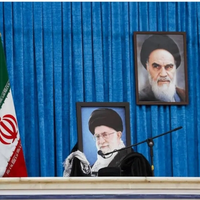
Iran’s Supreme Leader Ali Khamenei addresses a gathering of people from East Azarbaijan province in Tehran on February 17, 2026.
Iran’s Supreme Leader Ali Khamenei said the United States will never succeed in toppling the Islamic Republic and warned that even the world’s strongest military can suffer crippling blows.
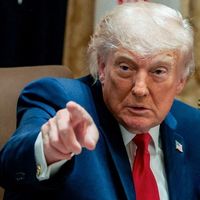
“The US president said in one of his recent remarks that for 47 years America has been unable to eliminate the Islamic Republic; he complained about it to his own people. For 47 years, America has not been able to eliminate the Islamic Republic. That is a good admission,” Khamenei said at a meeting with people from East Azarbaijan province on Tuesday.
“I say: You, too, will not be able to do this.”
His comments come days after Trump said regime change “would be the best thing that could happen.”
Khamenei also addressed remarks by the US president that the American military is the strongest in the world.
“The strongest army in the world may at times receive such a slap that it cannot rise,” he said.
“They keep saying we have sent an aircraft carrier toward Iran. Very well, an aircraft carrier is a dangerous device, but more dangerous than the carrier is the weapon that can send it to the bottom of the sea.”
His statements come amid heightened rhetoric between Tehran and Washington over military deployments and regional security and at the time a new round of negotiations mediated by Oman is underway in Geneva.
Talks with US
US threats and demands, Khamenei added, reflected an attempt to dominate Iran. “These statements by the US president, sometimes threatening, sometimes saying this must be done or that must not be done, mean they seek domination over the Iranian nation,” he said.
“Iran will not pledge allegiance to corrupt leaders currently in power in the United States.”
“They say let us negotiate about your nuclear energy, and the result of the negotiation should be that you do not have this energy,” he continued. “If a negotiation is to take place, and there is no place for negotiation, determining its result in advance is wrong and foolish.”
Iran’s Supreme Leader Ali Khamenei meets with people from East Azarbaijan province in Tehran on February 17, 2026.
US presidents and some senators, he went on, were making an “absurd” demand by setting conditions before any dialogue.
January protest remarks
In the same speech, Khamenei said those killed during the January protests are mourned as martyrs.
“Blood was shed. We are grieving. I say we are in mourning for the blood that was shed,” he said, adding that not all of the dead fell into the same category.
Security forces responded to the latest nationwide protests with lethal force, mass arrests, and communication blackouts. At least 36,500people killed in the recent wave of unrest, while authorities acknowledge a far lower figure of about 3,117.
Security forces, according to the Amnesty International, moved quickly after the killings to impose sweeping controls aimed at silencing survivors, intimidating families of victims and preventing documentation of what it described as unlawful mass killings carried out to crush what it called a popular uprising.
The measures included arbitrary mass arrests, enforced disappearances, bans on gatherings, night-time curfews, and a near-total internet blackout, alongside the deployment of heavily armed patrols across cities and inter-city roads, Amnesty International said.
Khamenei argued some were “corrupt elements and instigators,” while others were not involved in organizing the protests. He divided the dead into three groups, beginning with what he described as "defenders of security" – police, Basij and Guards members and those alongside them – calling them “among the greatest martyrs.”
He described a second group as bystanders. When turmoil breaks out in a city, he said, “innocent people walking toward their workplace or their homes are also killed,” adding that they too should be considered martyrs because their deaths occurred within “the enemy’s sedition.”
A third group, he said, consisted of those who had been misled. “They were deceived, inexperienced… they are also ours; they are our children,” he said, adding that some later wrote to him expressing regret. Officials, he said, were right to count those killed from this group as martyrs.
“Therefore, the circle of our fallen whom we count as martyrs is a wide one,” he added, excluding only what he called “the ringleaders and those who took money and weapons from the enemy.”
Khamenei concluded by offering prayers for mercy and forgiveness for those he described as misled participants, framing the uprising as an enemy-driven plot rather than a domestic protest movement.
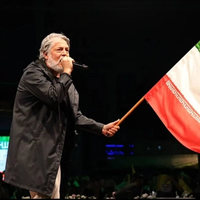
People carrying Iran’s pre-1979 “Lion and Sun” national flags gathered near the United Nations office in Geneva on Tuesday as a second round of nuclear talks between the United States and Iran took place in the city.
Iran has come to nuclear talks in Geneva with “genuine, constructive proposals,” a senior Iranian official told Reuters on Tuesday.
The official said Iran’s approach to the negotiations with the United States was “positive and serious,” but added that Tehran had no preconceptions about the outcome.
“The key to sustaining effective talks is US seriousness on lifting sanctions and avoiding unrealistic demands,” the official said.
Indirect talks between the two sides were due to begin in Geneva later on Tuesday.
A senior Iranian MP said on Tuesday that Iran previously did not allow the IAEA to inspect its nuclear facilities because Rafael Grossi, the agency’s director general, had not fulfilled his duties and “needed to be punished.”
Alaeddin Boroujerdi said Grossi had not condemned attacks on Iran’s nuclear sites and “it was only natural for us not to allow inspections.”
The member of parliament's national security and foreign policy committee added that Iran has now agreed to allow inspections to demonstrate that its nuclear activities remain peaceful and within the framework of the Nuclear Non-Proliferation Treaty, a decision made by the Supreme National Security Council, according to Boroujerdi.
Iran and the United States will speak separately with Oman’s foreign minister during their indirect nuclear talks, Iranian Foreign Ministry spokesman Esmaeil Baghaei said on Tuesday on state television IRIB.
Baghaei said the format would mirror the previous round, with the Omani foreign minister relaying messages between the two sides.
He said the discussions would focus on nuclear issues.
Baghaei added that, similar to Iran, the United States would also hold talks with International Atomic Energy Agency chief Rafael Grossi.
The delegations were about to depart for the venue of the negotiations, he said.