Violinist Pooya Faragerdi killed by security forces during Tehran protests
The night air on Jan. 8 in northeastern Tehran filled with chants rising in defiance. Among them stood Pooya Faragerdi, a violinist whose life was measured in music and a heart that beat for Iran. Then came the gunfire.
Faragerdi, 44, was shot by security forces near a police station in Pasdaran that night.
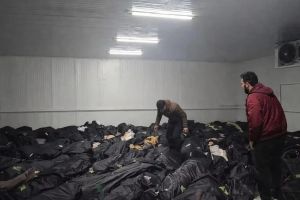
Videos verified by Iran International from Pasdaran on Jan. 8 showed wounded protesters lying bloodied on the street as others tried to help, with gunfire audible in the background.
Senator John Kennedy on Wednesday defended Trump's Iran negotiations, citing a measured Venezuela-style strategy and doubts about Tehran's sincerity despite the talks.
"President Trump made a promise to Iranian people to support them... The president is in the process to keep his promise," Republican Senator from Louisiana told Iran International.
Kennedy said US decisions on dealing with the Islamic Republic will rely on Israeli intelligence assessments, adding the need for a careful strategy rather than hasty actions like bombing or deploying thousands of American troops.
"You can't just go in and start dropping bombs and committing thousands of American troops that could make things worse. You have to be strategic about this like we were in Venezuela," he added.
Iranian women next to flags of Hezbollah and Iran, as they attend the 47th anniversary of the Islamic Revolution in Tehran, Iran February 11, 2026.
Iran International has obtained information alleging that senior Iranian diplomats transported large amounts of cash to Beirut in recent months, using diplomatic passports to move funds to Lebanon’s Hezbollah.
The transfers involved at least six Iranian diplomats who carried suitcases filled with US dollars on commercial flights to Lebanon, according to the information.
The cash deliveries formed part of efforts to help Hezbollah rebuild its finances and operational capacity after sustaining significant blows to its leadership, weapons stockpiles and funding networks.
Those involved include Mohammad Ebrahim Taherianfard, a former ambassador to Turkey and senior Foreign Ministry official; Mohammad Reza Shirkhodaei, a veteran diplomat and former consul general in Pakistan; his brother Hamidreza Shirkhodaei; Reza Nedaei; Abbas Asgari; and Amir-Hamzeh Shiranirad, a former Iranian embassy employee in Canada.
Taherianfard traveled to Beirut in January alongside Foreign Minister Abbas Araghchi. He carried a suitcase filled with dollars, relying on diplomatic immunity to avoid airport inspection.
Mohammad Ebrahim Taherianfard (circled) onboard a plane to Beirut in January alongside Foreign Minister Abbas Araghchi
Similar methods were used on other trips, with diplomats transporting cash directly through Beirut’s Rafik Hariri International Airport.
Ali Larijani, secretary of Iran’s Supreme National Security Council, also traveled to Beirut in October and carried hundreds of millions of dollars in cash, according to the information.
After Israeli strikes disrupted weapons and cash-smuggling routes used by Iran’s Revolutionary Guards in Syria, Beirut airport emerged as a primary channel for direct cash deliveries.
Hezbollah’s longstanding influence over security structures at the airport has in the past facilitated such transfers, though Lebanese authorities have recently increased control.
The cash shipments come as Hezbollah faces acute financial strain. The group has struggled to pay fighters and to finance reconstruction in parts of southern Lebanon heavily damaged in fighting. Rebuilding costs have been estimated in the billions of dollars.
In January 2025, The Wall Street Journal reported that Israel had accused Iran of funneling tens of millions of dollars in cash to Hezbollah through Beirut airport, with Iranian diplomats and other couriers allegedly carrying suitcases stuffed with US dollars to help the group recover after major losses.
Israel filed complaints with the US-led cease-fire oversight committee, while Iran, Turkey and Hezbollah denied wrongdoing. The report said tighter scrutiny at Beirut airport and the disruption of routes through Syria had made such cash shipments a more prominent channel for funding.
On Tuesday, the US Treasury announced new sanctions targeting what it described as key mechanisms Hezbollah uses to sustain its finances, including coordination with Iran and exploitation of Lebanon’s informal cash economy.
The Treasury’s Office of Foreign Assets Control sanctioned Lebanese gold exchange company Jood SARL, which operates under the supervision of US-designated Al-Qard Al-Hassan, a Hezbollah-linked financial institution. Treasury said Jood converts Hezbollah’s gold reserves into usable funds and helps the group mitigate liquidity pressures.
OFAC also sanctioned an international procurement and commodities shipping network involving Hezbollah financiers operating from multiple jurisdictions, including Iran.
“Hezbollah is a threat to peace and stability in the Middle East,” Treasury Secretary Scott Bessent said in a statement, adding that the United States would continue working to cut the group off from the global financial system.
Iran has long considered Hezbollah a central pillar of its regional alliance network and has provided the group with financial, military and logistical support for decades.
The Islamic Revolutionary Guards Corps’ intelligence organization and Iran’s Intelligence Ministry pressured families of some detainees linked to nationwide protests to attend a pro-state rally marking the anniversary of the 1979 revolution, sources told Iran International.
Security officials informed the families their presence at the February 11 pro-state march must be “verifiable,” including by taking photos and videos of themselves at the rally and sending the material to security bodies, informed sources said.
The officials, according to the sources, coupled the demand with threats and sustained psychological pressure, telling families that only if they comply might their detained relatives be released, spared execution, or see their sentences reduced.
The pressure coincided with a message delivered on Monday by Ali Khamenei, who in a short recorded video urged Iranians to demonstrate loyalty to the Islamic Republic and emphasized the need to stand firm against opponents of the system.
Pressure amid widening crackdown
The reported coercion comes as Iran International has previously documented an intensifying crackdown following nationwide protests, including mass arrests and a rise in reported deaths in custody. Observers have warned the pattern may point to a broader phase aimed at consolidating control and removing evidence linked to the violent suppression of dissent.
According to a statement by Iran International’s editorial board, at least 36,500 protesters have been killed during the unrest. Many viewers of the outlet have also reported widespread arrests, critical conditions for detainees, and, in numerous cases, families being left without information about the whereabouts or treatment of their relatives.
Statements attributed to detainees’ families
Separately, websites affiliated with the Islamic Revolutionary Guards Corps published a text on Monday attributed to Mohammad Ali Saeedi-Nia, an entrepreneur and founder of the Saeedi-Nia Real Estate and Industries Group, alleging that he would take part in the February 11 pro-state rally.
Sources told Iran International that the publication was part of the same pressure campaign and aimed at extracting forced declarations of loyalty from families of detainees, using pro-government media to signal compliance.
Sadegh Saeedi-Nia, the son of Mohammad Ali Saeedi-Nia and chief executive of the family business, was arrested following the protests and subsequent killings and remains in prison.
Meanwhile, reports indicate a new wave of government-ordered closures of cafés and restaurants in Tehran, accompanied by the suspension of their social media accounts. Officials have not announced the reasons for the closures, which follow similar actions in recent months and appear to have intensified after the mass killings of protesters in January.
Iran’s Revolutionary Guard intelligence organization and the Intelligence Ministry have pressured families of those detained during nationwide protests to attend the state-organized February 11 rally marking the anniversary of the 1979 Revolution, sources close to the families told Iran International.
Security officials informed several families their presence at the February 11 march must be “verifiable,” including by taking photos and videos of themselves at the rally and sending them to security bodies, the sources said.
The sources said officials coupled the demand with threats and psychological pressure, telling families that only if they comply might their detained relatives be released, spared execution, or see their sentences reduced.
The reported pressure comes amid what Iran International has previously documented as an intensifying crackdown following nationwide protests, including mass arrests and a rise in reported deaths in custody. Observers have said the trend may signal a broader “purge” phase aimed at eliminating evidence of a bloody suppression.
Iranian security forces ran armored vehicles over protesters in at least three areas of the northwestern city of Ardabil on Jan. 9, killing one woman and seriously injuring three others, according to information received by Iran International.
Earlier this week, Iran International published a video showing an armored vehicle driving over protesters in Yahyavi Square.