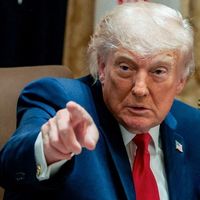
Trump said on Sunday that Iranian officials had reached out seeking talks on a nuclear deal and said the United States may meet with them after repeatedly warning Tehran against killing demonstrators and mooting "very strong" military options.
Former British Army officer and military analyst Andrew Fox told Iran International that the Islamic Republic is deliberately applying maximum force early to crush the protests before Washington can act decisively.
“If (Trump) limits his intervention to just rhetoric, then clearly that is, of course, strategic restraint, but also an absolute betrayal at a critical moment,” Fox said.
“He’s made promises. It’s very clear that there were promises that the Americans were not ready to deliver.”
Trump, in a post on Truth Social last week, warned that the United States is “locked and loaded” and ready to intervene in Iran if authorities violently suppress demonstrators — statements that analysts say emboldened many to take to the streets.
“It’s questionable that this many people would have protested had Mr. Trump not made those promises,” Fox said. “So at the moment,” he added, “America potentially has blood on its hands quite frankly.”
Publicly, Iranian officials struck a defiant tone. Foreign Minister Abbas Araghchi said Iran was open to negotiations but also “fully prepared for war,” insisting the situation inside the country was under control.
Behind the scenes, however, US officials say Tehran is sending a different message.
White House Press Secretary Karoline Leavitt said an Iranian official had reached out to US Special Envoy Steve Witkoff “expressing a far different tone than what you’re seeing publicly.”
Axios earlier reported a phone call between Araghchi and Witkoff during which the two sides discussed both the protests and Iran’s nuclear program.
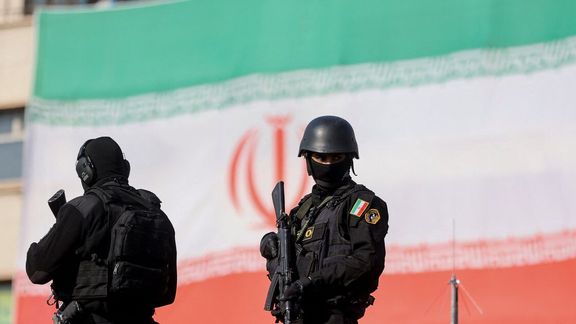
On the ground, the crackdown has intensified amid a near-total internet shutdown.
Medics and eyewitnesses told Iran International that the preliminary death toll over more than two weeks of unrest had surged in recent days to as many as 2,000 people.
The full scale remains impossible to verify due to communications blackouts.
New evidence suggests the state response is being conducted as a wartime operation.
A physician who treated large numbers of wounded protesters described mass-casualty conditions, overwhelmed hospitals, and the use of live ammunition and military-grade weapons by Islamic Revolutionary Guard Corps and Basij forces according to the Center for Human Rights in Iran.
The doctor said security forces operated under orders that eliminated accountability and treated civilian protests as a battlefield scenario, with injured protesters systematically identified inside hospitals and communications deliberately shut down.
To intervene or not?
Trump’s own mixed messaging, analysts say, risks compounding the damage.
“President Trump’s comments on Air Force One contained something for everyone in them,” said Jason Brodsky, the policy director for United Against Nuclear Iran (UANI), pointing to the combination of military threats, diplomacy with Tehran and outreach to the opposition.
While unpredictability can have tactical benefits, Brodsky warned that a US meeting with Iran’s leadership now “will provide relief for the regime.”
“It can prop-up the currency while demoralizing the Iranian freedom fighters on the ground,” he said. “There is great benefit for Iran in a negotiating process with the US. But no benefit for the US.”
Such talks, Brodsky said, would be “perceived by the Iranian people as external American intervention on the side of the Islamic Republic, not the Iranian people.”
“We should be giving time, space, and resources to the Iranian people,” he said, “not the Islamic Republic.”
Confidence that US military action was imminent has meanwhile begun to waver.
“Do I believe President Trump will strike Iran? Yesterday I was more confident of an attack, today, not quite as much,” said Dr. Eric Mandel, director of the Middle East Political Information Network (MEPIN).
Mandel said he had spoken with Israeli analysts saying they were confident Trump would strike but “did not know sooner or later.”
He said Washington still retains options short of a full-scale war, including seizing oil tankers tied to Iran’s shadow fleet exporting more than two million barrels of oil a day, CIA covert actions, cyber operations, kinetic action against the Islamic Revolutionary Guard Corps and Basij and restoring communications through satellite internet systems such as Starlink.
Trump said Sunday he would speak to Elon Musk about restoring internet access in Iran.
As the death toll rises and Iran remains largely cut off from the outside world, analysts warn the moment for measures is rapidly disappearing.
What comes next, they say, will determine not only the fate of Iran’s uprising — but whether US warnings are remembered as deterrence or as words that raised hope just long enough to deepen a sense of betrayal.