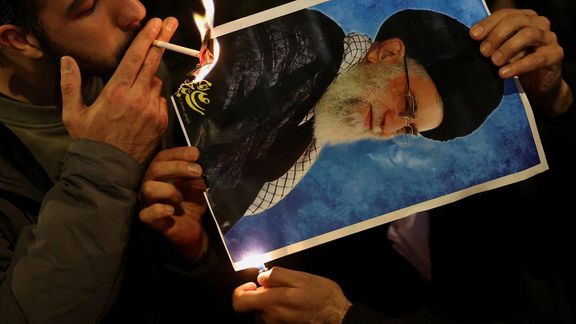
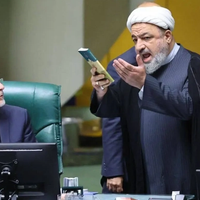
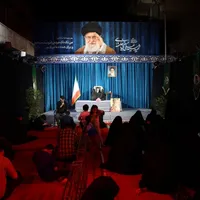
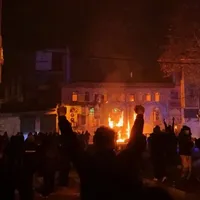
What began in late December 2025 as protests over economic hardship—initially centered on Tehran’s bazaar and spreading through strikes—has since transformed into a far broader uprising, with demonstrators increasingly calling for an end to theocratic rule.
The unrest has been met with sweeping force, including mass arrests and the use of live ammunition, as authorities imposed near-total internet blackouts to obscure the scale of the crackdown.
Western governments have hardened their stance as the scale of the crackdown has become clearer, with US President Donald Trump vowing to hit Iran “very hard” if repression continued.
In this environment, Russia has remained persistent in its backing of Tehran.
A Times report last week even suggested that supreme leader Ali Khamenei might flee to Russia should his rule be seriously threatened.
While such scenarios cannot be entirely dismissed, they remain speculative and, above all, ideologically improbable.
Khamenei’s legitimacy is deeply rooted in his personal commitment to the ideological tenets of the Islamic Revolution and to the principle of revolutionary endurance.
This stance sharply differentiates him from other segments of the Islamic Republic’s establishment, notably economic and technocratic elites, for whom exit options and external safeguards may constitute a rational form of risk management.
Whether grounded in concrete planning or not, the persistence of such narratives nonetheless underscores how closely external partnerships—especially with Russia—are now perceived to be intertwined with the regime’s internal resilience and survival calculations.
The perception that Moscow backs repression—and offers sanctuary if it fails—may be influencing the calculations of Iran’s ruling elite, hardening the loyalists’ resolve while quietly expanding the exit options available to those at the apex of power.
Material support
Moscow's backing reflects not merely tactical convenience but a deeper strategic convergence rooted in shared opposition to Western norms of governance and intervention.
For Russia—strained by its war in Ukraine and declining influence elsewhere—Iran represents one of the few remaining pillars of resistance to what the Kremlin portrays as an increasingly assertive liberal international order.
Material cooperation lies at the core of this relationship.
While there is no publicly confirmed reporting of Russian military airlifts tied directly to the current protest wave, the depth of the Moscow-Tehran partnership is evident in joint ventures such as Iran’s recent satellite launches aboard Russian rockets and a series of long-term bilateral cooperation agreements.
Together, these developments form the geopolitical backdrop to the current unrest.
Learning repression
Officially framed as security and counterterrorism cooperation, the partnership has also involved political learning and technological convergence.
Iran’s security apparatus has increasingly adopted surveillance practices similar to those used by Russia to manage domestic dissent, including facial-recognition technologies, large-scale data aggregation and advanced communications monitoring that allow security forces to identify and disrupt protest networks with greater precision.
This convergence is reinforced by doctrinal exchanges and intelligence coordination involving the Islamic Revolutionary Guard Corps.
Russian experience in sanctions evasion, electronic warfare and information control has proved valuable to Tehran as it seeks to preserve coercive capacity under mounting economic pressure.
Moscow’s support has become an increasingly important component of Tehran’s ability to contain a protest movement that challenges not only economic governance but the ideological foundations of the Islamic Republic.
Elite calculations
That external backing does not affect all factions within Iran’s power structure equally.
Tehran’s most ideologically committed forces—particularly within the IRGC and the security services—are widely expected to resist collapse at almost any cost.
For these actors, collapse would not simply mean loss of office but could entail prosecution, exile or worse. Their commitment to repression is therefore existential, reinforced by decades of indoctrination and deeply entrenched interests in a closed political system.
By contrast, Iran’s economic oligarchy, though deeply intertwined with the state, appears far less ideologically anchored.
Composed of business elites, semi-private conglomerates and networks enriched through privileged access to state resources, this group has long hedged its political bets.
As the crisis deepens, many are likely to seek exit strategies rather than confrontation. Unlike the ideological core, they possess the financial means and transnational connections to adapt quickly.
In the event of a fundamental political change in Iran, such actors would likely shift allegiances or secure settlement abroad.
Diplomatic protection
Beyond material assistance, Russia also provides Tehran with diplomatic shielding.
In multilateral forums, Moscow has consistently portrayed Iran’s repression as a legitimate exercise of sovereignty in response to foreign-backed destabilization.
This posture has taken on renewed urgency following the dramatic detention of Venezuelan President Nicolas Maduro by US forces—a development that sent shockwaves through governments closely aligned with Russia.
Maduro’s removal represented a setback for Moscow, depriving it of a partner whose geographic proximity to the United States offered a rare opportunity to project influence in Washington’s immediate neighborhood.
Iran’s strategic value to Russia is significant but different. While Tehran’s regional reach and energy leverage matter, its geography does not offer Moscow comparable proximity to US power.
As a result, Russia’s investment in Iran—though politically and symbolically important—appears constrained by a lack of capacity to challenge American influence within its own hemisphere.
Russia has nonetheless intensified its diplomatic defense of Tehran, blocking or diluting resolutions on human rights abuses and portraying Iranian protests as externally engineered “color revolutions.”
Shaping Tehran’s calculus
Russian state media has reinforced Tehran’s preferred narrative, emphasizing sanctions and alleged foreign interference while downplaying corruption, elite predation and long-standing structural mismanagement.
Equally significant is narrative coordination through non-Western platforms such as BRICS and the Shanghai Cooperation Organization, where Russia and Iran have worked to recast unrest as foreign-driven destabilization, emphasizing sovereignty, non-intervention and resistance to “hybrid warfare.”
By signaling that diplomatic backing—and potentially sanctuary—remain available, Moscow reinforces the resolve of ideological hardliners while quietly widening the options available to those at the apex of power.
In this sense, Iran’s internal crisis has become embedded in wider international security networks.
For Moscow, supporting Tehran is not only about regional influence but about defending the principle that political systems can withstand sustained popular challenge through transnational cooperation.
As protests in Iran continue with no clear resolution, their outcome will resonate far beyond the country’s borders, testing the balance between state resilience and popular sovereignty in an increasingly polarized international order.