• العربية
  • فارسی
Brand
  • Iran Insight
  • Politics
  • Economy
  • Analysis
  • Special Report
  • Opinion
  • Podcast
  • Iran Insight
  • Politics
  • Economy
  • Analysis
  • Special Report
  • Opinion
  • Podcast
  • Theme
  • Language
    • العربية
    • فارسی
  • Iran Insight
  • Politics
  • Economy
  • Analysis
  • Special Report
  • Opinion
  • Podcast
All rights reserved for Volant Media UK Limited
volant media logo

Iran foreign minister says state, people can resolve protest grievances

Jan 7, 2026, 12:27 GMT+0Updated: 13:31 GMT+0
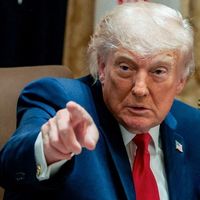
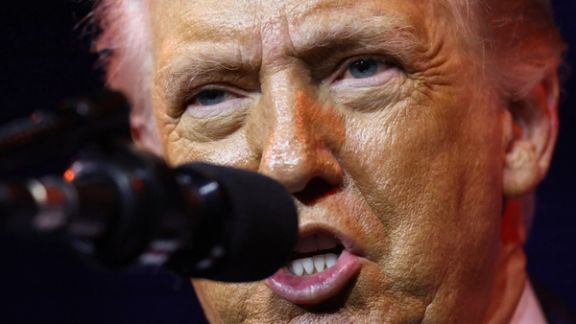
US President Donald Trump addresses House Republicans at their annual issues conference retreat, at the Kennedy Center, renamed the Trump-Kennedy Center by the Trump-appointed board of directors, in Washington, January 6, 2026.

Iran’s foreign minister said on Wednesday that protests roiling the country could be resolved by the country's government and people, calling the unrest an internal matter in an apparent rebuke to US solidarity with demonstrators.

“We see that through interaction between the government and the people, any protests or outstanding issues can, God willing, be resolved, and I am very hopeful that this will happen,” Abbas Araghchi told reporters on the sidelines of a cabinet meeting in Tehran.

At least 36 people have been killed in anti-government demonstrations which began on Dec. 28. US President Donald Trump has vowed to intervene if authorities killed protestors, in comments which have ramped up anticipation about his intentions.

Araghchi appeared to address the comments by saying the unrest was a domestic matter. "Iran’s internal affairs were not the concern of any foreign government," he said.

Relations between Tehran and Washington are at a low ebb and talks between the longtime foes on Iran's disputed nuclear program ended when Israeli launched a surprise military campaign in June capped off by US attacks on Iran nuclear sites.

“Now the conditions are not right for negotiations due to US policies,” Araghchi added.

“Iran has never left the negotiating table,” Araghchi added, sayingTehran had always been ready for talks based on mutual respect and interests.

Israel Hayom reported on Tuesday that Trump had rejected a proposal by his special envoy, Steve Witkoff, to pursue further talks with Tehran and instead chose to increase pressure on Iran.

Meanwhile, protests and strikes continued on Wednesday as shopkeepers shut stores and joined rallies in multiple cities.

Araghchi also said he would travel to Beirut on Thursday, adding that an economic delegation would accompany him and that Iran wanted to expand long-standing ties with Lebanon and its government.

Most Viewed

Iran negotiators ordered to return after internal rift over Islamabad talks
1
EXCLUSIVE

Iran negotiators ordered to return after internal rift over Islamabad talks

2
ANALYSIS

US blockade enters murky phase as tankers spoof signals and buyers hesitate

3
ANALYSIS

Why the $100 billion Hormuz toll revenue is a myth

4

US tightens financial squeeze on Iran, warns banks over oil money flows

5
ANALYSIS

US blockade targets Iran oil boom amid regional disruption

Banner
Banner

Spotlight

  • Hardliners push Hormuz ‘red line’ as US blockade tests Iran’s leverage
    INSIGHT

    Hardliners push Hormuz ‘red line’ as US blockade tests Iran’s leverage

  • Ideology may be fading in Iran, but not in Kashmir's ‘Mini Iran'
    INSIGHT

    Ideology may be fading in Iran, but not in Kashmir's ‘Mini Iran'

  • War damage amounts to $3,000 per Iranian, with blockade set to add to losses
    INSIGHT

    War damage amounts to $3,000 per Iranian, with blockade set to add to losses

  • Why the $100 billion Hormuz toll revenue is a myth
    ANALYSIS

    Why the $100 billion Hormuz toll revenue is a myth

  • US blockade targets Iran oil boom amid regional disruption
    ANALYSIS

    US blockade targets Iran oil boom amid regional disruption

  • Iran's digital economy battered by prolonged blackout
    INSIGHT

    Iran's digital economy battered by prolonged blackout

  • Senators say US will hit Iran if it rebuilds nuclear, missile programs

    Senators say US will hit Iran if it rebuilds nuclear, missile programs

  • What 'locked and loaded' signals in Trump’s message backing Iran protests

    What 'locked and loaded' signals in Trump’s message backing Iran protests

  • Iran warns it may act before an attack if it detects a threat

    Iran warns it may act before an attack if it detects a threat

•
•
•

More Stories

Trump’s 'Make Iran Great Again' photo fuels anticipation over next moves

Jan 5, 2026, 22:00 GMT+0
•
Negar Mojtahedi

A new photo of US President Donald Trump posing with a “Make Iran Great Again” hat is ramping up suspense over US intentions as protests there which Trump vowed to protect are being met with deadly force.

The photo, posted on Senator Lindsey Graham’s account on X, shows the two men smiling aboard Air Force One as Trump holds the hat which he has signed.

Trump first deployed the slogan at the height of a 12-day war in June, saying that if Iran’s rulers couldn’t “make Iran great again,” regime change should be on the table.

“God bless and protect the brave people of Iran who are standing up to tyranny,” Graham wrote, referring to nationwide protests now in their ninth day.

Holly Dagres, an Iran expert at the Washington Institute, told Iran International that while the photo leaves room for interpretation it at least shows the Iran issue is on the president's radar.

“While much of the world’s focus is squarely on Venezuela, President Donald Trump’s comments about the ongoing protests and posing with the MIGA hat suggest his mind is also on Iran,” Dagres said.

“It’s hard to interpret what the president’s next steps are, but the clerical establishment won’t be resting easy," she said.

Demonstrators across Iran continue to chant slogans against the country’s supreme leader in protests which entered their ninth day.

Trump has twice warned that the United States will respond forcefully if Iranian authorities kill protesters. According to the Human Rights Activists News Agency (HRANA), at least 19 protesters and one member of the security forces have been killed so far.

Behnam Ben Taleblu, a senior fellow at the Foundation for Defense of Democracies, suggested the message could ripple beyond the White House.

“Hopefully his statement has a contagion effect in the Congress and helps the administration adhere to its own red line about standing by the Iranian people and taking down their apparatus of repression,” he told Iran International.

Others see the moment as part of a broader warning directed at Tehran. Kamran Matin, who teaches International Relations at Sussex University in Britain, described Trump’s messaging as layered and intentional.

“More broadly, the remarkable success of Trump in leading targeted and consequential operations, from the assassination of Qassem Soleimani to the bombing of Iran’s nuclear sites to the seizure of Nicolas Maduro has likely increased Trump’s appetite for using limited military force to achieve political ends in Iran now that the regime is in its weakest point,” he told Iran International.

The image has fueled anticipation online about whether Trump might pursue tougher measures toward Tehran, particularly after the US seizure of Venezuela and previous strikes on Iran’s nuclear facilities.

Greg Brew, an Iran analyst with the Eurasia Group, told Iran International the symbolism of the photo could suggest a willingness to go further.

“Trump has already secured for himself a legacy of doing what no other president would do — bombing Iran’s nuclear program. But recent protests and the success of the Maduro operation suggest he may go further,” Brew said.
Iran accuses US, Israel of interference as protests continue

Jan 5, 2026, 09:41 GMT+0

As protests continued across Iran for a ninth day, the foreign ministry on Monday accused the United States and Israel of interfering in Iran’s internal affairs and encouraging violence through their public statements.

Spokesperson Esmail Baghaei said statements by some American and Israeli officials amounted to interference in Iran’s internal affairs and incitement to violence under international norms and rejected what he described as foreign efforts to present themselves as supportive of the Iranian public.

“Actions or statements by figures such as the Israeli prime minister or certain radical and hardline US officials regarding Iran’s internal affairs amount, under international norms, to nothing more than incitement to violence, terrorism, and killing.”

Protests have been reported in 222 locations nationwide, including rallies in 78 cities across 26 provinces, according to the US-based Human Rights Activists News Agency (HRANA).

US President Donald Trump said on Sunday night aboard Air Force One that the United States is following developments in Iran very closely, warning: “If they start killing people like they have in the past, I think they are going to get hit very hard by the United States.”

Baghaei said Iranians remained deeply distrustful of Washington and Israel, citing past actions by the two countries and arguing that the public would not be swayed by what he called “deceptive rhetoric.”

He also said Iran would not base its security posture on remarks from Israeli officials, accusing Israel of misleading statements and signaling continued military vigilance.

“We are not going to trust or rely on the statements of officials from the Zionist regime,” he said. “The regime’s pattern of deception is clear to us.”

According to HRANA, at least 19 demonstrators and one member of security forces have been killed so far as the unrest continues.

Tech entrepreneurs eye investment in a post-Islamic Republic Iran

Jan 4, 2026, 11:34 GMT+0

A social media post by a prominent Silicon Valley investor has ignited an unusual discussion among global entrepreneurs: what it would take to invest in a future Iran after the fall of the Islamic Republic.

Josh Wolfe, co-founder of Lux Capital, a New York-based venture capital firm known for backing deep-tech companies in fields such as artificial intelligence, semiconductors, aerospace, and biotechnology, asked fellow investors on X whether they were prepared to deploy capital in a “free Iran” once political conditions change.

Addressing American investors, family offices, and asset managers, Wolfe urged them to begin thinking about how to support Iranian technologists and entrepreneurs when Iran is free and... opportunity is unleashed.”

The post quickly drew attention from senior figures across the technology and investment world, reflecting growing interest in frontier markets shaped by geopolitical transformation.

Among the most prominent responses came from Jeff Huber, a veteran Silicon Valley executive who previously led Google Maps and Google Ads before co-founding Triatomic Capital, an investment firm focused on infrastructure, energy transition, and advanced technologies.

Huber replied in Persian, writing simply, “Count on me,” a gesture that was widely shared among Iranian users as a sign of solidarity and intent.

Another notable response came from Michael Granoff, founder and managing partner of Maniv Mobility, an Israeli venture capital firm specializing in transportation and energy technologies.

Granoff pointed to his firm’s experience investing in the United Arab Emirates following the Abraham Accords, which normalized relations between Israel and several Arab states.

“We’d love to be the first to invest in a free Iranian startup,” Granoff wrote, explicitly linking potential investment in Iran to precedents set by rapid capital flows following political normalization elsewhere in the region.

The exchange also attracted responses from Iranian entrepreneurs in the diaspora, including business founders and professionals based in Canada, Australia, and Europe, many of whom offered to contribute expertise in healthcare, technology, and management during a future reconstruction phase.

While some users criticized the discussion as premature amid ongoing repression and protests inside Iran, the reaction from high-profile investors indicated a broader shift: the idea that Iran’s post-Islamic Republic future is no longer viewed solely through a political or security lens, but increasingly as a potential economic and technological opening.

Iran says it backs Maduro government after US operation

Jan 4, 2026, 07:42 GMT+0

Iran’s Foreign Minister Abbas Araghchi told his Venezuelan counterpart Ivan Gil Pinto in a phone call that Tehran supports the people and the elected government of Venezuela, Iran’s foreign ministry said on Sunday.

Araghchi strongly condemned the “US military aggression against Venezuela and the abduction of the country’s legitimate president and his wife,” according to Iran’s foreign ministry.

The statement described the US move as a “clear example of state terrorism, and a blatant violation of Venezuela’s sovereignty and the national will of the Venezuelan people.”

Iran on Saturday denounced the US military attack on Venezuela, accusing Washington of violating international law following reports that American forces had captured Venezuelan President Nicolas Maduro in a military operation.

The United States carried out an overnight operation targeting Venezuela and detained Maduro, US President Donald Trump said on Saturday, adding that Washington would assume control of the country for the time being and could deploy American troops if required.

  • Iran strongly condemns US attack on Venezuela

    Iran strongly condemns US attack on Venezuela

Iran strongly condemns US attack on Venezuela

Jan 3, 2026, 19:32 GMT+0

Iran on Saturday denounced the US military attack on Venezuela, accusing Washington of violating international law following reports that American forces had captured Venezuelan President Nicolas Maduro in a military operation.

The United States carried out an overnight operation targeting Venezuela and detained Maduro, US President Donald Trump said on Saturday, adding that Washington would assume control of the country for the time being and could deploy American troops if required.

In a statement, Iran’s Foreign Ministry said the United States had carried out a military aggression against Venezuela, calling it a blatant violation of the country’s sovereignty and territorial integrity.

It said the action breached fundamental principles of the United Nations Charter, including the prohibition on the use of force enshrined in Article 2(4), and described it as a clear act of aggression that should be condemned by the international community.

The statement said the US action undermined regional and international peace and security and warned that its consequences would extend beyond Venezuela, further eroding the international order based on the UN Charter.

Iran's Foreign Ministry urged the United Nations and other states to respond clearly to what it called an unlawful use of force, calling for measures to hold accountable those who planned and carried out what it described as crimes committed during the operation.

Foreign Ministry spokesman Esmail Baqaei also called Iran's ambassador to Caracas, emphasizing "Tehran’s principled position in condemning the US military aggression and the violation of that country’s national sovereignty and territorial integrity."

Baqaei also expressed confidence that "the Venezuelan people, by maintaining national unity and cohesion, will safeguard their independence and national interests and continue on the path of development and progress."

Elon Musk on Saturday congratulated Trump on the capture of Maduro, a staunch ally of Iran's Supreme Leader Ali Khamenei, calling it "a win for the world and a clear message to evil dictators everywhere."

Maduro’s capture has fueled widespread debate on social media about the possibility of a similar scenario in Iran, as Trump has issued warnings to the country’s leadership during nationwide protests.