• العربية
  • فارسی
Brand
  • Iran Insight
  • Politics
  • Economy
  • Analysis
  • Special Report
  • Opinion
  • Podcast
  • Iran Insight
  • Politics
  • Economy
  • Analysis
  • Special Report
  • Opinion
  • Podcast
  • Theme
  • Language
    • العربية
    • فارسی
  • Iran Insight
  • Politics
  • Economy
  • Analysis
  • Special Report
  • Opinion
  • Podcast
All rights reserved for Volant Media UK Limited
volant media logo

Senators say US will hit Iran if it rebuilds nuclear, missile programs
Jan 6, 2026, 16:48 GMT+0
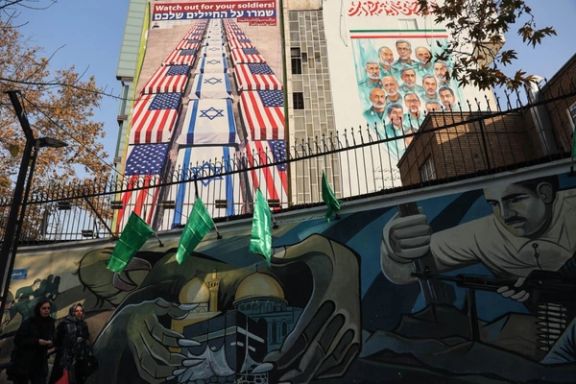
People walk past murals and a banner in central Tehran showing coffins wrapped in Israeli and US flags

President Donald Trump would likely authorize more US attacks if Iran advances its nuclear or missile programs, Republican senators told Jewish Insider.

“If they go forward again and start building up nuclear facilities, yeah, I think Trump’s going to bomb the hell out of them,” Republican Senator Rick Scott said.

The United States joined a surprise US military campaign on Iran with a June 22 attack on three key nuclear facilities which Trump said "obliterated" the program.

Trump has repeatedly vowed to attack nuclear sites again should uranium enrichment resume and in recent days warned Tehran that Washington was "locked and loaded" and ready to intervene if Iran killed protestors as unrest grips the country.

“We should be considering what action may be appropriate if Iran progresses with its missile building and nuclear programs, which are obviously a pressing and dire threat to us and Israel,” Democratic Senator Richard Blumenthal was quoted as saying.

Trump’s ultimatum on Iranian protests and the shock US capture of Venezuelan President Nicolas Maduro over the weekend has ramped up suspense over the president's next steps, but close ally Republican Senator John Kennedy dismissed any direct connection.

“I don’t think one’s related to the other,” Kennedy said. “I also think that if Iran starts back in terms of developing a nuclear weapon or substantially tries to increase the number of missiles that they have, I think the president should hit them, and I believe he will.”

Republican Senator Pete Ricketts also said the US military remains ready, echoing Trump’s warnings about Iran’s nuclear and missile programs.

“President Trump is demonstrating that we have the most outstanding military in the world. And if he believes that we need to strike Iran again, I believe he’ll do it,” Ricketts said.

Trump launched the attack on Iran after two months of fruitless talks and has offered to return to dialogue. Supreme Leader Ali Khamenei has rejected the overture, branding as unacceptable US demands that Iran end domestic enrichment and rein in its missile program and support for armed allies in the region.

Democratic Senator Tim Kaine asserted that the US president should not launch military strikes against any country, including Iran, without consent from US Congress.

“This president should not willy-nilly use the press, use the military as his palace guard to go here, there and everywhere,” Kaine said. “Not Nigeria, not Iran, not Venezuela, not international waters, not Cuba, not Mexico, not Panama, not Greenland. It should be a debate with Congress.”

The United States held five rounds of negotiations with Iran over its nuclear program earlier this year, for which Trump set a 60‑day deadline.

When no agreement was reached by the 61st day on June 13, Israel launched a surprise military offensive, followed by US strikes on June 22 targeting key nuclear facilities in Isfahan, Natanz and Fordow.


Most Viewed

Iran negotiators ordered to return after internal rift over Islamabad talks
1
EXCLUSIVE

Iran negotiators ordered to return after internal rift over Islamabad talks

2
ANALYSIS

US blockade enters murky phase as tankers spoof signals and buyers hesitate

3
ANALYSIS

Why the $100 billion Hormuz toll revenue is a myth

4

US tightens financial squeeze on Iran, warns banks over oil money flows

5
ANALYSIS

US blockade targets Iran oil boom amid regional disruption

Banner
Banner

Spotlight

  • Hardliners push Hormuz ‘red line’ as US blockade tests Iran’s leverage
    INSIGHT

    Hardliners push Hormuz ‘red line’ as US blockade tests Iran’s leverage

  • Ideology may be fading in Iran, but not in Kashmir's ‘Mini Iran'
    INSIGHT

    Ideology may be fading in Iran, but not in Kashmir's ‘Mini Iran'

  • War damage amounts to $3,000 per Iranian, with blockade set to add to losses
    INSIGHT

    War damage amounts to $3,000 per Iranian, with blockade set to add to losses

  • Why the $100 billion Hormuz toll revenue is a myth
    ANALYSIS

    Why the $100 billion Hormuz toll revenue is a myth

  • US blockade targets Iran oil boom amid regional disruption
    ANALYSIS

    US blockade targets Iran oil boom amid regional disruption

  • Iran's digital economy battered by prolonged blackout
    INSIGHT

    Iran's digital economy battered by prolonged blackout

•
•
•

More Stories

Iran warns it may act before an attack if it detects a threat

Jan 6, 2026, 11:11 GMT+0

Iran’s newly formed Defense Council warned on Tuesday that the country could respond before an attack if it detected clear signs of a threat, a stance that implicitly raised the possibility of preemptive action amid rising tensions with the United States and Israel.

In a statement carried by state media, the council said allegations and interventionist remarks directed at Iran could be treated as hostile acts if they went beyond rhetoric.

It said Iran’s security, independence and territorial integrity constituted a red line that cannot be crossed, and warned that continued hostile behavior would prompt a response, with full responsibility for the consequences resting with those behind it.

The statement said that, within the framework of legitimate defense, Iran did not consider itself restricted to responding only after an action had taken place and would treat tangible signs of a threat as part of its security assessment.

“Any infringement on national interests, interference in internal affairs or action against Iran’s stability will be met with a proportionate, targeted and decisive response... An escalation in threatening language and interventionist conduct that goes beyond verbal posturing may be interpreted as hostile behavior.”

The Defense Council was formed following the 12-day war in June on the order of Supreme Leader Ali Khamenei.
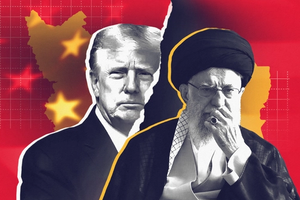
  • Trump’s warning to Tehran sparks hope, fear, and official pushback

    Trump’s warning to Tehran sparks hope, fear, and official pushback

  • Why Iran should take Trump’s threat seriously

    Why Iran should take Trump’s threat seriously

The warning comes as protests have continued across Iran in recent days, with senior officials accusing Washington and Israel of interference in the country’s internal affairs.

On Monday, Iran’s foreign ministry said statements by some US and Israeli officials amounted to interference and incitement to violence under international norms.

US President Donald Trump said on Sunday night aboard Air Force One that the United States was monitoring developments in Iran closely and warned that if Iranian authorities resumed killing protesters, the country would face a strong response from Washington.

At least 29 people have been killed and more than 1,200 arrested in nine days of nationwide protests in Iran, according to rights group HRANA, as demonstrations and strikes continue despite a heavier security presence.

Ukraine is excuse for Europe to target Iran, Russian envoy says

Jan 6, 2026, 09:43 GMT+0

European governments are using disputes over Iran’s alleged role in Ukraine and the nuclear dossier to justify tougher measures against Iran, Russia’s ambassador to Tehran told state media.

Alexey Dedov said accusations over Iran’s role in the Ukraine war were being used as “merely a pretext for taking aggressive anti-Iran measures,” adding that both Tehran and Moscow had rejected the allegations.

“In my view, European countries are seeking to punish any state that pursues an independent foreign policy and refuses to follow directives from Brussels or other European capitals,” ISNA quoted Dedov as saying.

He said this approach was reflected first in Europe’s stance on the snapback mechanism.
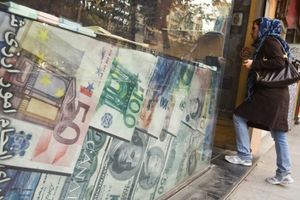
  • Sanctions snapback augurs deeper pain for Iran's ailing economy

    Sanctions snapback augurs deeper pain for Iran's ailing economy

  • Iran sanctions snapback heralds suffering, possible war

    Iran sanctions snapback heralds suffering, possible war

Iran has emerged as one of Russia’s key backers since Moscow launched its full-scale invasion of Ukraine in February 2022, and Tehran has been accused of supplying Russia with hundreds of Shahed-series attack drones.

Western governments and Kyiv say Iranian-made drones have played a central role in Russia’s aerial campaign, allegations Iran has repeatedly denied or played down.

“If the issue was not Ukraine, European countries would have found other pretexts to take hostile action against Iranian officials with the same self-serving approach,” Dedov said.

He said relations between Moscow and Tehran had reached an unprecedented level in recent years, adding that cooperation in the gas, electricity and nuclear sectors was expanding.

“Bushehr nuclear power plant is our main joint project, with its first unit having been successfully operating for more than 10 years,” he said, adding that construction of the second and third units was continuing and about 700 Russian specialists were working on the project.

2026 will test the limits of Tehran’s endurance

Jan 5, 2026, 15:20 GMT+0
•
Shahram Kholdi

Prolonged economic exhaustion and a broader loss of confidence in the Iranian state after historic military and foreign policy setbacks in 2025 means 2026 may be the Islamic Republic's hardest ever year.

Popular unrest is not unfolding in isolation. It comes amid sustained external pressure, legal constraint and strategic exposure that have narrowed the Islamic Republic’s room for maneuver.

The protests are best understood not as a discrete domestic episode, but as the internal manifestation of a broader convergence: sanctions enforcement, legal isolation, military attrition and fiscal strain now intersect more directly with the regime’s ability to manage society.

At the center of this convergence lies a structural tension.

Tehran has long prioritized the maintenance of its coercive apparatus as the ultimate guarantor of regime survival, assuming it could continue to fund and mobilize those forces even as the wider population absorbed economic pain. The present unrest tests that assumption.

The question is no longer simply whether the state can repress protest—it has done so repeatedly—but whether it can sustain that approach under prolonged economic pressure.

The war that reshaped Iran’s strategic landscape

In June 2025, the Islamic Republic faced sustained direct military action against core elements of its nuclear and missile infrastructure, followed not by rapid diplomatic de-escalation but by heightened scrutiny and enforcement.

While Tehran avoided immediate escalation beyond the conflict, the war unsettled long-standing assumptions about deterrence, sanctuary and escalation control.

In its aftermath, the state’s survival was framed domestically as vindication. Yet continuity did not amount to recovery. Vulnerabilities exposed by the war could not be addressed simply through rebuilding or rhetorical reaffirmation.

Iran’s leadership has often equated endurance with strategic success. In this case, endurance masked erosion. The post-war environment became more constrained, not more permissive.

Sanctions and their toll

The reactivation of pre-2015 United Nations sanctions through the snapback mechanism in September 2025 constituted a second rupture—less visible, but no less consequential.

These measures reimposed binding legal constraints independent of the JCPOA framework.

Whatever Tehran’s posture toward negotiations, its obligations under revived Security Council resolutions and the Nuclear Non-Proliferation Treaty remain formally intact.

Iran’s refusal to comply with inspection-related understandings, alongside renewed threats to withdraw from the NPT, reflected a strategy of legal brinkmanship. But brinkmanship has limits.

Snapback has proven difficult to circumvent, constraining access to finance, insurance and energy markets. Even states inclined to engage Iran have struggled to shield it from the broader effects of renewed enforcement.

These constraints have translated into economic pressure. The protests now visible across Iran are therefore not only political acts; they are also the social consequence of legal and economic containment.

Missiles and strategic trade-offs

Under this pressure, Tehran has prioritized strategic reconstruction, particularly in its ballistic missile program. Facilities linked to missile development and solid-fuel production have shown signs of renewed activity, even as nuclear infrastructure remains under close scrutiny.

This reflects a belief that missile capability can restore leverage by raising the costs of external pressure.

Missile reconstruction aims to reconstitute coercive leverage and recover lost influence. Yet the strategic context has shifted. Measures once tolerated as incremental are now interpreted as preparatory, intensifying scrutiny and compressing decision timelines.

The domestic trade-offs are significant. Resources directed toward military-industrial reconstruction are resources unavailable for economic stabilization or social relief.

Iran’s rulers appear to have judged that sustaining coercive capacity outweighs the risks of popular discontent—a calculation that depends on continued loyalty within the security apparatus, even as economic conditions worsen.

A narrowing set of options

During the war, US President Donald Trump publicly raised the prospect of regime change—not as declared policy, but as a conceivable outcome should Iran prove unable to govern or stabilize the country.

While ambiguous, the remarks widened the range of interpretations available to Tehran.

As protests spread, that signalling evolved. In early January, Trump warned that violent suppression of peaceful protesters would provoke an American response. The emphasis shifted from missiles and enrichment to repression itself.

Taken together, these statements suggest a growing linkage in US rhetoric between Iran’s internal conduct and its external confrontation, though how far this would translate into policy remains uncertain.

For a system long reliant on compartmentalization—treating internal repression and external escalation as separate domains—this rhetoric further narrows room for maneuver.

Repression now carries not only domestic costs, but potential external risk.

Resilience—and its limits

None of this points to inevitability. The Islamic Republic has weathered previous crises, including acute pressure in 2009 and again in 2022, through repression, fragmentation of opposition and strategic patience.

Those precedents caution against linear narratives of collapse.

Yet the present unrest differs in one important respect: it is embedded in sustained economic degradation rather than episodic political mobilization. Repression can suppress protest, but it cannot substitute for economic viability indefinitely.

In 1978, prolonged disruption in Iran’s oil sector did not immediately bring down the state, nor did repression collapse. What faltered was the state’s capacity to function as revenues declined and administrative coherence eroded.

The parallel should not be overstated. But it underscores a familiar pattern: regimes rarely fail at the height of coercion; they falter when the material foundations of governance erode to the point that authority can no longer translate power into control.

Whether the Islamic Republic is approaching such a threshold remains uncertain. What is clearer is that its margin for error has narrowed. The 12-day war did not end Iran’s confrontation with its adversaries, it reshaped it.

The unrest now visible across the country is not separate from that confrontation—it is one of its most consequential domestic expressions.

What 'locked and loaded' signals in Trump’s message backing Iran protests

Jan 2, 2026, 15:27 GMT+0

A phrase used by US President Donald Trump in support of Iran’s protesters carries a specific military meaning, analysts say, going beyond political rhetoric to signal a state of readiness for action.

In a message published on his Truth Social account, Donald Trump warned that if Iran’s rulers kill peaceful protesters, the United States would act to save the Iranian people.

"If Iran shots and violently kills peaceful protesters, which is their custom, the United States of America will come to their rescue. We are locked and loaded and ready to go."

The phrase “locked and loaded” is a classic military expression in English, meaning a weapon is armed, ammunition is in place, and it is ready to fire. Its roots lie in military training, particularly in the US armed forces, and the term has appeared in military literature since at least the eighteenth century.

Formally incorporated into weapons manuals around the time of World War II, the expression has long carried an operational and warning connotation. It is not merely a metaphor or casual figure of speech, but language traditionally used to indicate readiness for immediate action.

The expression has also become widely familiar through popular culture. In Hollywood war films, beginning notably with the 1949 film Sands of Iwo Jima starring John Wayne, “lock and load” is commonly used to signal the imminent start of combat. The phrase has since been embedded in video games such as Call of Duty and Battlefield, where it typically precedes intense fighting scenes.

Trump has used similar language in previous high-tension situations, including during confrontations involving North Korea and Syria.

Senior US officials have also employed the term in moments of crisis, signaling that the military option is not only under consideration but operationally prepared.

'US ready for military action'

International relations scholar Kamran Matin described Trump’s wording as an explicit threat that could be interpreted as readiness for military action.

Matin told Iran International that in Trump’s latest remarks, the scope of the threat appeared to expand beyond Iran’s missile or regional activities to include the government’s violent response to domestic protests.

At the same time, he cautioned that Trump’s personal style must be taken into account, noting that the president is known for shifting positions and statements that allow for multiple interpretations.

However, Matin said that verbal threats do not always translate into action.

Despite signs of military preparedness by the United States and Israel in the region, Matin emphasized that there remains a significant gap between verbal threats, actual military readiness, and the political decision to launch a direct attack.

Iran arms export agency offers missiles for crypto – FT

Jan 2, 2026, 01:47 GMT+0

Iran’s official defense export agency is offering to sell ballistic missiles, drones and other advanced weapons systems to foreign governments in exchange for cryptocurrency and barter, Financial Times reported on Thursday.

The Ministry of Defence Export Center, known as Mindex, presents itself as the export arm of Iran’s defense ministry. It advertises more than 3,000 products across categories including armaments, rockets and missiles, aviation, marine platforms, and radar and optical systems.

The portal’s payment terms say contracts can be settled using “digital currencies,” local currencies in the buyer’s country and barter arrangements, alongside more traditional bank transfers.

Mindex’s online platform, hosted on an Iranian cloud provider already blacklisted by Washington, says decades of experience in overseas sales and says it works with a number of foreign clients.

100%

A frequently asked questions section reassures potential buyers that “given the general policies of the Islamic Republic of Iran regarding circumvention of sanctions, there is no problem in implementing the contract,” and promises that purchased products will reach their destination “as soon as possible,” FT reported.

According to the center’s own “About us” page, Mindex began its marketing activity in 1989 and is “affiliated to the Ministry of Defence and Armed Forces Logistics,” (MODAFL) a ministry that has been under US sanctions since 2007 for supporting Iran’s missile and conventional arms programs.

Washington has repeatedly targeted MODAFL‑linked front companies and procurement networks, warning that foreign entities supplying or buying military hardware through such channels risk secondary sanctions and potential exclusion from the US financial system.

Recent US designations have also singled out Iran‑linked “shadow banking” and crypto networks accused of helping Tehran move money for oil and weapons sales outside formal banking channels, underscoring the risks for buyers using digital assets to pay Mindex.

US Treasury in recent months has sanctioned multiple Iran‑linked networks accused of using front companies and alternative payment channels to facilitate weapons transfers to partners such as Russia and Venezuela, warning that digital currencies do not shield transactions from enforcement.