• العربية
  • فارسی
Brand
  • Iran Insight
  • Politics
  • Economy
  • Analysis
  • Special Report
  • Opinion
  • Podcast
  • Iran Insight
  • Politics
  • Economy
  • Analysis
  • Special Report
  • Opinion
  • Podcast
  • Theme
  • Language
    • العربية
    • فارسی
  • Iran Insight
  • Politics
  • Economy
  • Analysis
  • Special Report
  • Opinion
  • Podcast
All rights reserved for Volant Media UK Limited
volant media logo

Iran hangs man accused of spying for Mossad

Jan 7, 2026, 07:29 GMT+0

Iran executed a man convicted of spying for Israel’s Mossad intelligence agency on Wednesday, state media said, in a case authorities described as involving the transfer of sensitive security information and direct coordination with alleged Israeli operatives inside the country.
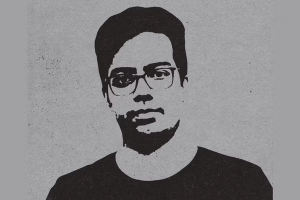
The judiciary’s Mizan news agency said Ali Ardestani was hanged after Iran’s Supreme Court upheld his death sentence.

According to the court ruling, Ardestani was recruited online by Mossad officers and carried out assigned tasks in exchange for payments and promises, including financial rewards and the prospect of a visa to Britain.

According to the report, Ardestani was accused of collecting images and information about specific locations and individuals and transferring them to Mossad handlers.

The judiciary said that Ardestani had both virtual and in-person contacts with alleged intermediaries inside Iran.

Mizan said Ardestani was arrested while carrying out what it described as an intelligence mission and later admitted during interrogations and court proceedings that he was aware he was working with Mossad.

Iran has executed more than a dozen people in recent months on charges of spying for Israel, cases that human rights groups say often involve opaque legal proceedings. Israel rarely comments on such allegations.

Iranian authorities have said more than 700 people were detained on suspicion of espionage or collaboration with Israel following the conflict in June.

Most Viewed

State media slam Araghchi's Hormuz tweet, say it let Trump claim victory
1

State media slam Araghchi's Hormuz tweet, say it let Trump claim victory

2
OPINION

The Hormuz get out of jail card turned to a grave

3
INSIGHT

How Tehran bends its own red lines to boost state rallies

4

Iran International says it won’t be silenced after London arson attack

5

US arrests Iranian national over alleged Basij-linked visa fraud

Banner
Banner

Spotlight

  • Too early to tell who is winning Iran war, experts say
    PODCAST

    Too early to tell who is winning Iran war, experts say

  • How Tehran bends its own red lines to boost state rallies
    INSIGHT

    How Tehran bends its own red lines to boost state rallies

  • Iran blackout cripples freelancer, small business incomes
    VOICES FROM IRAN

    Iran blackout cripples freelancer, small business incomes

  • Ideology may be fading in Iran, but not in Kashmir's ‘Mini Iran'
    INSIGHT

    Ideology may be fading in Iran, but not in Kashmir's ‘Mini Iran'

  • US blockade enters murky phase as tankers spoof signals and buyers hesitate
    ANALYSIS

    US blockade enters murky phase as tankers spoof signals and buyers hesitate

  • Why the $100 billion Hormuz toll revenue is a myth
    ANALYSIS

    Why the $100 billion Hormuz toll revenue is a myth

  • Iran executes man accused of spying for Israel

    Iran executes man accused of spying for Israel

  • Iran executes student on charges of spying for Israel

    Iran executes student on charges of spying for Israel

•
•
•

More Stories

Missiles, not diplomacy: how Iran signals resolve under pressure

Jan 7, 2026, 07:23 GMT+0
•
Behrouz Turani

Tehran appears to be placing growing emphasis on its ballistic missile program amid continued domestic unrest and the looming possibility of US intervention in support of protesters in Iran.

That assessment was underscored on Tuesday by a statement from Iran’s Defense Council, formed after the June war with Israel, which warned that the country could respond before an attack if it detected clear signs of a threat.

In remarks carried by state media, the council said Iran did not consider itself restricted to responding only after an action had taken place and would treat “tangible signs of a threat” as part of its security calculus.

The warning came amid an escalating war of words between Tehran and Washington, with President Donald Trump recently cautioning that the United States would act if Iranian security forces continued killing protesters.

Signaling deterrence

Against that backdrop, Iranian officials have sought to project readiness while downplaying the likelihood of immediate war.

“We will not launch a pre-emptive strike unless our military commanders deem it necessary,” Abolfazl Zohrevand, a member of parliament’s national security committee, said on Tuesday—suggesting that while escalation is not inevitable, the option of striking first remains firmly on the table.

Since late December, reports from international outlets such as Euronews, alongside eyewitness accounts shared online, have pointed to sightings of missile trails over several cities, including Tehran, Mashhad and Kermanshah.

Iranian authorities have not commented publicly on the reports, but they have reinforced the sense that missiles have become the most visible pillar of Iran’s deterrence posture.

The moderate outlet Khabar Online wrote on Monday that the reported missile activity suggested “a shift in Iran’s strategy against Israel,” arguing that Tehran was now prioritizing the restoration of its missile capabilities while keeping its nuclear program in the background.

Gearing for conflict?

Other state-aligned media have been more explicit.

In a January 6 commentary, the Asia News website argued that recent missile and air-defense drills were intended to test and showcase Iran’s capabilities, improve coordination among the Islamic Revolutionary Guards Corps, the regular army and air-defense units, and send a deterrent signal to Israel and the United States.

It added that nighttime operations were designed to enhance combat readiness under low-visibility conditions.

Given that Asia News is primarily an economic outlet with no military specialization, analysts say such commentary may reflect messaging prepared by military sources rather than independent assessment.

Analysts also caution that the quieter nuclear posture may reflect financial constraints and a desire to avoid drawing US attention at a moment of intense scrutiny of Iran’s nuclear facilities, rather than a fundamental change in long-term strategy.

As Khabar Online itself noted with thinly veiled irony, “this shift in Iran’s strategy is likely to pave the way for more complex security competition rather than reducing tensions.”

36 killed as crowds swell on tenth day of Iran protests - rights group

Jan 6, 2026, 20:45 GMT+0

At least 36 people have been killed during ongoing protests in Iran, a US-based human rights group said, as merchant strikes and street demonstrations spread to 285 locations across 92 cities nationwide on the tenth day of unrest.

The Human Rights Activists News Agency (HRANA) said at least 34 protesters and two members of Iran’s security forces have been killed since the unrest began on Dec. 28.

Four of those killed were under the age of 18. Dozens more protesters have been injured, many by pellet and plastic bullets.

Protests have now been recorded in 27 provinces, with security forces arresting more than 2,000 people, the report said.

The crackdown on protests has extended to hospitals and medical centers treating wounded demonstrators in Ilam and Tehran, according to eyewitness reports and videos obtained by Iran International.

The most significant development on the tenth day of protests was a widespread strike and demonstration by bazaar merchants, particularly in Mashhad's commercial centers and Tehran’s Grand Bazaar.

Large sections of the gold, currency, fabric, footwear and household goods markets were reported fully or partially closed. Security forces increased their presence around major commercial hubs and blocked some gatherings, but the strike disrupted daily economic activity and reduced foot traffic, highlighting the growing overlap between street protests and economic dissent.

HRANA also documented an escalation in force by security units, including the use of pellet guns, tear gas and direct assaults on demonstrators. Rights monitors said official accounts of some deaths conflict with eyewitness testimony and remain under investigation.

Ilam protests

The Kurdish-majority Ilam province in western Iran remained a flashpoint of protests on Tuesday, as funerals in the city of Malekshahi for slain protesters turned into scenes of massive anti-government protests. Huge crowds in the city of Abdanan also poured into the streets with chants against the Supreme Leader.

Seven Iranian Kurdish opposition parties have issued a joint call for a general strike on Thursday, in support of nationwide protests and in condemnation of what they described as the “crimes of the regime in Kermanshah, Ilam and Lorestan.”

They said they strongly condemned the crackdown on demonstrations and the detention of protesters, describing it as a "long-standing policy of the Islamic Republic regime."

The parties called on all political parties and civil organizations to “take a united and collective stance against the crimes of the Islamic Republic regime and join this call.”

Exiled Prince Reza Pahlavi also issued his first call for protests in a video message on Tuesday, calling on Iranian protesters to chant slogans at 8 pm (local time) on Thursday and Friday.

Hospital intrusions

In a major point of concern, security forces were reported to have entered at least two hospitals. In Ilam, witnesses said tear gas was fired inside Imam Khomeini Hospital as forces attempted to arrest wounded protesters transferred from Malekshahi.

In Tehran, reports said security personnel entered Sina Hospital and detained injured demonstrators, creating fear among patients and families.

Iran’s government said it had ordered an investigation into unrest in Ilam after rights groups condemned reports that security forces raided a hospital where injured protesters were being treated.

The public relations office of Tehran University of Medical Sciences, which oversees Sina Hospital, also said tear gas was not deliberately fired inside the hospital during Tuesday’s protests, according to a statement carried by Revolutionary Guards-affiliated Tasnim.

Senators say US will hit Iran if it rebuilds nuclear, missile programs

Jan 6, 2026, 16:48 GMT+0

President Donald Trump would likely authorize more US attacks if Iran advances its nuclear or missile programs, Republican senators told Jewish Insider.

“If they go forward again and start building up nuclear facilities, yeah, I think Trump’s going to bomb the hell out of them,” Republican Senator Rick Scott said.

The United States joined a surprise US military campaign on Iran with a June 22 attack on three key nuclear facilities which Trump said "obliterated" the program.

Trump has repeatedly vowed to attack nuclear sites again should uranium enrichment resume and in recent days warned Tehran that Washington was "locked and loaded" and ready to intervene if Iran killed protestors as unrest grips the country.

“We should be considering what action may be appropriate if Iran progresses with its missile building and nuclear programs, which are obviously a pressing and dire threat to us and Israel,” Democratic Senator Richard Blumenthal was quoted as saying.

Trump’s ultimatum on Iranian protests and the shock US capture of Venezuelan President Nicolas Maduro over the weekend has ramped up suspense over the president's next steps, but close ally Republican Senator John Kennedy dismissed any direct connection.

“I don’t think one’s related to the other,” Kennedy said. “I also think that if Iran starts back in terms of developing a nuclear weapon or substantially tries to increase the number of missiles that they have, I think the president should hit them, and I believe he will.”

Republican Senator Pete Ricketts also said the US military remains ready, echoing Trump’s warnings about Iran’s nuclear and missile programs.

“President Trump is demonstrating that we have the most outstanding military in the world. And if he believes that we need to strike Iran again, I believe he’ll do it,” Ricketts said.

Trump launched the attack on Iran after two months of fruitless talks and has offered to return to dialogue. Supreme Leader Ali Khamenei has rejected the overture, branding as unacceptable US demands that Iran end domestic enrichment and rein in its missile program and support for armed allies in the region.

Democratic Senator Tim Kaine asserted that the US president should not launch military strikes against any country, including Iran, without consent from US Congress.

“This president should not willy-nilly use the press, use the military as his palace guard to go here, there and everywhere,” Kaine said. “Not Nigeria, not Iran, not Venezuela, not international waters, not Cuba, not Mexico, not Panama, not Greenland. It should be a debate with Congress.”

The United States held five rounds of negotiations with Iran over its nuclear program earlier this year, for which Trump set a 60‑day deadline.

When no agreement was reached by the 61st day on June 13, Israel launched a surprise military offensive, followed by US strikes on June 22 targeting key nuclear facilities in Isfahan, Natanz and Fordow.

Iran warns it may act before an attack if it detects a threat

Jan 6, 2026, 11:11 GMT+0

Iran’s newly formed Defense Council warned on Tuesday that the country could respond before an attack if it detected clear signs of a threat, a stance that implicitly raised the possibility of preemptive action amid rising tensions with the United States and Israel.

In a statement carried by state media, the council said allegations and interventionist remarks directed at Iran could be treated as hostile acts if they went beyond rhetoric.

It said Iran’s security, independence and territorial integrity constituted a red line that cannot be crossed, and warned that continued hostile behavior would prompt a response, with full responsibility for the consequences resting with those behind it.

The statement said that, within the framework of legitimate defense, Iran did not consider itself restricted to responding only after an action had taken place and would treat tangible signs of a threat as part of its security assessment.

“Any infringement on national interests, interference in internal affairs or action against Iran’s stability will be met with a proportionate, targeted and decisive response... An escalation in threatening language and interventionist conduct that goes beyond verbal posturing may be interpreted as hostile behavior.”

The Defense Council was formed following the 12-day war in June on the order of Supreme Leader Ali Khamenei.

  • Trump’s warning to Tehran sparks hope, fear, and official pushback

    Trump’s warning to Tehran sparks hope, fear, and official pushback

  • Why Iran should take Trump’s threat seriously

    Why Iran should take Trump’s threat seriously

The warning comes as protests have continued across Iran in recent days, with senior officials accusing Washington and Israel of interference in the country’s internal affairs.

On Monday, Iran’s foreign ministry said statements by some US and Israeli officials amounted to interference and incitement to violence under international norms.

US President Donald Trump said on Sunday night aboard Air Force One that the United States was monitoring developments in Iran closely and warned that if Iranian authorities resumed killing protesters, the country would face a strong response from Washington.

At least 29 people have been killed and more than 1,200 arrested in nine days of nationwide protests in Iran, according to rights group HRANA, as demonstrations and strikes continue despite a heavier security presence.

Death toll in Iran protest crackdown rises to 29 - rights group

Jan 5, 2026, 22:00 GMT+0

At least 29 protesters have been killed and more than 1,200 people arrested during nine days of nationwide protests in Iran, US-based human rights group HRANA reported on Monday.

The Human Rights Activists News Agency said it had confirmed the deaths of seven protesters over the past 24 hours, including people killed in Azna, Marvdasht and Qorveh.

Of the 29 confirmed fatalities, two were members of Iran’s security forces. At least 64 protesters were also reported wounded, mainly by pellet and plastic bullets.

Iran International has independently identified 21 victims so far through interviews with relatives and friends.

Protests and strikes continued nationwide for a ninth day despite an intensified security presence and the use of live ammunition in some areas.

Verified data show that demonstrations, street rallies or labor strikes took place in at least 257 locations across 88 cities in 27 provinces. Protests were also reported at 17 universities, HRANA said

The report added that at least 1,203 protesters have been arrested so far, though the actual number is believed to be higher.

Mass arrests were reported in cities including Bojnord, Qazvin, Isfahan, Tehran, and Babol, with students among those detained.

HRANA said internet disruptions, security restrictions, and limited access to independent sources continue to hinder full verification of casualties and arrests.