Chinese car Dongfeng's T5 EVO is displayed as Iran-assembled Lamari EAMA at Tehran International Exhibition, January 2025
As Iranian consumers grapple with inflation and shortages, the country’s mid-tier car market which is dominated by Chinese automakers faces growing uncertainty following the renewal of UN sanctions in September.
“With the return of UN Security Council sanctions and the exposure of sanction-evasion methods, will Chinese automakers still be willing to operate in Iran?” the business daily Donya-ye-Eqtesad asked this week.
The share of private automakers in Iran’s car market has tripled over the past eight years, according to a recent parliamentary report, driven largely by Chinese partnerships.
But the reactivation of the UN “snapback” mechanism and renewed Western pressure have cast doubt on their long-term presence. If Chinese firms were to withdraw, the market could face severe disruption.
Chinese automakers increasingly rely on barter trade to skirt US restrictions, according to a Bloomberg report, with vehicles and auto parts shipped to Iran in exchange for copper and zinc.
Factories under strain
Iran’s automotive “pyramid” places domestic models at the base, Chinese-assembled cars in the middle, and high-end imports at the top. Losing the middle tier could trigger sharp price increases across all segments.
The auto-news site Pedal reported last month that several Chinese automakers have instructed their Iranian partners to lay off about 30 percent of production-line staff and to suspend both cash and installment sales.
The industry also fears further price hikes as the rial continues to slide against the dollar.
Parts shortages have deepened the malaise.
Economist Albert Baghzian of Tehran University told the government-run Iran newspaper: “Visit any Chinese car dealership today and the first thing you hear is, ‘We have no parts, we’re sanctioned.’”
To cushion the blow, major assemblers such as Kerman Motor (which produces Chery’s Tiggo line), Iran Khodro (Haima), and Saipa/Pars Khodro (Brilliance) are rebranding Chinese models, working with smaller firms less exposed to sanctions.
Flashy but distrusted
Vehicle imports are restricted and tightly controlled.
Prices of imported cars cannot exceed $35,000, and only a few models—from Changan, DFM, Geely, Haima, Kia, Hyundai and several Chinese SUVs—have entered the market.
Some Korean and Japanese brands like Toyota, Kia and Mazda reach Iran through free-trade zones, but European and American models such as Mercedes-Benz, BMW, Peugeot and Ford remain largely absent.
Middle-class buyers praise the design and technology of Chinese cars compared with domestic models from Iran Khodro and Saipa. Reza, a shop owner in Tehran’s Grand Bazaar, quipped they were like “a fake Rolex: flashy, but unreliable.”
He told Iran International that while Chinese SUVs have improved, many owners report problems after 30,000 to 40,000 kilometers, including rattling cabins and gearbox failures.
“The market still doesn’t trust them,” he added.
In inflation-hit Iran, where cars serve as a store of value, that perception carries weight.
One user on X wrote, “A 2024 Chinese-made Toyota Corolla sells for 2.7 billion tomans and finds no buyers, while a 2015 Japanese-made Corolla with an unknown history is listed for 3 billion! Once you drive both, the quality gap is obvious.”
Iran's foreign minister said on Wednesday it will not return to negotiations with the United States unless Washington abandons what it described as unreasonable and excessive demands.
Abbas Araghchi told reporters in the northeastern city of Mashhad that Iran remained committed to diplomacy but would not compromise on its national rights.
He said five rounds of indirect talks with Washington had taken place before the 12-day conflict in June that saw US and Israeli strikes on Iranian nuclear facilities and that subsequent discussions on the sidelines of the UN General Assembly also failed due to US demands.
“This year, after five rounds of negotiations, the United States joined Israel’s military attack against Iran. Later, in New York, there was also an opportunity for a reasonable, mutually beneficial agreement -- but once again, the talks failed because of America’s excessive demands,” he said.
He added, “As long as the Americans persist in their policy of overreach and continue to make unreasonable demands, we will not return to the negotiating table.”
“Iran has always shown that it believes in peace and diplomacy,” Araghchi emphasized. “Wherever the country’s interests can be secured through dialogue, we will not hesitate to act. But the other side has repeatedly proven it does not adhere to diplomacy.”
The comments came as Araghchi arrived in Mashhad to attend a two-day regional diplomacy conference alongside senior Iranian officials, business leaders, and ambassadors to neighboring and Asian countries.
Earlier in the day, the foreign ministry spokesperson said Iran must rely on both its missile capabilities and diplomacy to safeguard national interests.
Speaking earlier in the day in the same city, Esmail Baghaei said: “We must use all tools to protect the country’s rights -- whether through missiles or diplomacy and negotiation.”
The collapse of the talks followed months of rising tension over Iran’s nuclear and missile programs, compounded by the reimposition of UN sanctions under the 2015 nuclear deal’s snapback mechanism.
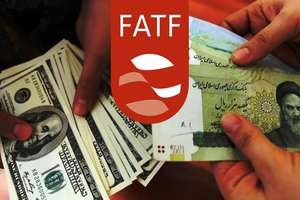
The logo of the FATF (the Financial Action Task Force) is seen during a news conference after a plenary session at the OECD Headquarters in Paris, France, October 18, 2019.
Iranian President Masoud Pezeshkian has signed into law the country’s conditional accession to the United Nations Convention for the Suppression of the Financing of Terrorism (CFT), approving it only within the limits of Iran’s constitution and domestic legislation.
In a formal decree on Tuesday, Pezeshkian instructed the judiciary, the ministries of interior, intelligence, justice, foreign affairs, and economy, as well as the Central Bank, to implement the law in accordance with national regulations -- a condition that could limit its impact even as Tehran seeks to ease its isolation from the global financial system.
Under conditions set by parliament and endorsed by the Expediency Council, Iran will act “within the framework of the constitution,” and in cases where any provision of the convention conflicts with national laws, “domestic legislation will take precedence,” council spokesman Mohsen Dehnavi said.
The move, which follows years of political wrangling, comes just a day before the Financial Action Task Force (FATF) plenary in Paris on October 22–24, where delegates from over 200 jurisdictions will discuss mutual evaluations and global efforts to combat money laundering and terror financing.
Iran’s Financial Intelligence Unit chief, Hadi Khani, has traveled to Paris to attend FATF plenary for the first time in six years at the group’s official invitation, according to state media.
Khani, who also serves as deputy economy minister and secretary of Iran’s Anti–Money Laundering and Counter-Terrorist Financing Council, is expected to outline Iran’s progress on its action plan, focusing on the recent approval of its accession to the UN Palermo Convention against transnational organized crime.
The Iranian delegation will brief FATF members on legislative and implementation steps and coordinate future meetings to address questions and clarify outstanding issues, IRNA reported.
In May, Iran’s Expediency Council, conditionally approved the country’s accession to the Palermo Convention, one of the two key legislative items tied to the FATF standards, alongside the CFT.
The Expediency Council, overseen by Supreme Leader Ali Khamenei, mediates disputes between parliament and the Guardian Council, a body that vets laws and candidates.
Supporters say joining the UN convention could help Iran align with FATF standards, reconnect with global banking systems, and attract investment, while hardliners warn it risks exposing financial channels used to evade US sanctions and fund regional allies.
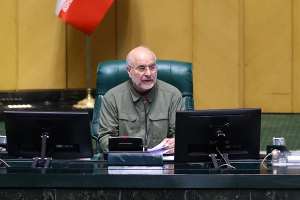
Parliament Speaker Mohammad Bagher Ghalibaf sent the bill to Pezeshkian for implementation under Article 123 of the constitution last week after lawmakers rejected a conservative-backed motion to block the move, clearing the way for Iran to finalize its accession.
Iran and North Korea remain the only two countries still outside the FATF framework.
Iranian people walk at the Tehran Bazaar in Tehran, Iran, October 5, 2025.
Iran’s establishment is bracing for renewed public unrest as UN sanctions squeeze an already fragile economy, Reuters reported, citing officials and experts warning that the government’s options to avert crisis are narrowing.
“The establishment knows protests are inevitable, it is only a matter of time ... The problem is growing, while our options are shrinking,” according to one Iranian official quoted by Reuters.
The sanctions, reimposed last month after the collapse of nuclear talks, have accelerated inflation, weakened the rial, and pushed millions further into poverty. The national currency has fallen past 1.1 million to the dollar, while inflation remainsabout 40%.
Officials told Reuters that high-level meetings have been held in Tehran to manage “simmering public anger” and prevent a repeat of past protests that shook the country.
“Mounting distress could reignite mass protests among lower- and middle-income Iranians,” a second official said.
The government, they said, blames the United States, its allies, and Israel for using sanctions to “fuel unrest” and threaten the Islamic Republic’s survival.
“The impact of the UN sanctions will be severe and multifaceted, deepening the country’s longstanding structural and financial vulnerabilities,” said Umud Shokri, an energy strategist at George Mason University. “The government is struggling to maintain stability as sanctions disrupt trade, banking, and oil exports.”
While Iran continues to rely on discounted crude sales to China, officials told Reuters that even this lifeline could weaken if Beijingseeks to ease tensions with Washington.
The prospect of deepening hardship has heightened fears within the establishment of another wave of street protests like those that erupted in 2019 and 2022 over fuel prices and compulsory hijab enforcement.
With unemployment rising and living costs soaring, the government’s reliance on security measures to preserve order risks backfiring, analysts warn.
As one Tehran-based trader put it: “When people lose faith in the currency, they lose faith in the system.”
China's President Xi Jinping meets Iranian counterpart Masoud Pezeshkian
The return of UN sanctions has deepened Tehran’s isolation and tested Beijing’s pragmatic balancing act in a region shaken by Donald Trump’s new peace plan and the 12-day war between Iran and Israel.
The current state of China–Iran relations is unusually difficult to assess. Both governments continue to affirm their “strategic partnership,” but beyond the rhetoric the reality is less clear.
On paper, the two countries are bound by a 25-year cooperation agreement signed in 2021, covering trade, infrastructure, energy and security.
Yet China has remained notably cautious during Iran’s recent crises. Despite being Tehran’s largest oil customer and a key diplomatic partner, Beijing largely stayed on the sidelines as Israeli strikes hit Iranian territory.
In practice, the partnership operates within strict limits. While Sino-Iranian economic relations have been stagnating, China’s ties with Saudi Arabia and other Gulf monarchies have expanded dramatically.
Expectations meet caution
During the 12-day confrontation with Israel, some Chinese analysts urged a more proactive role—mediation, public condemnation of Israeli strikes or closer military cooperation.
But Beijing did little, triggering accusations in Tehran that it failed to grasp the Islamic Republic’s strategic value in its rivalry with the United States.
China should have done more, many asserted, rarely elaborating on what that more could look like.
Direct military or political backing, however, would have risked confrontation with Washington and jeopardized China’s broader regional network.
Oil and gas tanks are seen at an oil warehouse at a port in Zhuhai, China October 22, 2018.
Oil as quiet support
Where China’s support has been most tangible is in energy trade. The world's top importer of oil is Iran's main, almost sole, customer.
Despite sanctions, imports of Iranian crude have continued to grow in 2025, with tankers often re-flagged or disguised to evade detection. This provides Tehran with a crucial lifeline.
For Beijing, the motive is less political than practical: discounted Iranian oil fits its strategy of stockpiling reserves and securing cheap energy while global prices remain low.
Dependence by default
With UN sanctions back in force, Iran faces renewed isolation from global finance, trade, and technology. That leaves Tehran even more dependent on a handful of partners—above all, China.
A recent review of Iranian media published by the ChinaMed Project confirms this.Iran’s leaders—or at least parts of the elite—prize strategic autonomy and resent reliance on any single power, yet options are scarce.
Russia, itself sanctioned and weakened, offers little beyond rhetoric. China, by contrast, provides trade, energy purchases, and a degree of diplomatic cover, making it Iran’s indispensable partner whether Tehran likes it or not.
The trajectory of Iran-Saudi relations will be decisive. If détente holds, Tehran may find limited room to maneuver; if it collapses, dependence on Beijing will only deepen.
Looking ahead
The return of UN sanctions on Iran coincides with Donald Trump’s unveiling of a new peace plan.
Beijing’s official line is that it “welcomes all efforts” toward peace based on a two-state solution. Chinese experts, however, are skeptical, arguing that peace will be impossible without recognizing Palestinian statehood—a position long enshrined in Chinese diplomacy.
Many Chinese commentators also see Trump’s plan as a US bid to reassert dominance, protect Israel’s interests, and strengthen Arab-Israeli ties.
Beijing opposes none of these in principle, but grows wary when they appear designed to isolate Tehran further, potentially undermining China’s own mediation between Iran and Saudi Arabia.
Beijing’s challenge is to sustain its balancing act: maintaining economic ties with Tehran, preserving partnerships with Iran’s Arab neighbors, and avoiding direct confrontation with Washington.
For Tehran, choices are narrowing. The more isolated it becomes, the more it must rely on China, even if that means accepting a subordinate position in the relationship.
China’s support for Iran remains significant but measured, rooted more in calculation than ideology. As sanctions bite and isolation deepens, Beijing’s role may grow—but within limits that protect China’s own interests above all.
Containers are stacked at Iran's Caspian port of Anzali
Despite years of official rhetoric about a “strategic partnership,” new data show that Russia has slipped from Iran’s list of main trading partners.
Iran’s customs chief Faroud Asgari confirmed the shift without specifying trade volume for the first half of the current Iranian fiscal year (March 21–September 22).
Figures from Iran’s Chamber of Commerce show, however, that bilateral trade totaled less than $1.1 billion in the first five months—just 4.5% of Iran’s total non-oil foreign trade.
This comes despite a 2023 agreement between Tehran and Moscow to boost annual trade to $40 billion after Russia’s invasion of Ukraine and the onset of Western sanctions.
Last year, Iran–Russia trade stood at $2.5 billion.
Exaggerations
Following reports that Russia had fallen off Iran’s main trading list, Deputy Trade Minister Mohammad Ali Dehgan said Iranian exports to Russia had grown by 30% in the first five months of this year, “approaching one billion dollars.”
But data from the Chamber of Commerce show the real figure was less than half that amount.
Tehran has long tried to frame its ties with Moscow as a deep strategic alliance, though critics say Russia sees Iran merely as a tool in its standoff with the West.
Former foreign minister Mohammad Javad Zarif recently said Russia “sabotaged” talks between Tehran and Western powers, calling any improvement in Iran–West relations a “red line” for the Kremlin.
Despite signing more than 100 memoranda of understanding and contracts in the oil and gas sector, Moscow has failed to implement any of them or deliver promised investments in Iran’s logistics infrastructure.
Even so, Russia moved two weeks ago to activate its “Comprehensive Strategic Agreement” with Tehran—a pact focused on military and security cooperation rather than trade or investment.
In 2018, Moscow pledged $40 billion in investments after US President Donald Trump tore up the 2015 nuclear deal and reinstated sanctions on Iran. That promise never materialized either.
Such agreements appear aimed more at encouraging Tehran to resist Western pressure than advancing real economic cooperation. Iranian officials, in turn, use them to project strength and deny isolation at home and abroad.
Broader trade decline
According to customs data, Iran’s non-oil exports reached about $26 billion in the first half of the fiscal year, nearly unchanged from last year, while imports fell 15% to $28.3 billion.
Iraq remains Iran’s second-largest non-oil export market after China, but exports to Iraq dropped 12% year-on-year to $4.5 billion, mostly food products.
In late September, Iraq banned the import of 44 types of agricultural and livestock goods to protect domestic producers, further cutting Iranian exports.
Three-quarters of Iran’s total exports now go to just five countries—China, Iraq, the United Arab Emirates, Turkey, and Afghanistan—underscoring the growing concentration and isolation of its trade.
The same pattern holds for imports. For the first time, 80% of Iran’s imports this year have come from only five countries: the UAE, China, Turkey, India, and Germany.
The trend is not promising for Tehran as UN sanctions return: if trade with Russia fails to recover, nearly all of Iran’s economic eggs will be in the Chinese basket.