Iran faces rising risk of unrest as UN sanctions deepen economic strain - Reuters
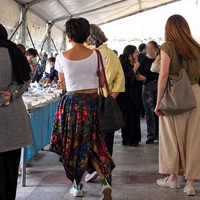
Iranian people walk at the Tehran Bazaar in Tehran, Iran, October 5, 2025.
Iran’s establishment is bracing for renewed public unrest as UN sanctions squeeze an already fragile economy, Reuters reported, citing officials and experts warning that the government’s options to avert crisis are narrowing.
“The establishment knows protests are inevitable, it is only a matter of time ... The problem is growing, while our options are shrinking,” according to one Iranian official quoted by Reuters.
The sanctions, reimposed last month after the collapse of nuclear talks, have accelerated inflation, weakened the rial, and pushed millions further into poverty. The national currency has fallen past 1.1 million to the dollar, while inflation remainsabout 40%.
Officials told Reuters that high-level meetings have been held in Tehran to manage “simmering public anger” and prevent a repeat of past protests that shook the country.
“Mounting distress could reignite mass protests among lower- and middle-income Iranians,” a second official said.
The government, they said, blames the United States, its allies, and Israel for using sanctions to “fuel unrest” and threaten the Islamic Republic’s survival.
“The impact of the UN sanctions will be severe and multifaceted, deepening the country’s longstanding structural and financial vulnerabilities,” said Umud Shokri, an energy strategist at George Mason University. “The government is struggling to maintain stability as sanctions disrupt trade, banking, and oil exports.”
While Iran continues to rely on discounted crude sales to China, officials told Reuters that even this lifeline could weaken if Beijingseeks to ease tensions with Washington.
The prospect of deepening hardship has heightened fears within the establishment of another wave of street protests like those that erupted in 2019 and 2022 over fuel prices and compulsory hijab enforcement.
With unemployment rising and living costs soaring, the government’s reliance on security measures to preserve order risks backfiring, analysts warn.
As one Tehran-based trader put it: “When people lose faith in the currency, they lose faith in the system.”
The return of UN sanctions has deepened Tehran’s isolation and tested Beijing’s pragmatic balancing act in a region shaken by Donald Trump’s new peace plan and the 12-day war between Iran and Israel.
The current state of China–Iran relations is unusually difficult to assess. Both governments continue to affirm their “strategic partnership,” but beyond the rhetoric the reality is less clear.
On paper, the two countries are bound by a 25-year cooperation agreement signed in 2021, covering trade, infrastructure, energy and security.
Yet China has remained notably cautious during Iran’s recent crises. Despite being Tehran’s largest oil customer and a key diplomatic partner, Beijing largely stayed on the sidelines as Israeli strikes hit Iranian territory.
In practice, the partnership operates within strict limits. While Sino-Iranian economic relations have been stagnating, China’s ties with Saudi Arabia and other Gulf monarchies have expanded dramatically.
Expectations meet caution
During the 12-day confrontation with Israel, some Chinese analysts urged a more proactive role—mediation, public condemnation of Israeli strikes or closer military cooperation.
But Beijing did little, triggering accusations in Tehran that it failed to grasp the Islamic Republic’s strategic value in its rivalry with the United States.
China should have done more, many asserted, rarely elaborating on what that more could look like.
Direct military or political backing, however, would have risked confrontation with Washington and jeopardized China’s broader regional network.
Oil and gas tanks are seen at an oil warehouse at a port in Zhuhai, China October 22, 2018.
Oil as quiet support
Where China’s support has been most tangible is in energy trade. The world's top importer of oil is Iran's main, almost sole, customer.
Despite sanctions, imports of Iranian crude have continued to grow in 2025, with tankers often re-flagged or disguised to evade detection. This provides Tehran with a crucial lifeline.
For Beijing, the motive is less political than practical: discounted Iranian oil fits its strategy of stockpiling reserves and securing cheap energy while global prices remain low.
Dependence by default
With UN sanctions back in force, Iran faces renewed isolation from global finance, trade, and technology. That leaves Tehran even more dependent on a handful of partners—above all, China.
A recent review of Iranian media published by the ChinaMed Project confirms this.Iran’s leaders—or at least parts of the elite—prize strategic autonomy and resent reliance on any single power, yet options are scarce.
Russia, itself sanctioned and weakened, offers little beyond rhetoric. China, by contrast, provides trade, energy purchases, and a degree of diplomatic cover, making it Iran’s indispensable partner whether Tehran likes it or not.
The trajectory of Iran-Saudi relations will be decisive. If détente holds, Tehran may find limited room to maneuver; if it collapses, dependence on Beijing will only deepen.
Looking ahead
The return of UN sanctions on Iran coincides with Donald Trump’s unveiling of a new peace plan.
Beijing’s official line is that it “welcomes all efforts” toward peace based on a two-state solution. Chinese experts, however, are skeptical, arguing that peace will be impossible without recognizing Palestinian statehood—a position long enshrined in Chinese diplomacy.
Many Chinese commentators also see Trump’s plan as a US bid to reassert dominance, protect Israel’s interests, and strengthen Arab-Israeli ties.
Beijing opposes none of these in principle, but grows wary when they appear designed to isolate Tehran further, potentially undermining China’s own mediation between Iran and Saudi Arabia.
Beijing’s challenge is to sustain its balancing act: maintaining economic ties with Tehran, preserving partnerships with Iran’s Arab neighbors, and avoiding direct confrontation with Washington.
For Tehran, choices are narrowing. The more isolated it becomes, the more it must rely on China, even if that means accepting a subordinate position in the relationship.
China’s support for Iran remains significant but measured, rooted more in calculation than ideology. As sanctions bite and isolation deepens, Beijing’s role may grow—but within limits that protect China’s own interests above all.
Iran’s government spokesperson said on Tuesday that the administration does not believe coercion can restore compliance with Iran’s hijab laws, amid renewed debate over enforcement and the deployment of tens of thousands of volunteers in Tehran.
Speaking at her weekly press briefing, Fatemeh Mohajerani said, “Hijab cannot be restored to society by force... The president has repeatedly said that we certainly cannot bring hijab back to people through coercion.”
She added that the government respects all existing laws but emphasized that social norms should be upheld through cultural engagement rather than force.
Mohajerani added that the government seeks to prevent the hijab debate from deepening social divisions.
“We must ensure,” she said, “that defending social values does not come at the cost of dividing our people.”
“We are a Muslim society,” she pointed out. “We must take care not to create divisions. While we believe inappropriate public behavior should be addressed, it is something that requires the cooperation of all citizens.”
Her remarks came after Tehran’s Promotion of Virtue and Prevention of Vice headquarters said this month that 80,000 trained volunteers would be deployed across the capital as part of a new “hijab and chastity situation room.”
The initiative, announced by conservative officials, will rely on local monitoring and cooperation with cyber police and prosecutors.
No extra budget for hijab enforcement
Mohajerani also denied that any dedicated funding had been assigned for the recently announced mobilization, saying that “no special budget has been allocated for such programs.”
She added that Iran’s Supreme National Security Council (SNSC) -- headed by the president -- remained the ultimate authority on matters related to social order and security.
The new hijab enforcement drive has drawn concern among reformist politicians and clerics who warn that policing public behavior risks further division.
Cleric Abdolkarim Behjatpour, a senior member of Iran’s Institute for Islamic Culture and Thought, told ILNA news agency this week that if the campaign “turns into arrests and imprisonment, it will harm the system.”
He said moral guidance “must be delivered politely, with compassion and dignity, not through enforcement that creates social rifts.”
Another senior cleric and member of the Society of Seminary Teachers in Qom, Mohsen Faghihi, said on Tuesday that “inviting people to observe hijab should not involve confrontation, morality patrols, or imprisonment,” warning that such measures only create tension and division.
However, Abbas Ka'bi, a senior cleric and member of Iran’s Assembly of Experts, warned earlier this week against what he described as neglect over hijab enforcement, calling it a religious and legal duty of all state institutions.
He described hijab as an asset "protecting Iran’s Islamic identity from Western moral decline," and urged coordinated, well-planned action by cultural, security, and judicial bodies to prevent what he called the spread of immorality.
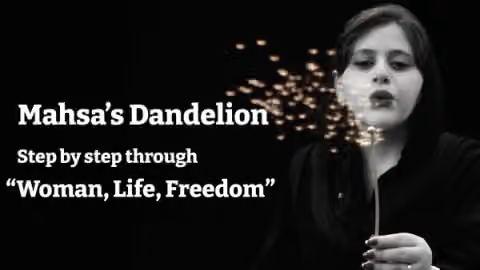
Since the 2022 death of Mahsa Amini in the custody of Iran’s morality police, enforcing compulsory hijab has become increasingly difficult, and the state’s ability to impose the rules has sharply eroded, particularly in major cities.
Since then, many women have continued to appear unveiled in public despite warnings, fines, and the return of hijab patrol vans, turning defiance into a daily act of resistance.
In recent months, however, authorities have revived enforcement drives through mobile patrol vans, increased fines, and business closures targeting cafés and shops accused of noncompliance.
Judiciary spokesman Ali-Asghar Jahangir said earlier this month that hijab laws remain in force, though enforcement methods have shifted toward targeting businesses rather than individuals.
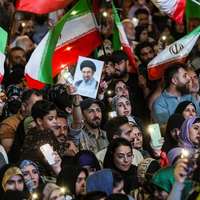
Passengers on Tehran’s subway shouted anti-government slogans on Tuesday after a major service disruption left commuters stranded between stations, according to videos sent to Iran International.
Footage from the Tehran–Karaj line showed frustrated passengers exiting carriages through emergency doors and walking along the tracks after a train broke down on Line 5, which links the capital with its western suburbs.
Some could be heard chanting “Death to Khamenei,” “Death to the dictator,” and “Reza Shah, bless your soul,” a reference to the founder of Pahlavi dynasty and Shah of Iran from 1925 to 1941.
Local news site DidbanIran reported that train services on Line 4, running east–west through central Tehran, were also disrupted earlier in the morning after a train stopped between two stations due to a technical failure. The stoppage caused long delays as following trains were held up along the line.
Tehran Metro’s public relations office said in a statement that technical teams resolved the issue completely, and service has returned to normal.
City Council Chairman Mehdi Chamran described the incident as unavoidable, saying “such disruptions can always happen” and that parts of the metro network are in urgent need of overhaul.
Similar outbursts of protests have occurred before. in August, passengers at Aliabad and Khazaneh stations shouted slogans against the Islamic Republic following long delays.
Despite years of official rhetoric about a “strategic partnership,” new data show that Russia has slipped from Iran’s list of main trading partners.
Iran’s customs chief Faroud Asgari confirmed the shift without specifying trade volume for the first half of the current Iranian fiscal year (March 21–September 22).
Figures from Iran’s Chamber of Commerce show, however, that bilateral trade totaled less than $1.1 billion in the first five months—just 4.5% of Iran’s total non-oil foreign trade.
This comes despite a 2023 agreement between Tehran and Moscow to boost annual trade to $40 billion after Russia’s invasion of Ukraine and the onset of Western sanctions.
Last year, Iran–Russia trade stood at $2.5 billion.
Exaggerations
Following reports that Russia had fallen off Iran’s main trading list, Deputy Trade Minister Mohammad Ali Dehgan said Iranian exports to Russia had grown by 30% in the first five months of this year, “approaching one billion dollars.”
But data from the Chamber of Commerce show the real figure was less than half that amount.
Tehran has long tried to frame its ties with Moscow as a deep strategic alliance, though critics say Russia sees Iran merely as a tool in its standoff with the West.
Former foreign minister Mohammad Javad Zarif recently said Russia “sabotaged” talks between Tehran and Western powers, calling any improvement in Iran–West relations a “red line” for the Kremlin.
Despite signing more than 100 memoranda of understanding and contracts in the oil and gas sector, Moscow has failed to implement any of them or deliver promised investments in Iran’s logistics infrastructure.
Even so, Russia moved two weeks ago to activate its “Comprehensive Strategic Agreement” with Tehran—a pact focused on military and security cooperation rather than trade or investment.
In 2018, Moscow pledged $40 billion in investments after US President Donald Trump tore up the 2015 nuclear deal and reinstated sanctions on Iran. That promise never materialized either.
Such agreements appear aimed more at encouraging Tehran to resist Western pressure than advancing real economic cooperation. Iranian officials, in turn, use them to project strength and deny isolation at home and abroad.
Broader trade decline
According to customs data, Iran’s non-oil exports reached about $26 billion in the first half of the fiscal year, nearly unchanged from last year, while imports fell 15% to $28.3 billion.
Iraq remains Iran’s second-largest non-oil export market after China, but exports to Iraq dropped 12% year-on-year to $4.5 billion, mostly food products.
In late September, Iraq banned the import of 44 types of agricultural and livestock goods to protect domestic producers, further cutting Iranian exports.
Three-quarters of Iran’s total exports now go to just five countries—China, Iraq, the United Arab Emirates, Turkey, and Afghanistan—underscoring the growing concentration and isolation of its trade.
The same pattern holds for imports. For the first time, 80% of Iran’s imports this year have come from only five countries: the UAE, China, Turkey, India, and Germany.
The trend is not promising for Tehran as UN sanctions return: if trade with Russia fails to recover, nearly all of Iran’s economic eggs will be in the Chinese basket.
About 120,000 Iranians die each year from nutrition-related causes, an Iranian official said on Monday, as soaring food prices and declining consumption of key staples such as dairy, meat, fruits, and vegetables deepen the country’s public health crisis.
Out of 400,000 to 420,000 annual deaths in the country, roughly 35% are linked to malnutrition, Ahmad Esmailzadeh, director of the Nutrition Improvement Office at Iran’s Health Ministry, said at a World Food Day event.
“Deficiencies in diet and lack of essential nutrients have become a major contributor to mortality,” he said.
Government data show that nutritional imbalances—ranging from vitamin and mineral deficiencies to obesity in children and expectant mothers—are escalating nationwide.
Each year, about 10,000 Iranians die due to insufficient intake of omega-3 fatty acids, another 10,000 from not consuming enough fruits and vegetables, and 25,000 from low consumption of whole grains and bread.
Vitamin D deficiency, affecting between 50% and 70% of the population, remains widespread and directly impacts bone and immune health.
Rising prices, falling nutrition
Much of the crisis is attributed to soaring food inflation, which has sharply reduced household access to healthy diets, Tehran-based Rouydad24 wrote on Monday. The consumption of dairy and meat, two vital protein sources, has fallen to less than half of recommended levels.
Even vitamin supplements have become unaffordable for many families, particularly in deprived provinces such as Sistan and Baluchestan, Kerman, and Hormozgan, according to the outlet.
The consequences extend beyond mortality. Rouydad24 quoting nutrition experts reported alarming increases in obesity among children, stunted growth in poorer provinces, and rising rates of chronic illnesses such as hypertension and diabetes.
Research cited by the outlet shows that one in five children and adolescents is overweight or obese, while 30% of pregnant women experience unhealthy weight gain.
Economic and social costs
The financial burden of maintaining a balanced diet is straining family budgets, added the report. As inflation continues, more households are forced to cut back on basic food items, fueling a vicious cycle of malnutrition, illness, and poverty. Experts warn the crisis could have long-term effects on human development, including reduced cognitive performance in children.
“If iodine deficiency in pregnant women continues, the IQ of future generations will decline,” Esmailzadeh cautioned. “Nutrition is not only a health issue but a vital economic and social concern.”
Without comprehensive intervention, the daily warned, Iran will continue to face silent deaths and a worsening decline in public health.