The original plan, announced shortly after his death was confirmed on March 1, envisioned a three-stage procession through Tehran, Qom and Mashhad before Khamenei’s burial in his hometown.
A day later, after the death of his wife, Mansoureh Khojasteh Bagherzadeh, was announced, officials shifted to a joint burial at the Imam Reza Shrine in Mashhad.
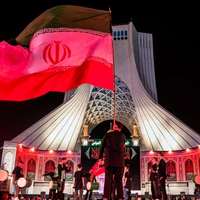
On Wednesday morning, state television reported that Khamenei’s coffin would be placed at Tehran’s Mosalla (Prayer Grounds) for mourners. By midday, the broadcast postponed the ceremony to the evening. Hours later, another update said it would still take place at an unspecified later time.
State television later aired footage of workers preparing a podium where the coffin was to be displayed behind bulletproof glass.
Security and optics
Security concerns appear central to the delays. Iran is organizing a state funeral amid an active regional war, and Israeli officials have said they would target anyone appointed as the next Supreme Leader.
Foreign dignitaries—particularly figures linked to Hezbollah and the Houthis—have reportedly expressed concern about attending, citing the killing of Hamas leader Ismail Haniyeh in Tehran during former President Ebrahim Raisi’s funeral.
Many Iranian officials likely share similar concerns. Lower-level Chinese and Russian delegations are expected to attend.
The question of succession adds further uncertainty. Ahmad Khatami, a member of the Assembly of Experts, said on state television Wednesday that the body had not yet reached a final decision on Khamenei’s successor.
“Allowing everyone to express their views is extremely difficult during wartime,” he added.
Some clerical figures argue that naming a successor while the former leader remains unburied would be inappropriate. Others contend that announcing a new leader during the funeral itself—before a large crowd—would better project unity and legitimacy, despite widespread anti-government protests earlier this year.
The crowd problem
Officials also appear concerned about turnout. State television acknowledged that authorities were attempting to bus supporters in from other cities to produce what it described as “a funeral attended by millions.”
The leadership is keen to replicate the massive crowds that gathered for Ayatollah Ruhollah Khomeini in 1989. Official figures at the time claimed 10 million mourners, though foreign journalists estimated between two and four million. Replicating even a fraction of that turnout now—amid war and public discontent—appears uncertain.
Transporting large crowds between Tehran, Qom and Mashhad for a multi-city mourning procession adds further complications.
Khamenei’s supporters, including those backing his son as a potential successor, are seeking a large and symbolic display of loyalty when and if a new leader is announced.
Some officials and analysts say that effort to stage a carefully managed spectacle may help explain why the funeral has been repeatedly delayed over the past two days.