• العربية
  • فارسی
Brand
  • Iran Insight
  • Politics
  • Economy
  • Analysis
  • Special Report
  • Opinion
  • Podcast
  • Iran Insight
  • Politics
  • Economy
  • Analysis
  • Special Report
  • Opinion
  • Podcast
  • Theme
  • Language
    • العربية
    • فارسی
  • Iran Insight
  • Politics
  • Economy
  • Analysis
  • Special Report
  • Opinion
  • Podcast
All rights reserved for Volant Media UK Limited
volant media logo

US condemns Iran over prison deaths, activist hunger strike, and looming execution

Oct 1, 2025, 07:30 GMT+1Updated: 00:33 GMT+0

The United States on Wednesday accused Iran of gross human rights violations following the deaths of three women in prison, the deteriorating condition of an imprisoned activist on hunger strike, and the looming execution of a Kurdish political prisoner.

The State Department’s Persian-language account on X said three women -- Somayeh Rashidi, Jamileh Azizi and Soudabeh Asadi -- died in recent days at Qarchak prison near Tehran after being denied medical care, adding their deaths followed that of Farzaneh Bijanpour in January.

It cited a statement by 45 women prisoners who condemned “inhumane treatment” of fellow inmates.

Washington also highlighted the case of Hossein Ronaghi, a well-known dissident jailed for criticizing the authorities, who is on hunger strike in protest at what it called “horrific prison conditions.”

The US said his health had sharply worsened due to denial of medication for chronic illness and demanded his immediate release.

Separately, it condemned what it described as the arbitrary detention and torture of Kurdish activist Pakshan Azizi, arrested with relatives in August 2023 and sentenced to death after what it called a sham trial.

“We call on the regime to halt her execution, free her and all political prisoners, and end its campaign of terror against its own people,” the statement said, adding more than 1,000 executions in Iran so far in 2025.

Most Viewed

Ghalibaf defends Iran-US talks amid hardline backlash
1
INSIGHT

Ghalibaf defends Iran-US talks amid hardline backlash

2
INSIGHT

Iran diplomacy wobbles as factions compete to avoid looking soft on US

3
VOICES FROM IRAN

Bread shortages, soaring prices strain households in Iran, residents say

4
ANALYSIS

The politics of pink: how Iran uses cuteness to rebrand violence

5

Scam messages seek crypto for ships’ safe passage through Hormuz, firm warns

Banner
Banner

Spotlight

  • Diplomacy tolls at Hormuz as conflict returns to its doorstep
    OPINION

    Diplomacy tolls at Hormuz as conflict returns to its doorstep

  • Opposition to US talks grows in Tehran as ceasefire deadline nears
    INSIGHT

    Opposition to US talks grows in Tehran as ceasefire deadline nears

  • Tehran moderates see ‘no deal–no war’ limbo as worst outcome
    INSIGHT

    Tehran moderates see ‘no deal–no war’ limbo as worst outcome

  • The future has been switched off here
    TEHRAN INSIDER

    The future has been switched off here

  • Lights out, then gunfire: Witnesses recount Mashhad protest crackdown
    VOICES FROM IRAN

    Lights out, then gunfire: Witnesses recount Mashhad protest crackdown

  • Is Iran entering its Gorbachev moment?
    INSIGHT

    Is Iran entering its Gorbachev moment?

  • UN experts condemn Iran’s ‘industrial-scale’ executions

    UN experts condemn Iran’s ‘industrial-scale’ executions

•
•
•

More Stories

Foreign supply chains enabled Iran protest crackdown, report finds

Sep 30, 2025, 22:55 GMT+1

A new investigation has revealed how Iranian security forces relied on global supply chains and intermediary companies to obtain weapons later turned on protesters during the 2022 Woman, Life, Freedom uprising.

The joint report by the Iran Human Rights Documentation Center and independent news outlet IranWire describes how Turkish, European and North American firms, often through shadowy networks and front companies, supplied or enabled the transfer of shotguns, ammunition and paintball guns used to quell street unrest.

“Shooting protesters in the eyes is a deliberate form of torture meant to instill fear. Hundreds of cases involving teenagers and adults reveal a state-sanctioned pattern, with weapons supplied and repurposed through state-linked channels," it said.

"Targeting eyes and faces reflects a calculated effort to incapacitate protesters and create cautionary examples. These acts violate ICCPR Article 7, constitute crimes against humanity under the Rome Statute and breach domestic firearms laws."

The report argues that while the Iranian government has long imported arms despite sanctions, the 2022 protests marked a shift.

Security forces deliberately deployed so-called less-lethal weapons not as a means of crowd control but as tools of intimidation and punishment. Shotguns, pellet rounds, paintball guns and tear gas canisters were routinely fired at eyes, leaving many protesters permanently blinded or disfigured.

Doctors in Tehran and Kurdistan reported hundreds of eye injuries, suggesting the practice was widespread and state sanctioned.

Investigators documented 134 victims across 24 provinces, with an average age of 29. At least 114 were struck by pellets, nine by paintball rounds, and nine by direct hits from tear gas canisters.

The report said that these numbers represent only a fraction of the total, with many victims avoiding hospitals for fear of arrest.

'Complicity'

The companies named include Turkish shotgun makers Hatsan, Akkar and Sarsilmaz, whose Escort, Karatay and SAR-branded models were traced inside Iran.

European firm Cheddite was linked to ammunition identified by headstamps recovered from protest scenes. Paintball markers produced by Tippmann in the United States and DYE Precision in Canada were also diverted into the hands of police and Basij forces.

These products reached Iran through Turkish intermediaries such as Yavascalar YAF, as well as front companies tied to the FARAJA Cooperative Foundation and the Defense Industries Organization.

Some procurement was disguised under the cover of sports, with the Iran Paintball Association and other federations providing channels to skirt restrictions.

The report warns that such transfers may constitute corporate complicity in human rights abuses under international law. It highlights potential breaches of export control rules and exposure to secondary sanctions, particularly where companies made sales despite Iran’s documented record of violent crackdowns.

The authors call for urgent action, including classifying shotguns and paintball markers as dual-use products subject to strict end-user verification, closer scrutiny of financial intermediaries including crypto platforms and new pathways for victims to seek justice.

They argue that without accountability, foreign firms and evasive intermediaries will continue to arm Iran’s security forces with tools of repression.

Four Iranian directors compete for Oscars from four countries

Sep 30, 2025, 22:02 GMT+1

Four Iranian directors are competing in the Academy Awards Best International Feature Film category this year, each representing a different country, with a shortlist of finalists due to be announced on March 2.

Iran submitted Cause of Death: Unknown by Ali Zarnegar after a selection process that excluded films by independent and dissident filmmakers.

Among those left out was the critics’ favorite It Was Just an Accident, secretly filmed by internationally acclaimed director Jafar Panahi, who is banned from filmmaking.

Panahi's drama was in turn submitted to the Oscars by France while fellow dissident filmmaker Alireza Khatami’s The Things You Kill will represent Canada.

Shahram Mokri’s Black Rabbit, White Rabbit has also been selected by Tajikistan.

Panahi’s film, which won the Palme d’Or at the 2025 Cannes Film Festival, was selected as France’s submission from a shortlist that also included Richard Linklater’s Nouvelle Vague and Rebecca Zlotowski’s A Private Life.

Oscars rules allow submissions in the category for productions "largely in the hands of citizens or residents of the submitting country."

The plethora of films by Iranian filmmakers has stoked some criticism, however, as LA Times columnist Glenn Whip wrote in an article titled, "The Oscars’ international feature category is broken. But there’s no easy fix".

"All this leads to a question raised annually: Isn’t there a better way to choose movies for the Oscars’ international feature category, one that sidesteps the politics of repressive regimes and produces a list of films that are the best the world has to offer?" he wrote.

The global presence of Iranian directors highlights both the richness of Iran’s cinema and the challenges artists face under domestic repression.

Earlier this month, an association of independent Iranian filmmakers called on the Academy of Motion Picture Arts and Sciences (AMPAS) to overhaul how it accepts films from countries under authoritarian rule, warning that the current system legitimizes state-controlled cinema bodies.

In a letter to the Academy, the Iranian Independent Filmmakers Association (IIFMA) said the Farabi Cinema Foundation, which oversees Oscar submissions from Iran, enforces censorship and sidelines independent voices at home and abroad.

  • Dissident Iranian filmmakers urge Oscars to reject state-linked submissions

    Dissident Iranian filmmakers urge Oscars to reject state-linked submissions

Many Iranian talents, facing censorship and restrictions at home, have fled abroad. Panahi remains in Iran under travel and work restrictions, but his French residence gives him the chance to participate in the Oscar submission process.

Mohammad Rasoulof, whose The Seed of the Sacred Fig was Germany's Oscars submission last year, was previously sentenced to prison and now lives and works in Germany.

While Iranian cinema has global reputation for its exploration of social themes, independent filmmakers operate under a system of strict censorship at home.

The government requires script approval and screening permits by the Ministry of Culture and Islamic Guidance, punishing those who challenge political or social taboos with bans, imprisonment or exile.

After June war, is the Islamic Republic due for a 'paradigm shift'?

Sep 30, 2025, 20:23 GMT+1
•
Behrouz Turani

Once relegated to the world of academic social science, the term "paradigm shift" has gained traction in Iran's political discourse after a punishing 12-day war with Israel and the United States exposed the country's weakness.

With new international sanctions set to deepen economic suffering and no diplomatic or domestic opening yet visible, the severity of Iran's predicament is clear.

The term "paradigm shift" has become a euphemism for fundamental change to Iran’s political system, specifically, curbing Supreme Leader Ali Khamenei’s nearly four decades of autocratic rule.

As Iran's primary and often sole decision-maker, Khamenei has shaped not only strategic affairs but also the daily operations of government, media and public life.

But a remarkable exchange between two natural political opponents aired by an independent media outlet appears to show that both sides of the political spectrum grasp the need for a profound shift, albeit couched in politically inoffensive terms.

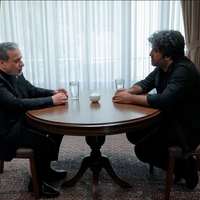
On September 29, the Iranian website Entekhab posted a YouTube video featuring a debate between two prominent figures: Mohammad Reza Bahonar, a conservative heavyweight and member of the Expediency Council and Abolfazl Shakouri Rad, former leader of the reformist Unity of the Nation Party.

In the 90-minute video, Bahonar emphasized that a paradigm shift does not mean regime change.

“It’s not about abandoning principles,” he said. “It’s about adapting them to new realities. The revolution’s core, Islamic governance and independence, remains intact. But the world has changed. We can’t ignore the demands of the youth or the country’s economic challenges.”

Shakouri Rad agreed, framing the shift in terms of Thomas Kuhn’s theory of scientific revolutions: “This is Kuhn’s paradigm shift applied to politics, old models collapse under pressure. Iran is facing this due to sanctions, demographics and technological globalization.”

Kuhn (1922–1996) was an American historian and philosopher of science who popularized the concept of paradigm shifts.

'Mini-shifts'

Bahonar noted that Iran has experienced “mini-shifts” before, under President Akbar Hashemi Rafsanjani (1989–1997), who pursued economic liberalization, and President Mohammad Khatami (1997–2005) who pushed for reforms despite resistance from Khamenei.

These shifts, Bahonar argued, were pragmatic rather than ideological.

Shakouri Rad added historical context: “Paradigm shifts often occur during crises like the 1979 revolution or the 1988 ceasefire with Iraq. Today, we’re in a post-heroic phase. War veterans no longer dominate politics. Over 60% of the population is under 30. They demand transparency and reject the resistance narrative.”

Bahonar called for economic reform as the cornerstone of any shift: “The Resistance Economy is a good idea, but it will fail without global engagement. Sanctions have crippled us. A real shift requires pragmatic diplomacy. Domestically, we must decentralize power and empower local councils.”

Shakouri Rad focused on ideological reform, touching on the foundational theocratic doctrine of the country.

“Velayat-e Faqih (Guardianship of the Jurist) needs reinterpretation, not abolition. We must transition from exporting revolution to practicing defensive realism," he said.

Despite their differences, both politicians agreed on the need for generational transition. Shakouri Rad elaborated: “We need a hybrid model of Islamic values with modern efficiency, like Turkey’s early Erdogan era. The solution is bottom-up change through elections, not top-down fatwas. Data shows 70% of Iranians want better ties with the West.”

Bahonar warned of the risks of delay: “If the shift is too slow, economic collapse could trigger unrest.” Shakouri Rad echoed the concern: “Without change, brain drain will accelerate.”

Responding to viewers’ questions at the end of the segment, Bahonar reiterated: “Shift means dialogue, not submission. Change is an Islamic duty. The ‘evolve or perish’ idea isn’t Western—it’s Quranic adaptation.”

Rights group raps Iran restrictions on media coverage of UN sanctions

Sep 30, 2025, 18:30 GMT+1

The Committee to Protect Journalists (CPJ) has condemned restrictions imposed by Iran’s judiciary on media coverage of European-triggered international sanctions imposed on Iran over the weekend.

“Iran's judiciary has announced it is monitoring media coverage of the newly reimposed sanctions and may take legal action against outlets it accuses of causing public unrest, citing concerns about ‘disturbing the public's psychological security,” CPJ Middle East and North Africa program director Sara Qudah said on X on Tuesday.

“Such broadly defined charges are part of a wider pattern by authorities to restrict free expression, discourage open debate and pressure journalists and others reporting on sensitive issues,” Qudah added.

The UN sanctions were initiated by France, Germany and Britain last month after they accused Iran of spurning diplomacy and inspections related to its disputed nuclear program.

Western countries and Israel suspect Tehran of pursuing nuclear weapons capabilities in a charge denied by Iran, which calls the sanctions an illegal attempt at bullying.

They came into force on September 28 and include arms embargoes and banking restrictions set to deepen pain on the country's already febrile economy.

Last month, Iran’s intelligence ministry warned of potential consequences of the sanctions' return, including roiled markets, deeper unemployment and more profound popular discontent.

Iran’s judiciary has long used vague legal charges to prosecute journalists, who often face Islamic revolutionary courts and jailtime for reporting in the public interest.

Reporters Without Borders (RSF) ranked Iran 176th out of 180 countries in its 2024 World Press Freedom Index, placing it among the world’s most repressive nations for media.

The ranking is consistent with previous years, with Iran repeatedly cited as one of the “five biggest prisons for journalists,” along with China, Myanmar, Turkey and Egypt.

US lawmakers introduce act to move confiscated Iranian arms to US allies

Sep 30, 2025, 17:17 GMT+1

US members of Congress on Tuesday tabled the bipartisan Seized Iranian Arms Transfer Authorization (SEIZE Act), a measure designed to fast-track the transfer of confiscated Iranian weapons to unspecified US partners.

The legislation, introduced by Congressman Josh Gottheimer (NJ-5), is co-led by Representatives Jefferson Shreve (IN-6), Jared Moskowitz (FL-23), and Rich McCormick (GA-7). In the Senate, companion legislation was introduced by Senators Ted Budd (R-NC) and Mark Kelly (D-AZ).

Currently, weapons intercepted by US Central Command often face a year-long legal review process before they can be distributed. The SEIZE Act seeks to cut through that delay, ensuring seized arms can be redirected swiftly to bolster America’s allies.

“Iran — the world’s largest state-sponsor of terror — continues to arm proxies that threaten American troops, our bases, and our allies. The SEIZE Act ensures that when these illegal weapons are intercepted, they help our allies who need them, instead of our adversaries,” said Rep. Gottheimer.

“Our bipartisan, bicameral legislation will cut through red tape, strengthen our strategic partnerships, keep Americans safe, and counter Iranian aggression.”

Rep. Jefferson Shreve described the bill as “commonsense legislation” that keeps weapons from “sitting idle” and instead puts them “where they belong: protecting America.”

“When the United States seizes illegal Iranian weapons, those weapons should be made available to support our security goals. The SEIZE Act makes sense and is a smart, bipartisan effort to ensure that these stockpiles are transferred quickly to trusted allies who are working every day to counter shared threats. This is a practical step that makes America, our servicemembers, and our partners safer,” said Rep. Jared Moskowitz.

According to the Department of Homeland Security, between May 2021 and January 2023, the US Navy intercepted shipments during maritime security operations in the Gulf of Oman and the Arabian Sea that included more than 9,000 rifles, 284 machine guns, 194 rocket launchers, 70 anti-tank guided missiles and 700,000 rounds of ammunition. The arms were destined for the Iran-backed Houthi group in Yemen.

Supporters of the SEIZE Act argue that ensuring these weapons are quickly transferred strengthens strategic partnerships and enhances collective defense at a time of heightened tensions across the Middle East.