• العربية
  • فارسی
Brand
  • Iran Insight
  • Politics
  • Economy
  • Analysis
  • Special Report
  • Opinion
  • Podcast
  • Iran Insight
  • Politics
  • Economy
  • Analysis
  • Special Report
  • Opinion
  • Podcast
  • Theme
  • Language
    • العربية
    • فارسی
  • Iran Insight
  • Politics
  • Economy
  • Analysis
  • Special Report
  • Opinion
  • Podcast
All rights reserved for Volant Media UK Limited
volant media logo

Dissident Iranian filmmakers urge Oscars to reject state-linked submissions

Sep 18, 2025, 12:27 GMT+1Updated: 00:39 GMT+0
A worker moves an Oscar statue before being placed out for display in Los Angeles, California, March 9, 2023.

An association of independent Iranian filmmakers has called on the Academy of Motion Picture Arts and Sciences (AMPAS) to overhaul how it accepts films from countries under authoritarian rule, warning that the current system legitimizes state-controlled cinema bodies.

In a letter to the Academy this week, the Iranian Independent Filmmakers Association (IIFMA) said the Farabi Cinema Foundation, which oversees Oscar submissions from Iran, enforces censorship and sidelines independent voices at home and abroad.

The group proposed an international committee that could select Iranian films free of government influence, citing the cultural impact of the Woman, Life, Freedom protest movement.

The appeal came a day after Iran announced Ali Zarnegar’s Cause of Death: Unknown as its entry for the 98th Academy Awards.

The selection drew mixed reactions inside Iran, with the hardline daily Javan urging officials to choose a film that reflected “Islamic-Iranian values,” while veteran filmmaker Homayoun Asadian accused state authorities of trying to dictate the choice.

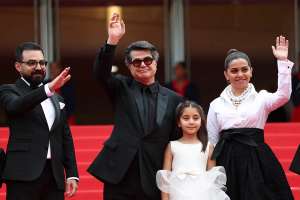
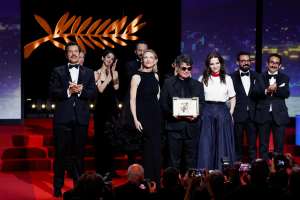
IIFMA argued that acclaimed works such as Jafar Panahi’s Palme d’Or-winning It Was Just an Accident -- which France has submitted this year -- demonstrate the global recognition of Iranian filmmakers when free of state oversight.

Panahi has long been barred from representing Iran, and supporters say his case highlights how government involvement excludes major artists.

Iran has a history of success at the Oscars, with Asghar Farhadi winning best international feature for A Separation (2012) and The Salesman (2017).

Most Viewed

Ghalibaf defends Iran-US talks amid hardline backlash
1
INSIGHT

Ghalibaf defends Iran-US talks amid hardline backlash

2
INSIGHT

Iran diplomacy wobbles as factions compete to avoid looking soft on US

3
VOICES FROM IRAN

Bread shortages, soaring prices strain households in Iran, residents say

4
ANALYSIS

The politics of pink: how Iran uses cuteness to rebrand violence

5

Scam messages seek crypto for ships’ safe passage through Hormuz, firm warns

Banner
Banner

Spotlight

  • Opposition to US talks grows in Tehran as ceasefire deadline nears
    INSIGHT

    Opposition to US talks grows in Tehran as ceasefire deadline nears

  • Tehran moderates see ‘no deal–no war’ limbo as worst outcome
    INSIGHT

    Tehran moderates see ‘no deal–no war’ limbo as worst outcome

  • The future has been switched off here
    TEHRAN INSIDER

    The future has been switched off here

  • Lights out, then gunfire: Witnesses recount Mashhad protest crackdown
    VOICES FROM IRAN

    Lights out, then gunfire: Witnesses recount Mashhad protest crackdown

  • Family told missing teen was alive, then received his body 60 days later
    EXCLUSIVE

    Family told missing teen was alive, then received his body 60 days later

  • Is Iran entering its Gorbachev moment?
    INSIGHT

    Is Iran entering its Gorbachev moment?

  • France picks Jafar Panahi’s ‘It Was Just An Accident’ as Oscar entry

    France picks Jafar Panahi’s ‘It Was Just An Accident’ as Oscar entry

  • Mahsa Amini’s death sparked irreversible change in Iran, Jafar Panahi says

    Mahsa Amini’s death sparked irreversible change in Iran, Jafar Panahi says

•
•
•

More Stories

France picks Jafar Panahi’s ‘It Was Just An Accident’ as Oscar entry

Sep 18, 2025, 11:45 GMT+1

France has selected Iranian director Jafar Panahi’s It Was Just An Accident, winner of this year’s Cannes Palme d’Or, as its submission for the Academy Awards in the international feature category, giving the exiled filmmaker a path to Hollywood that Tehran was unlikely to offer.

The revenge drama, produced largely in France and shot in Iran without government approval, follows a group of former political prisoners confronting a man they believe tortured them decades earlier.

The decision, announced on Wednesday, was made by an 11-member committee convened by France’s culture ministry after reviewing five finalists, including Richard Linklater’s Nouvelle Vague and Rebecca Zlotowski’s A Private Life.

Panahi, long banned from working or traveling in Iran, has spent much of the past 15 years under house arrest or in prison. He was released from jail in 2023 after a hunger strike, and edited the new film in France.

  • France-Iran rift spills into cinema after dissident director wins in Cannes

    France-Iran rift spills into cinema after dissident director wins in Cannes

  • Jafar Panahi’s Cannes victory sparks praise and political reaction

    Jafar Panahi’s Cannes victory sparks praise and political reaction

  • Mahsa Amini’s death sparked irreversible change in Iran, Jafar Panahi says

    Mahsa Amini’s death sparked irreversible change in Iran, Jafar Panahi says

US distributor Neon has acquired the film and is planning an awards campaign, while Mubi has taken international rights.

“This Iranian drama, directed by the great Jafar Panahi and produced with the decisive support of France … is proof that our country, 130 years after inventing cinema, remains the beating heart of international co-productions,” Gaëtan Bruel, head of the CNC film body, said in a statement.

The move also highlights stark contrasts with Iran’s own Oscar choice. A day earlier, Tehran selected Ali Zarnegar’s Cause of Death: Unknown, a moral drama that won praise abroad but was pulled from Iran’s state-run Fajr Festival in 2022. Independent filmmakers in Iran continue to face censorship, surveillance and travel bans.

The 98th Academy Awards will take place in Los Angeles on March 15, 2026.

Khamenei-linked daily says Afghan expulsions failed to curb bread prices

Sep 18, 2025, 11:19 GMT+1

The Islamic Republic’s mass expulsions of Afghan migrants have not eased Iran’s economic strain nor slowed soaring bread prices, the hardline Kayhan newspaper, overseen by Iran's Supreme Leader Ali Khamenei, wrote on Wednesday.

“The claim was that Afghan nationals were consuming so much bread that they were pushing prices higher. Yet even after more than 1.5 million have left, the price of Sangak [a popular traditional Iranian bread] has risen fourfold,” the paper said.

“Why should bread prices climb 300 percent compared to 2024 when no major shortage is expected?” the paper asked.

A loaf of subsidized Sangak bread cost 5,000 rials (about $0.05) in September 2024 but now sells for 200,000 rials (about $0.20), marking a 300-percent increase in one year.

Iran’s state news agency IRNA says that in Tehran Sangak priced at 100,000–150,000 rials has effectively disappeared; most customers now pay 200,000–500,000 rials per loaf, with sesame-topped bread commonly around 300,000 (about $0.30).

Official rates diverge from street prices, which vary by neighborhood and bakery. A government task force set a 600-gram sangak at 76,000 rials (about $0.07), but shoppers say loaves at that price are smaller and poorer quality.

Interior Minister Eskandar Momeni argued in August that expulsions reduced bread transactions by six percent, calling this a government achievement. Lower demand would help stabilize supply, he said.

  • Rampant inflation may ignite bread riots in Iran, economist warns

    Rampant inflation may ignite bread riots in Iran, economist warns

  •  Iran sees steep bread price hikes as inflation bites

    Iran sees steep bread price hikes as inflation bites

Deportations tied to security rhetoric

The Islamic Republic intensified deportations in recent months, especially after the 12-day war with Israel, when authorities accused some foreigners, notably Afghans, of working with Mossad. Such allegations have been used to justify expulsions while deflecting blame for economic hardship.

Decades of economic mismanagement, sanctions, and currency collapse have eroded household purchasing power, leaving low-income families most exposed.

“If inflation remains unchecked … Iran could witness a bread riot,” economist Hossein Raghfar told the moderate outlet Rouydad24 earlier this month, warning that inaction could have consequences far beyond the economy.

Iran’s struggle for justice lights the way forward, Nobel laureate says

Sep 17, 2025, 21:00 GMT+1

Nobel laureate Narges Mohammadi praised Iranian civil society on the third anniversary of Mahsa Amini’s death in morality police custody, saying victims' families have kept the pursuit of justice alive by turning grief into a force for change.

In an exclusive editorial for Iran International, Mohammadi said the slogan Woman, Life, Freedom which became the mantra of the protest movement ignited by her death carries forward a decades-old struggle for human rights in Iran.

"From the image of the Khavaran mother standing tall over an unmarked grave, to the embrace of Mahsa Jina Amini’s parents in a hospital corridor as they endured her final moments in pain and tears, countless scenes have been created that will remain eternal in the history of our nation’s quest for justice," Mohammadi said, referring to mass graves for dissidents executed in 1988.

"In the wasteland of injustice and oppression, justice-seeking is a lamp to light the way, a hope in the darkness of despair, and an effort to resist defeat and passivity," Mohammadi wrote.

She traced a continuous line of activism from executions since the Islamic Republic's earliest days and the so-called chain murders of intellectuals inside Iran in the nineties to student protests, the Green Movement, 2017 and 2019 demonstrations and most recently the Women, Life, Freedom movement.

"Our society, in its pursuit of justice and its struggle to expose oppression and discrimination so that history cannot erase them, stands among the greatest in the world,” Mohammadi said.

Iran’s human rights situation remains dire according to watchdogs, with widespread state surveillance, arbitrary arrests and harsh crackdowns on political activists, journalists and women’s rights defenders.

Ethnic and religious minorities face systemic discrimination, international and Iran-focused rights groups say, and the ruling system continues to suppress protests and civil society movements with imprisonment, torture and executions.

Read the full text: Focus on Society and Justice, by Narges Mohammadi

Three years after Mahsa Amini’s death, Iranian frustration festers

Sep 17, 2025, 17:49 GMT+1

Three years after the death of Mahsa Amini in morality police custody and subsequent protests which were quashed with deadly force, the mood among Iranians has only darkened, with many pointing to hardships that increasingly shape daily life.

In response to Iran International query asking viewers what had changed since her death and the igniting of the Woman, Life, Freedom protest movement, most said life had become ever harder.

“Every day people fall deeper into ruin: more penniless, more unemployed, more hungry. There’s no water, power, or gas in places. Killings and violence have increased,” another message said.

Many Iranians are grappling with shortages of water and electricity and cited the mounting toll of high inflation and broader economic strain.

Sanctions, corruption and mismanagement have plagued Iran's economy for decades.

The wave of civil disobedience especially among women and girls continues subtly across Iran and has even spread to many traditionally religious cities.

“We’re in Mashhad. Even though it’s a religious city, many women come out with freer dress. I used to wear the chador, but since Mahsa I no longer wear hijab. Men have also changed. They’re united with the women,” one respondent said.

Other messages confirm that civil disobedience over dress codes and open defiance of Islamic regulations is widespread across the country.

“Women this year gained a little more freedom in dress. Men wear shorts and tank tops in public now. The government is failing on the hijab issue, but a woman still cannot claim her rights even in a court. Child laborers and people sleeping in cardboard boxes remain — poverty is rampant,” a caller said.

Patchy enforcement

A harsh new sanctions and chastity bill passed by the hardliner-dominated parliament was frozen by Iran's top security body this year in an apparent bid by the theocracy to forestall further unrest.

Some messages suggested that in affluent areas, obedience to the Islamic dress code has collapsed almost entirely, but that the trend was far from universal.

“The Mahsa movement caused the costly system of forced hijab to crumble. But in practice nothing changed, it got worse," in person said.

"A few women walking unveiled in the streets only benefits the wealthy; it does nothing for the millions who are starving. In fact, those who were killed and injured suffered the most. There’s no benefit for the poor.”

Beyond shortages of water and electricity, callers pointed to critical deficits in health and food supplies.

There are reports of shortages of essential medicines including treatments for rare diseases, cancer and chronic illnesses, as well as a scarcity of powdered milk and infant formula.

Rising food inflation has placed basic staples out of reach for many families. Still, messages of hope and a desire for change are widespread.

“Life has become much harder financially, socially and psychologically," one respondent said, "but we feel that a small spark, one small spark could become the final ax to tear down this tree of oppression."

Erasing memory: Tehran squeezes Woman, Life, Freedom families

Sep 17, 2025, 16:58 GMT+1
•
Maryam Sinaiee

Iranian authorities have led a systematic campaign to silence the families of those killed and executed amid the Woman, Life, Freedom protest movement—denying public mourning, arresting relatives and subjecting mourners to threats and intimidation.

From the earliest days after the death of Mahsa Amini in morality police custody three years ago, family memorials and funerals became focal points for renewed protest.

Victims' kin insist that remembrance itself is a form of resistance, and safeguarding the right to mourn is central to winning truth and justice.

In Iran, funerals and anniversaries have long been potent political tools. They gather people across social and geographic divides, create moments of public memory and sustain narratives of grievance and solidarity.

The 2022–23 protests frequently reignited during burials and 40-day mourning periods. Since then, authorities have continued to dismantle these anniversary rituals through arrests, intimidation, legal harassment and tight security controls at cemeteries where the victims are buried.

Families who refuse to forget

Despite these pressures, families persist. They gather at cemeteries, share photos and videos on social media, and hold private ceremonies to honor their loved ones. Many celebrate birthdays and New Year holidays at graves, bringing cakes, flowers, and posting images online as quiet acts of resistance.

Like previous years, Mahsa Amini’s father, Amjad Amini, published a defiant message on September 14 in remembrance of his daughter on Instagram.

“The memory and demand for justice for Mahsa and the other slain protesters will never be forgotten,” he wrote.

Menaced for mourning

The case of Mashallah Karami demonstrates the lengths to which the state will go to scotch remembrances. His son, Mohammad-Mehdi Karami, along with co-defendant Mohammad Hosseini, was executed in January 2023 for alleged involvement in the death of a Basij militia member in Karaj in central Iran. They denied the charges.

Karami’s father, a street vendor who campaigned relentlessly for his son and Hosseini, was arrested in August 2023 during a security raid. Authorities froze the family’s bank accounts and repeatedly destroyed plaques commemorating the men.

He now serves an eight-year and ten months sentence in prison on fabricated charges of money laundering and obtaining property through illegitimate means, on top of fines and asset confiscations. His appeals for a retrial were rejected by the Supreme Court this month.

Similarly, Mohammad Javad Zahedi, 20, from Sari in northern Iran, was shot dead in September 2022 while on his way to a pharmacy, his body showing close to a hundred pellet wounds.

His mother, Mahsa Yazdani, launched a social media campaign demanding justice but was arrested ahead of the first anniversary of his death.

She was sentenced to 13 years in prison, including a mandatory five-year term, on charges of insulting sacred values and inciting people to disrupt national security, insulting the Supreme Leader and propaganda against the system.

Her sentence was later commuted to home detention with an electronic ankle bracelet, and she was finally released in March after serving two years.

Lawyers in the dock

Legal defenders of these families have also faced persecution.

Saleh Nikbakht, winner of the European Parliament’s Sakharov Prize in 2023, who represented Mahsa Amini’s family, was sentenced to one year in prison for interviews with Persian-language media outside Iran and cooperation with hostile states.

Another lawyer, Khosrow Alikordi, was likewise sentenced to one year in prison for propaganda in favor of opposition groups. He represented the prosecuted members of Abolfazl Adinehzadeh’s family.

Adinehzadeh, a seventeen-year-old student, was shot with over 70 pellets in Mashhad during the protests.

Several of his family members, including his father and sister were charged with propaganda against the system. They had been detained at his gravesite on the first anniversary of his death.