Israel vows to respond to Houthis' Iranian masters in the right time
"Attacks by the Houthis emanate from Iran," the Israeli prime minister said in a post on X on Sunday.
"Israel will respond to the Houthi attack against our main airport AND, at a time and place of our choosing, to their Iranian terror masters," the post reads.
Israel is expected to retaliate against the Houthi missile launch that hit Ben-Gurion Airport on Sunday, following a decision made at the Jewish state's security cabinet later in the day.
Prime Minister Benjamin Netanyahu said in a video Israel has acted against the Houthis in Yemen in the past and will act again in the future.
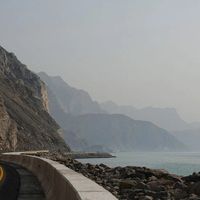
The final death toll from the April 26 explosion at Iran's Rajaei port has been revised to 57, the head of Hormozgan's judiciary announced.
Mojtaba Ghahremani said the previously reported figure of 70 fatalities was based on initial estimates.
However, he added, further investigations, including family inquiries and forensic tests, revealed that some body parts collected from different parts of the blast site and stored in separate bags actually belonged to the same individuals.
This led to the adjustment in the casualty count.
According to the judiciary official, the confirmed total includes 46 identified bodies and 11 individuals still missing.
Multiple videos circulating on social media appear to show explosions and fires Sunday in the Iranian cities of Mashhad and Qom. Footage from Mashhad indicates a blast at what some reports describe as a factory site, though details remain unverified. No official confirmation has been issued by Iranian authorities, and casualty figures are unclear. The cause of the apparent incidents is also not yet known. Iran International has not independently verified the videos.
At least 110 people were executed in Iran in April, bringing the total number of the year to 343, a 75% increase compared to the same period in 2024, according to Oslo-based rights group Iran Human Rights (IHR).
Of those, 169 were for drug-related offences, 153 for murder, 12 for security-related charges, and nine for rape.
Among those executed in April on security-related charges, seven were accused of ties to dissident political or religious groups, and one was accused of espionage for Israel.
Only two of the April executions were officially announced by the Iranian authorities.
Iran accounted for 64% of all known global executions in 2024, with at least 972 people executed, according to Amnesty International.
On Saturday, over 300 global figures—including UN experts, Nobel laureates, former ambassadors, judges, and human rights leaders— issued an urgent appeal for United Nations intervention to stop what they called a “campaign of politically motivated executions” in Iran.
Iran’s Supreme Leader has said the Islamic pilgrimage of Hajj is a fundamentally political act and urged Muslim nations to unite against the United States and Israel, in remarks likely to revive tensions with Saudi Arabia ahead of the annual pilgrimage season.
“Hajj is a duty whose very structure is political,” Ali Khamenei said during a meeting with Hajj officials in Tehran. “It brings people together at a specific time and place, and this gathering has an inherently political nature.”
He added that the pilgrimage should serve the interests of Muslims, with the greatest benefit being unity among Islamic nations. “If Muslims were united, Gaza and Palestine would not suffer like this.”
While calling for Muslim solidarity, Khamenei implicitly warned Riyadh against rapprochement with Israel, saying that cooperation with Washington and Tel Aviv amounted to “oppression.”
His remarks follow reports of renewed Saudi-Israeli contacts brokered by US officials following the Gaza war.
The speech comes just weeks after Khamenei told visiting Saudi Defense Minister Prince Khalid bin Salman that closer ties between Iran and Saudi Arabia would be mutually beneficial and should overcome hostile interference.
However, the tone of his latest address contrasts with that message, returning to the combative rhetoric that has historically strained Iran-Saudi ties—especially over the politicization of Hajj.
Saudi Arabia has repeatedly warned against using the pilgrimage for sectarian or political activity, implementing strict rules to prevent disruptions.
Since the Gaza war, multiple pilgrims wearing the Palestinian flag have been removed from the holy site.
According to regulations released by the Saudi Ministry of Hajj and Umrah in August, pilgrims are forbidden from bringing any prohibited items, such as pictures, books, flags, slogans, political publications, or other banned materials, into Saudi Arabia, according to the Saudi Gazette.
The kingdom’s 1987 clash with Iranian demonstrators during Hajj led to hundreds of deaths and a long diplomatic rift, which only began to heal with a China-brokered rapprochement in 2023.
Iranian President Masoud Pezeshkian on Sunday voiced concern over the country’s brain drain, calling for a cultural shift that encourages youth to invest their talents in developing Iran rather than seeking opportunities abroad.
“We are raising children whose minds are set on leaving the country,” Pezeshkian said in a public address. “We must raise children whose thoughts are rooted in their land and who devote their efforts to building this nation.”
“The goal is not to hand our science and art to the Americans,” he added. “True achievement is when this knowledge serves our own country.”
Iran is grappling with a growing exodus of professionals and students, particularly from the medical sector, amid mounting economic hardship.
Authorities have recently empowered the passport and immigration police to monitor elite migration in coordination with the National Elites Foundation, which operates under the presidency.