UN experts, laureates urge action to halt executions in Iran
Over 300 global figures—including UN experts, Nobel laureates, former ambassadors, judges, and human rights leaders—have issued an urgent appeal for United Nations intervention to stop what they call a “campaign of politically motivated executions” in Iran.
The joint statement, signed by a wide range of international voices, condemned Tehran’s judicial handling of political prisoners and called on democratic governments and UN bodies to act swiftly.
The appeal centers on the cases of Behrouz Ehsani, 69, and Mehdi Hassani, 48, whose death sentences were recently upheld by Iran’s Supreme Court.
The statement described their prosecution as a sham: “Their kangaroo trial on 10 August 2024, lasting just five minutes, was a travesty of justice: they were denied legal counsel for nearly two years, tortured, and silenced during proceedings.”
The charges include “membership in the exiled opposition group Mujahedin-e Khalq Organization” and “propaganda,” framed as “enmity against God” and “corruption on earth” under Iran’s legal code.
“We demand an immediate halt to their execution,” the signatories wrote. “The international community must not remain silent.”
The group also warned of a broader execution drive under President Masoud Pezeshkian, who took office in August 2024. Since then, more than 1,000 executions have been carried out, disproportionately targeting women, juveniles, ethnic and religious minorities, and political dissenters. Several prisoners, including Abolhassan Montazer and Sharifeh Mohammadi, have already been moved to Ghezel Hesar Prison—described in the statement as “a notorious execution site.”
The appeal highlights findings by former UN Special Rapporteur Javaid Rehman, whose July 2024 report concluded that mass killings in Iran in 1981–82 and 1988 amounted to crimes against humanity and genocide. “The Iranian authorities’ systematic targeting of political prisoners is rooted in a culture of impunity,” the joint statement said.
They called on the UN and democratic governments to “identify and sanction Iranian officials responsible for human rights violations” and to tie future relations with Iran to the release of political prisoners and abolition of the death penalty.
Iran accounted for 64% of all known global executions in 2024, with at least 972 people executed, according to Amnesty International.
Mike Lawler, US representative for New York's 17th congressional district since 2023
Iran must agree to end all uranium enrichment in a nuclear deal or be prepared to face attack, Republican Congressman Mike Lawler told Eye for Iran.
“Iran is not going to win this,” said Lawler during the podcast. “The sooner they come to that realization and acceptance, the better the outcome will be for everybody.”
“If Iran doesn’t comply, then action will have to be taken,” he added.
Despite his hardline stance, Lawler supports diplomacy before war.
“It would be foolish not to try diplomacy first.” Invoking Reagan’s "trust but verify" adage, Lawler said diplomatic engagement was a tool to avoid war and not a sign of weakness.
Oil sanctions
The New York representative is one of the Congress's most vocal advocates of stepping up pressure on Tehran. He recently co-sponsored bipartisan legislation targeting China’s purchase of Iranian crude oil—part of a legislative package responding to Iran’s direct military attacks on Israel last year.
Lawler sees Iran’s oil trade—particularly with China—as the Islamic Republic's financial lifeline.
The Enhanced Iran Sanctions Act of 2025 targets Chinese purchases of Iranian crude oil and cracks down on facilitators like banks and insurers.
“They (Iran) have been the greatest sponsor of terrorism around the globe,” Lawler said. “Their funding stream comes in large measure from the petroleum industry and the illicit oil trade with China. China purchases the vast majority of Iranian petroleum—amounting to a $200 billion revenue increase under Joe Biden’s watch.”
Lawler praised Trump's current strategy, calling it "night and day" compared to that of his predecessor.
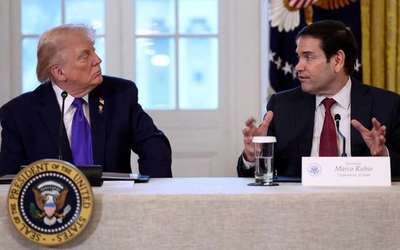
Separately on Thursday, President Donald Trump declared that all purchases of Iranian oil or petrochemical products must cease, warning that any buyers would be subject to secondary sanctions. “They will not be allowed to do business with the United States of America in any way, shape, or form,” Trump posted on Truth Social.
Timing of talks is justified
Lawler also rejected criticism from some Iran hawks that the Trump administration is negotiating too early and giving away leverage.
With Iran’s nuclear capabilities more advanced than in years past, he said the urgency is warranted.
“We’re in a different world. Iran is further along today than they were four years ago or eight years ago,” he told Eye for Iran. “So I don’t know how much longer people want to wait.”
That urgency, however, now faces a new obstacle. The fourth round of US-Iran nuclear talks, initially scheduled for May 3 in Rome, has been postponed for reasons still unknown.
Lawler, who represents a district with a significant Persian community, said many of his Iranian-American constituents support a tougher US stance.
Journalist Mansoureh Ghadiri was stabbed and bludgeoned to death by her husband in Tehran in November 2024
Iran's government has announced the withdrawal of a critical draft law on violence against women from parliament after hardliners watered it down, dealing a new setback to women's rights in the theocracy.
The bill—originally proposed by former President Hassan Rouhani’s administration—was intended to strengthen protections for women by increasing penalties for physical abuse and providing support services for victims.
But modifications by hardline lawmakers have significantly altered the bill’s core principles, leading the government to abandon the effort.
Hardline lawmakers replaced the term “violence” with “ill-behavior” throughout the draft bill and its title from “Safeguarding Women’s Dignity and Protecting them Against Violence” to “Safeguarding Women’s Dignity and Supporting Women and Families”.
Unlike the original bill, the revised version does not propose increased penalties for a broad range of injuries inflicted on women—such as cuts, bruises, or other forms of bodily harm but only limits harsher punishments to cases involving dismemberment.
“We requested the draft bill to be withdrawn when we realized that (parliamentary committees) had changed the character and substance of the draft bill," Zahra Behrouz-Azar, President Masoud Pezeshkian’s Women’s Affairs Deputy.
"It no longer addresses prevention (of violence),” she told reporters on the sidelines of a cabinet meeting on Thursday.
Despite the government's decision, the hardline-dominated Parliament is likely to move ahead with its own version of the law, the chair of the Parliament’s Social Committee Zohrehsadat Lajevardi has indicated.
The draft bill now mandates the Ministry of Higher Education to create separate classrooms, study spaces, and even universities exclusively for women when the original draft called for interdisciplinary research programs and academic courses on violence prevention as well as to establish counseling centers for victims.
“One cannot expect support for women from a parliament that has approved an oppressive hijab law," Iranian journalist Mina Emamverdi argued in a post on X. "The functional incongruity is a sign of the lack of a structural understanding of gender-based violence.”
A glaring example is a law that exempts fathers – who legally own the right to the “blood” of their offspring – from the death penalty if they kill them. Another law allows a father to pardon his children’s killers, for the same reason, if he so chooses.
Such provisions have led to lenient sentences in many so-called honor killing cases.
In a particularly tragic case in February 2022, Mona Heydari, a 17-year-old mother of three, was beheaded by her husband in Ahvaz in southwestern Iran. The victim’s father had helped the husband, his nephew, to bring his daughter back from Turkey where she had fled after being refused a divorce.
Pardoned by the victim’s father, the husband who had proudly paraded her severed head on the street was sentenced to slightly over eight years in prison.
“The lack of deterrent laws, legal loopholes, and the father's escape from punishment make domestic violence a modest crime,” Iranian journalist Samira Rahi commented about the recent killing of an 18-year-old girl, Fatemeh Soltani, by her father in a post on X.
The young woman had allegedly revealed her father’s infidelity to her mother, also a victim of domestic violence.
Under current laws, the father could face a maximum of ten years in prison.
Long journey of the proposed bill
The fourteen-year delay in presentation of the bill, first proposed by former President Mahmoud Ahmadinejad’s administration and finally submitted to the Parliament by Rouhani’s government in 2021, reflects the broader tensions between maintaining cultural and religious norms and protecting women’s rights.
Iran’s Supreme Leader, Ali Khamenei, weighed in on the issue in 2017. While condemning violence against women, he warned that government and parliament officials should be careful not to follow Western values in such matters.
“(Saying) it is violence if a father interferes in a daughter’s marriage (by not allowing it), for example … What is violence and what is not violence should not be learned from the West; it should be understood from our own rational logic, from our own Islamic belief.”
These, Rahman said, included a lack of comprehensive definitions of various forms of abuse such as psychological and economic violence and exclusion of marital rape and child marriage.
Rahman also warned over a provision requiring a period of mandatory mediation in domestic violence cases which could place victims in even greater danger before action was taken against alleged perpetrators.
Proposals for a renewed nuclear agreement between the United States and Iran would cap uranium enrichment and expand international oversight, but stop short of dismantling Iran’s nuclear infrastructure, eight sources familiar with the talks told Reuters.
The framework under discussion largely mirrors the 2015 Joint Comprehensive Plan of Action (JCPOA), which was abandoned by President Donald Trump in 2018, but includes stricter inspections, extended timelines, and expanded sunset clauses.
“Essentially, the negotiations are shaping into a ‘JCPOA 2’ with some additions that would allow Trump to present it as a victory, while Iran could still keep its right to enrichment,” said a senior Iranian official.
Under proposals discussed in April, Iran would cap enrichment at 3.67%, in line with JCPOA limits, and allow expanded access to its facilities for the International Atomic Energy Agency (IAEA), three Iranian officials said.
Supreme Leader Ali Khamenei has set a key red line: Iran’s enriched uranium stockpile must not be reduced below levels agreed in 2015. Iran has recently enriched uranium to 60% using advanced centrifuges, far beyond what the JCPOA allowed.
Iran open to uranium exports — even to the US
As part of compromise proposals, Iran could retain a minimal enrichment capacity using 5,000 centrifuges and import additional uranium — possibly from Russia — according to a senior Iranian security official.
Iran now operates around 15,000 centrifuges, compared to the 6,000 permitted under the 2015 deal.
A regional source close to Tehran added that Iran "will keep a portion of it — diluted — inside the country while sending another portion abroad, possibly to Russia.”
According to the same source, Iran has “even floated the idea of selling enriched uranium to the United States.”
Tehran demands guarantees Trump won’t exit deal again
In exchange for limiting enrichment and accepting enhanced inspections, Tehran is seeking firm guarantees that President Trump would not again withdraw from the deal.
“We need watertight guarantees this time,” one Iranian official said. Another noted that deep mistrust remains due to the abrupt US exit in 2018.
Ballistic missile issue remains unresolved
The talks face a major sticking point over Iran’s missile program. Washington wants it addressed in the new agreement, but Iranian officials say their missile development is not up for negotiation.
“Tehran continues to reject any discussion,” said a regional security official. “The problem is that without addressing the missile issue, Trump cannot claim that the new deal goes beyond the JCPOA.”
An Iranian official previously told Reuters that Tehran may offer to refrain from building nuclear-capable missiles as a “gesture of goodwill,” but would not commit to terms exceeding the original 2015 deal.
Israel caught off guard, urges tougher terms
Israeli Prime Minister Benjamin Netanyahu was blindsided by Trump’s decision to resume talks with Iran, learning of the move less than 24 hours before a joint appearance in Washington, four sources familiar with the matter said.
Netanyahu had come to the White House in April seeking support for potential military action and was shocked to discover the US had already scheduled nuclear talks with Iran.
Israel is demanding “zero enrichment” and a Libya-style deal that would dismantle Iran’s entire nuclear infrastructure. The current proposals fall short of those expectations.
A new marketing display by Iranian brand My Lady features sanitary pads in transparent packaging, sparking widespread online debate.
A new marketing display by Iranian brand My Lady featuring transparent packaging for sanitary pads has ignited online debate, revealing the deep cultural discomfort still surrounding menstruation in Iran.
The display, first posted by a user on the social media platform X last week, showed a row of pads visible in see-through folders—an abrupt break from the longstanding norm of black plastic bags and whispered requests at the counter.
The post quickly surpassed one million views and gathered thousands of likes and shares. “From black plastic to product albums to help us choose better. What a path we’ve come, woman!” wrote one user, who reposted the image with commentary that resonated widely.
Others joined the conversation with similar stories of resisting the imposed shame around buying menstrual products in public.
The marketing choice—practical on its face—has gained symbolic weight in a country where women’s bodies are policed not just through law but through entrenched taboos.
“Seven years ago, when My Lady launched its maxi pads, we had to secretly open samples for customers,” wrote a user identifying as a company marketer. “The store manager scolded us, said it was shameless. So we made a discreet booklet with three samples stuck inside—like contraband.”
The move to make pads visibly accessible in stores echoes moments from the 2022 protests, when women were photographed covering surveillance cameras in Tehran’s subway with sanitary pads—turning a product once treated as unmentionable into a symbol of defiance.
That imagery reinforced a broader shift: menstruation was no longer something to be hidden, but something women could use—literally and figuratively—to resist.
In a post viewed more than 800 times, another X user described how, in smaller towns, buying pads still carries a strong social stigma. “I’d say put it in a regular bag, and I’d relish the look on the seller’s face,” she wrote. “You could see them thinking, ‘How shameless the new generation has become.’ It was deeply satisfying.”
That stigma, rooted in religious and patriarchal frameworks, frames menstruation as impure. Across various cultures with strong religious influences, menstruating women are often deemed unclean and barred from certain spaces. The expectation is silence—both about the blood and the discomfort.
In Iran, where the Islamic Republic’s laws tightly govern gender expression and public morality, that silence is rigorously enforced.
Still, the shift is underway. A handful of men have joined the conversation online, recalling how they were dispatched to buy pads to shield female relatives from embarrassment.
“I’d run home with the black bag, praying no one saw me,” one wrote. But others mocked the change, reflecting a lingering cultural divide. Of 84 replies under one widely shared post, 11 came from male accounts opposing the visibility initiative.
The company behind the display, My Lady, has previously drawn official backlash. In March, following the release of a video marking International Women’s Day—one that referenced women’s exclusion from stadiums and legal rights—their Instagram page was taken down. Still, the public rallied, citing the brand’s decade-long focus on education and taboo-breaking.
The rise of transparent packaging may not end the stigma, but its presence in plain sight signals a societal reckoning.
The journey from hushed exchanges to open acknowledgment continues, carried forward by a generation of women unwilling to be hidden.
New satellite imagery obtained by Iran International shows a huge crater left by the April 26 explosion at Iran's Rajaei port, which killed at least 70 people according to official figures.
According to the photos take on April 30, the large crater has been formed in front of the administrative building of Sina Marine and Port Services Development Company, which was the epicenter of the explosion.
Epicenter of explosion in front of the administrative building of Sina Marine and Port Services Development Company
In the images, the complete destruction of the building—located in the northwest section of the compound—can be also clearly seen, along with the adjacent warehouses and at least three other buildings. The trees in the area also appear to be completely burned.
Destruction of buildings adjacent to Sina Marine and Port Services Development Company
The images also show a large number of shipping containers crushed on both sides of the explosion site, highlighting the extent of the destruction.
Crushed containers belonging to Sina Company
Iran International had previously reported that the 15-hectare Sina yard, which could accommodate between 12,000 to 20,000 twenty-foot containers, was entirely destroyed. The latest satellite photos confirm the previous report.
Complete destruction of Sina Company's 15-hectare yard in comparison with a photon taken a month before the explosion
The new images also reveal the total destruction of a large administrative building in the nearby Onik yard, located to the north of the Sina area. Damage to this building has not been previously reported.
Complete destruction of a large administrative building in the Onik yard
Khazar Qeshm Company: 10 hectares
To the west of the Sina yard lies the yard of Khazar Qeshm Company, with an area of 10 hectares, which has been almost completely destroyed. The images show that the roof of the company’s warehouse, which is located approximately 500 meters from the explosion's epicenter, has been completely torn apart.