• العربية
  • فارسی
Brand
  • Iran Insight
  • Politics
  • Economy
  • Analysis
  • Special Report
  • Opinion
  • Podcast
  • Iran Insight
  • Politics
  • Economy
  • Analysis
  • Special Report
  • Opinion
  • Podcast
  • Theme
  • Language
    • العربية
    • فارسی
  • Iran Insight
  • Politics
  • Economy
  • Analysis
  • Special Report
  • Opinion
  • Podcast
All rights reserved for Volant Media UK Limited
volant media logo
INSIGHT

Iran’s energy growth slows to a crawl as demand races ahead

Dalga Khatinoglu
Dalga Khatinoglu

Oil, gas and Iran economic analyst

Jul 6, 2026, 01:07 GMT+1
An aerial view of Shahid Salimi power plant near the northern town of Neka, which generates around 4 percent of Iran's electricity, taken November 2023

The latest Statistical Review of World Energy published by the Energy Institute paints a troubling picture of Iran’s energy sector: a country with some of the world’s largest oil and gas reserves is increasingly struggling to meet its own energy needs.

The report shows a sharp slowdown in the growth of electricity generation and natural gas production at a time when Iran faces widening shortages of both.

Iran’s energy demand has continued to rise, driven by population growth, industrial consumption and heavily subsidized domestic prices. Analysts estimate the country needs annual increases of around 7% in electricity generation and 5% in natural gas production simply to keep pace with demand.

Years of underinvestment, delayed infrastructure projects and international sanctions, however, have left supply lagging behind consumption, creating electricity and gas shortages exceeding 20% during peak periods.

According to the Energy Institute, Iran generated nearly 399 terawatt-hours (TWh) of electricity last year, an increase of only 1% from the previous year. Natural gas production rose by just 1.3%, reaching approximately 265 billion cubic meters (bcm).

The figures represent a sharp break from the previous decade, when Iran’s natural gas production expanded by more than 5% annually and electricity generation grew by roughly 4% a year.

But recent growth of only 1–2% has widened the country’s structural energy deficit and accelerated a remarkable reversal in its regional energy position.

From exporter to importer

As electricity demand reaches its summer peak, Iranian authorities estimate the country faces a power deficit of 15–20%, despite lower industrial consumption following recent military strikes on several petrochemical and steel facilities.

The shortage has become so severe that Iran’s deputy energy minister traveled to Turkey on June 2 to discuss electricity imports.

According to Iran’s Energy Ministry, the country recorded net electricity imports of 1.1 TWh last year—the first time imports exceeded exports. A decade earlier, Iran exported roughly 8 TWh of electricity annually on a net basis and viewed itself as a regional power supplier.

Natural gas exports reveal a similar contradiction. Despite domestic shortages that repeatedly force power plants and industries to reduce consumption during winter, Iran exported 15.4 bcm of natural gas last year.

The future of those exports is increasingly uncertain. Iran’s 25-year gas export agreement with Turkey expires this month, and unless renewed, Iraq will remain Tehran’s only major gas customer.

Even Iraq has faced repeated disruptions in Iranian gas and electricity supplies and is pursuing alternative sources through regional energy connections.

Renewable targets out of reach

The Energy Institute’s report also highlights Iran’s struggle to diversify its electricity sector.

The government planned to add between 5,000 and 7,000 megawatts of new solar and wind capacity during the past year. Only around 1,000 MW entered operation.

As a result, renewable energy has been left with a marginal role in Iran’s power mix despite the country’s significant potential. Iran’s only nuclear power plant, Bushehr, generated 5.4 TWh of electricity last year, accounting for just 1.3% of total generation.

Hydropower has declined even more sharply.

For a second consecutive year, severe drought reduced hydroelectric output, which fell 36% to just 12 TWh. The scale of the decline is striking: Iran generated around 34 TWh of hydropower in 2019 and 23 TWh in 2023.

With reservoir levels continuing to fall and water shortages expected to worsen, hydropower is likely to remain under pressure, increasing reliance on fossil-fuel power plants.

Greenhouse gas emissions rise

Another major finding of the report is the rapid rise in Iran’s greenhouse gas emissions.

For the first time, Iran overtook Japan to become the world’s fifth-largest greenhouse gas emitter, behind only China, the United States, India and Russia.

The comparison is striking. Germany and Turkey—countries with populations similar to Iran’s and economies roughly 18 times and 4.5 times larger, respectively—each emit only about half as much greenhouse gas as Iran.

Iran’s emissions exceeded one billion tonnes for the first time last year.

Chronic natural gas shortages have forced wider use of heavy fuel oil (mazut) in power plants and industrial facilities, while slow renewable deployment, falling hydropower output and limited nuclear capacity have kept Iran heavily dependent on carbon-intensive fuels.

The result is a deepening contradiction: even as Iran faces worsening energy shortages, its greenhouse gas emissions have risen by 31% since 2015, reflecting an increasingly inefficient and carbon-intensive energy system.

Most Viewed

Classified warning projected up to 3,000 deaths at Khamenei funeral - Die Welt
1

Classified warning projected up to 3,000 deaths at Khamenei funeral - Die Welt

2

Tailored Quran verses at Khamenei funeral spark diplomatic debate

3
PODCAST

After the war, Iran’s rulers face their biggest question

4
ANALYSIS

Behind the funeral: Khamenei’s coffin becomes stage for Iran’s wounded power

5

Iran's new IRGC Navy chief emerges without formal decree: who is Ali Azmaei?

Banner
Banner
Banner

Spotlight

  • Iran’s energy growth slows to a crawl as demand races ahead
    INSIGHT

    Iran’s energy growth slows to a crawl as demand races ahead

  • Iran buries Khamenei as fight over his power continues
    ANALYSIS

    Iran buries Khamenei as fight over his power continues

  • After the war, Iran’s rulers face their biggest question
    PODCAST

    After the war, Iran’s rulers face their biggest question

  • Behind the funeral: Khamenei’s coffin becomes stage for Iran’s wounded power
    ANALYSIS

    Behind the funeral: Khamenei’s coffin becomes stage for Iran’s wounded power

  • Iran hardliners warn Hormuz authority slipping to US-backed Omani route
    INSIGHT

    Iran hardliners warn Hormuz authority slipping to US-backed Omani route

  • Funeral expenses deepen anger over Ali Khamenei's week-long burial
    VOICES FROM IRAN

    Funeral expenses deepen anger over Ali Khamenei's week-long burial

•
•
•

More Stories

Cattle feeding on hospital waste expose risks at Iran landfill

Jul 5, 2026, 09:10 GMT+1
Cattle feeding on hospital waste expose risks at Iran landfill
100%
Cattle forage among piles of garbage at a landfill in Talesh, Gilan Province, northern Iran, while a close-up image shows discarded plastic medical waste mixed with refuse.

Cattle have been filmed feeding on hospital waste at a landfill in northern Iran, exposing failures in waste management that risk contaminating livestock, soil and the human food chain, according to a report by Rokna website on Saturday.

The video from the landfill in Talesh shows cattle roaming through piles of refuse, including hospital waste, highlighting the apparent lack of effective segregation, containment and disposal measures for hazardous materials.

Hazardous waste enters food chain

Hospital waste ranks among the most dangerous categories of refuse because it can contain infectious materials, contaminated equipment, sharp objects and hazardous chemicals. Allowing livestock to graze in direct contact with such waste, according to the report, raises concerns that contaminants could spread through meat, milk and other agricultural products consumed by people.

The footage also points to broader shortcomings in landfill management beyond the presence of medical waste. Open dumping without effective isolation, daily cover or barriers preventing animal access leaves waste exposed to livestock, wildlife and the surrounding environment.

Such conditions, Rokna wrote, can contaminate soil, generate polluted leachate that may seep into groundwater, attract disease-carrying insects and animals, and release foul odors and harmful gases. When cattle graze freely in these areas, the potential for biological and chemical contaminants to enter the food chain increases.

The risks, based on the report, are particularly acute in Talesh, where mountains, forests, farmland, residential areas and the Caspian Sea lie in close proximity, allowing pollution to spread more rapidly through interconnected ecosystems.

Environmental and public health concerns

Environmental degradation extends beyond the immediate health risks. Large volumes of uncovered waste can damage natural habitats, reduce land quality and increase the likelihood of contaminants spreading into surrounding soil and water resources, added the report.

The conditions documented by Rokna also suggest failures in basic waste management practices, including separating hazardous medical waste from ordinary refuse, safely treating infectious materials and preventing livestock from entering disposal sites.

Without urgent measures to improve waste segregation, strengthen landfill controls and restrict animal access, the Talesh landfill risks becoming a continuing source of contamination affecting livestock, the environment and public health, the report added.

Iran hardliners warn Hormuz authority slipping to US-backed Omani route

Jul 3, 2026, 22:13 GMT+1
•
Maryam Sinaiee
Iran hardliners warn Hormuz authority slipping to US-backed Omani route
100%
An IRGC speedboat sailing in Iran's southern waters

Iranian hardliners have accused the country's negotiators of compromising Tehran’s authority over the Strait of Hormuz, claiming a recent understanding with the United States has pushed international shipping toward what they call a US-backed Omani route.

Opponents of the Iran-US understanding have launched a fierce campaign against Parliament Speaker Mohammad-Bagher Ghalibaf, described as the agreement's chief negotiator, and President Masoud Pezeshkian, accusing them of surrendering Iran's authority over the Strait of Hormuz, thereby allowing the establishment of an Oman-American shipping corridor.

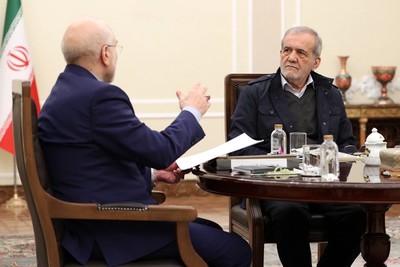
The criticism intensified after a televised interview with Ghalibaf aired on Tuesday, during which he appeared to reject calls by hardliners to close the strategic waterway.

"We must not turn the Strait against itself. The Strait is valuable only if traffic through it increases day by day, not decreases," he said.

His remarks were interpreted by conservative critics as a signal that Tehran has accepted Washington’s preferred arrangements governing maritime traffic through the Strait.

Focus shifts to Omani route

The controversy was fueled by satellite-based vessel tracking videos recently published by Kpler, which appeared to show that many non-Iranian commercial vessels have recently transited the Omani side of the Strait apparently accompanied by US naval vessels, while only a limited number of Iranian vessels were using the Iranian side. Hardliners argue that this reflects a de facto shift away from Iran's jurisdiction.

Ehsan Hosseini, editor-in-chief of the conservative economic website Khat-e Energy, claimed in a video posted online that both "the naval blockade and the Omani corridor are products of negotiations with the United States."

"At this very moment, groups of ships are passing through this corridor under US military escort. Your grave mistake is unforgivable."

In a separate social media post, Hosseini wrote that Iran's diplomats had "not only failed to collect any fees, but also created the conditions for establishing an Omani corridor through the Strait." He questioned whether Iran lacked the military capability to prevent the arrangement or whether "someone has tied the hands of the armed forces."

Military issues warning

Amid the growing debate, the Khatam al-Anbiya Central Headquarters issued a strongly worded statement on Thursday amid hardliner pressure, without explicitly referring to the alleged Omani corridor.

The military command said all commercial and oil tankers were required to navigate through routes designated by Iran and warned that any vessel departing from those routes or disregarding “Iranian navigation protocols” in the Strait would face "an immediate and decisive response by the armed forces," placing the security of non-compliant ships at risk.

Several Friday prayer leaders also addressed the issue.

Hassan Ameli, Friday prayer leader of Ardabil, claimed the United States had violated the agreement by establishing "a new waterway alongside Oman."

Mohammad-Nabi Mousavifard, the Friday prayer leader of Ahvaz, issued an even stronger warning.

"If any ship passes through this waterway without permission and without observing the laws of the Islamic Republic, it will be sunk in the depths of the Persian Gulf."

Dispute over Strait management fees

According to The Wall Street Journal, US officials proposed during talks in Doha earlier this week that Iran abandon its demand to collect transit charges from ships crossing the Strait in exchange for access to frozen Iranian assets abroad. Tehran reportedly continues to insist on charging vessels for passage.

Hardliners argue that revenue generated from shipping fees could rival Iran's oil income.

They also accuse Ghalibaf of keeping parliament inactive to allow the agreement with Washington to proceed without interference from lawmakers affiliated with the ultra-hardliner Paydari (Steadfastness) Party, who are reportedly preparing draft legislation on a new legal framework for administering the Strait.

Iranian officials have maintained that the payments would be "management fees" rather than transit tolls, which could raise legal objections under international maritime law.

In his interview, Ghalibaf said ships would be allowed to pass without charge for only 60 days under the signed understanding, although he did not specify the type or amount of the fees that would eventually be imposed.

Social media backlash

Hardliner social media users also directed their criticism at Ghalibaf and the Pezeshkian administration.

One X user, Reza Valizadeh, referred to the Kpler tracking footage and wrote: “This is the doing of Ghalibaf and Pezeshkian. Nobody is passing through the Iranian section of the Strait of Hormuz."

Another user, Mohammad-Hossein Chavoshi, claimed that "part of the Strait of Hormuz has effectively slipped out of Iran's control" because international vessels were using a route designated by Oman.

He argued that the sovereign rights over the Strait emphasized by Supreme Leader Mojtaba Khamenei had effectively been abandoned and warned that "no one knows what will happen in two months if this continues."

In Iran’s Zagros, villagers fight oak forest fires the state cannot contain

Jul 3, 2026, 14:28 GMT+1
•
Saman Rahmatian
In Iran’s Zagros, villagers fight oak forest fires the state cannot contain
100%
Local residents use improvised tools to fight a wildfire in the Zagros forests.

When flames appeared over the Zagros, local residents again climbed toward the fire with shovels, branches and bottles of water, exposing a recurring failure: Iran’s largest oak landscape is burning faster than the state can protect it.

This time, Taghi Changalvaei was one of those who went.

He entered the fire to help save Khayiz, a protected area in the southern Zagros near Behbahan, in Khuzestan province. He did not return.

For Zagros communities, his death was familiar. For years, local residents and environmental volunteers have been losing friends and relatives to fires that return each summer across the mountains.

Iranian media have reported that since 2020, 27 people have died while trying to control fires in the Zagros.

Most were not professional firefighters. They had no specialized training, no protective clothing and little more than improvised tools.

They went because the forests were burning, and because in many parts of the Zagros, people know that if they do not move first, help may arrive too late.

  • Wildfire burns through southern protected forests in Iran

    Wildfire burns through southern protected forests in Iran

A landscape primed to burn

The Zagros Mountains run for about 1,600 kilometers, from northwestern Iran toward the Persian Gulf. Their oak woodlands cover almost six million hectares, roughly 40 percent of Iran’s forest area, and support millions of rural livelihoods while helping regulate water and prevent soil erosion.

The Persian oak defines this landscape, shaping village economies, water systems and grazing patterns. But the Zagros oak belt has been shrinking for decades under pressure from illegal logging, overgrazing, drought, climate change and poor management.

Each summer, fire turns that decline into an emergency. That pattern was visible again in Khayiz, where a blaze that began on Badil Mountain burned for days through protected forests near Behbahan, exposing shortages of aerial firefighting capacity.

Experts say the fires have become larger, harder to contain and more closely tied to climate stress, fuel buildup and weak management.

  • Iran suspects human cause in northern forest fire, probes land development ties

    Iran suspects human cause in northern forest fire, probes land development ties

Winter and spring rains can cover the slopes with grasses and seasonal plants. By early summer, heat dries that vegetation into fuel load: the combustible layer that lets a spark, a cigarette butt, a campfire or an intentional blaze spread quickly.

One part of the debate concerns grazing. In the past, livestock consumed part of the seasonal vegetation that now dries out in the mountains. From around 2021, authorities pursued efforts to reduce grazing pressure more seriously to help forests and pastures recover from overuse.

  • Public criticism mounts over Iran government’s forest fire response

    Public criticism mounts over Iran government’s forest fire response

  • Iran bans public entry to forest zones as wildfire threat persists

    Iran bans public entry to forest zones as wildfire threat persists

The aim was environmental protection: overgrazing has long damaged Zagros forests, limiting natural regeneration and weakening young oak growth. But some experts argue that reducing livestock presence without alternative vegetation management may have left more dry grass and brush by summer.

That does not make grazing restrictions the cause of the fires. Climate change, drought, oak decline, human negligence, arson, weak fire roads, aircraft shortages, poor coordination and lack of equipment all remain central. Unmanaged vegetation, some experts say, may be one piece of a larger puzzle.

In parts of Spain and the western United States, targeted grazing is used to reduce wildfire fuel loads and maintain firebreaks. For the Zagros, the question is whether the state can protect forests without removing one form of vegetation control and failing to replace it with another.

  • Wind and dry vegetation fuel forest fires in Iran’s Hyrcanian woodlands

    Wind and dry vegetation fuel forest fires in Iran’s Hyrcanian woodlands

Bigger fires, weaker capacity

The statistics point to a worsening burden. In the Iranian year that began in March 2021, about 21,000 hectares of forests across the country burned, according to figures cited in Iranian media. By the year that began in March 2024, that figure had risen to about 27,000 hectares.

By November 2025, Iran had recorded more than 2,300 fires across national land, forests and rangelands, burning about 46,000 hectares. A recent study of the southern Zagros recorded more than 13,000 fire events from 2000 to 2023, with a sharp increase in the most recent years covered by the study.

The year that began in March 2026 has opened with another wave of fires, from Khayiz and Mongasht to the highlands of Lorestan, Fars and Kordestan provinces. Mongasht, a long mountain massif between Khuzestan and Chaharmahal-Bakhtiari, is one of several rugged areas where local residents are often the first responders.

The financial picture has also worsened. On paper, the rial budget of Iran’s Natural Resources and Watershed Management Organization has increased. But once the collapse in the value of Iran’s currency is taken into account, its real resources appear to have fallen sharply.

Calculations based on budget figures cited in Iranian media and market exchange rates suggest the organization’s dollar-denominated budget dropped from roughly $94 million in the Iranian year that began in March 2021 to about $41 million in the year that began in March 2026. Compared with the year that began in March 2016, the decline is estimated at more than 60 percent.

The direction is clear: while the fires have grown, the state’s real capacity to fight them has shrunk.

The consequences are visible on the ground. The fire in Khayiz is now out. But for Changalvaei‘s family, and for the families of others who died trying to save the Zagros, the fire has not ended.

Without changes in policy, funding and firefighting capacity, next summer will bring the same scene again: men with shovels, branches and bottles of water climbing toward the smoke, while fire moves through the oaks and leaves behind ash and names.

Dust storm blankets central Iran as air quality worsens

Jul 2, 2026, 11:57 GMT+1
Dust storm blankets central Iran as air quality worsens
100%

A dust storm has affected large parts of central and eastern Iran this week, with air quality reaching hazardous levels in some areas, visibility falling and authorities closing roads in parts of the country on Thursday.

Air quality monitors showed hazardous pollution levels in parts of Kerman, Yazd, Isfahan, Markazi, Chaharmahal-Bakhtiari, and Sistan-Baluchestan provinces, according to Iranian media.

The sustainable development news site Payam-e Ma reported that air quality index readings reached 500, the highest level on the scale, at several monitoring stations in Kerman province on Thursday morning.

The site said the extent of the dust storm showed it was a regional weather event rather than pollution from local urban or industrial sources.

Experts told the outlet that simultaneous increases in airborne particles across several provinces on Iran's central plateau pointed to weather systems carrying dust across the region.

Repeated droughts, shrinking vegetation cover, dry wetlands and expanding dust sources had increased the frequency and severity of such events, they said.

  • Air pollution killed seven Iranians every hour last year, official says

    Air pollution killed seven Iranians every hour last year, official says

"From this afternoon, the concentration of dust will gradually decrease," she told state media, adding that skies over the province would remain dusty on Friday, although conditions would improve.

100%

Authorities issue health warnings

Authorities across affected provinces urged residents to stay indoors where possible, wear masks and avoid unnecessary outdoor activity, particularly children, older people and those with heart or lung conditions.

In Isfahan province, crisis management chief Mansour Shishehforoush said a dust mass with domestic origins had entered from Semnan province and northern parts of Isfahan.

"This condition will continue until the end of Thursday," he told IRNA.

He said authorities had ordered temporary restrictions on polluting industrial units and other measures to reduce health risks.

  • ‘We can’t breathe’: Iranians recount daily toll of persistent smog

    ‘We can’t breathe’: Iranians recount daily toll of persistent smog

Visibility falls, roads close

In Yazd province, weather official Ghasem Raji said the dust had spread across most parts of the province from Wednesday afternoon into Thursday morning.

"Horizontal visibility in Yazd city reached the critical level of 500 meters at times today," Raji told Mehr. He said relatively strong winds had carried dust into the province from neighboring areas and warned the conditions would continue through Thursday, disrupting travel.

Police in Kerman province said heavy dust and sharply reduced visibility had forced the closure of roads in both directions in Rigan, Fahraj and Narmashir counties until further notice. Authorities urged motorists to avoid the affected routes, slow down elsewhere in the province and postpone unnecessary travel.

  • Air pollution returns to Tehran, putting capital back in unhealthy range

    Air pollution returns to Tehran, putting capital back in unhealthy range

Maryam Salajegheh, a Kerman weather official, said conditions would remain severe until Thursday afternoon.

"From this afternoon, the concentration of dust will gradually decrease," she told state media, adding that skies over the province would remain dusty on Friday, although conditions would improve.

In Chaharmahal and Bakhtiari province, a weather official said dust had moved in from central and neighboring provinces and would persist until early next week.

"With the increase in wind speed in the coming days, dust will intensify," the official, identified by state media as Qatreh, said.

Insulin costs soar in Iran as insurance fails to keep up

Jul 1, 2026, 12:23 GMT+1
•
Saba Heidarkhani
Insulin costs soar in Iran as insurance fails to keep up
100%
A pharmacy in Tehran.

Rising drug prices and lagging insurance coverage are pushing diabetes medication further out of reach in Iran, documents obtained by Iran International show, with one patient’s NovoMix FlexPen insulin payment rising more than 24-fold in less than two months.

The patient paid 1,592,500 rials (about $0.91) for 15 insulin pens in early May. The same prescription, purchased from the same pharmacy in Tabriz on June 28, cost 39,092,500 rials (about $22.27), an increase of about 2,355%.

The sharp rise in the patient's bill far exceeded the increase in the price of the medicine itself. The total cost of the prescription rose from 96,862,500 rials (about $55.19) to 134,362,500 rials (about $76.56), an increase of 37,500,000 rials (about $21.37), or about 38.7%.

The receipts show the same billing categories, including the insurer's contribution, the patient's share, coverage for patients with special illnesses and pharmacy service fees. But while the drug's price increased, the Social Security Organization's reimbursement remained fixed at 96,000,000 rials (about $54.70), leaving the patient to pay the difference.

The newer receipt also included a new line item labeled "difference" worth 37,500,000 rials (about $21.37), transferring the additional cost directly to the patient. That line did not appear on the receipt issued in early May.

  • Iran’s legal drug market is being hollowed out as shortages feed illicit channels

    Iran’s legal drug market is being hollowed out as shortages feed illicit channels

As a result, while the price of the drug itself increased by less than 40%, the patient's out-of-pocket payment rose more than 24-fold because the insurance reimbursement ceiling was not adjusted.

Drug prices continue to climb

Iran International reported in late April that insulin prices had already surged compared with levels before the Persian New Year (March 21), with some domestically produced brands rising by up to 212% and imported products by as much as 271%.

The latest receipts suggest prices have continued to rise since then, while also highlighting the growing burden on patients as insurance coverage has failed to keep pace with higher costs.

  • Drug prices jump up to 400% as shortages strain Iranian pharmacies

    Drug prices jump up to 400% as shortages strain Iranian pharmacies

Industry blames production costs

Pharmaceutical industry representatives say the crisis has been driven by a combination of factors, including the removal of subsidized exchange rates, the depreciation of the rial, higher prices for raw materials and packaging, rising wages, increased financing costs and supply chain disruptions linked to the recent war.

They say manufacturers have also struggled with higher working capital requirements, while delayed price adjustments and insufficient government and banking support have compounded the problem.

Since January, following the government's exchange-rate unification policy, pharmaceutical raw materials that had previously been imported at a subsidized exchange rate have instead been purchased at rates more than five times higher.

Mohammad Abdehzadeh, head of the Health Economy Commission at the Tehran Chamber of Commerce, told Donya-ye Eqhtesad on Wednesday that most medicines had been removed from the subsidized currency system since March and were now being produced using the new exchange rate.

The newspaper said Iran's pharmaceutical sector was facing twin pressures: producers struggling with sharply higher manufacturing costs and liquidity shortages, and patients increasingly forced to bear a much larger share of medicine costs out of pocket.