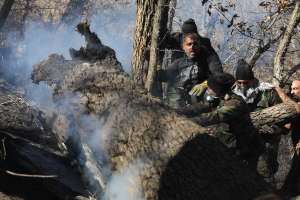
The commander of Iran’s Forest Protection Unit, Colonel Majid Zakariaei, said fires this year have scorched about 46,000 hectares of national land, forest and rangeland.
He told state media that from March to November more than 2,300 fires were recorded nationwide – a 12-percent rise in the number of incidents compared with the same period last year, though the total burned area was about two percent smaller.
Zakariaei said around 95 percent of fires were linked to human activity, including careless visitors and campers, compounded by drought and rising temperatures.
“Climate change, reduced rainfall, and dryness have turned natural areas into tinder,” he said, calling for better public awareness and faster local response systems.
While the largest recent fires in the Hyrcanian Forests – the ancient, UNESCO-listed woodlands along the Caspian Sea – have been extinguished, authorities warned that dry conditions persist and that access will remain restricted until effective autumn rains arrive.
“The situation is still fragile. Until we have sufficient rainfall, unnecessary entry to the forests is prohibited,” Zakariaei said, announcing that bans now cover the Hyrcanian, Zagros and Arasbaran forest zones.
The measure, which includes parts of Mazandaran, Golestan, Ardabil and North Khorasan provinces, is aimed at preventing new flare-ups.
Firefighting teams remain on full alert and village councils near the forests have been told to prepare local emergency stations.
Political and media reactions
The government’s handling of the fires has triggered debate in Iranian media and on social networks.
The newspaper Farhikhtegan said in an article on Wednesday that several of the northern fires may have been intentionally set, describing them as “organized acts” rather than the result of drought or accident.
The paper cited unnamed officials who said about 20 suspects had been detained.
The article suggested that such incidents were meant to “undermine confidence in the state’s crisis management,” framing the destruction as part of broader attempts to disrupt the country.
Environmental officials have not endorsed those claims and maintain that negligence remains the dominant cause. They say most of the recent fires began near roads, farms or picnic areas rather than in inaccessible terrain.
Iran’s environmental community has urged a focus on prevention with experts saying that weak firefighting infrastructure, limited aerial equipment and late detection continue to leave forests vulnerable.
The Hyrcanian Forests, believed to be among the world’s oldest surviving temperate forests, are home to hundreds of endemic plant and animal species. Prolonged drought and land encroachment have already reduced much of their natural resilience.
Zakariaei said Iran plans to expand its firefighting bases and training programs, with 21 stations now designated nationwide and more in development. “With better readiness and local participation, we hope to reduce next year’s figures,” he said.