• العربية
  • فارسی
Brand
  • Iran Insight
  • Politics
  • Economy
  • Analysis
  • Special Report
  • Opinion
  • Podcast
  • Iran Insight
  • Politics
  • Economy
  • Analysis
  • Special Report
  • Opinion
  • Podcast
  • Theme
  • Language
    • العربية
    • فارسی
  • Iran Insight
  • Politics
  • Economy
  • Analysis
  • Special Report
  • Opinion
  • Podcast
All rights reserved for Volant Media UK Limited
volant media logo
OPINION

Fog of war meets fog of law in the Strait of Hormuz

Shahram Kholdi
Shahram Kholdi

International Security and Law Analyst

May 12, 2026, 04:26 GMT+1
Fishermen row through the Strait of Hormuz as a cargo vessel passes in the background, May 3, 2026

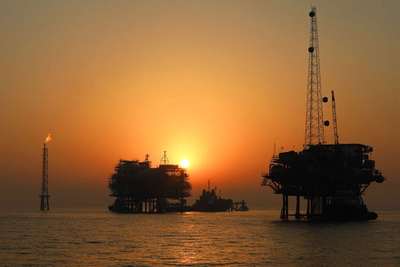
As the US-Iran gap widens and President Trump brands the truce “on life support,” three competing visions of international law are struggling for mastery over the crisis in the Strait of Hormuz. Each captures part of the truth. None fully resolves the tensions.

The first, rooted in the peacetime law of the sea, asserts the enduring right of transit passage. Customary international law, reflected in UNCLOS Articles 38 and 44, imposes a continuing obligation on coastal states not to hamper navigation through a strait upon which one-fifth of the world’s oil depends.

In this view, the IRGC’s mining operations, swarm attacks and threatened tolls violate established norms governing international waterways.

The second perspective prioritises the law of armed conflict. Once hostilities began, the San Remo Manual and Hague Convention VIII became increasingly relevant. Belligerents gain expanded rights to mine, blockade and restrict.

Under this framework, the IRGC may claim some legal justification for defensive measures within its territorial waters. Yet the same body of law imposes strict limits: notification, self-neutralisation, distinction and protection of neutral shipping.

The third school focuses less on legal doctrine than on the practical limits of enforcement. Without a UN Security Council resolution, both sides operate in a grey zone where customary rules are asserted but difficult to enforce amid active hostilities.

Each framework has significant weaknesses. The peacetime approach underestimates how armed conflict alters the legal environment. The wartime framework risks legitimising measures whose consequences extend far beyond the immediate belligerents. The enforcement-focused view accurately describes the absence of central authority but offers little guidance for resolution.

A more coherent framework emerges through triangulation: integrating all three regimes.

Peacetime transit passage supplies the baseline obligation to keep the strait open to neutral commerce. The law of armed conflict supplies limited belligerent rights—proportionate blockades and defensive mining—subject to strict restraints of notification, self-neutralisation and proportionality.

Customary international law, shaped by the global importance of Hormuz, acts as the reconciling principle. It prevents any party from turning one of the world’s critical maritime arteries into a private toll road or permanent minefield.

Within this framework, the IRGC’s mining operations without adequate safeguards, combined with strikes on Persian Gulf Arab infrastructure, exceed legitimate defensive measures.

By attempting to globalise the conflict—compensating for its conventional military weaknesses by widening the economic costs—the IRGC has threatened the security interests of multiple states and strengthened arguments for collective self-defence under Article 51 of the UN Charter.

The US blockade, narrowly directed at Iranian ports and coastal areas while preserving neutral passage, appears to fit more comfortably within belligerent rights. Yet no legal arrangement can ignore the Iranian people themselves. They remain trapped between the repression of the IRGC and the economic pressure of the Hormuz stalemate.

Any workable regime must therefore include verifiable humanitarian channels: inspection mechanisms that protect energy security while ensuring essential supplies reach civilians. As in Iraq after the expulsion from Kuwait, the regime would inevitably divert portions of aid to its networks, yet some assistance would still reach ordinary citizens.

Such a framework cannot rest on American shoulders alone. European states, above all France with its defence commitments to the United Arab Emirates and its capable naval presence, would need to participate. The Combined Maritime Forces operating from Bahrain already provide the foundation for such a multinational mechanism.

Still, triangulation confronts one overriding reality. Safe corridors, mine-clearance verification, ceasefire monitoring and dispute resolution ultimately require a United Nations Security Council resolution. If Russia and China were prepared either to abstain or acquiesce, such a framework could open the path toward a formal armistice convention.

At present, however, the “ceasefire” remains little more than a pause. Despite President Trump’s declaration on April 8, the IRGC continued strikes on Persian Gulf Arab infrastructure until April 9. Absent a formal convention defining duration, obligations and enforcement mechanisms, the fog of war and the fog of law will continue to thicken together.

During the 1956 Suez Crisis, President Eisenhower withheld support from Britain, France and Israel, helping force the operation’s collapse. Today the strategic balance is markedly different: the United States under President Trump enjoys overwhelming military superiority, while Russia and China lack the Soviet Union’s former capacity to directly challenge American power in the region.

Yet many governments and commentators increasingly frame the present stalemate as a strategic success for Tehran despite the immense economic, military and diplomatic damage sustained by the Islamic Republic.

Should the current deadlock persist, the IRGC is unlikely to ease either regional escalation or internal repression. If negotiations prove illusory, President Trump—who has repeatedly spoken of regime change—may face growing pressure from regional allies, particularly Israel and the UAE, to move from rhetoric toward a more explicit strategy aimed at dismantling the current power structure in Tehran.

The Strait of Hormuz is now more than a naval theatre. It has become a test of whether international law and diplomatic statecraft can contain a conflict that the IRGC is actively seeking to globalise.

Even if hostilities continue, the world may soon face a difficult question: whether to construct such a framework now, or wait for both the fog of war and the costs of paralysis to deepen further.

Most Viewed

Netanyahu says Iran regime change ‘possible, not guaranteed’
1

Netanyahu says Iran regime change ‘possible, not guaranteed’

2
ANALYSIS

The strange stability between Tehran and the Taliban

3

Iran calls proposal to US ‘reasonable and generous’

4

Drug prices jump up to 400% as shortages strain Iranian pharmacies

5

Iran steps up crackdown on Baha’is with raids, arrests

Banner
Banner

Spotlight

  • Fog of war meets fog of law in the Strait of Hormuz
    OPINION

    Fog of war meets fog of law in the Strait of Hormuz

  • Tehran rejects US terms as hardliners push escalation
    INSIGHT

    Tehran rejects US terms as hardliners push escalation

  • As Iran’s economy sinks, hardliners turn to conspiracy
    INSIGHT

    As Iran’s economy sinks, hardliners turn to conspiracy

  • Iranians describe toll of 70 days of internet restrictions
    VOICES FROM IRAN

    Iranians describe toll of 70 days of internet restrictions

  • The strange stability between Tehran and the Taliban
    ANALYSIS

    The strange stability between Tehran and the Taliban

  •  Tehran’s youth emerge from war more cynical, not more hopeful
    TEHRAN INSIDER

    Tehran’s youth emerge from war more cynical, not more hopeful

•
•
•

More Stories

Scholars warn Iranian academia is being crushed by war and repression

May 12, 2026, 03:25 GMT+1

A prominent international academic organization focused on Iranian studies has urged the United Nations and the European Union to condemn US-Israeli attacks on universities and educational institutions in Iran during the March and April conflict.

In a letter dated May 11, the Committee on Academic Freedom of the Association for Iranian Studies (AIS) warned that Iran’s educational system had become “a frontline in the widening U.S.-Israel war against the country.”

The letter was addressed to several senior international figures, including UN High Commissioner for Human Rights Volker Türk, UNESCO chief Audrey Azoulay, EU foreign policy chief Kaja Kallas and US Secretary of State Marco Rubio.

The group accused the United States and Israel of systematically targeting universities, schools, research centers and medical institutions in violation of international humanitarian law.

It cited reported damage to major universities including Sharif University of Technology, Shahid Beheshti University, Amir Kabir University and the Iran University of Science and Technology.

AIS, founded in 1967, is one of the leading international scholarly organizations focused on Iran and Persianate studies. Its Committee on Academic Freedom has frequently criticized the Islamic Republic’s repression of student activism, arrests of academics and crackdowns on campuses following protests and political unrest in Iran.

In its latest statement, the group argued that the war had compounded the trauma already inflicted on Iranian students and universities by state repression.

“The 2026 war and the resulting disruption of education, following upon such attacks and repressive measures, have inflicted both physical and psychological trauma on students at all levels—effects that many young Iranians are likely to carry throughout their lives,” the letter said.

The letter also referred to strikes on medical research institutions including the Pasteur Institute of Iran and the Tofigh Daru pharmaceutical research center, as well as attacks on schools.

It rejected US-Israeli arguments that some institutions constituted legitimate “dual use” targets because of alleged links to Iran’s military sector, arguing that such claims ignored proportionality and the cumulative harm inflicted on civilians and educational infrastructure.

The organization called for international condemnation of attacks on educational institutions, pressure to end the war and support for rebuilding damaged academic infrastructure.

Tehran rejects US terms as hardliners push escalation

May 12, 2026, 01:35 GMT+1
•
Maryam Sinaiee

Iran’s defiant response to a US proposal on ending the conflict is fueling new fears that the fragile ceasefire could collapse and fighting resume within days.

Tehran handed its response to the latest US proposal to Pakistan on Sunday for delivery to Washington. Hours later, President Donald Trump dismissed the Iranian reply as “totally unacceptable” and warned Monday that “the ceasefire is on life support.”

The exchange has fueled growing expectations in Iranian media and political circles that another military confrontation may be approaching, even as officials insist they remain open to diplomacy on their own terms.

Arash, a 45-year-old engineer in Tehran, said many people were once again preparing for the possibility of war.

“Filling gasoline tanks and stocking up on food and water for emergencies has again become a priority,” he said.

Tehran rejects key US conditions

Iranian state-linked media strongly denied Western reports suggesting Tehran’s response included compromises on nuclear issues.

Tasnim News Agency, affiliated with the Revolutionary Guards (IRGC), rejected claims that Iran’s proposal addressed the future of its nuclear materials or enrichment activities.

Iran's state broadcaster IRIB described the American proposal as “meaning Iran’s surrender to Trump’s excessive demands.”

According to IRIB, Iran’s counterproposal emphasized compensation for war damages, recognition of Iran’s sovereignty over the Strait of Hormuz, the lifting of sanctions and the release of frozen Iranian assets.

Former IRGC commander-in-chief Mohammad Ali Jafari said Monday that no further negotiations would take place unless Iran’s conditions were met.

Mixed signals

President Masoud Pezeshkian struck a more conciliatory tone during a meeting with senior police commanders on Sunday.

While acknowledging deep distrust toward Washington, Pezeshkian said Iran would remain committed to any agreement reached “while taking into account the concerns of the Supreme Leader and the interests of the Iranian nation.”

“The rational, logical and nationally beneficial preference is for the victory achieved by the armed forces on the battlefield to be completed in diplomacy as well,” he added.

Foreign Ministry spokesman Esmaeil Baghaei also said Monday that Tehran’s proposal was “reasonable and generous,” but accused Washington of continuing to insist on “unreasonable demands.”

Baghaei said Iran’s immediate priority was ending the war rather than negotiating details of the nuclear program, adding that decisions regarding “the nuclear issue, enriched materials and enrichment itself” would be announced later “at the appropriate time.”

Some hardline figures, however, are increasingly arguing that Iran should openly pursue nuclear weapons capability as a deterrent against future attacks.

Ebrahim Rezaei, spokesman for parliament’s National Security and Foreign Policy Committee, said lawmakers had questioned the value of remaining in the Nuclear Non-Proliferation Treaty and stressed the need to preserve Iran’s nuclear “achievements.”

Limited optimism

Despite the dominance of hardline rhetoric in official circles, online reactions suggested skepticism toward maximalist demands and calls for escalation.

Under a commentary published by Alef News listing Iran’s conditions, one reader wrote sarcastically: “Do not expect them to accept all these conditions unless you completely defeat them and even take prisoners.”

Another commented: “These are a list of wishes, and nobody is asking what they would receive in return.”

The skeptical comments drew significantly more support from readers than hardline calls for confrontation.

State television has repeatedly discussed the possibility of renewed fighting, often portraying another conflict as likely but manageable.

Reformist website Rouydad24 wrote that “the political atmosphere inside Iran is not favorable to a quick agreement,” arguing that hardline factions view any retreat as surrender while the government is trying to avoid appearing weak without securing sanctions relief.

“For now,” the outlet concluded, “the most likely scenario is not a comprehensive agreement but continued attritional negotiations combined with temporary ceasefires and crisis management—a situation that is neither full peace nor total war.”

Iran calls proposal to US ‘reasonable and generous’

May 11, 2026, 10:35 GMT+1

Iran described its latest proposal to the United States as “reasonable and generous” on Monday and said Tehran’s immediate priority remained ending the war rather than deciding the future of its nuclear program.

Foreign ministry spokesman Esmail Baghaei said Tehran’s proposal included ending the war in the region, lifting what he described as the US blockade, releasing frozen Iranian assets, ensuring safe passage through the Strait of Hormuz and restoring regional security.

“The Islamic Republic has proven that it is a responsible power in the region,” Baghaei said during his weekly briefing. “We are not bullies; we stand against bullies.”

He accused Washington of continuing to insist on “unreasonable” demands.

US President Donald Trump on Sunday dismissed Iran’s latest response to a US proposal as “totally unacceptable,” while Iranian state media said Tehran rejected what it described as Washington’s “excessive demands.”

Iran Foreign Ministry Spokesman Esmail Baghaei
100%
Iran Foreign Ministry Spokesman Esmail Baghaei

The dispute appears to center on two of the war’s most contentious issues: Iran’s insistence on sovereignty over the Strait of Hormuz and Washington’s demands over Tehran’s nuclear program, particularly its stockpile of enriched uranium and enrichment infrastructure.

Tehran says focus remains on ending war

Baghaei said Iran was not currently focused on decisions related to uranium enrichment or the future of its nuclear activities.

  • Netanyahu says Iran regime change ‘possible, not guaranteed’

    Netanyahu says Iran regime change ‘possible, not guaranteed’

“At the current stage, our focus is on ending the war,” he said. “Later, regarding the nuclear issue, Iran’s materials and matters related to enrichment, we will discuss those issues when the time comes.”

Several countries, particularly in the region, had contacted Tehran because of concerns over further escalation, he added.

“We have always appreciated parties that sincerely try to persuade the other sides to stop creating tensions,” Baghaei said.

Pakistan acting as ‘mediator’

Baghaei described Pakistan as an “official mediator” between Tehran and Washington and said other countries, including Qatar, were also maintaining contacts with both sides and sharing proposals with Iran’s foreign minister.

Baghaei also urged European countries not to be drawn into the conflict through what he described as pressure from the United States and Israel.

“We clearly told European countries not to allow temptations from the United States or Israel on regional issues to drag them into a crisis that will bring them no benefit,” he said.

  • Trump says Iranian people must have guns to fight

    Trump says Iranian people must have guns to fight

Many European governments, he added, understood the war had been “illegal, immoral and aggressive” and had resisted pressure to openly support actions he said “undermined international peace and security.”

Netanyahu says Iran regime change ‘possible, not guaranteed’

May 11, 2026, 02:26 GMT+1

Israeli Prime Minister Benjamin Netanyahu said on Sunday it was possible Iran’s leadership could eventually be toppled, though he stopped short of predicting such an outcome

“Is it possible? Yes. Is it guaranteed? No,” Netanyahu said in an interview with CBS’s 60 Minutes aired Sunday.

His remarks came as US President Donald Trump dismissed Iran’s latest response to a US proposal as “totally unacceptable,” while Iranian state media said Tehran rejected what it described as Washington’s “excessive demands.”

The dispute appears to center on two of the war’s most contentious issues: Iran’s insistence on sovereignty over the Strait of Hormuz and Washington’s demands over Tehran’s nuclear program, particularly its stockpile of enriched uranium and enrichment infrastructure.

Netanyahu acknowledged that Israeli planners only fully grasped the scale of the risk posed by Iran’s ability to disrupt shipping through the Strait of Hormuz after the war began.

“It took a while for them to understand how big that risk is, which they understand now,” he said.

The war between Israel, the United States and Iran began on February 28 and formally paused under a ceasefire framework brokered through Pakistani mediation, though negotiations over a broader settlement remain unresolved.

Iran’s throttling of traffic through the strait, through which roughly a fifth of global oil supply normally passes, has driven oil prices and US gasoline prices higher in recent weeks, complicating the political backdrop for Trump.

Netanyahu also said the conflict was “not over” as long as Iran retained highly enriched uranium and active enrichment facilities.

“There’s still nuclear material, enriched uranium, that has to be taken out of Iran,” Netanyahu said. “There are still enrichment sites that have to be dismantled.”

Asked how the uranium should be removed, Netanyahu replied: “You go in, and you take it out.”

Trump says Iran cannot be allowed to obtain a nuclear weapon, while Tehran insists its nuclear program is entirely peaceful and intended for civilian purposes.

The International Atomic Energy Agency has meanwhile repeatedly warned that Iran’s enrichment of uranium to 60% purity—one step from weapons-grade—has “no credible civilian justification.”

Netanyahu said a collapse of the Islamic Republic would likely mean “the end of Hezbollah, the end of Hamas” and probably the Houthis, arguing that Iran’s regional network depends heavily on Tehran’s leadership.

He also said he hoped Israel could eventually reduce its dependence on US military aid, describing it as the right time to begin rethinking the financial component of the US-Israel relationship.

Israel currently receives about $3.8 billion annually in US military assistance under a 10-year agreement signed in 2016.

Can Tehran weaponize the Strait of Hormuz for years to come?

May 9, 2026, 09:55 GMT+1

The shadow of a closed Strait of Hormuz no longer looms as a mere threat; it is a reality that has shattered the traditional foundations of the global energy market.

In the latest episode of the Eye for Iran podcast, host Mohamad Machine-Chian sat down with two experts to dissect the fallout: Bozorgmehr Sharafedin, Head of Digital News Services at Iran International and former Reuters Energy Correspondent, and Dr. Iman Nasseri, Managing Director for the Middle East Research at FGE Nexant consultancy, in Dubai.

Together, they painted a picture of a region at a point where a "broken" waterway might be forcing the world to permanently look elsewhere.

Tehran’s unexpected leverage

For decades, the Islamic Republic used the threat of closing the Strait as a rhetorical deterrent. However, according to Bozorgmehr Sharafedin, the actual closure in early 2026 was as much a surprise to Tehran as it was to the world. Having seen their primary deterrents – missile programs and regional proxies like Hezbollah – fail to prevent direct conflict with the US and Israel, the establishment stumbled upon a different kind of power.

"Iranians are also surprised," Sharafedin noted. "The deterrence they didn’t count on that much – the closure of the Strait of Hormuz – became their most valuable card. Now, they are tying the future security of Iran to the management of Hormuz. We had the deputy speaker of the parliament saying that the Strait of Hormuz is our nuclear weapon."

This shift in doctrine has led to a dangerous sense of triumphalism in Tehran. State-controlled media has floated the idea of imposing "transit fees" or "security taxes" on ships, much like the Suez Canal.

But Sharafedin warns that this strategy is fatally short-sighted. Unlike the Suez, which is governed by an international treaty and relative predictability, the Islamic Republic’s logic defies stability. "They will try to impose their political views and preferences on this transit route," he explained. "Many shipping lines simply won't risk it."

The 'broken vase' of global energy

The economic consequences of this closure are already being felt, even if they aren't always visible in the "Brent Crude" price tag seen on news tickers. Dr. Iman Nasseri pointed out that while the public looks at futures prices, the physical market has been in agony.

Dr. Iman Nasseri, Managing Director of FGE-Nexant Dubai (undated)
100%
Dr. Iman Nasseri, Managing Director for the Middle East Research at FGE-Nexant, in Dubai

"The price of jet fuel was over $200 for a prolonged period," Nasseri revealed. "The market is furious and frustrated. We have 12 to 14 million barrels per day of unsupplied demand. In India, many people do not have gas for cooking. The demand destruction has already happened."

This disruption has permanently changed how global powers view the Persian Gulf. Sharafedin cited comments by International Energy Agency (IEA) chief Fatih Birol, saying: "The Strait of Hormuz is like a broken vase. It's broken. The damage is done. It's almost impossible to put it back together." The world is no longer waiting for the Strait to reopen; it is actively building a future without it.

The exodus to alternative routes

The most immediate reaction to the blockade has been a massive surge in investment toward alternative infrastructure. Pipelines that were once considered "economically unfeasible" are now receiving emergency funding. Sharafedin noted that since the start of the conflict in February, the volume of oil transferred via alternative routes has nearly doubled, jumping from 4.2 million to 7 million barrels per day.

"Iraq recently allocated $1.5 billion for a pipeline connecting Basra to Jordan, Syria, and Turkey," Sharafedin said. This diversification isn't limited to the Middle East. Buyers like Pakistan, which relied on Kuwaiti oil for 50 years, are now sourcing crude from Nigeria, Libya, and the United States. Even China, the region's biggest customer, is accelerating its trillion-dollar pivot toward nuclear and solar energy to escape its reliance on the Hormuz bottleneck.

Regional prosperity held hostage

While the global economy may eventually adjust by finding new suppliers, the outlook for the Middle East itself is much grimmer. For the last decade, countries like the UAE, Qatar, and Saudi Arabia have tied their future prosperity to a logic of stability and foreign investment. That dream is now under direct attack.

"The Islamic Republic is single-handedly holding the region down," Sharafedin argued. He pointed out that every time the region moves toward a better future – whether through the Arab Uprisings or attracting tech giants like Amazon AWS – Tehran intervenes to sabotage the stability required for such progress. By attacking infrastructure in Fujairah and targeting tankers in the Red Sea, the regime has signaled that no alternative route is safe.

Eye for Iran host Mohamad Machine-Chian (right) and Bozorgmehr Sharafedin, Head of Digital News at Iran International, May 2026.
100%
Eye for Iran host Mohamad Machine-Chian (right) and Bozorgmehr Sharafedin, Head of Digital News at Iran International, May 2026.

"I don't think many of those countries can now justify the investment of huge data centers," Sharafedin lamented. "Both short-term and long-term, the regional countries will pay a heavy price."

Scenarios for 2027: A prolonged limbo

As the US shifts from "Operation Epic Fury" to "Project Freedom," a new diplomatic phase is emerging, but Dr. Nasseri remains skeptical of a quick fix. He outlined a base-case scenario where the market sees only a "gradual recovery" to about 60% of pre-war levels by late 2026, with the situation remaining largely flat well into 2027.

The fundamental issue, Nasseri argues, is the massive gap between Washington and Tehran’s expectations. "The same regime that has not agreed to terms over the last couple of years will not suddenly do so now," he said. While a potential Memorandum of Understanding (MOU) might provide temporary "happy headlines" to calm traders, the structural reality remains one of severe disruption.