The relationship between the Taliban and Iran, once marked by military confrontation and nearly pushed to war, is now defined by caution and quiet engagement.
The Taliban, who present themselves as representatives of a hardline Sunni Islamist movement, and the Iranian system, one of the main centers of Shiite political power, now maintain relations in which practical politics and mutual necessity have largely replaced deep-rooted sectarian hostility.
At first glance, the relationship appears contradictory. The 1998 Mazar-e-Sharif incident, when Iranian diplomats were killed and both sides nearly went to war, remains firmly embedded in the memory of both regimes.
Yet more than two decades later, the regional landscape has changed, enemies have shifted and one principle has again proven true: in the Middle East and across Central and South Asia, religion is often expressed rhetorically while decisions are driven by political interests.
From opposition to engagement
When the Taliban returned to power in 2021, Iran was among the few countries that did not completely shut its doors. Tehran neither formally recognized the Taliban administration nor severed ties with it.
Iran understood that an Afghanistan facing economic collapse, international isolation and political uncertainty contained both risks and opportunities—and chose engagement over exclusion.
The Taliban, constrained by sanctions, frozen assets and diplomatic isolation, were in turn forced to rely on neighboring countries. Iran—with its long shared border, fuel, electricity, transit routes and regional influence—became a practical partner.
After the death of Mullah Omar, the Taliban’s second leader, Mullah Akhtar Mohammad Mansour, emerged as a central bridge to Iran. His close associates, including Ibrahim Sadr, Mullah Shirin and Mullah Talib, established Sunni religious schools in Iran’s Sistan-Baluchistan region.
Over the past two decades, Iran pursued what Afghan officials describe as a “multi-track policy,” maintaining ties with Afghanistan’s republican government while simultaneously expanding covert and overt contacts with the Taliban to preserve influence under any future political arrangement.
Former senior Afghan presidential adviser Mohammad Iqbal Azizi says Iran significantly deepened ties with the Taliban after 2004, largely because of shared opposition to the US military presence.
“That’s why Mullah Mansour, Ibrahim Sadr and others went to Iran and received support from there,” he said.
Former head of Afghanistan’s Presidential Administrative Office Fazl Mahmood Fazli told Afghanistan International that some tribes maintain longstanding links with Iran.
“In recent years, Ishaqzai, Noorzai and Alizai Taliban commanders even cooperated with the IRGC in smuggling operations, and these relations have become so strong that they have now taken on a new form of partnership,” he said.
Former Pakistani senator Afrasiab Khattak said Iran has long maintained relations across Afghanistan’s political spectrum.
“Afghanistan is important for Iran, and its relations with Afghan governments are based on pragmatic politics,” he said. “Iran simply cannot operate on a purely religious basis.”
Khattak added that Iran invested heavily in ties with the Taliban during the war years and that its influence over some Taliban figures remains visible.
A key factor driving closer ties has been the Taliban’s deteriorating relationship with Pakistan. Relations with Iran help the Taliban avoid isolation, while Tehran understands the leverage this dependency creates.
Shared threats, shared interests
A central factor in improving Taliban-Iran relations has been the logic of shared threats.
The US military presence in Afghanistan represented a mutual challenge for both sides and laid the groundwork for gradual rapprochement. Iran sought to limit US influence while the Taliban fought directly against it.
Iran also faced broader security concerns linked to Afghanistan: border stability, ISIS-Khorasan, Baloch militancy, drug trafficking and refugee flows. From Tehran’s perspective, many of these issues could only be managed through engagement with the Taliban.
Economic factors also play a major role. Sanctions and isolation have pushed the Taliban toward regional economic networks, with Iran becoming an important supplier of fuel, electricity and goods. Tehran meanwhile seeks access to Afghanistan’s market, transit routes and water resources.
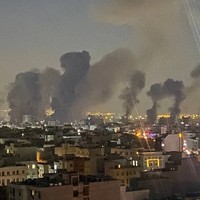
Relations between Kabul and Tehran appear to have grown closer following recent US and Israeli strikes on Iran. Facing pressure from Washington, Israel and parts of the Arab world, Tehran appears increasingly unwilling to lose Taliban cooperation.
A founding member of the Taliban movement, speaking anonymously to Afghanistan International-Pashto, said Mullah Akhtar Mansour opposed basing ties with Iran on sectarian identity.
“I remember in 2000 when Mullah Akhtar Mansour came to Pakistan and we met in Quetta,” he recalled. “Mansour carried a message from Mullah Mohammad Omar saying relations with Iran should be built on interests—not religious differences.”
He added that Iran supported Taliban forces in Helmand, Herat, Kandahar, Zabul, Ghazni, Maidan Wardak and Farah during the insurgency.
Former Afghan acting defense minister Shah Mahmood Miakhel said shared fears over ISIS-Khorasan have also created room for cooperation.
“The Taliban have learned from their first rule that conflict with Iran costs them dearly,” he said. “And Iran now feels more reassured because of the Taliban’s deteriorating relations with Pakistan.”
Iran and Afghanistan share nearly 900 kilometers of border, while refugee flows, narcotics trafficking, smuggling and water disputes remain impossible to manage without sustained engagement.
Abdul Ghafoor Liwal, the last ambassador of Afghanistan’s former republican government to Iran, said Tehran openly acknowledged its pragmatic reasoning.
“Iran officially told me that the Taliban are enemies of the United States, and so are we,” he said. “And because Iran shares a long border with Afghanistan, it is compelled to maintain relations with the Taliban.”
A Taliban Foreign Ministry official, also speaking anonymously, said the relationship is driven heavily by economics.
“Afghanistan is a good market for Iran, and Iran is a good source of goods for us,” he said.
Despite growing cooperation, the relationship remains constrained by deep ideological and geopolitical divides.
Iran’s Shiite Islamic Republic derives legitimacy from the doctrine of Velayat-e Faqih, while the Taliban adhere to a hardline Sunni Deobandi interpretation of Islam. The two sides do not view each other as natural allies so much as necessary and manageable rivals.
Regional rivalries further complicate the picture. Just as India-Pakistan competition shapes Afghanistan, so too does the rivalry between Iran and Arab states.
Although the Taliban have avoided directly condemning Iranian attacks on Arab countries, they have at times described regional escalation as destabilizing. Taliban officials also seek stronger relations with Saudi Arabia, Qatar and the UAE, making outright alignment with Tehran difficult.
The Taliban continue seeking better relations with the United States and Europe, particularly in hopes of easing diplomatic isolation and refugee pressures.
Domestically and bilaterally, disputes over Afghan refugees and Helmand River water rights remain persistent sources of tension.
The Taliban also hope Iran will eventually recognize their government formally. Tehran, however, appears determined to keep recognition as leverage.
For now, necessity binds Tehran and the Taliban more tightly than ideology divides them. But the relationship rests less on trust than on a volatile region in which both sides fear isolation more than each other.