• العربية
  • فارسی
Brand
  • Iran Insight
  • Politics
  • Economy
  • Analysis
  • Special Report
  • Opinion
  • Podcast
  • Iran Insight
  • Politics
  • Economy
  • Analysis
  • Special Report
  • Opinion
  • Podcast
  • Theme
  • Language
    • العربية
    • فارسی
  • Iran Insight
  • Politics
  • Economy
  • Analysis
  • Special Report
  • Opinion
  • Podcast
All rights reserved for Volant Media UK Limited
volant media logo

Bahrain court gives life sentence to woman over ties to Revolutionary Guards

May 12, 2026, 09:35 GMT+1
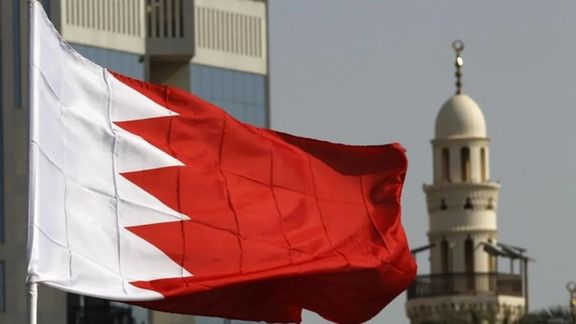
Bahrain's flag
Bahrain's flag

A Bahraini court sentenced a woman to life in prison after convicting her of communicating with Iran's Revolutionary Guards with intent to carry out hostile acts against the kingdom and harm its national interests, Bahrain's public prosecution said on Tuesday.

The prosecution said the woman used a social media account to post photos and coordinates of key sites and facilities in Bahrain and shared content that harmed the kingdom's military, political and economic standing.

Authorities said the account also promoted what the prosecution described as Iranian attacks against Bahrain.

The woman admitted to the charges during questioning, prosecutors said, adding that she told investigators she used her social media account to assist those targeting Bahrain by sharing images and coordinates of vital sites alongside messages indicating they could be targeted.

The prosecution said the court also ordered the confiscation of seized items. It did not identify the woman or say when the alleged acts took place.

Bahrain-Iran tensions

The ruling comes days after Bahrain said it had arrested 41 people allegedly linked to a group tied to Iran's Islamic Revolutionary Guard Corps and the ideology of Velayat-e Faqih, or Guardianship of the Jurist – the doctrine underpinning the Islamic Republic’s system of clerical rule and giving Iran’s supreme leader ultimate religious and political authority.

Authorities said legal proceedings were underway and investigations were continuing.

Bahrain's Foreign Minister Abdullatif bin Rashid Al Zayani on Saturday accused Tehran of interfering in the kingdom's internal affairs after the arrests, calling it a violation of international law and good neighborly principles. Iran has not publicly responded to the accusations.

Most Viewed

Netanyahu says Iran regime change ‘possible, not guaranteed’
1

Netanyahu says Iran regime change ‘possible, not guaranteed’

2
ANALYSIS

The strange stability between Tehran and the Taliban

3

Iran calls proposal to US ‘reasonable and generous’

4
INSIGHT

As Iran’s economy sinks, hardliners turn to conspiracy

5

Iran steps up crackdown on Baha’is with raids, arrests

Banner
Banner

Spotlight

  • Iranians told to post pro-government content to regain internet access
    VOICES FROM IRAN

    Iranians told to post pro-government content to regain internet access

  • Fog of war meets fog of law in the Strait of Hormuz
    OPINION

    Fog of war meets fog of law in the Strait of Hormuz

  • Tehran rejects US terms as hardliners push escalation
    INSIGHT

    Tehran rejects US terms as hardliners push escalation

  • As Iran’s economy sinks, hardliners turn to conspiracy
    INSIGHT

    As Iran’s economy sinks, hardliners turn to conspiracy

  • Iranians describe toll of 70 days of internet restrictions
    VOICES FROM IRAN

    Iranians describe toll of 70 days of internet restrictions

  • The strange stability between Tehran and the Taliban
    ANALYSIS

    The strange stability between Tehran and the Taliban

•
•
•

More Stories

Islamic Republic denies visits to eight female political prisoners

May 12, 2026, 08:42 GMT+1

Eight women political prisoners held in Tehran’s Evin Prison have been barred from meeting family members and lawyers following tighter security measures and pressure linked to collective protest activities inside the ward, according to information obtained by Iran International.

Shiva Esmaili, Golrokh Iraee, Sakineh Parvaneh, Forough Taghipour, Zahra Safaei, Marzieh Farsi, Elaheh Fouladi and Varisheh Moradi were denied visitation rights in recent weeks after participating in memorial gatherings and protest-related events inside the women’s ward, sources familiar with the situation said.

Prison authorities have also increased surveillance and patrols inside the ward, with officers entering cells daily and sometimes at night under the pretext of inspections, a source close to prisoners’ families told Iran International.

  • Alarm grows over health of Iran’s female political prisoners

    Alarm grows over health of Iran’s female political prisoners

Women prisoners in Evin had for years marked political and ideological occasions through gatherings, songs, readings and commemorations for killed protesters and veteran activists, the source said. Prison officials have recently intervened directly in such activities and threatened participants, the source added.

The source said some women recently transferred to the ward were also warned by prison and security officials after attending a small number of the gatherings.

Prison staff have in recent months used insulting language toward detainees and threatened them with transfer to solitary confinement, another source familiar with conditions in the ward told Iran International.

Prisoners face solitary confinement threats

Ghazal Marzban, another woman prisoner in Evin, was recently held in solitary confinement for five nights after protesting the handling of her case, a source familiar with the situation said.

File photo of Eight women political prisoners held in Tehran’s Evin Prison who have been barred from meeting family members.
100%
File photo of Eight women political prisoners held in Tehran’s Evin Prison who have been barred from meeting family members.

The women’s ward in Evin, often described by activists as a focal point of the “Woman, Life, Freedom” movement, has repeatedly issued statements and organized protests over executions, arrests, economic hardship and the suppression of demonstrations in Iran.

Prisoners in the ward have also staged sit-ins and hunger strikes against death sentences in recent years, after which some faced punitive measures including restrictions on phone calls, visits and new legal cases.

A source close to prisoners’ families said the growing restrictions and threats of solitary confinement reflected efforts by prison and security authorities to silence dissent inside the ward.

Prisoner with tumors denied urgent treatment

Separate information obtained by Iran International shows that Mohtaram Parandin, an imprisoned artist and painter known as Mahshar, has been denied urgent medical treatment despite suffering from two tumors near the cerebellum and throat as well as severe heart disease.

  • Women protesters held in basement ward at northeastern Iran prison

    Women protesters held in basement ward at northeastern Iran prison

A source familiar with her condition said prison doctors had warned that immediate surgery was necessary because the tumor near her cerebellum had affected her vision, speech and movement.

“The effects of the illness are visible in the way she walks and speaks,” the source said.

Despite recommendations from prison medical staff, authorities have not approved her transfer for treatment and have also rejected requests for medical leave and conditional release although she has served more than half of her sentence, the source added.

The source said documentation required for temporary medical leave had already been submitted to the prosecutor’s office.

Parandin, the mother of a teenage son, became the head of her household after the death of her husband. Her son also suffers from a chronic illness and has faced difficulties during her imprisonment.

Rights groups and prisoners’ families have for years accused Iranian prison authorities of denying political prisoners adequate medical care, with several detainees dying in custody after prolonged illness or delayed treatment.

Fog of war meets fog of law in the Strait of Hormuz

May 12, 2026, 04:26 GMT+1
•
Shahram Kholdi

As the US-Iran gap widens and President Trump brands the truce “on life support,” three competing visions of international law are struggling for mastery over the crisis in the Strait of Hormuz. Each captures part of the truth. None fully resolves the tensions.

The first, rooted in the peacetime law of the sea, asserts the enduring right of transit passage. Customary international law, reflected in UNCLOS Articles 38 and 44, imposes a continuing obligation on coastal states not to hamper navigation through a strait upon which one-fifth of the world’s oil depends.

In this view, the IRGC’s mining operations, swarm attacks and threatened tolls violate established norms governing international waterways.

The second perspective prioritises the law of armed conflict. Once hostilities began, the San Remo Manual and Hague Convention VIII became increasingly relevant. Belligerents gain expanded rights to mine, blockade and restrict.

Under this framework, the IRGC may claim some legal justification for defensive measures within its territorial waters. Yet the same body of law imposes strict limits: notification, self-neutralisation, distinction and protection of neutral shipping.

The third school focuses less on legal doctrine than on the practical limits of enforcement. Without a UN Security Council resolution, both sides operate in a grey zone where customary rules are asserted but difficult to enforce amid active hostilities.

Each framework has significant weaknesses. The peacetime approach underestimates how armed conflict alters the legal environment. The wartime framework risks legitimising measures whose consequences extend far beyond the immediate belligerents. The enforcement-focused view accurately describes the absence of central authority but offers little guidance for resolution.

A more coherent framework emerges through triangulation: integrating all three regimes.

Peacetime transit passage supplies the baseline obligation to keep the strait open to neutral commerce. The law of armed conflict supplies limited belligerent rights—proportionate blockades and defensive mining—subject to strict restraints of notification, self-neutralisation and proportionality.

Customary international law, shaped by the global importance of Hormuz, acts as the reconciling principle. It prevents any party from turning one of the world’s critical maritime arteries into a private toll road or permanent minefield.

Within this framework, the IRGC’s mining operations without adequate safeguards, combined with strikes on Persian Gulf Arab infrastructure, exceed legitimate defensive measures.

By attempting to globalise the conflict—compensating for its conventional military weaknesses by widening the economic costs—the IRGC has threatened the security interests of multiple states and strengthened arguments for collective self-defence under Article 51 of the UN Charter.

The US blockade, narrowly directed at Iranian ports and coastal areas while preserving neutral passage, appears to fit more comfortably within belligerent rights. Yet no legal arrangement can ignore the Iranian people themselves. They remain trapped between the repression of the IRGC and the economic pressure of the Hormuz stalemate.

Any workable regime must therefore include verifiable humanitarian channels: inspection mechanisms that protect energy security while ensuring essential supplies reach civilians. As in Iraq after the expulsion from Kuwait, the regime would inevitably divert portions of aid to its networks, yet some assistance would still reach ordinary citizens.

Such a framework cannot rest on American shoulders alone. European states, above all France with its defence commitments to the United Arab Emirates and its capable naval presence, would need to participate. The Combined Maritime Forces operating from Bahrain already provide the foundation for such a multinational mechanism.

Still, triangulation confronts one overriding reality. Safe corridors, mine-clearance verification, ceasefire monitoring and dispute resolution ultimately require a United Nations Security Council resolution. If Russia and China were prepared either to abstain or acquiesce, such a framework could open the path toward a formal armistice convention.

At present, however, the “ceasefire” remains little more than a pause. Despite President Trump’s declaration on April 8, the IRGC continued strikes on Persian Gulf Arab infrastructure until April 9. Absent a formal convention defining duration, obligations and enforcement mechanisms, the fog of war and the fog of law will continue to thicken together.

During the 1956 Suez Crisis, President Eisenhower withheld support from Britain, France and Israel, helping force the operation’s collapse. Today the strategic balance is markedly different: the United States under President Trump enjoys overwhelming military superiority, while Russia and China lack the Soviet Union’s former capacity to directly challenge American power in the region.

Yet many governments and commentators increasingly frame the present stalemate as a strategic success for Tehran despite the immense economic, military and diplomatic damage sustained by the Islamic Republic.

Should the current deadlock persist, the IRGC is unlikely to ease either regional escalation or internal repression. If negotiations prove illusory, President Trump—who has repeatedly spoken of regime change—may face growing pressure from regional allies, particularly Israel and the UAE, to move from rhetoric toward a more explicit strategy aimed at dismantling the current power structure in Tehran.

The Strait of Hormuz is now more than a naval theatre. It has become a test of whether international law and diplomatic statecraft can contain a conflict that the IRGC is actively seeking to globalise.

Even if hostilities continue, the world may soon face a difficult question: whether to construct such a framework now, or wait for both the fog of war and the costs of paralysis to deepen further.
Scholars warn Iranian academia is being crushed by war and repression

May 12, 2026, 03:25 GMT+1

A prominent international academic organization focused on Iranian studies has urged the United Nations and the European Union to condemn US-Israeli attacks on universities and educational institutions in Iran during the March and April conflict.

In a letter dated May 11, the Committee on Academic Freedom of the Association for Iranian Studies (AIS) warned that Iran’s educational system had become “a frontline in the widening U.S.-Israel war against the country.”

The letter was addressed to several senior international figures, including UN High Commissioner for Human Rights Volker Türk, UNESCO chief Audrey Azoulay, EU foreign policy chief Kaja Kallas and US Secretary of State Marco Rubio.

The group accused the United States and Israel of systematically targeting universities, schools, research centers and medical institutions in violation of international humanitarian law.

It cited reported damage to major universities including Sharif University of Technology, Shahid Beheshti University, Amir Kabir University and the Iran University of Science and Technology.

AIS, founded in 1967, is one of the leading international scholarly organizations focused on Iran and Persianate studies. Its Committee on Academic Freedom has frequently criticized the Islamic Republic’s repression of student activism, arrests of academics and crackdowns on campuses following protests and political unrest in Iran.

In its latest statement, the group argued that the war had compounded the trauma already inflicted on Iranian students and universities by state repression.

“The 2026 war and the resulting disruption of education, following upon such attacks and repressive measures, have inflicted both physical and psychological trauma on students at all levels—effects that many young Iranians are likely to carry throughout their lives,” the letter said.

The letter also referred to strikes on medical research institutions including the Pasteur Institute of Iran and the Tofigh Daru pharmaceutical research center, as well as attacks on schools.

It rejected US-Israeli arguments that some institutions constituted legitimate “dual use” targets because of alleged links to Iran’s military sector, arguing that such claims ignored proportionality and the cumulative harm inflicted on civilians and educational infrastructure.

The organization called for international condemnation of attacks on educational institutions, pressure to end the war and support for rebuilding damaged academic infrastructure.

Tehran rejects US terms as hardliners push escalation

May 12, 2026, 01:35 GMT+1
•
Maryam Sinaiee

Iran’s defiant response to a US proposal on ending the conflict is fueling new fears that the fragile ceasefire could collapse and fighting resume within days.

Tehran handed its response to the latest US proposal to Pakistan on Sunday for delivery to Washington. Hours later, President Donald Trump dismissed the Iranian reply as “totally unacceptable” and warned Monday that “the ceasefire is on life support.”

The exchange has fueled growing expectations in Iranian media and political circles that another military confrontation may be approaching, even as officials insist they remain open to diplomacy on their own terms.

Arash, a 45-year-old engineer in Tehran, said many people were once again preparing for the possibility of war.

“Filling gasoline tanks and stocking up on food and water for emergencies has again become a priority,” he said.

Tehran rejects key US conditions

Iranian state-linked media strongly denied Western reports suggesting Tehran’s response included compromises on nuclear issues.

Tasnim News Agency, affiliated with the Revolutionary Guards (IRGC), rejected claims that Iran’s proposal addressed the future of its nuclear materials or enrichment activities.

Iran's state broadcaster IRIB described the American proposal as “meaning Iran’s surrender to Trump’s excessive demands.”

According to IRIB, Iran’s counterproposal emphasized compensation for war damages, recognition of Iran’s sovereignty over the Strait of Hormuz, the lifting of sanctions and the release of frozen Iranian assets.

Former IRGC commander-in-chief Mohammad Ali Jafari said Monday that no further negotiations would take place unless Iran’s conditions were met.

Mixed signals

President Masoud Pezeshkian struck a more conciliatory tone during a meeting with senior police commanders on Sunday.

While acknowledging deep distrust toward Washington, Pezeshkian said Iran would remain committed to any agreement reached “while taking into account the concerns of the Supreme Leader and the interests of the Iranian nation.”

“The rational, logical and nationally beneficial preference is for the victory achieved by the armed forces on the battlefield to be completed in diplomacy as well,” he added.

Foreign Ministry spokesman Esmaeil Baghaei also said Monday that Tehran’s proposal was “reasonable and generous,” but accused Washington of continuing to insist on “unreasonable demands.”

Baghaei said Iran’s immediate priority was ending the war rather than negotiating details of the nuclear program, adding that decisions regarding “the nuclear issue, enriched materials and enrichment itself” would be announced later “at the appropriate time.”

Some hardline figures, however, are increasingly arguing that Iran should openly pursue nuclear weapons capability as a deterrent against future attacks.

Ebrahim Rezaei, spokesman for parliament’s National Security and Foreign Policy Committee, said lawmakers had questioned the value of remaining in the Nuclear Non-Proliferation Treaty and stressed the need to preserve Iran’s nuclear “achievements.”

Limited optimism

Despite the dominance of hardline rhetoric in official circles, online reactions suggested skepticism toward maximalist demands and calls for escalation.

Under a commentary published by Alef News listing Iran’s conditions, one reader wrote sarcastically: “Do not expect them to accept all these conditions unless you completely defeat them and even take prisoners.”

Another commented: “These are a list of wishes, and nobody is asking what they would receive in return.”

The skeptical comments drew significantly more support from readers than hardline calls for confrontation.

State television has repeatedly discussed the possibility of renewed fighting, often portraying another conflict as likely but manageable.

Reformist website Rouydad24 wrote that “the political atmosphere inside Iran is not favorable to a quick agreement,” arguing that hardline factions view any retreat as surrender while the government is trying to avoid appearing weak without securing sanctions relief.

“For now,” the outlet concluded, “the most likely scenario is not a comprehensive agreement but continued attritional negotiations combined with temporary ceasefires and crisis management—a situation that is neither full peace nor total war.”

Iran calls proposal to US ‘reasonable and generous’

May 11, 2026, 10:35 GMT+1

Iran described its latest proposal to the United States as “reasonable and generous” on Monday and said Tehran’s immediate priority remained ending the war rather than deciding the future of its nuclear program.

Foreign ministry spokesman Esmail Baghaei said Tehran’s proposal included ending the war in the region, lifting what he described as the US blockade, releasing frozen Iranian assets, ensuring safe passage through the Strait of Hormuz and restoring regional security.

“The Islamic Republic has proven that it is a responsible power in the region,” Baghaei said during his weekly briefing. “We are not bullies; we stand against bullies.”

He accused Washington of continuing to insist on “unreasonable” demands.

US President Donald Trump on Sunday dismissed Iran’s latest response to a US proposal as “totally unacceptable,” while Iranian state media said Tehran rejected what it described as Washington’s “excessive demands.”

Iran Foreign Ministry Spokesman Esmail Baghaei
100%
Iran Foreign Ministry Spokesman Esmail Baghaei

The dispute appears to center on two of the war’s most contentious issues: Iran’s insistence on sovereignty over the Strait of Hormuz and Washington’s demands over Tehran’s nuclear program, particularly its stockpile of enriched uranium and enrichment infrastructure.

Tehran says focus remains on ending war

Baghaei said Iran was not currently focused on decisions related to uranium enrichment or the future of its nuclear activities.

  • Netanyahu says Iran regime change ‘possible, not guaranteed’

    Netanyahu says Iran regime change ‘possible, not guaranteed’

“At the current stage, our focus is on ending the war,” he said. “Later, regarding the nuclear issue, Iran’s materials and matters related to enrichment, we will discuss those issues when the time comes.”

Several countries, particularly in the region, had contacted Tehran because of concerns over further escalation, he added.

“We have always appreciated parties that sincerely try to persuade the other sides to stop creating tensions,” Baghaei said.

Pakistan acting as ‘mediator’

Baghaei described Pakistan as an “official mediator” between Tehran and Washington and said other countries, including Qatar, were also maintaining contacts with both sides and sharing proposals with Iran’s foreign minister.

Baghaei also urged European countries not to be drawn into the conflict through what he described as pressure from the United States and Israel.

“We clearly told European countries not to allow temptations from the United States or Israel on regional issues to drag them into a crisis that will bring them no benefit,” he said.

  • Trump says Iranian people must have guns to fight

    Trump says Iranian people must have guns to fight

Many European governments, he added, understood the war had been “illegal, immoral and aggressive” and had resisted pressure to openly support actions he said “undermined international peace and security.”