Intensive strikes on eve of Trump deadline killed dozens in Iran - HRANA
A painting remains on the interior wall of an apartment damaged by a strike in Tehran, amid US-Israeli strikes on Iran, April 4, 2026
The heaviest wave of attacks in more than a week struck Iran on Monday, killing at least 49 civilians and injuring 58 others as the war between Iran, rights group HRANA reported ahead of President Trump's Tuesday deadline to hit Iranian power plants.
The strikes were spread across 20 provinces, according to the Washington-based monitoring group Human Rights Activists News Agency, and represented the highest rate of attacks recorded in the past 10 days.
Among those killed were four children and two women, HRANA said, adding that the figures remain preliminary and could rise as more information emerges.
In total, the group documented at least 573 individual strikes across 215 separate incidents during the past day, a scale of bombardment that analysts say reflects a widening focus on strategic sectors of Iran’s economy.
Many of the attacks targeted infrastructure linked to the country’s core industries, including elements of Iran’s energy sector, HRANA reported.
The latest wave of strikes comes as President Trump has warned that the United States could launch sweeping new attacks on Iranian infrastructure if Tehran does not agree to negotiations by Tuesday evening.
In a statement Monday, the White House said Iran would be “sent back to the stone ages tomorrow night if they fail to engage in a serious way” with diplomatic efforts.
The war, now in its sixth week, has already inflicted heavy losses across the region.
Iranian authorities and monitoring groups estimate that more than 2,000 people have been killed inside Iran since the conflict began. Israeli officials say at least 26 people have been killed there, while missile and drone attacks launched by Iran have also caused dozens of casualties in the Persian Gulf countries.
With negotiations uncertain and attacks intensifying on both sides, Tuesday is shaping up as one of the most consequential moments in the conflict since it began more than five weeks ago.
An image released on April 5, 2026, and obtained from social media appears to show wreckage of an American aircraft and a helicopter rotor in Isfahan, Iran, which forensic imagery analyst... Purchase Licensing Rights
The mission to rescue an American pilot downed in Iran showed how a tactical success can open wider strategic possibilities, sharpening debate over how far the United States may expand its footprint inside Iran.
The operation may have cost the United States several military assets, but it also forced Iran to reveal what it considers key terrain, according to former intelligence officer Michael Pregent.
A veteran with more than 28 years of experience in security and terrorism in the Middle East, Pregent believes that in scrambling to protect what it thought would be the next landing zone, Iranian forces exposed troop movements and defensive priorities that US planners may now be able to exploit.
“You can see movement of assets to protect key terrain that we may not have thought was key terrain but the regime does, and that gives an opportunity to exploit the situation," Pregent told Iran International.
"The establishment of this base now changes that focus. It's not just about fixed airstrips. Air bases that the US can take over—now it's just flat terrain, because that's what this was.”
For Pregent, the deeper implication is what the mission revealed about the regime’s internal weakness.
“It indicates a lack of command and control of regime forces due to the degradation, due to key leaders being taken out… the regime wasn't able to do anything about it. And that says something.”
That reading is echoed, though more cautiously, by Farzin Nadimi, a defense and military expert on Iran at the Washington Institute, who says the rescue proved American reach but also exposed how fragile that success was.
The mission itself was among the most daring US operations of the war so far. Special operations forces moved deep into Iran under cover of darkness, crossed mountainous terrain to reach the stranded weapons systems officer, and rushed him toward extraction before dawn.
But the operation nearly unraveled when two transport aircraft were unable to take off, forcing commanders to improvise a new extraction plan in real time to avoid leaving roughly 100 troops stranded inside Iran.
US troops destroyed the disabled MC-130s and four additional helicopters inside Iran rather than risk leaving sensitive equipment behind.
Ahead of the mission, the CIA reportedly ran a deception campaign inside Iran, planting false information that US forces had already found and moved the missing officer. As the rescue unfolded, US forces also jammed communications and struck key roads near the location to keep Iranian forces away.
"Over the past several hours, the United States military pulled off one of the most daring search and rescue operations in US history," Trump said in a statement. The airman was injured, but Trump said "he will be just fine."
For Nadimi, that near miss is the real takeaway.
“It was a very successful operation… It showed real reach, real flexibility, and real results. But at the same time, it also showed… that the mission could very well have failed. And that would leave almost 100 troops in the middle of Iran," he told Iran International.
That warning now carries added weight as the fate of Iran’s uranium stockpile remains unresolved.
The International Atomic Energy Agency (IAEA) had estimated Iran held roughly 440.9 kilograms of uranium enriched to near weapons-grade levels before the latest round of strikes, much of it still unaccounted for.
But when asked whether the rescue mission could make a future operation to secure that stockpile more likely, Nadimi is blunt.
“I think the simple answer is no.”
His assessment is that a mission to secure more than 400 kilograms of highly enriched uranium would require a fundamentally different scale of operation: heavy engineering equipment, excavation teams, perimeter defense, airlift support and the ability to seize and hold key terrain for days or even weeks.
Yet the political lesson may be moving in the opposite direction.
Shahram Kholdi, a Middle East historian whose own Iranian conscript service to the regular army (Artesh) gives him firsthand insight into how the Islamic Republic prioritizes the IRGC and Basij in any domestic theater, says the operation may strengthen the hand of those in Washington arguing that half measures are no longer enough.
“Those so-called hawks now have a stronger view… to convince the president not to go in half-baked anymore… we are going to see blows that would be interdisciplinary actions.”
The Islamic Republic's rush to capture the downed airman may reinforce arguments among hawks that future operations should combine overwhelming air power with more deliberate ground-enabled missions, according to Kholdi.
The rescue not only brought both men home but also demonstrated that Washington can execute complex operations deep inside Iran—leaving the far bigger question of how, and how far, it may use that lesson next.
Majid Khademi, the IRGC intelligence chief killed in Tehran on April 6, 2026
Majid Khademi, the IRGC intelligence chief killed in Tehran early Monday, was not a battlefield commander so much as a career security insider who rose through Iran’s secretive counterintelligence system and helped oversee repression, surveillance and anti-infiltration work.
His death matters because he sat at the junction of two of the system’s most sensitive functions: guarding the Guards from infiltration and directing the intelligence arm accused of crushing dissent.
In March, Washington’s Rewards for Justice program offered up to $10 million for information on Khademi and other senior IRGC figures, a sign that he was seen abroad not just as an internal operator but as a high-value intelligence target.
In symbolic terms, one of the men tasked with stopping penetration of the state was himself reached in the middle of Tehran.
A security man from the inner system
Khademi was one of the least public senior figures in Iran’s power structure. Iranian and regional reports have described him as being from the Fasa area in Fars province, while official and semi-official outlets have referred to him under different versions of his name, including Majid Khademi and Majid Hosseini, reflecting the opacity that surrounds senior intelligence officials.
Unlike many top IRGC commanders, he does not appear to have built his standing mainly through front-line war command. He rose instead through the quieter, more secretive world of protection, vetting and internal security.
From internal monitoring to the top intelligence job
Khademi was appointed head of the Defense Ministry’s intelligence protection organization in 2018. In 2022, after a major shake-up inside the IRGC following a series of security failures and reported Israeli penetrations, he was made head of the Guards’ Intelligence Protection Organization.
He was promoted again in June 2025, after the killing of his predecessor Mohammad Kazemi, to lead the IRGC Intelligence Organization itself.
That move put him in charge of a body the US Treasury later said had been “instrumental” in violently suppressing protests through mass violence, arbitrary detentions and intimidation.
That progression is part of what makes his killing significant. Khademi had spent years policing the system from within before ending up at the top of one of its most feared coercive institutions.
The IRGC’s Intelligence Protection Organization and its Intelligence Organization do different jobs, but together they form a core part of the Islamic Republic’s security state.
The first looks inward – loyalty, secrecy, infiltration and internal discipline – while the second has been linked to domestic repression and political-security cases.
Khademi mattered because he had moved through both worlds. He was not simply another general; he was a custodian of the regime’s inner files, vulnerabilities and suspicions.
That means his loss is not only personal or symbolic, but potentially institutional, at least in the short term. This is an inference from his portfolio and the structure of the IRGC, rather than a point Iranian officials have conceded.
How Khademi framed tighter control
Khademi gave a rare interview in February to the website of former Supreme Leader Ali Khamenei, and it offered a blunt window into how he saw the country.
He framed the January uprising not as a domestic revolt against the state, but as a foreign-backed plot, and presented mass preemption as routine intelligence work.
In that interview, he said the Guard had summoned 2,735 people linked to what he called anti-security networks, “counseled” 13,000 others, seized 1,173 weapons and identified 46 people allegedly tied to foreign intelligence services. He also said authorities had received nearly 500,000 public tips and reports by the end of the month.
Those figures are important less as verified facts than as a statement of doctrine. In his telling, the answer to unrest was wider surveillance, earlier intervention and a larger dragnet.
He also recalled Khamenei telling him to “pay attention to intelligence work” because “this period is like the year 60” – a reference to the early 1980s, one of the Islamic Republic’s bloodiest and most repressive phases.
The line is revealing because it shows the regime was reading the moment through the lens of existential internal threat, not ordinary dissent.
Khademi said Khamenei had stressed “two types of infiltration”: one deliberate and one broader current of people advancing the enemy’s aims without necessarily knowing it. Read plainly, that is the language of a state that sees not only organized opponents but also ordinary social and political currents as security problems.
Another revealing part of the interview was his insistence on the “national information network,” the state-backed effort to tighten control over Iran’s internet and communications space. That linked Khademi directly to the Islamic Republic’s broader push for censorship, digital control and isolation of the domestic information sphere.
A telling figure of the post-crackdown state
Khademi’s rise after the 2022 reshuffle suggested that the Islamic Republic wanted a harder, more security-centered figure to restore trust after repeated failures. His career embodied a system trying to repair itself through tighter internal control.
His death therefore lands on two levels at once. It removes a senior official tied to repression, and it exposes the vulnerability of a security apparatus that has long defined itself through secrecy, discipline and counter-penetration.
Why the killing matters now
Khademi was not just another uniformed commander. He was a product of the Islamic Republic’s hidden architecture – the part built to monitor loyalty, protect secrets and suppress threats before they reached the street.
His killing is more than the loss of one official. It is a blow to a man who personified the Islamic Republic’s effort to defend itself from within – and a reminder that even those charged with hunting infiltration have not been beyond its reach.
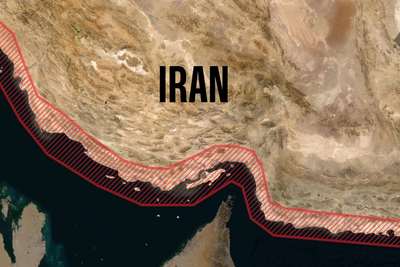
Iran and the United States have received a proposal to end hostilities that could take effect on Monday and reopen the Strait of Hormuz, according to Reuters citing a source familiar with the plan.
The source said a framework had been drawn up by Pakistan and exchanged overnight with both sides. It envisions a two-stage approach, with an immediate ceasefire followed by a broader agreement.
“All elements need to be agreed today,” the source said, adding that the initial understanding would take the form of a memorandum of understanding finalized electronically through Pakistan, described as the sole communication channel in the talks.
According to the source, Pakistan’s army chief, Field Marshal Asim Munir, had been in contact “all night long” with US Vice President JD Vance, special envoy Steve Witkoff and Iranian Foreign Minister Abbas Araghchi.
Under the proposal, a ceasefire would begin immediately and the Strait of Hormuz would reopen, with 15 to 20 days set aside to finalize a wider settlement.
The source said the plan, tentatively called the “Islamabad Accord,” would include a regional framework for the strait and culminate in in-person talks in Islamabad.
Axios reported on Sunday that the United States, Iran and regional mediators were discussing a possible 45-day ceasefire as part of a two-phase deal that could lead to a permanent end to the war.
There was no immediate confirmation from US or Iranian officials.
Iranian officials have previously said Tehran is seeking a permanent ceasefire with guarantees against renewed attacks by the United States and Israel, and have said messages have reached Iran through mediators including Pakistan, Turkey and Egypt.
According to an analysis by IRGC media Tasnim on Monday, a proposed 45-day temporary ceasefire “under the shadow of war” has no place in Iran’s policy, because any pause that does not meet Tehran’s conditions for ending the conflict would only give its enemies time to regroup.
The analysis said Iran has repeatedly rejected temporary truces that leave open the possibility of renewed attack, arguing that Washington and Israel would use such a window to recover from pressure on the battlefield, ease ammunition and strategic strains, and continue to extract military, economic and political advantages while keeping Iran under threat.
It added that, under the framework Iranian officials have set out, the war can end only if there are concrete guarantees against renewed US and Israeli attacks along with other non-negotiable conditions, and said the Strait of Hormuz would not return to its pre-war status.
According to the source who talked to Reuters, a final agreement would be expected to include Iranian commitments not to pursue nuclear weapons in return for sanctions relief and the release of frozen assets.
But two Pakistani sources said Iran had not yet committed despite intensified civilian and military outreach.
“Iran has not responded yet,” one source said, adding that proposals backed by Pakistan, China and the United States for a temporary ceasefire had so far drawn no commitment.
First responders work at the site of a projectile impact, as the US.Israel conflict with Iran continues, in northern Israel, April 5, 2026.
The United States and Iran are discussing the terms of a potential 45-day ceasefire that could open the door to a permanent end to the war, Axios reported Sunday, citing four US, Israeli and regional sources familiar with the talks.
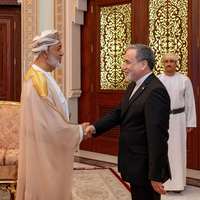
The sources said, the negotiations are taking place through mediators from Pakistan, Egypt and Turkey and also through direct text messages exchanged between US envoy Steve Witkoff and Iran’s Foreign Minister Abbas Araghchi.
The diplomatic push comes as the conflict enters its sixth week.
When the war began in late February, President Donald Trump suggested the campaign could last four to five weeks, though fighting has continued and threats of further escalation have mounted.
According to the sources, mediators are working on a two-phase framework. The first phase would involve a 45-day ceasefire during which negotiations would take place on a permanent end to the conflict. One source said the ceasefire could be extended if more time were needed for talks.
The second phase would focus on reaching a comprehensive agreement to end the war.
Sources said mediators believe that issues such as fully reopening the Strait of Hormuz and resolving the question of Iran’s highly enriched uranium would likely only be addressed as part of a final settlement.
In recent days Trump has warned that the United States could target Iran’s power plants and bridges if Tehran does not reopen the Strait of Hormuz.
Iranian officials have responded defiantly, with the Revolutionary Guards naval command saying the waterway “will never return to normal,” especially for Israel and the United States.
According to Axios, however, diplomatic contacts are continuing behind the scenes.
The outlet cited a US official as saying that Washington has presented Tehran with several proposals in recent days, but Iranian officials have not yet accepted them.
According to another source, the mediators are "highly concerned" that Iran would retaliate to a potential US-Israeli strike on the country's energy infrastructure and cause extensive damage to the region's oil and water facilities.
Iran's Damavand power station, southeast of the capital Tehran
President Donald Trump’s threat to strike Iran’s power plants, if carried out, could trigger widespread economic disruption inside Iran while sending shockwaves through global energy markets.
Trump warned on Sunday that if the Strait of Hormuz is not opened by Tuesday, the United States could target Iran’s power plants and bridges.
Tehran has responded defiantly, warning that the Strait of Hormuz will not return to normal and signaling that it would retaliate if critical infrastructure were attacked.
Iran’s electricity system relies overwhelmingly on thermal power plants, most of them fueled by natural gas. A relatively small number of large facilities supply major urban and industrial centers, including Tehran and other key regions.
Among the most prominent facilities is the Damavand combined-cycle power plant east of Tehran, one of the country’s largest electricity producers and a key supplier to the capital’s metropolitan area.
Other large plants, including Neka on the Caspian coast and Shahid Montazeri near Isfahan, also play central roles in the national grid.
Strikes could temporarily remove large amounts of generating capacity without requiring prolonged bombing campaigns.
Inside Iran
Even limited damage to several major facilities could lead to rolling blackouts across large parts of the country.
Hospitals depend on stable power for life-support equipment and medical systems. Water pumping and treatment facilities require electricity to maintain supply, while telecommunications networks, factories and transport systems all rely on uninterrupted energy.
Iran’s economy is already under pressure from sanctions, high inflation and environmental challenges such as drought. Large-scale power disruptions could deepen these strains, affecting everything from factories to household water supplies.
Because many components used in large power plants must be imported, repairing damaged facilities could also take time, particularly under existing sanctions and trade restrictions.
Regional retaliation
Iran has signaled that it would respond proportionally if its energy infrastructure were attacked.
Regional energy systems present obvious targets. Persian Gulf oil facilities, desalination plants that supply drinking water to major cities and Israeli infrastructure could all become potential objectives in a cycle of reciprocal strikes.
Tehran could also retaliate through allied groups. Hezbollah in Lebanon and the Houthis in Yemen have both demonstrated the ability to target infrastructure and shipping routes, raising the possibility that attacks could spread beyond Iran itself.
Once energy systems become targets, they become shared vulnerabilities across the region.
A dangerous precedent
Targeting power plants also raises legal and ethical questions.
Electricity systems support civilian life, even if they may also serve military needs. International humanitarian law places limits on attacks against civilian infrastructure when the harm to civilians could be disproportionate to military advantage.
Human rights organizations have repeatedly warned that strikes on power systems can have cascading humanitarian effects, particularly in densely populated areas.
The threat to strike Iran’s electricity grid reflects a broader shift in modern conflict, where infrastructure itself increasingly becomes a tool of coercion.
While such attacks may promise short-term strategic leverage, they also risk opening a cycle of infrastructure warfare. Energy systems, water facilities, ports and communications networks could all become targets in a conflict that spreads beyond traditional military objectives.
In a region already marked by volatility, that shift could transform a localized confrontation into a broader and more unpredictable struggle in which societies themselves, rather than armies, become the pressure points of war.
Global impact
At the center of the confrontation remains the Strait of Hormuz, one of the world’s most important maritime chokepoints.
Roughly 20 million barrels of oil pass through the narrow waterway each day—about a fifth of global seaborne oil trade. Any prolonged disruption could push oil prices sharply higher and ripple through global supply chains.
Insurance costs for shipping could rise, tanker traffic could fall and energy-importing economies, particularly in Asia, could face new supply shocks.
Oil prices reflected those fears at the start of the trading week, with crude jumping at market open Monday as the confrontation intensified.
Analysts warn prices could rise significantly further if the conflict escalates or if shipping through the Strait of Hormuz remains disrupted.