First responders work at the site of a projectile impact, as the US.Israel conflict with Iran continues, in northern Israel, April 5, 2026.
The United States and Iran are discussing the terms of a potential 45-day ceasefire that could open the door to a permanent end to the war, Axios reported Sunday, citing four US, Israeli and regional sources familiar with the talks.
The sources said, the negotiations are taking place through mediators from Pakistan, Egypt and Turkey and also through direct text messages exchanged between US envoy Steve Witkoff and Iran’s Foreign Minister Abbas Araghchi.
The diplomatic push comes as the conflict enters its sixth week.
When the war began in late February, President Donald Trump suggested the campaign could last four to five weeks, though fighting has continued and threats of further escalation have mounted.
According to the sources, mediators are working on a two-phase framework. The first phase would involve a 45-day ceasefire during which negotiations would take place on a permanent end to the conflict. One source said the ceasefire could be extended if more time were needed for talks.
The second phase would focus on reaching a comprehensive agreement to end the war.
Sources said mediators believe that issues such as fully reopening the Strait of Hormuz and resolving the question of Iran’s highly enriched uranium would likely only be addressed as part of a final settlement.
In recent days Trump has warned that the United States could target Iran’s power plants and bridges if Tehran does not reopen the Strait of Hormuz.
Iranian officials have responded defiantly, with the Revolutionary Guards naval command saying the waterway “will never return to normal,” especially for Israel and the United States.
According to Axios, however, diplomatic contacts are continuing behind the scenes.
The outlet cited a US official as saying that Washington has presented Tehran with several proposals in recent days, but Iranian officials have not yet accepted them.
According to another source, the mediators are "highly concerned" that Iran would retaliate to a potential US-Israeli strike on the country's energy infrastructure and cause extensive damage to the region's oil and water facilities.
Iran's Damavand power station, southeast of the capital Tehran
President Donald Trump’s threat to strike Iran’s power plants, if carried out, could trigger widespread economic disruption inside Iran while sending shockwaves through global energy markets.
Trump warned on Sunday that if the Strait of Hormuz is not opened by Tuesday, the United States could target Iran’s power plants and bridges.
Tehran has responded defiantly, warning that the Strait of Hormuz will not return to normal and signaling that it would retaliate if critical infrastructure were attacked.
Iran’s electricity system relies overwhelmingly on thermal power plants, most of them fueled by natural gas. A relatively small number of large facilities supply major urban and industrial centers, including Tehran and other key regions.
Among the most prominent facilities is the Damavand combined-cycle power plant east of Tehran, one of the country’s largest electricity producers and a key supplier to the capital’s metropolitan area.
Other large plants, including Neka on the Caspian coast and Shahid Montazeri near Isfahan, also play central roles in the national grid.
Strikes could temporarily remove large amounts of generating capacity without requiring prolonged bombing campaigns.
Inside Iran
Even limited damage to several major facilities could lead to rolling blackouts across large parts of the country.
Hospitals depend on stable power for life-support equipment and medical systems. Water pumping and treatment facilities require electricity to maintain supply, while telecommunications networks, factories and transport systems all rely on uninterrupted energy.
Iran’s economy is already under pressure from sanctions, high inflation and environmental challenges such as drought. Large-scale power disruptions could deepen these strains, affecting everything from factories to household water supplies.
Because many components used in large power plants must be imported, repairing damaged facilities could also take time, particularly under existing sanctions and trade restrictions.
Regional retaliation
Iran has signaled that it would respond proportionally if its energy infrastructure were attacked.
Regional energy systems present obvious targets. Persian Gulf oil facilities, desalination plants that supply drinking water to major cities and Israeli infrastructure could all become potential objectives in a cycle of reciprocal strikes.
Tehran could also retaliate through allied groups. Hezbollah in Lebanon and the Houthis in Yemen have both demonstrated the ability to target infrastructure and shipping routes, raising the possibility that attacks could spread beyond Iran itself.
Once energy systems become targets, they become shared vulnerabilities across the region.
A dangerous precedent
Targeting power plants also raises legal and ethical questions.
Electricity systems support civilian life, even if they may also serve military needs. International humanitarian law places limits on attacks against civilian infrastructure when the harm to civilians could be disproportionate to military advantage.
Human rights organizations have repeatedly warned that strikes on power systems can have cascading humanitarian effects, particularly in densely populated areas.
The threat to strike Iran’s electricity grid reflects a broader shift in modern conflict, where infrastructure itself increasingly becomes a tool of coercion.
While such attacks may promise short-term strategic leverage, they also risk opening a cycle of infrastructure warfare. Energy systems, water facilities, ports and communications networks could all become targets in a conflict that spreads beyond traditional military objectives.
In a region already marked by volatility, that shift could transform a localized confrontation into a broader and more unpredictable struggle in which societies themselves, rather than armies, become the pressure points of war.
Global impact
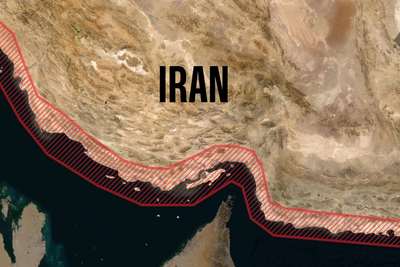
At the center of the confrontation remains the Strait of Hormuz, one of the world’s most important maritime chokepoints.
Roughly 20 million barrels of oil pass through the narrow waterway each day—about a fifth of global seaborne oil trade. Any prolonged disruption could push oil prices sharply higher and ripple through global supply chains.
Insurance costs for shipping could rise, tanker traffic could fall and energy-importing economies, particularly in Asia, could face new supply shocks.
Oil prices reflected those fears at the start of the trading week, with crude jumping at market open Monday as the confrontation intensified.
Analysts warn prices could rise significantly further if the conflict escalates or if shipping through the Strait of Hormuz remains disrupted.
A research centre at Tehran's Shahid Beheshti University is destroyed by US-Israeli strikes, April 4, 2026
In these fateful weeks, strikes thunder against steel plants at Mobarakeh and Khuzestan, sites tied to the Pasteur Institute, vital transport arteries, and facilities of Shahid Beheshti University—formerly Melli University.
They ignite fierce controversy, yet they also summon an unexpected surge of public approval across Iran. Civilians dispatch streams of video clips to Iran International. The clips capture Iranians who voice heartfelt gratitude to President Trump and Israeli Prime Minister Netanyahu for striking at the very sinews of the regime’s repressive machine. These voices of thanks now confront a sterner question: Can the free world justify blows against targets that the regime has cunningly woven into the fabric of civilian life, without exacting a price too heavy for the Iranian people to bear?
For decades, the Islamic Republic has masterfully blurred the frontier between civilian and military domains and has woven them into a single, sinister tapestry. Nowhere does this fusion reveal itself more starkly than at the Pasteur Institute. Long before the present strikes, foreign governments sounded the alarm on proliferation dangers. Japan designated the institute an entity of concern for biological and chemical weapons capabilities in 2007. Britain followed in 2008. U.S. Department of Justice records from 2014 expose illicit transfers of sensitive equipment linked to covert programmes. Research has shown how the regime, by the early 1990s, quietly transplanted elements of its biological weapons research into civilian cover at the Pasteur and Razi Institutes, masquerading under the noble guise of vaccine development and medical science. Open sources may yield no final smoking gun of active weaponisation on the day of the strikes, yet the entrenched pattern of state-directed dual-use work demands unflinching scrutiny of these sites.
The regime carries this dark art far beyond the laboratory walls. In late 2022 and early 2023, the regime unleashed chemical assaults on girls’ schools spanning 91 institutions across 20 provinces, mere months after the Woman, Life, Freedom protests erupted. These attacks poisoned over 1,200 students with toxic gas and sent them to hospitals in agony. UN experts and Amnesty International branded the campaign deliberate. The regime singled out high school teenagers—the very cohort, together with university students, that will form the backbone of any future uprising against tyranny. Its feeble response and contemptuous dismissal of the victims’ suffering as mere “hysteria” only fuel the gravest suspicions of complicity. Such a damning record forbids any illusion that sites like the Pasteur Institute stand as pure civilian sanctuaries. It warns, moreover, that once the present storm passes, the regime may unleash similar horrors against ever wider ranks of Iran’s youth.
Academic halls face the same grim reckoning. Probing investigations by The Globe and Mail and The Guardian unmask how researchers from Sharif University of Technology, Amir Kabir University of Technology, and Isfahan University of Technology—often tied to IRGC channels—pursued advanced training and partnerships at Western seats of learning: the University of Waterloo in Canada, leading Australian institutions, and Britain’s finest, including Southampton, Imperial College London, and Cambridge. Their work has zeroed in on microwave engineering, radio frequency systems, missile guidance, and drone propulsion. When the regime systematically bends scholarly pursuit toward the engines of war, strikes on facilities at Shahid Beheshti University strike not at innocent learning, but at the regime’s own ruthless decision to militarise the academy. The April 3 strike on the university’s Laser and Plasma Research Institute targeted a node long flagged in sanctions and proliferation reporting as part of Iran’s military-relevant nuclear research base. Although open sources do not prove formal subordination to the regime’s weaponisation ecosystem, the overlap of sanctioned infrastructure, dual-use research, and personnel tied to that ecosystem leaves no doubt the site served as a scientific-military enabler.
The regime chooses its infrastructure with the same cold calculation. Steel complexes at Mobarakeh and Khuzestan form vital chokepoints that feed materials straight into missile casings and drone airframes. Fuel depots permit sharper, more discriminating pressure than sweeping assaults on power stations, which risk widespread yet reversible blackouts that weigh heavily on civilian spirits—while many regime strongholds simply switch to backup diesel generators. Reckless blows against the electrical grid would crush the hopes of the very citizens who now cheer these targeted strikes and drive them to doubt whether Trump and Netanyahu truly stand with them in the struggle to cast off their oppressors. History and bitter experience confirm that simply hitting generators or broad power plants fails to deliver decisive results; such strikes prove reversible, psychologically burdensome, and ultimately counterproductive when the goal is to sustain civilian support.
The regime adapts with relentless speed and raises the stakes for every strike. Senior government meetings and high-ranking state and IRGC sessions now convene in hospital basements. Checkpoints wind beneath bridges and into civilian tunnels. Ammunition piles up inside schools and apartment blocks across Tehran and beyond. Repressive units park motorcycles amid playgrounds and stash weapons and gear within residential buildings. These cynical manoeuvres transform everyday civilian spaces into living shields. The IRGC even disguises missile launchers as ordinary civilian trucks and trailers, a tactic analysts long warned would turn legitimate civilian transport into legitimate targets once war begins. In the coming three weeks, special forces may well prove essential to root out these embedded elements from populated zones and restore the precision that air power alone can no longer guarantee—lest the forces choking Iran’s people escape justice.
The regime’s reply comes as no surprise: its chieftains pledge fiercer crackdowns, denser checkpoints, and deadly force against all who dare celebrate the strikes or whisper dissent once the operations ebb. This wave of vengeance may yet merge with Iraqi proxy militias and the chemical agents the regime has already tested—turned once more against the youth who could ignite the final revolt. More than two dozen top architects of repression and proxy warfare still walk free, even as President Trump holds open the door to talks with factions of this same leadership.
No honest appraisal can ignore the stern limits of air power. Strikes may shatter production lines and fracture command chains, yet they rarely succeed in uprooting deeply entrenched machines of control on their own. Today the IRGC rules the Islamic Republic outright and maintains a symbiotic relationship with the Friday prayer imams who stir ideological fire while the Guards command the apparatus of intelligence and terror. The regime forged that machinery under Qassem Soleimani. It hardened the apparatus through the convulsions of 2018 and 2019 and redoubled its grip after the recent 12-day war with Israel. Its leaders have drawn a bleak conclusion: in any grave external assault, survival demands an ISIS-like creed—sacrificing the nation’s wealth as fuel for endurance, clinging to power through illicit petrochemical sales, and coldly converting schools, hospitals, and mosques into human shields for protection and resupply. The clerical-military edifice stands engineered to endure distant strikes; air power alone appears unlikely to bring it down.
History provides a relevant, if imperfect, frame. In Nazi-occupied Europe—across France, the Netherlands, Belgium, and Norway—Allied strikes imposed hardship on civilian populations. These societies contained significant collaborator elements, yet large portions of the population endured such costs because they identified the occupying power as the principal source of oppression. The analogy does not map perfectly onto present conditions; it clarifies a central dynamic: external pressure can align with internal sentiment when a regime loses its claim to represent the nation. Recent heavy US airstrikes on Hashd al-Shaabicolumns at the Shalamcheh border crossing confirm the pattern: entire battalions of Iraqi proxies, already inside Iranian customs zones and awaiting clearance, suffered devastating explosions while attempting to reinforce the regime’s repressive machine. The current outpouring of Iranian gratitude stands out for its clarity and courage; it imposes a sacred duty to strike with the precision that honours this trust and avoids any needless shadow on the cause of liberty.
By its reckless actions and heavy reliance on foreign proxies, the Islamic Republic has already invited the decisive intervention now underway by Israel and the United States on both domestic and international fronts. The allies press forward in this ongoing campaign. Should momentum falter, the regime may survive in a weakened, hollowed-out form — a theocratic shell that operates much like the ISIS caliphate in its final days: sustained by illicit petrochemical sales and extortion, while ruthlessly exploiting civilian sites as human shields and treating national resources as expendable fuel for its own perpetuation. Such a remnant would endanger regional stability. It would threaten energy security through the Strait of Hormuz. It would undermine President Trump’s repeated assurances that help is on the way for the Iranian people’s liberation. And it would imperil the preservation and expansion of the Abraham Accords.
History and hard experience—from other cases in the region and beyond—demonstrate that the only viable course is sustained, precise pressure on the regime’s dual-use infrastructure and proxy networks. Broad, indiscriminate attacks on electrical grids or power plants have repeatedly proven insufficient and often counterproductive; they risk alienating the very population whose confidence history shows must remain intact if the regime is ever to fall. A key measure of risk mitigation lies in keeping the native Iranian population firmly on board. The regime, sensing its grip slipping, now exhibits features of a system that sustains itself in a manner comparable to late-stage insurgent entities. It relies on illicit resource flows, uses civilian infrastructure as cover, and depends on foreign proxy forces. This hollowed yet resilient structure resembles, in operational terms, the final phases of ISIS control, where survival overrides governance and civilian life becomes instrumentalised as protection. The regime stands ready to turn the country into scorched earth—sacrificing national resources and civilian infrastructure—to tighten its hold. If checkpoints, urban choke points, proxy formations, and the remaining senior IRGC command structure continue to function, they will retain the capacity to suppress any renewed anti-regime mobilisation. Only when the regime has significantly degraded or neutralised these instruments of control can the balance between state power and societal action shift meaningfully. The Iranian people themselves, who have largely welcomed these measured strikes, hold the ultimate power to shape their nation’s future. Decades of half-measures have sustained this system. Only sustained clarity and disciplined resolve that preserves their confidence can open a realistic path to genuine change.
Electronic boards showing stock information are pictured at the stock market, in Dubai, United Arab Emirates, November 5, 2020.
The UAE’s recent arrest of IRGC-linked money changers could expand into a broader crackdown on Iran’s shadow financial network, experts said on this week's episode of Eye for Iran podcast.
Earlier this week, UAE authorities detained dozens of money changers tied to financial entities linked to Iran’s Revolutionary Guards, shut down associated companies and closed their offices, sources familiar with the matter told Iran International.
The crackdown followed days of mounting regional tensions and came after other measures targeting Iranian nationals, including visa revocations and tighter travel restrictions through Dubai.
While the initial crackdown appears focused on exchange houses and foreign-currency procurement, the bigger question now is whether Emirati authorities are prepared to move deeper into the far larger ecosystem of front companies and free-zone entities that have long enabled Iran’s oil, petrochemical, metals and procurement networks.
That next step could determine whether this is a structural threat to one of Tehran’s most important offshore financial systems.
“It’s unclear, I think we’ve got to wait and see the extent of the crackdown,” Miad Maleki, former senior US Treasury sanctions strategist and a senior fellow at the Foundation for Defense of Democracies (FDD) said on Eye for Iran podcast.
“If it only has to do with the current crackdown....whether it’s really limited to IRGC's foreign currency procurement activities in Dubai, which is significant or it goes beyond that and they’re going after Iranian connected companies in free zones," said Maleki.
That distinction matters.
For years, Dubai’s exchange houses were only the most visible layer of Iran’s shadow economy. Beneath them sits a much deeper network of shell firms, nominee ownership structures, commodity brokers and free-zone companies often run by third-country nationals.
According to Maleki, many of those firms were designed precisely to hide any direct Iranian fingerprints.
“Usually, the connections to Iran are nothing. There are no Iranian hands or fingerprints over these companies,” he said.
“There are third country nationals, Indians and Pakistani nationals who are running these companies and you have an Emirati national who is only on paper as the owner.”
That architecture has allowed Iranian petrochemical, petroleum and metals businessmen to move funds, settle transactions and procure goods while remaining beyond the immediate reach of sanctions enforcement.
Daniel Roth, research director at United Against Nuclear Iran, said the sophistication of those structures is exactly what makes the next phase of enforcement so consequential.
“It has been a sophisticated operation to the extent that anybody working in just the general compliance AML unit, say in the west wouldn’t necessarily know that this is,” Roth said on Eye for Iran.
He warned that seemingly generic corporate branding can make sanctions-linked entities difficult to detect.
“If I’m going to be a little bit more clever than that, and obviously I’m getting to use a name like some generic name, some boilerplate name.”
Roth added that the opacity of Dubai’s business ecosystem has historically made ownership trails difficult to establish.
“The Dubai environment or the financial system, it is quite opaque.”
That opacity becomes even more important when looking beyond money changers and toward the free-zone corporate structures that may still remain untouched.
Mohammad Machine-Chian, a senior journalist covering economic affairs at Iran International, said the economic stakes of a broader move into shell companies could be enormous.
“So all in all, I think it’s fair to estimate around $8 to maybe $15 billion a year,” he said, referring to the Dubai channel’s role in supplying hard currency.
“In this scenario, they’re expected to lose much more, maybe between at least $15 to $20 billion.”
If authorities expand the crackdown into those deeper layers, the consequences for Tehran could extend far beyond exchange houses.
It would raise the cost of moving oil proceeds, complicate hard-currency conversion, threaten procurement channels, and strike at the free-zone companies that have long helped disguise Iranian-linked exports.
For now, that remains the unanswered question.
The arrests have exposed the first layer of Iran’s financial architecture in Dubai.
Whether the UAE is prepared to absorb the economic and political costs of moving against the deeper shell-company maze may determine whether Tehran’s most important offshore pressure valve is merely disrupted or fundamentally dismantled.
You can watch Eye for Iran on YouTube or listen on any podcast platform of your choosing.
Iran and the United States may prefer an end to the war, but the gap between the minimum terms each side could accept is so wide that a deal remains unlikely for now.
What we are more likely to see instead are continued displays of power intended to shape the terms of any eventual agreement.
For now, negotiations speak the language of war more than diplomacy. When Washington talks about “progress” or “flexibility,” it is not simply describing talks; it is projecting the idea that military pressure is forcing Iran toward an American framework for ending the conflict.
Tehran’s denial of negotiations serves a similar purpose. Rejecting reports of talks helps prevent any existing contacts from being interpreted as evidence of weakness or submission.
Nor will the outcome depend only on Washington and Tehran. Regional actors will seek a role in shaping any settlement, and any country or coalition attempting to reopen the Strait of Hormuz will attach its own demands to the process.
Washington’s rhetoric reflects this struggle over narrative as much as over territory. In the second week of the war, the US defense secretary said that “at every stage, the conditions of the war will be determined by us.” Similar language echoes in Donald Trump’s repeated threats to send Iran “back to the Stone Age.”
Yet military power becomes a real victory only when it can be translated into a political settlement. When US officials speak about “progress in negotiations,” they are attempting to move from delivering blows to defining the outcome.
The very need to emphasize negotiations suggests that this transition remains incomplete. If battlefield superiority had already produced a decisive political result, Washington would have little reason to stress mediation and contacts.
The rhetoric also serves audiences beyond Tehran: financial markets, domestic politics, and allies trying to assess the war’s trajectory.
Israeli objectives further complicate the picture. US officials have acknowledged that Washington’s goals differ from those of Israel, which appears more focused on weakening Iran’s leadership.
Tehran’s definition of victory is also different. For the Islamic Republic, success means preserving the regime while reshaping the balance of power in the Strait of Hormuz.
Admitting negotiations under intense military pressure and under Washington’s conditions would risk appearing politically subordinate. Denial therefore becomes part of the struggle over legitimacy.
At the same time, Iran’s leadership—its military weakened and many senior figures killed—also needs a way out of the conflict. It must keep communication channels open while ensuring those contacts cannot be portrayed as retreat.
Iran’s strategy is therefore less about proving it has won than about preventing the United States from presenting its victory as complete. Tehran may not be able to claim triumph outright, but it seeks to ensure Washington cannot dictate the outcome alone.
Trump’s push for negotiations may also serve another purpose: testing where real power lies inside Iran. Every reported contact, denial, or proposed channel becomes a way of probing who still has the authority to make decisions.
Reports of fractures inside Iran’s leadership since the war began suggest uncertainty over that question. In wartime conditions, however, the Revolutionary Guards appear to hold the strongest position within the system.
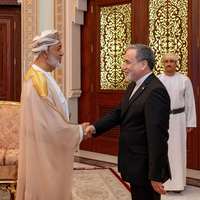
Meanwhile, mediators are beginning to shape the diplomatic landscape. Turkish Foreign Minister Hakan Fidan recently suggested that neither Washington’s nor Tehran’s demands will remain at their current levels, and that the task of mediators is to bring those positions closer to political reality.
But mediators are not neutral actors. Any settlement will also reflect their own interests in the region’s future energy and security order.
These states are caught between two fears: they do not want the Gulf to become a permanent instrument of Iranian pressure, yet they are also wary of confronting Tehran alone if Washington eventually disengages.
For now, mediation reflects less a drive for peace than a shared effort to contain instability.
Diplomacy has become another arena in the struggle to shape the balance of power emerging from the battlefield. As long as both Washington and Tehran continue to claim the upper hand, escalation remains more likely than compromise.
For now, what passes for diplomacy is the management of collapse, not the architecture of peace.
The B1 Bridge near Karaj, Iran, was struck twice by the United States on April 2, 2026.
President Trump’s threat to bomb Iran’s infrastructure and “send it back to the stone ages,” followed by strikes that reportedly included a not-yet-opened bridge, has sparked anger among Iranians at home and abroad.
Iran’s president Masoud Pezeshkian condemned the remarks, writing: “Does threatening to send an entire nation back to the Stone Age mean anything other than a massive war crime? … History is full of those who paid a heavy price for their silence in the face of criminals.”
Ground Forces commander Ali Jahanshahi, warned to send US troops “not to the Stone Age but to pre-Stone Age.”
International reactions have also been critical. Former IAEA chief Mohamed ElBaradei accused Trump and Israel’s prime minister Benjamin Netanyahu of “employing horrific methods” and quipped, “I truly don't know who belongs to the Stone Age!”
Former Swedish prime minister Carl Bildt also weighed in, saying Iranians want “a decent and representative government” not being bombed back to the Stone Age.
‘War crimes’
Anger also surged among ordinary Iranians and diaspora communities—many of whom oppose the government but object strongly to threats against national infrastructure and civilian sites.
Strikes on health facilities such as the Pasteur Institute of Tehran have heightened sensitivities about civilian harm.
Hadi Partovi, a technology investor with Iranian roots, framed the issue in moral terms: “Many Iranians supported your war because your plan was to liberate Iran. Instead, you celebrate sending a civilization to the Stone Age. Great leaders build, not destroy… I weep to see America like this.”
London-based human rights lawyer Shadi Sadr accused Western governments of hypocrisy, arguing that initial justifications under the “Responsibility to Protect” have given way to actions that “send those same people back to the Stone Age, committing war crimes on a massive scale.”
Tehran-based journalist Yashar Soltani wrote: “You first spoke of ‘liberating Iran.’ Then you bombed a school in Minab and took the lives of children. And today you speak of dragging Iran back to the ‘Stone Age’.”
“Iran is a land that, when many nations were still in the Stone Age, was building cities, writing laws, and creating civilization,” he added.
Rift over costs of war
Despite widespread criticism, reactions among Iran’s opposition have not been uniform.
Some supporters of regime change argue that damage to infrastructure, while painful, can ultimately be repaired. They point to historical precedents such as the Iran–Iraq War, when key facilities including oil refineries and export terminals were rebuilt after extensive destruction.
Others contend that the Islamic Republic’s long-term impact on governance, the economy and human capital outweighs the immediate damage caused by military strikes. For them, the focus should remain on political repression, including executions and internet shutdowns.
One social media user questioned priorities: “How can your infrastructure and the Stone Age be your priority before you even mention the executions and internet shutdowns!”
Another argued that reconstruction would follow regime change, writing: “Don’t worry about iron and concrete; worry about a homeland occupied by incompetence… after that, a free Iran will build infrastructure worthy of the name Iran.”
Some commentators have also suggested that Trump’s rhetoric was directed primarily at Iran’s ruling establishment rather than the public. “When he says… ‘we’ll hit you and send you back to the Stone Age,’ he’s talking to the clerics, not the people,” one user wrote.