• العربية
  • فارسی
Brand
  • Iran Insight
  • Politics
  • Economy
  • Analysis
  • Special Report
  • Opinion
  • Podcast
  • Iran Insight
  • Politics
  • Economy
  • Analysis
  • Special Report
  • Opinion
  • Podcast
  • Theme
  • Language
    • العربية
    • فارسی
  • Iran Insight
  • Politics
  • Economy
  • Analysis
  • Special Report
  • Opinion
  • Podcast
All rights reserved for Volant Media UK Limited
volant media logo

Iran adviser says Strait of Hormuz open but warns enemies

Apr 2, 2026, 07:44 GMT+1

A senior adviser to Iran’s supreme leader said on Thursday the Strait of Hormuz would remain open to global shipping but warned it would be closed to enemies of the Iranian people and their regional bases.

“The Strait of Hormuz remains open to the world; however, it will always be closed to the enemies of the Iranian people and their bases in the region,” Ali Akbar Velayati said.

He added that any war would end with Iran’s “prudence and strength,” and not with what he described as the “delusions and wishful thinking of aggressors.”

Most Viewed

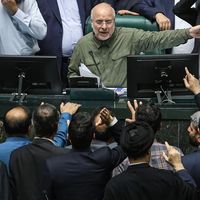
Ghalibaf defends Iran-US talks amid hardline backlash
1
INSIGHT

Ghalibaf defends Iran-US talks amid hardline backlash

2
VOICES FROM IRAN

Bread shortages, soaring prices strain households in Iran, residents say

3
ANALYSIS

From instability to influence: Pakistan’s pivotal role in US-Iran diplomacy

4
ANALYSIS

100 days on: why Iran’s January protests spread across social classes

5

War-hit homeowners feel abandoned as Iran’s reconstruction aid fades

Banner
Banner

Spotlight

  • Is Iran entering its Gorbachev moment?
    INSIGHT

    Is Iran entering its Gorbachev moment?

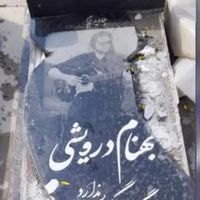
  • Iran crackdown reaches cemeteries as graves of slain protesters defaced
    EXCLUSIVE

    Iran crackdown reaches cemeteries as graves of slain protesters defaced

  • Iran diplomacy wobbles as factions compete to avoid looking soft on US
    INSIGHT

    Iran diplomacy wobbles as factions compete to avoid looking soft on US

  • The politics of pink: how Iran uses cuteness to rebrand violence
    ANALYSIS

    The politics of pink: how Iran uses cuteness to rebrand violence

  • Bread shortages, soaring prices strain households in Iran, residents say
    VOICES FROM IRAN

    Bread shortages, soaring prices strain households in Iran, residents say

  • Ghalibaf defends Iran-US talks amid hardline backlash
    INSIGHT

    Ghalibaf defends Iran-US talks amid hardline backlash

•
•
•

More Stories

Islamic Republic sole legitimate representative of Iranians, foreign ministry says

Apr 2, 2026, 07:28 GMT+1

The Islamic Republic is the only legitimate representative of Iranians and attacks on its leadership have not weakened national resolve, the foreign ministry said.

“The government of Iran is the legitimate representative of the nation, and the assassination of leaders has not disrupted the national will,” said spokesman Esmaeil Baghaei.

He said Iran had received messages through mediators, including Pakistan, but ruled out direct talks with Washington, describing US demands as “maximalist and unreasonable.”

Baghaei added that Washington had entered the conflict due to miscalculation and Israeli influence.

He said Iran would not accept a recurring cycle of war, negotiations and ceasefire, and warned that Tehran would respond forcefully.

US and Israel misjudged Iran military power, spokesman says

Apr 2, 2026, 06:49 GMT+1

Assessments by US and Israeli officials of Iran’s military capacity are incomplete, said an Iranian military spokesman on Thursday and warned against underestimating the country’s capabilities.

The facilities targeted were limited in scale, the spokesman for Khatam al-Anbiya Central Headquarters said, adding that key military production continued elsewhere.

He also warned that those responsible for strikes on Iran would face consequences and said Tehran would carry out stronger and more extensive retaliatory actions.

New pipelines seen as key to cutting Hormuz exposure - FT

Apr 2, 2026, 05:25 GMT+1

New pipelines may be the only way to reduce the Persian Gulf countries’ enduring vulnerability to disruption in the Strait of Hormuz, the Financial Times reported on Thursday, citing officials and industry executives.

Such projects would be expensive, politically complex and take years to complete, according to the report.

Any new pipelines would, over the longer term, likely form part of broader trade routes through which a wider range of goods beyond oil and gas could flow, read the report.

War follows us Iranian scientists far from home

Apr 2, 2026, 04:46 GMT+1
•
Ebrahim Karimi

I have learned as an Iranian-American scientist that war and politics rarely remain outside the laboratory for scholars from the Middle East, following us into our visas, our collaborations and even our ability to concentrate on our work.

To be born a scientist in the Middle East, and particularly in Iran, is to inherit constraints that shape your education, your mobility and often your sense of belonging long before you publish your first paper.

For many students, the obstacles begin early. Access to higher education can depend on geography, religion, ethnicity or family background. Certain research topics are restricted. Background checks are routine. Resources are uneven.

These constraints do not extinguish ambition. Many of the most driven students I have met from the region have worked relentlessly to overcome barriers that would discourage others. A significant number succeed in gaining admission to leading universities abroad, often ranking among the strongest in their cohorts.

But leaving does not mean leaving politics behind.

Students from Iran and other parts of the Middle East frequently undergo additional security screening when applying for visas or research permits in Western countries. Even when governments recognise the vulnerability of marginalised groups, the bureaucratic process can be prolonged and uncertain. Delays disrupt research timelines, funding and family life.

For a graduate student on a fixed stipend, uncertainty is not an abstraction. It is rent, tuition and the ticking clock of a degree.

Once abroad, the challenges evolve rather than disappear entirely. Family, friends and history bind students to their countries of origin. Political upheaval, internet shutdowns, military escalation or widespread protests reverberate across continents.

During periods of unrest, many students feel a moral obligation to support loved ones financially and emotionally. They spend hours each day checking the news, supporting movements on social media, translating information, sending money and making calls at odd hours.

Research suffers. Sleep suffers. Concentration suffers. The entire laboratory feels the impact when one member is under acute stress.

Political manipulation and disinformation can deepen divisions within diaspora communities, leading to heated disputes that further isolate students already under strain.

I have lived through several such cycles as a graduate student and now as a professor. Today I receive daily messages from students—via email, on social media or during meetings—asking for advice. My guidance is simple, though not easy to follow: help where you can, avoid corrosive debates and focus on your research and your long-term goals.

This tension between civic conscience and scientific focus is what I think of as a form of geographic discrimination. Events far beyond one’s control can disrupt internet access, travel, funding and collaboration, affecting thousands of scientists across the globe simply because of where they were born.

The current conflict involving Iran, Israel and the United States illustrates this clearly. Universities and schools have closed. Conferences and workshops have been postponed or cancelled. Laboratories face interruptions, whether from direct damage, security restrictions or the displacement of staff and students.

Even when military actions are described as targeted, research institutes and surrounding civilian infrastructure are not immune to the shock.

Recent strike damage near civilian educational facilities in Iran, which cost the lives of 160 students, and the previous attack on the Weizmann Institute of Science in Israel are reminders that scientific ecosystems are fragile. Rebuilding infrastructure takes years. Rebuilding trust and a sense of safety can take longer.

The long-term cost is not measured only in damaged buildings or delayed experiments. It is measured in lost collaborations, abandoned projects and the quiet departure of talented young people who decide that stability matters more than prestige.

Science thrives on openness, mobility and sustained concentration. War undermines all three.

When we speak about geopolitical conflict, we often focus on borders, strategy and power. We speak less about research teams fractured by forces entirely outside their control.

If we value scientific progress, we must recognise how deeply it depends on the human beings who carry it forward. For many scientists from the Middle East, war is not a distant headline. It is an interruption that follows them into the laboratory and into the quiet hours when research demands clarity of mind.

Protecting science, in times of conflict, means protecting them as well.

Rep. Ansari calls Trump ‘stone age’ remarks 'evil'

Apr 2, 2026, 04:37 GMT+1

US congresswoman Yassamin Ansari sharply criticized President Trump’s comments about Iran following his speech on the war.

Quoting Trump’s remark that the United States could bring Iran “back to the stone ages where they belong,” Ansari wrote on X: “He’s talking about a country of 90 million people. Vile, horrifying, evil.”

Ansari is the first Democratic lawmaker of Iranian origin who represents Arizona in the US House of Representatives.