US says talks with Iran ongoing but warns of continued strikes


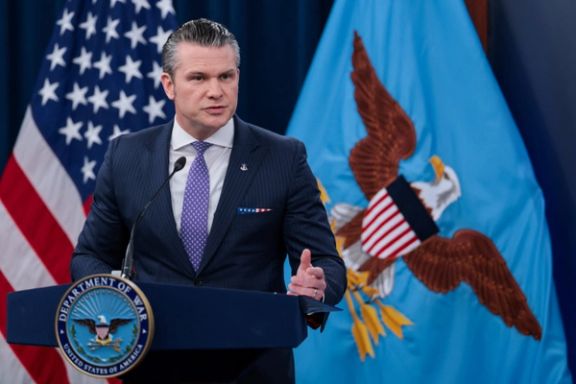
US Defense Secretary Pete Hegseth said on Tuesday talks with Iran are ongoing but stressed military pressure would continue.
“The talks... are very real. They are ongoing... gaining strength,” he said.
“We would much prefer get a deal... we don’t want to have to do more militarily than we have to,” he added, but warned, “we’ll negotiate... in the meantime... with bombs.”


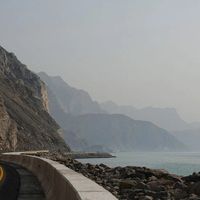
US Defense Secretary Pete Hegseth said more vessels are moving through the Strait of Hormuz and urged other countries to take a greater role in securing the waterway.
“There are many more vessels flowing through today,” Hegseth told reporters, adding the United States has options to ensure the strait remains open.
“It’s not just the United States Navy... the world ought to be prepared to stand up,” he said, calling it an international waterway.
US says pressuring Iran military capabilities, monitoring rivals
Hegseth said US operations have focused on weakening Iran’s naval and missile capabilities, including cruise missiles, drones and financing networks.
“We’ve been focused from the beginning on attrition and defeating those capabilities,” he said.
He added the United States is monitoring support for Iran from countries such as Russia and China, saying, “We know exactly what they’re doing... where necessary, we’re addressing it.”
US defends military strategy, keeps options open
Hegseth said the United States would not rule out any options, including ground forces.
“You can’t fight and win a war if you tell your adversary what you are willing to do,” he said.
He added US objectives include dismantling Iran’s missile program and ensuring it does not obtain a nuclear weapon.
US general says strikes targeting production, missile launches
Chairman of the Joint Chiefs of Staff Dan Caine said US strikes continue to target Iran’s military production and launch capabilities.
“We do continue to see a trend down,” Caine said of Iranian missile and drone launches, though he noted they have not dropped to zero.
He added strikes on Iran’s defense industrial base aim to prevent it from rebuilding capabilities.
Iran’s Foreign Minister Abbas Araghchi warned of what he described as false-flag operations aimed at undermining regional ties during a call with his Turkish counterpart.
The call came a day after NATO intercepted a ballistic missile fired from Iran over Turkey.
Turkey has been playing a mediating role, alongside other regional countries, between the US and Iran to help de-escalate tensions and end the conflict, the statement said.
US Secretary of State Marco Rubio said the United States will ensure the Strait of Hormuz remains open and warned NATO may need to be re-examined after some allies denied airspace and basing access.
“The Strait of Hormuz will be open. When this operation is over, it will be open, and it’ll be open one way or another,” Rubio said in an interview with Al Jazeera.
“It will be open because Iran agrees to abide by international law... Or a coalition of nations... will make sure that it’s open. One way or the other, it’s going to be open,” he added.
Rubio said US objectives include weakening Iran’s military capabilities, including its air force, navy and missile systems, and reducing its ability to produce drones and weapons.
He also criticized NATO allies over restrictions on US operations, saying, “We have countries like Spain... denying us the use of their airspace and bragging about it.”
“If NATO is just about us defending Europe... but them denying us basing rights when we need them, that’s not a very good arrangement,” he said, adding the alliance “is going to have to be re-examined.”
European Council President Antonio Costa said on Tuesday he had a phone call with Iran’s President Masoud Pezeshkian in which he urged de-escalation and the protection of civilians and infrastructure amid the war.
Costa said he called on Iran to stop attacks on countries in the region and stressed the need for all parties to fully respect international law.
He also urged Iran to engage with the United Nations to ensure freedom of navigation in the Strait of Hormuz.
US President Donald Trump urged countries facing jet fuel shortages due to disruption in the Strait of Hormuz to secure supplies themselves, while criticizing the United Kingdom’s stance on the conflict with Iran.
“All of those countries that can’t get jet fuel because of the Strait of Hormuz, like the United Kingdom, which refused to get involved in the decapitation of Iran, I have a suggestion for you: Number 1, buy from the US, we have plenty, and Number 2, build up some delayed courage, go to the Strait, and just TAKE IT,” Trump said on Truth Social.
“You’ll have to start learning how to fight for yourself, the USA won’t be there to help you anymore, just like you weren’t there for us. Iran has been, essentially, decimated. The hard part is done. Go get your own oil!” he added.