US 15-point plan reaches Tehran as Iran publicly scoffs at diplomacy
A billboard displays images of Iranian missiles, amid the US-Israeli conflict with Iran, in Tehran, Iran, March 16, 2026.
Iran has received a US 15-point proposal via Pakistan aimed at opening a path toward a ceasefire, a senior Iranian source told Reuters on Wednesday, though the venue for any talks was still under discussion and Tehran publicly denied that negotiations with Washington had begun.
The reported proposal, described by Pakistani and Egyptian officials speaking to the Associated Press, covers sanctions relief, civilian nuclear cooperation, curbs on Iran’s nuclear and missile programs, stronger International Atomic Energy Agency monitoring and guarantees for shipping through the Strait of Hormuz.
One Egyptian official described it as a “comprehensive deal,” but said it was being treated only as a basis for further talks, adding that Iranian officials remained “very skeptical” of the Trump administration.
That skepticism has been reinforced by Iran’s public messaging. Iran’s ambassador to Pakistan, quoted by state media, said no direct or indirect talks with the United States had taken place, even as he said “friendly countries” were trying to create conditions for dialogue.
An Iranian military spokesman was even more dismissive, mocking Washington’s diplomatic push and saying Iran would never “come to terms” with the United States.
“Do not call your defeat an agreement... Have your internal conflicts reached the point where you are negotiating with yourselves? You will see neither your investments in the region nor the former prices of energy and oil again until you understand this: stability in the region is guaranteed by the strong hand of our armed forces,” said the spokesperson for Iran’s Khatam al-Anbiya Central Headquarters, Ebrahim Zolfaghari.
The mixed signals come after President Donald Trump said the United States was “in negotiations right now” with Iran and suggested Tehran wanted a deal.
Pakistan has emerged as a possible channel, with Prime Minister Shehbaz Sharif saying Islamabad was ready to host talks, while Saudi Arabia’s crown prince also discussed Pakistan’s mediation effort with Sharif, according to the AP report.
According to a senior Iranian talking to Reuters on Wednesday, Turkey had also "helped to end the war and either Turkey or Pakistan was under consideration as the venue for such talks."
Even as diplomacy stirred, the war showed little sign of pausing. The United States was moving about 1,000 troops from the 82nd Airborne Division to the region and deploying two Marine units, while Israel launched new wide-scale strikes and Iran continued attacks on Israel and across the Persian Gulf region.
Israeli officials were described as surprised by the submission of a ceasefire plan, having pushed Trump to keep up military pressure.
Still, major uncertainties remain over who in Iran has the authority to negotiate, what terms Tehran might ultimately accept, and whether any proposal can survive continued fighting.
Reflecting that uncertainty, the Kremlin said on Wednesday it had received no information from Iran about the reported US plan and could not assess the reliability of the reports.
Sweden's Foreign Minister Maria Malmer Stenergard speaks during a press conference
Sweden has stopped issuing and renewing short-term visas for some Iranian embassy staff in Stockholm following the execution of a dual national, in a move its foreign minister said was “just the beginning” of further action.
Foreign Minister Maria Malmer Stenergard said the decision came after Iran executed an Iranian-Swedish citizen accused of spying for Israel, a charge Stockholm and European officials have rejected.
“This is just the beginning,” she said, adding that Sweden was considering additional measures.
Under the new policy, no new short-term visas will be granted to Iranian diplomatic staff and existing permits will not be extended, affecting at least two embassy employees whose residency will expire in May.
The execution has triggered a broader diplomatic response across Europe. The European Union condemned the killing as “brutal and unjustifiable” and expressed concern over what it called a worsening human rights situation and rising use of capital punishment in Iran.
Sweden is also pushing within the EU for sanctions against individuals involved in the judicial process that led to the execution, including potential travel bans across the bloc.
The move comes amid widening diplomatic strains linked to the ongoing conflict involving Iran, the United States and Israel, which has reshaped international engagement with Tehran.
In recent days, Lebanon expelled Iran’s ambassador from Beirut, while Australia said it would temporarily restrict some Iranian visitor visa holders from entering the country.
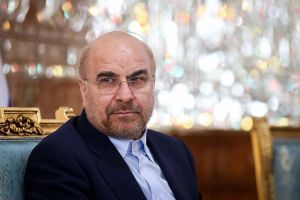
Iran's Parliament Speaker Mohammad Bagher Ghalibaf
Reports that the United States is considering Iran’s parliament speaker as a potential negotiating channel, alongside a proposal for high-level talks, have brought into focus a deeper question: is Washington probing who truly holds power inside Iran?
It suggests that the emergence of Iran Parliament Speaker Mohammad Bagher Ghalibaf’s name is less about his standing among Iranians and more about how Washington is reading power inside the Islamic Republic.
US President Donald Trump on Monday indicated he was in contact with a senior Iranian figure without naming a formal office. “We’re talking to a top person in Iran,” he said, describing the contacts as “very good and productive,” remarks that coincided with his decision to delay strikes on Iran’s energy infrastructure.
Ghalibaf rejected the suggestion outright. “There has been no negotiation with the United States,” he wrote on X, adding that such reports were being circulated “to manipulate financial and oil markets.”
Mohammad Bagher Ghalibaf appears in IRGC uniform while presiding over a parliamentary session, in a symbolic show of support following the Guard’s designation by the EU as a terrorist organization.
A test channel, not a political endorsement
What places Ghalibaf in this discussion is not legitimacy or popularity, but how he fits a specific operational need.
Washington appears to be searching for a test channel – a figure embedded enough within Iran’s power structure to determine whether pressure has shifted internal calculations, yet visible enough to engage without committing to a formal negotiation track.
Ghalibaf fits that role. As parliament speaker with a background spanning the Islamic Revolutionary Guards Corps, the police, and executive administration, he sits at the intersection of political authority and coercive power. Over time, he has also sought to project a more technocratic and managerial image, particularly during election campaigns.
That combination makes him more legible to Washington than figures whose authority is either opaque or purely symbolic.
The central question for US policymakers is not who represents Iran – but who can act. President Masoud Pezeshkian, despite holding elected office, is widely seen as constrained by unelected centers of power. At the same time, killing of former Supreme Leader Ali Khamenei and uncertainty around leadership structures has made it difficult to identify a single decisive authority.
In that environment, Ghalibaf emerges as a practical option. He connects political, military, and administrative networks and is positioned to transmit signals across factions.
Mohammad Bagher Ghalibaf sits in a pilot’s cockpit during a night-time flight, reflecting his background as a former IRGC air force commander.
This also aligns with a broader pattern in Trump’s foreign policy. His approach has consistently favored leaders perceived as decisive and capable of enforcing outcomes.
Engagements with figures such as Abdel Fattah el-Sisi, Vladimir Putin, and Kim Jong Un reflect a preference for authority and deliverability over institutional legitimacy.
Ghalibaf fits that pattern as well – not because of what Trump put as being “respectable,” but because of perceived functionality.
Yet the same factors that make Ghalibaf useful to Washington also define his limits. Iran’s strategic decisions are not delegated to individual officials. Authority remains concentrated within tightly controlled security and leadership circles, with networks aligned with the IRGC shaping core policy direction.
Recent statements from these circles have reinforced resistance to negotiations under pressure, with some going further by demanding concessions rather than offering them.
Mohsen Rezaei, a military adviser to the country’s new Supreme Leader Mojtaba Khamenei, warned that escalation would be met with force. “If they make this mistake [hitting Iran power plants], we will paralyze them and sink them in the Persian Gulf,” he said in a televised interview Monday night.
Rezaei added that “the war will not end until sanctions are lifted, compensation is paid, and legal guarantees are provided that aggression against Iran will not be repeated,” ruling out any ceasefire under current conditions.
Mohammad Bagher Ghalibaf in IRGC uniform during his tenure as commander of the IRGC Air Force in the 1990s.
His remarks feature the broader reality facing any potential channel: even if figures like Ghalibaf are engaged, key security actors continue to set maximalist terms that leave little room for negotiation under pressure.
In that context, even a well-positioned figure like Ghalibaf does not have the authority to shift policy. At most, he can serve as a conduit – not a decision-maker.
Mohammad Bagher Ghalibaf served as Iran’s chief of police from 2000 to 2005.
Public perception
Ghalibaf’s record includes involvement in past crackdowns, including student protests, as well as longstanding corruption allegations. These factors have shaped his image within Iranian society and limit his credibility beyond state structures.
This creates a structural contradiction. A figure who may be functional within the system is not necessarily acceptable outside it.
This gap becomes more pronounced when viewed against recent unrest. Large-scale protests in January, met with a heavy security response in which Ghalibaf was part of the broader system response, showed the depth of public anger toward figures associated with the state.
Mohammad Bagher Ghalibaf made three bids for the presidency of Iran.
Slogans widely heard during those demonstrations – including “This is the final battle, Pahlavi will return” and “Reza Pahlavi is the national slogan” – showed that the opposition is widely rallying around the exiled son of Iran’s last Shah, rejecting any one associated with the Islamic Republic.
In that context, any attempt to elevate a figure such as Ghalibaf – even as a de facto interlocutor or transitional figure – would likely face immediate resistance from a public that has already signaled its rejection of the existing power structure.
Therefore, the focus on Ghalibaf is not that much about elevating him – it appears it is about testing the system around him.
For Washington, he represents a point of access into Iran’s power structure at a moment of uncertainty, a figure through whom pressure can be measured rather than resolved.
On the other hand, for Tehran, the episode highlights how tightly controlled that structure remains, with authority dispersed across networks that limit any individual’s room to act.
This makes the channel inherently narrow. It may reveal whether pressure has altered internal thinking, but it does not resolve the deeper constraints that define decision-making in Iran.
In that sense, the question is not whether Ghalibaf can deliver – but whether anyone within the current structure can.
Remarks by Donald Trump suggesting backchannel contacts with a figure inside Iran’s government have stirred intense political debate in Tehran.
The controversy intensified after reports by Israel’s Channel 11 and Politico suggested that Parliament Speaker Mohammad-Bagher Ghalibaf could be the “pragmatic partner” potentially engaging with the Trump administration.
According to the Politico report, “at least some White House officials see him as someone who could lead Iran and negotiate in a next phase of conflict with the Trump administration.” However, the report added that the White House “is not yet ready to bet on a single figure” and is exploring multiple options.
The mere suggestion that a sitting Iranian parliament speaker could be engaged—formally or informally—with Washington carries significant implications within Iran’s political system, where any perception of independent diplomatic outreach can trigger backlash, particularly during periods of heightened tension.
Iran’s Revolutionary Guards (IRGC)-linked media outlets have strongly rejected claims of secret negotiations.
Fars News Agency described the reports as a “psychological operation,” asserting that the narrative was designed with three goals: “character assassination of Ghalibaf, incitement toward possible physical targeting, and sowing division in the country.”
Similarly, Tasnim News Agency called the reports a “complex enemy design to create the perception of internal tension,” arguing that it aimed to distract political forces from the ongoing conflict.
Even political figures outside Ghalibaf’s immediate camp have echoed concerns about psychological warfare.
Mohammad-Javad Azari-Jahromi, telecommunications minister under President Hassan Rouhani, wrote on X that Trump’s contradictory statements—and media suggestions that Ghalibaf could be conducting secret talks—are intended to “create division within the government and among military forces.”
Hesameddin Ashena, a former media adviser to Rouhani, also warned of “character assassination,” describing the amplification of such claims as effectively “aligning with the enemy.”
Iranian officials have acknowledged indirect communications with Washington through intermediaries. Foreign Minister Abbas Araghchi and spokesman Esmail Baghaei said countries such as Egypt, Turkey, and Pakistan have been exchanging messages between the two sides in recent days in an effort to reduce tensions.
At the same time, Iranian officials stressed that Tehran’s core positions remain unchanged.
These include its stance on the potential closure of the Strait of Hormuz—a position that has contributed to escalating rhetoric, including reported threats by Trump to target Iran’s energy infrastructure and impose a short deadline.
An Iranian official told Al Jazeera that Washington has so far refused to meet Tehran’s key conditions for negotiations: “payment of war reparations and acknowledgment of aggression against Iranian territory.”
Meanwhile, reports from Reuters and The Wall Street Journal suggest that potential talks to end the conflict could take place in Pakistan or Turkey, possibly involving figures such as Steve Witkoff, Jared Kushner, and Vice President J. D. Vance in the coming days.
Despite official denials, the issue has gained traction on social media—particularly among Iranians abroad, given severe internet restrictions inside Iran since the war began.
Thousands of responses to Ghalibaf’s denial of secret talks with Washington on X framed the issue in terms of suspicion and alleged betrayal.
Some users pointed to his absence from certain recent public events, while others noted that his name had not appeared in US bounty lists targeting Iranian officials, interpreting this as suspicious though without evidence.
Others revived longstanding allegations of financial corruption and nepotism raised by hardline factions such as the Paydari Front and supporters of Saeed Jalili—claims that have circulated in Iran’s political rivalries for years.
A hole in a wall, after shrapnel from an intercepted Iranian missile made impact in Sahel Alma, a Christian town north of Beirut, Lebanon, according to Lebanese sources, amid escalating hostilities between Israel and Hezbollah, as the US-Israeli conflict with Iran continues, March 24, 2026
A missile fired from Iran struck Lebanon’s coast hours after Beirut expelled Tehran’s ambassador, sources told Iran International, contradicting earlier reports that it had been intercepted.
The projectile was not intercepted in Lebanese airspace and instead landed on the coast, according to Iran International sources, disputing earlier reporting by Reuters.
The strike came shortly after Lebanon declared Iran’s ambassador to Beirut, Mohammad Reza Raouf Sheibani, persona non grata and ordered his expulsion.
Lebanese Foreign Minister Youssef Raggi said on X that the decision had been formally communicated and that the envoy must leave the country by March 29.
Lebanon also recalled its ambassador from Tehran for consultations, accusing Iran of violating diplomatic norms and established protocols between the two countries.
Israel’s military said that, based on its assessments, a ballistic missile launched from Iran fell in Beirut around the same time as missile attacks targeting Israel. In a statement, the army said the projectile was fired by the “Iranian regime” and landed inside Lebanon.
Diplomats from several Persian Gulf states told Iran International on Tuesday that Tehran was acting like a “runaway horse,” warning that attacking another Arab country crossed a new red line and would not be tolerated.
According to Iran International sources, since the start of the current conflict following US and Israeli strikes in early March, Iran has targeted at least 12 countries in the region. Lebanon is now the 13th.
Reactions to Lebanon’s move were swift. Israel’s President Isaac Herzog called the expulsion a “very courageous decision,” according to Israeli media. Foreign Minister Gideon Sa'ar welcomed the move, describing it as “justified and necessary” in response to Iran’s actions in Lebanon, including its backing of Hezbollah.
Israeli Defense Minister Israel Katz said Israel would continue its attacks against Iranian positions “with full force.”
Hezbollah condemned the decision, warning it could undermine national unity and deepen internal divisions.
Meanwhile, Bloomberg reported on Tuesday that Saudi Arabia and United Arab Emirates are growing increasingly impatient after attacks on energy infrastructure and airports, and could join US- and Israeli-led strikes if Iran targets critical facilities.
Mohammad Bagher Ghalibaf may soon be called a pragmatist. That would be a mistake.
The Rebrand Begins
The pattern is familiar. When Ali Larijani was killed in an Israeli strike last week, some Western coverage quickly reached for the usual labels: practical, moderate, easier to work with than the other men around him. Ghalibaf may now be next. He is now the most senior surviving figure in the Islamic Republic with deep IRGC roots. That puts him in a dangerous and important position. He could become the next major assassination target. He could also be sold as a channel to the West in a system that increasingly looks like an IRGC republic.
At the very moment that reports are emerging of further U.S. military steps around Iran, there are also reports that JD Vance may soon meet senior regime figures. Ghalibaf may be one of them. We do not know whether those reports are true, whether any such contact will take place, or who exactly would be involved. No name has been officially confirmed. But if such a meeting does happen, it may prove clarifying. Vance belongs to the isolationist wing of the Trump administration. A meeting with Ghalibaf or another senior regime figure would give Vance a direct look at who actually holds power in Iran and the kind of men the administration would be dealing with. That could matter if the war deepens and the isolationist wing has to judge the regime more directly.
As I argued in an earlier piece, ambiguity about potential contacts is already doing political work, unsettling senior officials in Iran as they wonder who may be talking to Washington. This piece makes a different point. The same ambiguity can also create openings for the wrong kind of figure to be misread as a moderate or a usable channel.
But Ghalibaf is not a moderate. He is not a hidden reformer. He is not a practical man trapped inside an ideological state. He is a hardliner, corrupt to the bone, who has spent years trying to look like something else.
Ghalibaf has always been ambitious. He once cast himself as the Islamic Republic’s version of a modernising strongman, even using the language of an “Islamic Reza Khan.” He wanted the presidency and, for years, carried himself like Iran’s next president. He ran in four presidential elections after 2005. Around him, that ambition produced a political project: to present Ghalibaf not as just another insider, but as the man who could impose order after Khamenei.
That image was built not only for domestic politics. It was built for foreign eyes too.
How the image was built
Inside the system, Ghalibaf is a hardliner and a loyal product of the regime. Outside that circle, especially in private meetings and foreign-facing conversations, he has long tried to present himself as more modern, more practical, more disciplined, and less ideological than the Islamic Republic’s usual faces. He has tried to market himself as the man who could keep the system in place while making it easier for the outside world to deal with.
By mid-2024, that effort was already visible. On June 10, IranWire reported that people presenting themselves as Ghalibaf’s advisers had spent the previous two weeks approaching European and American diplomats with a clear message: Iran would need a strongman after Khamenei, and that strongman should be Ghalibaf. A European diplomat quoted in the report said they were presenting him as the only figure with the authority and connections to contain factional conflict, restore order, improve Iran’s foreign relations, and “cleanse” the regime of radical elements. The diplomat added that academics and think tank figures in Europe and the United States were also involved, suggesting a broader effort to persuade Western officials that Ghalibaf was not merely a candidate, but a future leader they should start accepting now.
My own sources point in the same direction. One source who was in the room told me that, in a meeting with European politicians in a European capital a few years before the IranWire report, Ghalibaf was plainly marketing himself as the kind of Islamic Republic figure the West could do business with after Khamenei. He was not presenting himself as an opponent of the regime. He was presenting himself as a more polished custodian of it: strong enough to control the system at home, but measured enough to speak to foreign capitals abroad.
There was another reason this belief took root. People familiar with the matter say Ghalibaf saw his absence from U.S. sanctions lists as a form of distinction, as if Washington treated him differently from other senior figures in the Islamic Republic. According to those familiar with the issue, the explanation was technical and legal rather than political, particularly because of his role as speaker of parliament. Even so, the coincidence seems to have had a real political effect. It fed his belief that he was seen abroad as a more acceptable and more usable figure than others in the system.
According to sources inside Iran, this also made parts of the regime suspicious of him. Some in the intelligence apparatus viewed his unsanctioned status with distrust and asked why a man of his seniority had escaped measures imposed on others. His ability to travel to the West only added to that unease. Ghalibaf is a pilot and, according to these sources, has at times flown aircraft himself, including on trips to London to keep his pilot credentials current. That too strengthened the sense among some insiders that he occupied an unusual place in the regime’s external profile.
The Record Behind the Image
But the image collapses the moment one looks at the record.
Ghalibaf is not a reformer held back by the system. He is one of its purest products. He rose through the Revolutionary Guards, the police, the municipality, and the institutions that sustain power in the Islamic Republic. His name is tied not only to hardline politics but also to repression, corruption, and elite hypocrisy.
For many Iranians, his role in repression has made him one of the most hated faces of the Islamic Republic. He is linked not only to the student crackdowns but also to the coercive institutions that kept the system alive through fear and force.
His corruption record is just as important. His years as mayor of Tehran are tied to some of the best-known scandals of that period, including the “astronomical properties” affair and the wider Yas Holding and Isa Sharifi case. These were not minor accusations at the edge of his career. They became part of the political meaning of his name.
The family scandals tell the same story. “Sismoni-gate” was politically damaging not because it was the gravest case against him, but because it exposed the hypocrisy of the ruling class. While the regime preached sacrifice and resistance, members of Ghalibaf’s family were seen shopping in Turkey for baby goods. Later came the embarrassment over his son’s attempt to secure permanent residence in Canada. These episodes confirmed a familiar pattern: the men who speak in the language of endurance often arrange private exits for their own families.
Why the West Should Resist the Script
That is why the current moment matters.
As war and decapitation strikes have thinned the Islamic Republic’s upper ranks, Ghalibaf has moved closer to the centre of power. Reports have suggested that he may have been involved in contacts with Washington. He has publicly denied that. He called the reports fake news and rejected any suggestion that negotiations had taken place.
But the deeper point is not whether he is lying or whether the reports are true in full. The deeper point is that his name surfaced so quickly at all. Whether Ghalibaf is really involved is almost secondary. He is exactly the kind of figure around whom such speculation gathers: a hardliner who has spent years trying to present himself as more practical, more modern, and more internationally legible than the rest of the ruling class. That makes him a natural target for rumour, whether or not he is the actual channel.
And that is the danger.
In moments of crisis, some in the West begin looking again for a hard man they can call practical. Faced with chaos in Tehran, they search for someone tough enough to control the machine but polished enough to sound like a statesman. Ghalibaf has spent years preparing for that role. He has tried to look like the man who could preserve the system while making it more manageable for outsiders.
But he is not a post-Khamenei solution. He is a distilled product of the Khamenei system.
Before anyone in the West starts calling him a pragmatist, it is worth remembering what he really is.
He is one of the clearest expressions of the Islamic Republic, and one of its most hated figures in the eyes of the Iranian public. That public is not a bystander here. Less than three months ago, Iranians gave more than 30,000 lives in resistance to the same oppressive system that Ghalibaf stands at the heart of. Anyone thinking of dealing with him should remember that.
And that is the point to make now, before the rebranding begins.