Two Iranian diplomats apply for asylum in Denmark, Australia
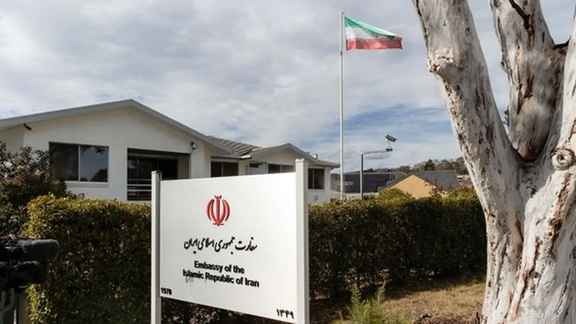
Two diplomats of the Islamic Republic in Denmark and Australia have applied for asylum, informed sources told Iran International.

Two diplomats of the Islamic Republic in Denmark and Australia have applied for asylum, informed sources told Iran International.
Alireza Sohbati, a diplomat at the Iranian embassy in Copenhagen, and Mohammad Pournajaf, a diplomat at the Iranian embassy in Canberra, have submitted asylum requests.
Pournajaf had previously served as the chargé d'affaires of the Islamic Republic’s embassy in Australia.
In recent months, amid escalating political and social developments linked to the Iranian national uprising, other cases of Islamic Republic diplomats abandoning their posts and seeking asylum have also been reported.
Iran International had previously reported that Alireza Jeyrani Hakamabad, a senior diplomat at the Iranian mission to the UN Office in Geneva, had left his workplace and applied for asylum in Switzerland.
Similarly, Gholamreza Derikvand, the chargé d'affaires of the Islamic Republic’s embassy in Austria, applied for asylum in Switzerland after leaving his post.
US President Donald Trump recently called on Islamic Republic diplomats around the world to distance themselves from the government and apply for asylum.




Members of Iran’s women’s national football team, after some delegation members sought asylum abroad, are being kept under tight security during a camp in Kuala Lumpur, Malaysia, Iran International has learned.
Players who arrived on Wednesday are being kept at a hotel where journalists and media are not allowed to enter, according to sources familiar with the situation.
Some players had their mobile phones confiscated, while others were allowed to keep them only under the supervision of security personnel from the Iranian football federation.
Sources told Iran International that pressure on the players began in Tehran and has continued during the team’s camp ahead of the 2026 Asian Championship.
Mohammad Rahman Salari, a member of the Iranian Football Federation’s board, played a central role in enforcing the restrictions and repeatedly collected and inspected the phones of players and staff after the team’s first match.
Fatemeh Bodaghi, who is traveling with the delegation as manager of Iran’s women’s national team, was described by sources as acting on behalf of the federation’s security apparatus under the leadership of federation president Mehdi Taj, monitoring players’ social media accounts and reporting their activities to authorities in Tehran.
Sources also said Zeinab Hosseinzadeh, the team’s physiotherapist, was among those involved in exerting pressure on players.
Farideh Shojaei, the women’s vice president of the football federation, is also accompanying the team. She previously said options for the team’s return to Iran amid US-Israeli airstrikes were being examined, including a possible land route through Turkey, after attempts to return via the United Arab Emirates did not succeed.

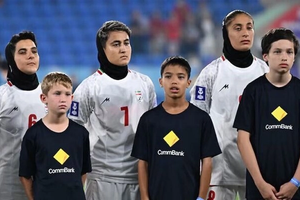
Players face pressure after anthem protest
The crisis surrounding the Iranian women’s national football team began on March 2, when the squad refused to sing the Iranian national anthem before their opening match against South Korea at the AFC Women's Asian Cup in Australia.
This silent protest, occurring shortly after the start of the Iran war and the killing of Supreme Leader Ali Khamenei, was immediately labeled an act of "wartime treason" by the state media. As the team progressed through the group stage, they were reportedly kept under strict surveillance by delegation minders, with international human rights groups and political figures warning that the athletes faced severe punishment, including the possibility of the death penalty, if they were forced to return to Tehran.
Six members of the delegation accepted humanitarian visas and remained in Australia to seek asylum, while the rest of the team boarded their flight to Malaysia.
Iran’s armed forces are facing acute supply shortages, rising desertions and deepening friction between the regular army (Artesh) and the Revolutionary Guards, according to informed sources who described a military system under growing strain as the war intensifies.
Among the most serious allegations are reports that wounded army personnel have been denied assistance by the Islamic Revolutionary Guard Corps (IRGC), that some frontline units are operating with minimal ammunition, food and drinking water, and that attempts to mobilize reserve forces have faltered.
Tensions between army and Revolutionary Guards
One of the sharpest points of friction appears to involve medical support for wounded soldiers.
Sources said that regular army units are suffering significant casualties but that IRGC personnel have refused to transport injured army soldiers to hospitals despite having access to medical facilities.
According to the sources, Revolutionary Guards officials rejected repeated army requests for assistance, citing shortages of ambulances and blood supplies.
The refusals have deepened anger and resentment between personnel from the two forces, adding to long-standing institutional tensions between the regular army (Artesh) and the IRGC.
Frontline shortages
The reported tensions come alongside severe shortages affecting some frontline and field units of the Iranian army.
Sources described worsening logistical conditions that have left troops struggling with limited ammunition and inadequate basic supplies.
In one example cited by the sources, some units were issued only 20 bullets for every two Artesh soldiers, leaving troops with little capacity to respond to potential attacks.
Field units in several areas are also said to be operating without reliable access to drinking water or sufficient food supplies.
The harsh conditions and what some soldiers perceive as neglect by commanders have contributed to what sources described as group desertions, with soldiers leaving bases and seeking refuge in nearby towns.
Strain extends to IRGC units
The strain is not limited to the regular army, according to the sources.
Even within IRGC missile units – traditionally among the best resourced parts of Iran’s military – there have been reports of communications equipment failures and shortages of food and other basic supplies.
Despite these problems, the sources said the command structure appears to be prioritizing the delivery of technical components needed to keep missile systems operational, rather than sending additional food rations or individual equipment to personnel.
The accounts suggest commanders are focusing on maintaining strategic weapons capabilities while troops face deteriorating living conditions.
Reserve mobilization falters
Efforts to widen the manpower pool appear to have run into resistance as well.
Sources said attempts by the Revolutionary Guards to mobilize reserve forces earlier this week produced limited results.
Many of those summoned for service reportedly did not report to military centers. Instead, some individuals used the situation to leave their areas and assist family members in moving toward border regions in hopes of leaving the country.
The crew of the Iranian naval vessel IRIS Bushehr, an auxiliary ship accompanying the warship IRIS Dena that was attacked by the United States, fled to Sri Lanka after abandoning the ship, a former Sri Lankan navy official told Iran International.
The vessel, belonging to the Iranian army’s navy, docked at the port of Colombo on March 5 due to what was described as an “engine technical malfunction,” carrying 208 naval personnel, including 53 officers and 84 officer cadets.
The former official said the ship’s request for humanitarian assistance due to engine trouble was in fact a cover for a “mass escape” by the crew.
He said the crew’s decision stemmed from a deep collapse of their trust in the Islamic Republic amid the current war in Iran.
The source added that the sinking of the destroyer Dena by a US submarine further intensified this distrust, saying the incident showed the crew that the Islamic Republic does not care about the lives and fate of its forces.
The source said all 208 sailors had left the ship, were transferred to the Welisara naval base and are now under the supervision of Sri Lankan security authorities.
An Iranian sailor who was killed when the warship Dena was struck by the US near Sri Lanka had called his father shortly beforehand, saying American forces had issued two warnings for the crew to abandon the vessel, a source close to the family told Iran International.
The Iranian navy warship's commander refused to allow the crew to abandon Dena despite the imminent threat, the source added.
The sailor’s father said some crew members argued with the commander, and the 32 crew members who survived were mainly sailors who managed to escape on lifeboats, according to the source.
A US submarine torpedoed Dena in the Indian Ocean on Wednesday, about 19 nautical miles from the southern Sri Lankan port of Galle, killing dozens of sailors and significantly expanding Washington’s campaign against Iran’s naval forces.
The sinking of the Dena — described by US War Secretary Pete Hegseth as a “quiet death” — marked the first time since World War II that the United States had torpedoed an enemy warship, underscoring the widening geographic reach of the conflict with Iran.
An internal US State Department cable dated March 6 seen by Reuters said the US urged Sri Lankan authorities not to return the 32 surviving sailors from Dena and the 208 sailors Sri Lanka rescued from naval auxiliary ship IRIS Booshehr.
Attacks struck sports venues, police stations and a waterpark in Tehran used by Iran’s security forces for self-protection, Iran International has learned.
An anti-narcotics police station, another police station in southeastern Tehran and the municipal building of Tehran’s District 18 were among the locations.
Others included Be’sat and Azadi stadiums, the Shahidan Esmaili and Eskandarlou sports complexes as well as Azadegan water park.