• العربية
  • فارسی
Brand
  • Iran Insight
  • Politics
  • Economy
  • Analysis
  • Special Report
  • Opinion
  • Podcast
  • Iran Insight
  • Politics
  • Economy
  • Analysis
  • Special Report
  • Opinion
  • Podcast
  • Theme
  • Language
    • العربية
    • فارسی
  • Iran Insight
  • Politics
  • Economy
  • Analysis
  • Special Report
  • Opinion
  • Podcast
All rights reserved for Volant Media UK Limited
volant media logo

Soaring prices push medicine beyond Iranians' reach

Saba Heidarkhani
Saba Heidarkhani

Iran International

Apr 30, 2026, 03:53 GMT+1
Staff prepare prescriptions at a pharmacy in Tehran, April 23, 2026

Medicine prices in Iran have surged sharply in recent weeks, with some drugs rising by as much as 380%, according to reports received by Iran International, as the country grapples with soaring inflation, a collapsing currency and worsening wartime disruption.
The price hikes come as many Iranians are already struggling to cope with an economic crisis driven by years of sanctions, mismanagement and, more recently, war-related damage and supply-chain disruptions.

The US dollar passed 1.81 million rials on Iran’s open market on Wednesday, rising nearly 8% in a single day as the country’s economic crisis worsened under the strain of maritime blockade, stalled diplomacy and mounting pressure on households.

A review of around 200 medicines found that prices in many cases have more than doubled since before Nowruz, while pharmacists say the prices of roughly 5,000 branded medicines have changed and more are being added to the list each day.

The surge comes as the US blockade of Iranian ports and the Strait of Hormuz remains in place despite President Donald Trump’s extension of a temporary ceasefire with Tehran earlier this month.

At the same time, citizens in several cities have repeatedly reported shortages of essential medicines in pharmacies, including drugs for heart disease, neurological disorders and cancer treatment.

In one case, a citizen reported shortages of the anti-clotting drug Plavix at Tehran’s Rajaei Hospital, a major cardiac centre.

Among the steepest increases were insulin products. Iranian-made insulin pens rose from around 205,000 tomans to 640,000 tomans, while foreign brands such as NovoMix and NovoRapid jumped from around 240,000 tomans to 890,000 tomans.

One doctor told Iran International the cost of medicine has risen so sharply that many patients can no longer afford their prescriptions.

A citizen whose wife has metastatic cancer said a drug she needs every 21 days rose from 65 million tomans for the first doses to 114 million tomans by the fifth.

Prices for some specialist and cancer drugs have also climbed sharply. Filgrastim, used by chemotherapy patients to stimulate white blood cell production, more than doubled in price from around 3.2 million tomans to 6.6 million.

Rituximab, used to treat lymphoma, blood cancers and autoimmune diseases, rose by more than 11%, while trastuzumab, a targeted breast cancer treatment, saw a similar increase—adding millions of tomans to already high treatment costs.

Deputy Health Minister Ali Jafarian on April 28 denied a “serious” medicine shortage and attributed rising prices to inflation and fluctuations in the free-market exchange rate.

He said the removal of subsidized currency in 1404 had worsened the impact, with around 70% of medicine production costs now tied to the open market exchange rate.

Prices of general medicines and over-the-counter products have also risen sharply. A review of 46 common medicines found average price increases of around 90%, while some supplements and vitamins rose by more than 200%.

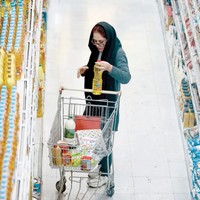
Many Iranians say the shortages and soaring costs are forcing impossible choices, with one report suggesting treatment for even a simple cold can now cost around two million tomans.

Most Viewed

Even state media sounds alarm as Iran’s economy sinks
1
INSIGHT

Even state media sounds alarm as Iran’s economy sinks

2

Iran currency plunges as dollar crosses 1.8 million in open market

3
TEHRAN INSIDER

Tehran is pricing out its daughters

4
INSIGHT

Iran taps reserves again as inflation bites and layoffs mount

5
EXCLUSIVE

Iran football chief with IRGC ties sent back by Canada after arrival

Banner
Banner

Spotlight

  • As Tehran praises Moscow, critics ask where Russia was
    INSIGHT

    As Tehran praises Moscow, critics ask where Russia was

  • Even state media sounds alarm as Iran’s economy sinks
    INSIGHT

    Even state media sounds alarm as Iran’s economy sinks

  • Iran football chief with IRGC ties sent back by Canada after arrival
    EXCLUSIVE

    Iran football chief with IRGC ties sent back by Canada after arrival

  • Tehran is pricing out its daughters
    TEHRAN INSIDER

    Tehran is pricing out its daughters

  • Three layers of mistrust behind US-Iran deadlock
    ANALYSIS

    Three layers of mistrust behind US-Iran deadlock

  • Iran’s water crisis: Mafia or destruction by design?
    SPECIAL REPORT

    Iran’s water crisis: Mafia or destruction by design?

•
•
•

More Stories

Even state media sounds alarm as Iran’s economy sinks

Apr 29, 2026, 17:43 GMT+1
•
Behrouz Turani

Iran’s worsening economic crisis is drawing unusually blunt warnings from state media and establishment voices as war, inflation and shortages squeeze households and expose the limits of the government’s response.

The exchange rate for the US dollar surged again on Wednesday, April 29, climbing above 1.8 million rials.

That same day in downtown Tehran, a single fried egg cost one million rials and a hamburger five million—prices that bite hard in a city where minimum wage is just above 200 million rials a month.

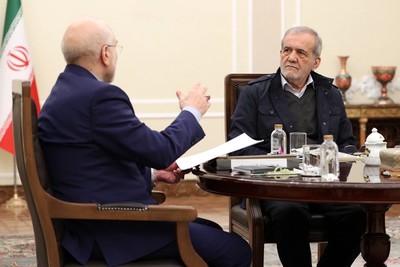
“What is going on in this country, Mr. Pezeshkian?” state TV anchor Elmira Sharifi asked earlier this week, staring directly into the camera after reporting that many Iranians can no longer afford basic staples such as rice, sugar, cooking oil, fruit, dairy products and medicine.

Had President Masoud Pezeshkian been watching, he might have been startled. State television rarely addresses officials so directly or publicly demands accountability. But he is no stranger to criticism. Calls for answers have become routine in the press and on social media.

His administration inherited a vast budget deficit, soaring inflation, high unemployment and widespread shortages. Those problems have worsened since he took office in 2024.

The war with the United States and Israel has deepened the crisis further, accelerating shortages, disrupting supply chains and giving officials a ready explanation for an economy already in freefall.

The government’s efforts to ease the burden have been criticized as too slow and too limited. Its latest initiative asks some supermarkets to offer goods on credit to customers unable to pay in cash.

Fars News, an outlet affiliated with the Revolutionary Guards, reported Tuesday that the government had approved a plan allowing households receiving cash subsidies to buy goods on credit, with repayments deducted from future handouts if necessary.

The measure, it said, is intended to support livelihoods and offset the economic consequences of the war.

But the plan has obvious flaws. It applies only to supermarkets that volunteer to participate, and repayments must be made within two months. More importantly, the monthly subsidy itself—worth less than seven dollars per person—barely buys anything.

Iran tried something similar in the 1980s during the war with Iraq, when cooperatives linked to ministries and the armed forces allowed employees to buy goods on credit and repay through their salaries.

Combined with ration books and coupons for essentials sold well below market rates, the system was widely seen as more efficient and more trusted than today’s improvised measures.

The announcement of the new credit-shopping plan came the same day Ettela’at, one of Iran’s oldest newspapers, issued a stark warning.

“The outlook of the war is entirely uncertain, and officials must focus on people’s livelihoods,” the paper wrote.

It warned that surging prices for essential goods, combined with unemployment, labor-market stagnation and the collapse of large parts of the production and supply chain due to war damage, had created a severe crisis.

The nationwide internet shutdown has only made matters worse.

Ettela’at said the current ceasefire could hold, collapse into a limited maritime conflict or spiral into broader war. In any scenario, it wrote, ensuring the livelihood, education, healthcare, security, food, housing, transportation, utilities, communications and employment of nearly 90 million Iranians requires urgent planning and “round-the-clock management.”

The paper concluded with another warning: the government may soon need special economic programs for wartime conditions, and they must be implemented urgently.

Whether officials can move fast enough—or govern coherently enough—to avert deeper hardship is another question.

Iran currency plunges as dollar crosses 1.8 million in open market

Apr 29, 2026, 11:58 GMT+1

The US dollar passed 1.81 million rials on Iran’s open market on Wednesday, rising nearly 8% in a single day as the country’s economic crisis worsened under the strain of maritime blockade, stalled diplomacy and mounting pressure on households.

The euro and pound also rose sharply, passing 2.11 million rials and 2.44 million rials respectively.

Gold prices also climbed, with the benchmark Emami coin rising about 6.5% to 2.08 billion rials, reflecting the role of gold as a common store of value for Iranians trying to protect savings from the rial’s decline.

The surge comes as the US blockade of Iranian ports and the Strait of Hormuz remains in place despite President Donald Trump’s extension of a temporary ceasefire with Tehran earlier this month.

Uncertainty over talks between the United States and the Islamic Republic, Tehran’s insistence on continuing its nuclear and missile programs and support for regional proxy groups, and the broader “neither war nor peace” situation have pushed Iran’s economy into deeper instability.

On April 28, Trump said the Islamic Republic had informed Washington it was in a “state of collapse” and wanted the Strait of Hormuz blockade lifted.

The Wall Street Journal later reported, citing US officials, that Trump had instructed aides to prepare for a prolonged maritime blockade of Iran.

Women look at the gold shop display in Tehran Bazaar, amid a ceasefire between US and Iran, in Tehran, Iran, April 21, 2026.
100%
Women look at the gold shop display in Tehran Bazaar, amid a ceasefire between US and Iran, in Tehran, Iran, April 21, 2026.

Cost of living crisis

The currency jump follows weeks of worsening economic conditions inside Iran.

On February 25, the final working day before the war began, the dollar stood at 1.65 million rials, while the euro was 1.95 million rials and the pound 2.24 million rials on the open market.

Messages sent to Iran International in recent days point to a rapidly worsening cost-of-living crisis, with viewers reporting mass layoffs, sharp increases in basic goods, medicine shortages, food insecurity and inability to pay rent.

The internet blackout, now stretching into its third month, has added to the pressure by cutting off online work, e-commerce and freelance income for millions of Iranians.

One doctor told Iran International that many patients could no longer afford their medicines, citing seizure medication whose price had more than tripled even though some patients need two or three packs each month.

A former worker at the Marvdasht petrochemical complex in Fars province said he had been laid off two months ago and had reduced his household’s food consumption to one meal a day.

“I have an elderly mother and I am ashamed before her,” he said. “We have reduced our food consumption to one meal a day, and even that is barely manageable. I have not paid rent either. The situation is terrible.”

On Tuesday, Mohsen Zanganeh, a member of parliament’s planning and budget committee, said in a post on X that during a meeting on Iran’s postwar economic situation, one participant warned that the country was nearing “economic collapse.”

Tehran is pricing out its daughters

Apr 29, 2026, 10:52 GMT+1
•
Tehran Insider

For years, young women from smaller cities and conservative families came to Tehran to study, to work, to breathe. Now, one by one, many are being forced to leave.

Tehran was supposed to be the place they came to become themselves. They got into top universities, found jobs, rented apartments with friends. They built lives of their own.

A year of protests, crackdown, war and economic freefall has pushed many to the edge. Rent has become unbearable. Prices rise by the week. Incomes shrink or disappear.

They are moving back to Ahvaz, Shiraz or smaller towns to live with family because they can no longer afford Tehran. Some are selling gold, burning through savings or taking on debt to survive one more month.

The economic shock is everywhere. Layoffs are spreading. Inflation has become so absurd that people joke shops are still full of staples only because no one can afford to buy them.

And now, as if rent and inflation were not enough, officials say metro, bus and taxi fares in Tehran will rise next month. Even getting to work is becoming more expensive.

But for many, the deepest blow has come from the collapse of the digital economy.

In Iran, Instagram was more than an app. It was a shopfront, a beauty salon, a classroom, an office. Women sold clothes and cosmetics, baked cakes, offered beauty services, taught languages, designed logos and built small businesses from their bedrooms.

Now much of that is gone.

After two months of severe internet disruption, many online businesses are collapsing. Orders have dried up. Customers cannot browse. Payments are delayed. Messages do not go through.

Sima, 29, runs a small online clothing business. For two months, she says, almost no orders have come in. What once brought in modest but steady income has become little more than an empty storefront.

Baran, 34, says she feels herself “going crazy” thinking about how quickly life is unraveling. The online business she spent years building is collapsing. Payments are not arriving. Debts are piling up.

“Everything we built with blood and tears is going up in smoke,” she says.

What makes it worse is the silence. No explanation. No accountability. Just the slow erasure of livelihoods.

Layoffs in offices and shops appear to hit women especially hard. There are no official figures, but many suspect employers assume men are more likely to be breadwinners. A woman, they think, may have a husband or father to fall back on. But many do not—or do not want to.

For many women here, losing a job is not just losing income. It can mean losing a home, a city and a life they fought hard to build.

And so Tehran is losing its daughters.

The city that once offered escape is beginning to send them back. Back to smaller cities. Back to family homes. Back to dependence—often to the lives they thought they had escaped for good.

Iran taps reserves again as inflation bites and layoffs mount

Apr 29, 2026, 05:37 GMT+1
•
Maryam Sinaiee

Iran has once again tapped its sovereign wealth reserves to fund essential imports, highlighting the growing strain on an economy battered by war, inflation and a rapidly weakening currency.

The government’s Task Force for Food Security and Livelihood Improvement has announced that $1 billion from the National Development Fund will be allocated to import basic goods such as sugar, rice, red meat and animal feed.

The move comes alongside a broader policy decision to continue subsidizing critical imports despite earlier plans to scale back such support. It marks the second time in two years that the fund has been tapped to finance basic imports.

With reserves estimated at around $40 billion, the fund is also expected to help rebuild war-damaged industries, particularly steel and petrochemicals, highlighting growing tension over how these resources are prioritized.

'Nothing left'

For many Iranians, the strain is already becoming unbearable.

Nader, a 42-year-old film industry worker, says he has had no income since January, when nationwide protests began, and is preparing to leave his rental home and move his family into his parents’ house in another city.

“My wife’s job depended on the internet, and she has also become unemployed,” he said. “We’ve been using our savings to pay rent, but if we continue, soon nothing will be left for food or unexpected medical costs.”

The move also marks a reversal of the government’s “economic surgery” policy introduced four months ago to reduce import subsidies.

Authorities are continuing to allocate foreign currency for essential imports, including medicine, at a fixed rate of 285,000 rials per dollar—far below the open market rate of around 1.5 million rials and the official budget rate of 1.23 million.

This subsidized rate, capped at $3.5 billion, applies to critical imports including wheat, medicine, pharmaceutical ingredients and infant formula. An additional $1 billion withdrawal from the sovereign fund is intended to help sustain the system.

Wheat and infant formula remain among the government’s highest priorities because shortages or price spikes could trigger social unrest.

Rising unemployment

To offset price hikes after January’s subsidy cuts on goods such as meat and cooking oil, the government reintroduced a coupon system. Around 87 million people receive monthly vouchers, initially worth 10 million rials per person.

But their value has eroded rapidly. Monthly inflation reached 7 percent and point-to-point inflation 67 percent, according to the Central Bank of Iran.

Consumers describe day-to-day increases in the price of basic goods and services, leaving many households unable to afford necessities.

At the same time, unemployment is rising sharply.

War-related damage to steel and petrochemical hubs has left large numbers of workers jobless and disrupted downstream industries reliant on their output.

'Hunger riots'

A prolonged internet shutdown—now entering its third month—has compounded the crisis, cutting off income for millions. Tourism has also collapsed, with airlines, hotels and local accommodations nearly inactive after the 12-day war.

Even those who remain employed are watching their purchasing power evaporate.

At a petrochemical terminals company in Bandar Mahshahr, representatives for more than 700 workers say their employer has eliminated overtime, holiday pay and welfare benefits.

In some cases, workers report wages have gone unpaid for months.

Political analyst Shahin Shahid-Saless warned that a naval blockade restricting oil exports and broader trade could accelerate the currency’s collapse.

“The national currency will collapse at an unbelievable speed, and hyperinflation will emerge,” he said. “The country may face … hunger riots whose intensity and violence would be entirely different from [recent] movements.”

Two months offline: Iran blackout drives losses, access splits

Apr 28, 2026, 10:27 GMT+1

Iran’s near-total shutdown of the global internet reached 60 days on Tuesday, worsening economic losses and social restrictions as authorities move toward selective access for some users and businesses.

The disruption began on February 28, when connectivity dropped to a fraction of normal levels, according to internet monitor NetBlocks, and has since stretched beyond 1,400 hours with most users still cut off from global networks.

“Exactly two months ago … Iran was thrown into digital darkness,” NetBlocks said, adding that the blackout persists despite limited access for privileged users.

Economic toll runs into billions

The prolonged shutdown has transformed internet access into a central economic constraint, with losses mounting daily across multiple sectors.

Estimates from Iran’s Chamber of Commerce put direct daily losses at $30 million to $40 million, rising to as much as $70 million to $80 million when indirect damage is included.

Communications Minister Sattar Hashemi said the disruption threatens the livelihoods of around 10 million people, pointing to the limited resilience of small and medium-sized businesses.

Zahra Behrouz-Azar, the vice president for women’s affairs, said women have been disproportionately affected, with many home-based businesses collapsing under the restrictions.

“The situation has been imposed like a war, and the damages should not be denied,” Behrouz-Azar said.

Export industries have also struggled to maintain international ties. Mohsen Ehtesham, the head of the National Saffron Council, said exporters had been unable to communicate with overseas clients or verify deliveries.

“Exporters … did not have direct contact with international customers, and could not even confirm whether goods had reached them,” Ehtesham said.

He added the disruption had weakened Iran’s position in global markets and created openings for competitors such as Afghanistan to rebrand Iranian saffron.

  • Iran's digital economy battered by prolonged blackout

    Iran's digital economy battered by prolonged blackout

Social divide deepens

Beyond the economic toll, the blackout has disrupted daily life and created a two-tier digital reality, with limited access granted to select groups while most Iranians remain cut off.

For younger Iranians, internet access is closely tied to education, identity and social life, making the prolonged shutdown especially disruptive.

The divide has become more visible as officials and connected groups retain access to platforms blocked for ordinary users, while much of the population remains limited to a heavily restricted domestic network.

Human rights groups say such shutdowns restrict access to information, make abuses harder to document and leave crises with less public scrutiny.

  • Internet Pro or Censor Pro? Iran rolls out a new service

    Internet Pro or Censor Pro? Iran rolls out a new service

‘Internet Pro’ plan fuels backlash

Authorities have sought to manage the fallout by advancing a plan known as “Internet Pro,” which would restore global access for selected businesses and institutions while most users remain restricted.

Under the proposal, approved by the Supreme National Security Council, commercial entities and later industrial sectors would receive connectivity, with officials presenting the measure as a form of economic management.

Government spokesperson Fatemeh Mohajerani said the plan aims to preserve business operations during crisis conditions.

“Internet Pro has been approved … to preserve business connections under current conditions,” Mohajerani said, adding that access could change once authorities declare conditions normal.

The plan has drawn criticism for formalizing unequal access. Reports show some connections have been sold at high prices, prompting judiciary chief Gholamhossein Mohseni Ejei to order an investigation, describing the practice as discriminatory and potentially corrupt.

100%

Civil society pushes back

Professional groups and users have rejected the proposal, describing it as institutionalizing digital inequality.

The Iranian Graphic Designers Guild said it would not submit a collective request for the service, calling it an insult and reaffirming the need for open and affordable access for all.

  • Iran nurses reject special internet access amid blackout

    Iran nurses reject special internet access amid blackout

Public reaction has echoed that stance, with users criticizing the idea of restricting connectivity in an era where digital access underpins economic survival and social participation.

At the same time, authorities are accelerating development of domestic infrastructure aimed at reducing reliance on the global internet, a move critics view as enabling longer-term isolation.