• العربية
  • فارسی
Brand
  • Iran Insight
  • Politics
  • Economy
  • Analysis
  • Special Report
  • Opinion
  • Podcast
  • Iran Insight
  • Politics
  • Economy
  • Analysis
  • Special Report
  • Opinion
  • Podcast
  • Theme
  • Language
    • العربية
    • فارسی
  • Iran Insight
  • Politics
  • Economy
  • Analysis
  • Special Report
  • Opinion
  • Podcast
All rights reserved for Volant Media UK Limited
volant media logo
ANALYSIS

China refiners turn to Russian oil as Iran faces rising uncertainty

Dalga Khatinoglu
Dalga Khatinoglu

Oil, gas and Iran economic analyst

Feb 25, 2026, 15:30 GMT+0
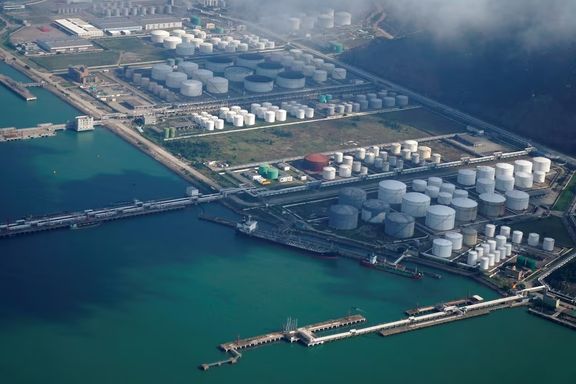
Oil and gas tanks are seen at an oil warehouse at a port in Zhuhai, China, in this file photo from October 2018.

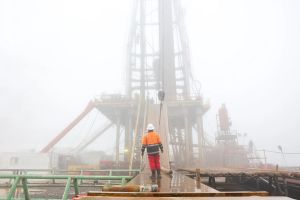
China appears to be replacing disrupted Venezuelan oil shipments with Russian crude rather than Iranian barrels, despite steeper discounts being offered by Tehran.

According to data from commodity intelligence firm Kpler, shared with Iran International, China discharged an average of 1.138 million barrels per day (bpd) of Iranian crude at its ports this month—about 115,000 bpd less than in January.

Separate figures from Vortexa show China’s average purchases of Iranian oil this month at just over 1.03 million bpd, marking a decline of 220,000 bpd compared to January.

The disruption began after a maritime blockade targeting Venezuelan tankers and the subsequent detention of former Venezuelan president Nicolás Maduro by US commandos on January 3. As a result, deliveries to China were interrupted, and several Chinese refiners halted purchases altogether.

Vortexa data indicate that Russian crude rapidly filled the gap.

This month, China received an average of 2.07 million bpd of Russian oil—370,000 bpd more than in January. Notably, this increase roughly matches Venezuela’s average crude exports to China in 2025, suggesting a near one-for-one replacement.

Supply stability

The decline in Iranian crude discharges comes despite a Reuters report that Iran is offering even deeper discounts than Russia to Chinese refiners.

This month, Iran is reportedly offering discounts of $10–11 per barrel on its light crude, roughly 16% of benchmark value and similar to those offered by Russia.

Beijing appears to be prioritizing supply stability over marginal price differences, given Iran’s uncertain trajectory amid ongoing nuclear talks and the shadow of potential military escalation.

China’s small independent refiners, known as “teapots,” are effectively the only buyers of sanctioned Iranian and Venezuelan oil. A significant portion of Russia’s crude exports to China also flows to these refiners.

Teapot refiners account for about 20% of China’s total crude imports. Unlike major state-owned refiners, they lack extensive strategic storage capacity and cannot rely on large internal inventories or risk sudden feedstock disruptions such as the Venezuelan supply shock.

Under these circumstances, relying on a relatively more stable supplier such as Russia appears commercially safer than depending on Iran, which currently faces escalating threats of potential US military action.

Almost a fifth of global crude consumption is transported through the Straits of Hormuz that Tehran has repeatedly warned it could close in the event of a major war.

Last year, the United States sanctioned 84% of the tankers involved in lifting Iranian crude. Those measures contributed to a decline in Iranian deliveries to Chinese refiners in the final months of the year, with the downward trend continuing into the current year.

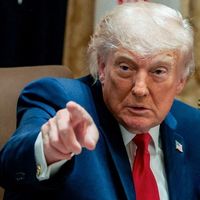
US President Donald Trump signed an executive order imposing a 25% tariff on Iran’s trading partners in 2026. Given that China exported over $400 billion worth of goods to the United States in 2025, it is unlikely that Beijing will ignore the potential impact of such tariff threats.

Most Viewed

Iran negotiators ordered to return after internal rift over Islamabad talks
1
EXCLUSIVE

Iran negotiators ordered to return after internal rift over Islamabad talks

2
INSIGHT

Iran's digital economy battered by prolonged blackout

3
ANALYSIS

US blockade enters murky phase as tankers spoof signals and buyers hesitate

4
ANALYSIS

Why the $100 billion Hormuz toll revenue is a myth

5

US tightens financial squeeze on Iran, warns banks over oil money flows

Banner
Banner

Spotlight

  • Hardliners push Hormuz ‘red line’ as US blockade tests Iran’s leverage
    INSIGHT

    Hardliners push Hormuz ‘red line’ as US blockade tests Iran’s leverage

  • Ideology may be fading in Iran, but not in Kashmir's ‘Mini Iran'
    INSIGHT

    Ideology may be fading in Iran, but not in Kashmir's ‘Mini Iran'

  • War damage amounts to $3,000 per Iranian, with blockade set to add to losses
    INSIGHT

    War damage amounts to $3,000 per Iranian, with blockade set to add to losses

  • Why the $100 billion Hormuz toll revenue is a myth
    ANALYSIS

    Why the $100 billion Hormuz toll revenue is a myth

  • US blockade targets Iran oil boom amid regional disruption
    ANALYSIS

    US blockade targets Iran oil boom amid regional disruption

  • Iran's digital economy battered by prolonged blackout
    INSIGHT

    Iran's digital economy battered by prolonged blackout

•
•
•

More Stories

Mexico cartel violence revives scrutiny of Iran-linked networks

Feb 24, 2026, 22:48 GMT+0
•
Negar Mojtahedi

As cartel violence grips Mexico following the death of a top drug lord, experts tell Iran International that Tehran-linked networks may be intertwined with the criminal infrastructure fueling instability across Latin America.

Mexico has deployed thousands of troops after coordinated attacks erupted across at least 20 states following the capture and death of Jalisco New Generation Cartel leader Nemesio Oseguera Cervantes, known as El Mencho.

Cartel fighters torched buses, blocked highways and clashed with security forces, leaving dozens dead and forcing authorities to mobilize nearly 10,000 personnel nationwide.

While Mexican authorities frame the unrest as cartel retaliation, security analysts say such episodes increasingly unfold within transnational financial and trafficking systems that extend beyond Mexico’s borders.

Those systems, experts say, have in some cases intersected with Iranian state-aligned networks operating across Latin America.

“There are longstanding money-laundering and trafficking ecosystems that connect Latin American cartels, Iranian state-aligned networks and global criminal finance,” investigative journalist Sam Cooper told Iran International, pointing to investigations linking criminal actors across North and South America.

Cooper who has reported extensively on transnational crime networks, stressed that the overlap does not necessarily indicate direct operational control by Tehran but reflects a convergence of interests that could benefit the theocracy during periods of heightened pressure.

“I don’t have direct evidence their intelligence would be involved in helping the cartel push back against the Mexican state,” he said. “But I do believe the Iranian regime would want to benefit very much from increasing the turmoil in Mexico.”

That convergence of illicit finance and geopolitical competition, analysts say, creates openings for states such as Iran to benefit from regional instability.

'Using gangs for dirty work'

Janatan Sayeh, a research analyst at the Foundation for Defense of Democracies focusing on Iranian domestic affairs and regional influence, says the Islamic Republic frequently advances its objectives indirectly, relying on criminal intermediaries to apply pressure while maintaining distance from direct involvement.

“They (Iran's regime) do try to put a distance between themselves and their criminal activity, specifically assassination plots,” Sayeh said.

“They increasingly are leveraging some of these gangs… to do the dirty work.”

In 2011, US officials brought charges against several Iranian nationals, among them an operative linked to the IRGC’s Quds Force, accusing them of conspiring to kill the Saudi ambassador in Washington.

According to prosecutors, an Iranian go-between attempted to recruit individuals he thought were tied to a Mexican drug cartel, offering payment to carry out the assassination. Those individuals were in fact informants working with the U.S. Drug Enforcement Administration.

Networks built over decades

Analysts say many of these connections trace back decades, particularly through Iran’s partnership with the former regime ruling Venezuela, where Iranian Revolutionary Guard-aligned networks and Hezbollah operatives established financial and logistical footholds across Latin America.

Hezbollah has long been accused of running criminal networks in Latin America that intersect with drug trafficking routes.

Dr. Walid Phares, a foreign policy expert and co-secretary general of the Transatlantic Parliamentary Group, said those networks gradually expanded into cooperation with organized crime groups operating across the region.

“Hezbollah had developed relationships with similar organizations across Latin America, Brazil, Colombia and beyond,” Phares told Iran International. “But the most important move backed by the IRGC regime was in Mexico.”

According to Phares, access to trafficking routes and financial channels allowed militant networks to expand their reach while maintaining distance through criminal intermediaries.

“The most important goal of Hezbollah was to get to the American and Mexican border,” he said.

Sayeh added that Western governments often mischaracterize the threat by treating such activity solely as organized crime rather than part of a broader national security challenge.

“A lot of times when it comes to the Americas it is treated as a criminal network, not a terrorism network,” he said. “Accurately labeling it for what it is important.”

For Iran, "it’s anything anti-America… and cartel is just part of that paradigm for them,” he said. “Any opportunity just to exert pressure on the Americas.”

Crime and geopolitics converge

Security specialists say the convergence has blurred the traditional boundary between criminal activity and geopolitical competition. Networks originally built for sanctions evasion and terror financing can also serve narcotics trafficking and money laundering operations, creating mutually beneficial partnerships between state and non-state actors.

For Cooper, the violence unfolding in Mexico reflects a wider shift in the Western Hemisphere, where criminal networks increasingly intersect with global rivalries.

“The level of threats that are emerging in the Western Hemisphere right now,” he said, “is all related.”

As Mexico contains the fallout from El Mencho’s death, experts say the episode highlights how criminal violence in the Western Hemisphere increasingly intersects with global power competition.

Officials in Tehran claim calm, but prices tell another story

Feb 24, 2026, 17:55 GMT+0
•
Behrouz Turani

Escalating talk of war and renewed negotiations with the United States may dominate Iran’s political discourse, but the country’s deepening economic crisis is more present in daily life—and no less likely to drive change.

On Monday morning, the Foreign Ministry spokesman said foreign reporters visiting the country had described life as “normal.” Yet the indicators and daily experience suggest anything but.

That same day, Iranian media quoted bakers and grocers saying that wealthier customers now leave deposits so poorer families can take bread or meat without paying upfront.

Even newspapers aligned with Supreme Leader Ali Khamenei have begun issuing warnings.

Khorassan cautioned about the political consequences of rising bread prices. Days earlier, Kayhan warned that bread riots were likely if the government proceeds with plans to raise prices for a fourth time since President Massoud Pezeshkian took office in mid-2024.

Tabnak, the news site run by former IRGC commander Mohsen Rezaei, reported that a family of two or three now needs about twice the government’s worst-case estimate from last year to cover food costs.

Overall inflation is above 60 percent and expected to approach 70 percent this month. Donya-ye Eqtesad warned that food inflation could soon reach triple-digit levels. The Statistical Center of Iran reports inflation for agricultural goods above 85 percent and services above 45 percent.

Across the media spectrum, analysts point to three converging pressures: soaring food prices, wages that lag behind living costs and persistent instability in financial markets.

Specialized economic outlets report continued volatility in the foreign-exchange market. The dollar has fluctuated between 1,630,000 and 1,650,000 rials in recent days, with traders describing “high-tension anticipation” tied to uncertainty over negotiations with the United States and broader political risks.

Gold prices have surged alongside the currency, placing what has long been a traditional hedge against instability beyond the reach of most households.

The stock market has added to public unease. Shargh reported sharp index declines and heavy retail capital flight on Monday, with roughly 110 trillion rials ($680 million) exiting the market in 24 hours.

Analysts cite eroding confidence in government support policies and fears that regional tensions could spill into the domestic economy. Even those with no investments feel the consequences, as market instability feeds broader uncertainty.

Ramadan, traditionally marked by nightly gatherings and shared meals, has taken on a subdued tone. Many families can no longer afford customary foods, let alone host guests.

State television and pro-government social-media accounts now openly discuss the possibility of war. Online documentaries show Tehran’s pre–New Year shopping districts open but nearly empty. Instead of browsing, residents exchange advice on stockpiling food, fuel and clothing — precautions in case the capital comes under attack.

If this is normal, it is a fragile and increasingly costly version of it.

Iranian students burn flag, signaling a new phase in state–society rupture

Feb 23, 2026, 16:42 GMT+0
•
Bozorgmehr Sharafedin

The burning of the Islamic Republic’s national flag at three Iranian universities on Monday marks a new high in the widening rift between the state and the people.

The protest movement in Iran is no longer selectively targeting certain symbols of the Islamic Republic, as it did a decade ago. It is now challenging everything the Islamic Republic represents, including the national flag itself.

One of the earliest visible signs of this state–society rupture emerged in 2009, when students set fire to a picture of Ayatollah Ruhollah Khomeini, the founder of the 1979 revolution. At the time, the act carried such a strong taboo that opposition leaders suggested it may have been carried out by elements linked to the security apparatus, to justify a harsher crackdown.

Around the same period, protesters began chanting, “No to Gaza, no to Lebanon — my life for Iran,” signaling a shift from the Islamic Republic’s transnational ideology to a national identity.

The Islamic Republic used such displays of anger in state television propaganda to discredit protesters. Yet each time, segments of the public repeated those same acts, turning them into a new front of defiance against the state.

The display of anger soon expanded to other figures — including Supreme Leader Ali Khamenei and senior military figures such as Qassem Soleimani, who had embodied Iran’s extraterritorial revolutionary doctrine. Their posters were torn down and burned.

Public anger even targeted the Iranian national football team during the 2022 World Cup in Qatar, which many Iranians viewed not as a sporting body but as a representative of the Islamic Republic.

For many Iranians, the team’s international presence risked strengthening the state’s domestic legitimacy and global image at a time when large segments of society felt alienated from it.

The depth of the rupture became particularly visible in June 2025, when many Iranians celebrated the killing of senior Iranian military commanders by Israel. Military figures who had been presented as national heroes four decades earlier during the war with Iraq were no longer seen as representing the nation.

Burning the flag

Students at several universities across Iran held protest gatherings for the third consecutive day on Monday, chanting slogans against Khamenei and in support of opposition figure exiled Prince Reza Pahlavi.

During their gatherings, they trampled on the flag of the Islamic Republic and threw it toward members of the security forces. At Amir Kabir University, the University of Tehran, and Alzahra University, students set fire to the flag of the Islamic Republic.

The Islamic Republic tried in 1979 to combine national and Islamic elements in the national flag. It took the colors from the pre-revolutionary flag and added the phrase “Allahu Akbar” in the middle. This is the part that many Iranians no longer sympathize with.

Iranian law does not explicitly criminalize insulting the national flag, but it can be prosecuted since the flag bears the word “Allah,” and insulting Islamic sanctities can carry severe penalties.

100%

Islamic Republic vs. Iran

The Islamic Republic, from the very beginning, showed little regard for many Iranian traditions and symbols. Khomeini and his allies attempted to replace Nowruz new year celebration with Islamic religious holidays, although they failed.

While the White House displays a Nowruz table with traditional symbols, Khamenei delivers his New Year speeches without a Nowruz table, with only a photo of Khomeini in the background.

For many years after the revolution, the national flag did not occupy a central place in the Islamic Republic’s public symbolism.

That changed during the presidency of Mahmoud Ahmadinejad, when the display of flags expanded dramatically. Streets were lined with newly produced, brightly colored flags, and government buildings were draped in national symbols.

This was not merely aesthetic. It coincided with the intensification of the nuclear dispute and a deliberate effort to frame Iran’s nuclear program as a matter of national sovereignty rather than regime ideology.

After the 12-day war with Israel in June, the Islamic Republic made an attempt to revive some of the national symbols and motifs. At one point, after emerging from his war bunker, Khamenei asked a religious singer to perform a song about Iran. But many Iranians saw that as too little, too late.

The resentment between segments of society and the state — and anything associated with it — has intensified to such a degree that long-standing religious funeral traditions have begun to fade. The customary recitation of the Quran at funeral ceremonies has been largely replaced by music, and mourners have even danced at the funerals of victims killed during the January protests.

In certain instances, people have worn white instead of black, returning not to pre-revolutionary but pre-Islamic traditions.


Capital flees Tehran stocks as geopolitical tensions deepen

Feb 23, 2026, 10:32 GMT+0

More than 107.8 trillion rials ($66.5 million) in retail money has flowed out of the Tehran Stock Exchange over the past 24 trading sessions, marking what analysts describe as a new phase of liquidity depletion driven by political uncertainty and fears of military escalation.

Habib Arian, a financial markets researcher, told ISNA that the turning point came on January 10, when the market recorded a one-day outflow of 9.4 trillion rials ($5.8 million), at the time the largest daily withdrawal of individual investor funds.

“That figure showed that trust, which is the main asset of the capital market, had been severely damaged,” Arian said. “From that date onward, the Tehran bourse was unable to return to an upward trajectory, and any positive fluctuation was treated as an opportunity to exit.”

Outflows accelerated as regional tensions intensified and speculation grew about possible confrontation between Iran and the United States. Investors shifted from equities toward hard assets, pushing the dollar above 1,650,000 rials and lifting domestic gold prices sharply.

Between January 8 and February 21, the benchmark index fell 15% while 18-karat gold posted a 33% gain over the same period. Gold-backed funds rose 20%, emerging as a primary destination for funds exiting equities.

“The 48-percentage-point gap between gold and stocks explains why liquidity has fled the equity market at this speed,” Arian said.

  • Money is leaving Iran faster as oil income falls and uncertainty mounts

    Money is leaving Iran faster as oil income falls and uncertainty mounts

  • Why Iran cannot stop its currency collapse

    Why Iran cannot stop its currency collapse

On Sunday alone, the main index shed another 103,000 points as retail investors pulled out a record 41 trillion rials ($25.3 million) in a single session, according to market data cited by Arian.

He said the stock market was now driven less by economic fundamentals than by political risk. “The market today is more hostage to political tensions and the shadow of war than to economic variables,” he said. “As long as geopolitical risks do not subside, the capital market will continue to act as a liquidity provider for parallel markets.”

The exodus from stocks comes against a backdrop of broader capital flight and currency weakness.

The rial has traded around 1,630,000 per dollar in recent weeks, reflecting deep structural imbalances, falling oil income and persistent uncertainty surrounding nuclear negotiations and sanctions.

Analysts say the combination of record outflows from equities, a weakening currency and rising demand for gold shows the erosion of investor confidence, with households and businesses seeking safety in assets perceived as more resilient to inflation and political shocks.

“In this environment, investors prefer the security of gold and dollar-linked assets to the ambiguity of shares,” Arian said.

Why war may no longer be the worst outcome for Tehran

Feb 21, 2026, 17:56 GMT+0

Tehran’s posture increasingly resembles that of an embattled state that sees greater odds of survival in confrontation than in compromise—one that views a decisive clash not as catastrophe, but as a potential turning point.

On February 17, while Iran’s negotiating team was in Geneva for talks with US officials, Supreme Leader Ali Khamenei delivered a stark warning in Tehran that reflected this outlook. “More dangerous than the aircraft carrier,” he said, “is the weapon that can send it to the bottom of the sea.”

Soon afterward, state-aligned poets circulated verses declaring, “We are leaves; we will fall at the foot of this tree.”

Even as negotiations continue abroad, the establishment in Tehran—and its media ecosystem—appear intent on preparing the public not for agreement, but for the possibility of a decisive confrontation.

Continue reading