• العربية
  • فارسی
Brand
  • Iran Insight
  • Politics
  • Economy
  • Analysis
  • Special Report
  • Opinion
  • Podcast
  • Iran Insight
  • Politics
  • Economy
  • Analysis
  • Special Report
  • Opinion
  • Podcast
  • Theme
  • Language
    • العربية
    • فارسی
  • Iran Insight
  • Politics
  • Economy
  • Analysis
  • Special Report
  • Opinion
  • Podcast
All rights reserved for Volant Media UK Limited
volant media logo
ANALYSIS

What Iran stands to lose after Maduro's downfall

Umud Shokri
Umud Shokri

Senior visiting fellow, George Mason University

Jan 6, 2026, 17:35 GMT+0
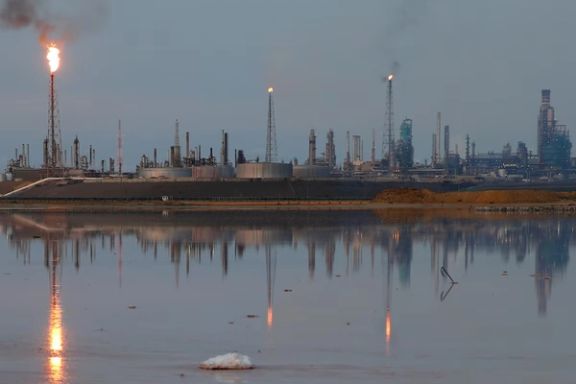
A general view of the Amuay refinery complex which belongs to the Venezuelan state oil company PDVSA in Punto Fijo, Venezuela November 17, 2016.

As Venezuela enters a volatile phase following Nicolas Maduro’s capture by US forces over the weekend, Iran’s strategic investments in the country’s oil refining sector are facing a sudden and uncertain reckoning.

For more than a decade, these ventures—framed as anti-imperialist cooperation between two heavily sanctioned states—served political purposes rather than a commercial ones.

They were designed to circumvent US sanctions, monetize Venezuela’s vast but increasingly stranded crude reserves and provide mutual economic lifelines. Their durability depended on the survival of aligned governments in Tehran and Caracas.

With the interim government in Caracas signaling openness to cooperation with the United States, Iran’s refinery projects risk shifting from sheltered geopolitical instruments into exposed financial and legal liabilities.

The fallout threatens not only Tehran’s assets in Venezuela but also the broader sanctions-evasion model it has refined across multiple theaters.

A partnership shaped by sanctions

Iran’s partnership with Venezuela dates back to the early 2000s, when Presidents Hugo Chavez and Mahmoud Ahmadinejad forged a relationship rooted in shared defiance of Washington.

Cooperation deepened after 2019, as US sanctions tightened around both Iran’s oil exports and Venezuela’s state oil company, PDVSA.

Iran supplied refinery repairs, gasoline and blending components; Venezuela provided heavy crude, gold, and other commodities. Both sides relied on barter, opaque contracts and shadow shipping networks to bypass sanctions.

The model kept fuel flowing during acute shortages and helped stabilize the Maduro government—but it never made commercial sense. Venezuela’s refineries never recovered, while Iran absorbed mounting costs in exchange for political influence.

A refinery bet that never paid

Iran’s most visible engagement centered on El Palito, a 140,000-barrel-per-day refinery in Carabobo state.

In May 2022, Tehran signed a $117 million contract with PDVSA to repair and expand the facility. By mid-2024, Iranian officials said they had managed to restore operations to about 20 percent of capacity amid chronic power outages and feedstock shortages.

Iran’s oil minister hailed El Palito as the country’s first overseas-built refinery—a symbolic milestone with limited operational impact.

Tehran’s ambitions extended to the much larger Paraguana Refining Center, Venezuela’s flagship complex with a nominal capacity of nearly one million barrels per day.

Leaked documents from late 2025 suggest Iran-linked projects in Venezuela totaled roughly $4.7 billion, underscoring the scale of exposure and the opacity surrounding the relationship.

These refinery projects formed part of a broader sanctions-evasion ecosystem.

In 2020 alone, Iran shipped more than 1.5 million barrels of gasoline and blending components to Venezuela. In return, Venezuelan oil revenues were routed through informal channels that helped sustain Tehran’s finances.

Beyond oil

The relationship also spilled into security and finance.

Iran supplied drones and military equipment, while Washington accused Hezbollah-linked networks operating in Venezuela of laundering money tied to senior Maduro-era officials.

Maduro’s removal marks a structural break: Iran’s Venezuelan strategy relied on political shielding rather than enforceable contracts.

President Trump has framed the transition as a US-led stabilization effort, with American energy companies positioning themselves to reenter Venezuela’s oil sector.

Interim authorities face pressure to attract foreign investment, secure sanctions relief, and manage the potential return of millions of displaced Venezuelans—priorities that favor transparency and compliance over legacy deals with sanctioned partners.

A sudden exposure

A US-aligned Venezuelan government is likely to reopen PDVSA contracts signed under Maduro, subjecting them to audits and potential legal challenges.

Iranian-linked assets could face expropriation or forced divestment, while Tehran’s unpaid claims for refinery work—estimated in the hundreds of millions of dollars—remain unsecured.

Operational displacement is likely to follow.

Western firms operating under renewed licensing frameworks are expected to take priority in refinery rehabilitation, sidelining Iranian equipment that engineers have often criticized as less reliable.

Tehran has pursued similar arrangements in Syria and elsewhere, using infrastructure repairs and energy swaps to monetize sanctioned oil and project influence.

A Venezuelan unraveling could embolden US enforcement against these networks, disrupting a system that has sustained an estimated 1.5 to 2 million barrels per day of Iranian oil exports despite sanctions.

Oil markets add another layer of consequence.

Venezuela holds the world’s largest proven reserves but produces less than one million barrels per day. A successful rehabilitation could lift output substantially over the coming years, increasing global supply and weakening Iran’s leverage within OPEC+.

Iran’s refinery investments in Venezuela were ultimately a wager on political alignment over economic fundamentals. With that alignment now broken, assets once protected by geopolitics are newly exposed to scrutiny, displacement, and loss.

For Venezuela, disentangling from Iran offers a path toward recovery under external oversight.

For Iran, it offers a harsher lesson: sanctions-evasion strategies endure only as long as political shields hold. When they collapse, the workaround becomes the liability.

Most Viewed

Iran negotiators ordered to return after internal rift over Islamabad talks
1
EXCLUSIVE

Iran negotiators ordered to return after internal rift over Islamabad talks

2
ANALYSIS

US blockade enters murky phase as tankers spoof signals and buyers hesitate

3
ANALYSIS

Why the $100 billion Hormuz toll revenue is a myth

4

US tightens financial squeeze on Iran, warns banks over oil money flows

5
ANALYSIS

US blockade targets Iran oil boom amid regional disruption

Banner
Banner

Spotlight

  • Hardliners push Hormuz ‘red line’ as US blockade tests Iran’s leverage
    INSIGHT

    Hardliners push Hormuz ‘red line’ as US blockade tests Iran’s leverage

  • Ideology may be fading in Iran, but not in Kashmir's ‘Mini Iran'
    INSIGHT

    Ideology may be fading in Iran, but not in Kashmir's ‘Mini Iran'

  • War damage amounts to $3,000 per Iranian, with blockade set to add to losses
    INSIGHT

    War damage amounts to $3,000 per Iranian, with blockade set to add to losses

  • Why the $100 billion Hormuz toll revenue is a myth
    ANALYSIS

    Why the $100 billion Hormuz toll revenue is a myth

  • US blockade targets Iran oil boom amid regional disruption
    ANALYSIS

    US blockade targets Iran oil boom amid regional disruption

  • Iran's digital economy battered by prolonged blackout
    INSIGHT

    Iran's digital economy battered by prolonged blackout

•
•
•

More Stories

Iran’s protest chants: From reformist appeals to calls for monarchy

Jan 6, 2026, 12:34 GMT+0
•
Amirhadi Anvari

Iran’s protest slogans have shifted from reformist appeals in the 2009 Green Movement demonstrations to more prominent calls to reinstate the monarchy ousted in 1979, transcending Tehran's central political divide between moderates and hardliners.

In 2009, many demonstrators chanted “Ya Hossein, Mir Hossein,” framing a disputed election in the language of religious legitimacy and around Mir Hossein Mousavi, a former prime minister who challenged the vote.

Sixteen years later, clips shared from protests and even holiday gatherings at historic sites suggest that a growing share of Iran’s street chant repertoire has shifted to a different refrain: “This is the last battle, Pahlavi will return.”

What unfolded in between is not only a story of anger, but of the shrinking space for incremental change and a widening search for alternatives.

How Iran moved from religiously-coded reformist slogans to open monarchist nostalgia matters for one reason above all: it suggests a growing segment of society no longer sees the Islamic Republic’s internal factions as a route to change.

Act 1: A political arena that emptied out

Official election statistics are contested, but they still illustrate a trend. Authorities said roughly 40 million of about 46 million eligible voters participated in 2009, around 85%.

By July 2024, officialdom reported about 24.5 million votes from roughly 61.5 million eligible voters, or around 40%.

That arithmetic captures a political migration. The eligible population rose by roughly 15.5 million, while the number of participants fell by roughly the same amount.

Whatever the true figures, the gap points to a public that increasingly signals disengagement through abstention – and, at times, through the street.

Act 2: two wings keeping the system airborne

In the mid-2000s, Iran’s political class was roughly divided into a left-right dichotomy. Around that time, a newer identity – “principlism” – took shape on the right.

Khamenei, in public remarks, cast the competing camps as two wings with which the country could fly, a formulation many critics interpret as meaning the system could manage dissent by channeling it into controlled competition. He also set out red lines which political discourse could not challenge: the constitution and the revolution’s principles.

After the 2009 protests, Khamenei went further, recalling that he had once told then-President Mohammad Khatami that if a “leftist current” did not exist, he would need to create one – so that the overall outcome of factional rivalry would remain “moderate.”

The subtext was hard to miss: the contest was permissible, even useful, so long as it protected the system.

Act 3: Mousavi – an internal feud packaged as salvation

Many Iranians voted for reformist president Mohammed Khatami in 1997 hoping for gradual reform. Eight years later, that hope had thinned. Officially, Khatami won with more than 20 million votes in 1997; by 2005, the combined votes for the three main reformist candidates were about 10 million.

In 2009, the system’s left wing returned with Mousavi, known as “Imam Khomeini’s prime minister” from the early post-revolution years. The title stemmed from Khomeini’s direct intervention to keep Mousavi in office during the 1980s, overruling then-president Ali Khamenei, who opposed his appointment.

For many young protesters, the title meant little. For the leadership, it carried older grudges. Mousavi’s return also carried a signal to Khamenei: an internal rivalry was being revived.

Mousavi, however, largely kept his challenge inside the Islamic Republic’s own vocabulary – careful not to turn an internal power struggle into a repudiation of the system.

During the campaign he expressed nostalgia for the 1980s – often remembered for repression and war – calling it the revolution’s “golden era.”

In his first statement after the disputed vote, he cast the crisis not as a failure of the Islamic Republic itself but as a betrayal by “untrustworthy custodians” who had weakened what he called “the sacred system,” and he described the protest movement as rooted in religious teachings and devotion to the prophet’s family.

That tension – between street anger and a leadership that still sought legitimacy within the system – was visible even then.

The death of a young female protestor, Neda Agha-Soltan in June 2009 was captured on video and blamed by activists on security forces, becoming a global symbol of the crackdown. But the movement’s most prominent political figure continued to welcome the return of religious slogans as proof of fidelity to the 1979 revolution.

Act 4: The purple interlude

In 2013, Hassan Rouhani entered with a promise to ease sanctions and improve livelihoods. Reformist figures backed him. The Obama administration reached the nuclear deal with Rouhani’s government, and the economy saw partial, temporary relief.

But the political bargain remained fragile. The government pursued subsidy reforms, and in 2016 Donald Trump’s election in the United States shifted the trajectory again. The sense that electoral choices could reliably improve daily life began to erode further.

Act 5: ‘Reformist, principlist – the game is over’

In January 2018, protests that began as economic anger produced a slogan that cut to the core of the “two wings” model: “Reformist, principlist – the game is over.” The chant did not merely condemn one faction; it rejected the system’s entire managed spectrum.

Alongside it came another first in modern protest cycles: open monarchist sentiment, including “Reza Shah, may your soul rest in peace.” He was the founder of the Pahlavi dynasty and served as Shah of Iran from 1925 to 1941.

Act 6: Nostalgia hardens and symbols return

Months later, in spring 2018, a mummified body was reportedly discovered during construction in Rey – near the site of Reza Shah’s former mausoleum, destroyed after the revolution. The episode fueled speculation and fascination, and it landed in a society already primed to argue about the Pahlavi legacy.

Act 7: Bloody November of 2019

The November 2019 fuel-price protests were met with a deadly crackdown that rights groups say killed hundreds. Reformist figures – who had often positioned themselves as aligned with protester grievances – were widely seen as cautious at best, critical at worst.

What stood out in the slogans was not only rejection of Khamenei and the Islamic Republic but a sharper turn toward affirmative alternatives: “Iran has no king, so there’s no accountability,” and “Crown Prince, where are you? Come to our aid.”

Act 8: Woman, Life, Freedom

After a young woman, Mahsa (Jina) Amini, died in morality police custody in 2022, protests erupted nationwide under the rallying cry “Woman, Life, Freedom.” The uprising also expanded the language of protest: chants in local mother tongues spread widely, and debates surfaced more openly among opposition currents.

One new wrinkle was the emergence of anti-monarchy chants – “Neither Shah nor clergy” – in apparent response to the growing visibility of pro-Pahlavi slogans. Other chants expanded the targets to include several left-leaning political currents at once.

Act 9: Nowruz 2025

By Nowruz 2025, videos showed crowds – especially younger people – gathering at historic sites associated with pre-Islamic and national heritage, chanting in support of the Pahlavi family. The geographic spread, from the northeast to Pasargadae, suggested the sentiment was not confined to one city or social niche.

Act 10: Late 2025 and early 2026

In late 2025, the suspicious death of human rights lawyer Khosrow Alikordi in Mashhad drew attention after recordings circulated suggesting he supported the Pahlavis.

At a memorial, Nobel Peace Prize laureate Narges Mohammadi attempted to speak but was met with pro-Pahlavi chants; supporters and critics disputed how representative the chanting crowd was.

Around the same time, the official account linked to Tractor S.C. in Tabriz urged fans to chant in Azeri Turkish against the Pahlavis at matches – an unusual institutional intervention in a politically charged argument.

Then, as Tehran protests began early in January, footage again showed prominent pro-Pahlavi and pro-monarchy slogans.

Chants were even reported at universities, traditionally a center of anti-monarchy politics, showing how far the protest soundscape has shifted.

Accuracy over arithmetic balance

In a race, fairness means everyone starts at the same line; it does not mean the referee forces the same finish. Applied to journalism, the principle is similar: reflect what is most widely heard and most central to the event, without “subsidizing” less prevalent slogans to manufacture balance.

Iran’s protests generate hundreds of chants. No report can list them all. The professional task is to identify what is both meaningfully connected to the protests and demonstrably widespread. Treating a marginal slogan as equal to a dominant one is not neutrality; it is editorial interference – especially in a media environment where a single influencer can rival a legacy newsroom’s reach.

If journalism is to remain relevant, it has to prioritize honest reflection over curated symmetry: equal opportunity for voices to be heard, not equal outcomes engineered on the page.

Iran’s currency slides to new low, dollar at 1.47 million rials

Jan 6, 2026, 08:59 GMT+0

Iran’s rial fell to a fresh record low on Tuesday on unofficial markets, with the US dollar quoted at about 1.47 million rials as authorities seek to defuse public anger over soaring prices.

The euro was trading around 1.72 million rials and the pound at about 19.94 million rials, traders said.

The latest slide follows sharp swings since late December, when the currency’s plunge helped trigger protests in Tehran and other cities that have increasingly taken on a broader political edge.

The government has floated new relief measures after moving to curb access to subsidized foreign exchange used for importing basic goods, a system critics say has fueled distortions and rent-seeking while failing to contain inflation.

  • Iran says food prices to jump as currency subsidies end

    Iran says food prices to jump as currency subsidies end

  • Can Iran's plan for a $7 monthly cash handout calm the streets?

    Can Iran's plan for a $7 monthly cash handout calm the streets?

President Masoud Pezeshkian’s administration has signaled it will shift support toward households, including a proposed monthly electronic credit or coupon scheme aimed at cushioning low-income families from price rises as the subsidy regime is rolled back.

Iran’s economy has been hit by years of sanctions and chronic inflation, and many Iranians turn to hard currency and gold as stores of value during bouts of political and economic uncertainty.

It's the economy: grim livelihoods explain Iranian anger

Jan 6, 2026, 07:21 GMT+0

The fate of the Iranian economy is increasingly shaping debates about the country’s future, one that may prove decisive regardless of how its current political struggles unfold.

Public frustration over rising living costs has once again spilled into protests across the country, shining a harsh light on how state resources are allocated and managed.

Continue reading...

It's the economy: grim livelihoods explain Iranian anger

Jan 6, 2026, 07:06 GMT+0
•
Dalga Khatinoglu

The fate of the Iranian economy is increasingly shaping debates about the country’s future—one that may prove decisive regardless of how its current political struggles unfold.

Public frustration over rising living costs has once again spilled into protests across the country, shining a harsh light on how state resources are allocated and managed.

As demonstrations continue, economic indicators are emerging as a central measure of both state capacity and public confidence.

That tension is visible in Iran’s draft budget for the next fiscal year, beginning on March 22. The document offers a snapshot of priorities at a moment marked by military confrontation, diplomatic strain and widening economic pressure.

A budget shaped by security concerns

According to the draft, the government has projected just 1,850 trillion rials in oil export revenues for itself—equivalent, at the official exchange rate, to roughly $2 billion.

By contrast, allocations tied to military and security institutions account for at least 16 percent of total budgetary resources, while the share of oil export revenues linked to the Islamic Revolutionary Guard Corps is estimated to be several times larger than that of the civilian government.

Funding for religious institutions is projected at close to half of the government’s oil income.

At the same time, projected tax revenues have risen by 63 percent, signaling a heavier burden on households and businesses amid high inflation and weak purchasing power.

Taken together, the figures raise questions about how effectively state revenues are being translated into economic stability or improved living standards. They also complicate expectations that external relief alone—such as sanctions easing—would be sufficient to reverse economic decline.

An economy with untapped potential

Official data underscore the scale of resources involved.

Even under extensive sanctions, Iran’s crude oil export revenues over the past five years have totaled approximately $193.5 billion.

Yet over roughly the same period, Iran’s gross domestic product has contracted sharply, falling from around $600 billion in 2010 to an estimated $356 billion in 2025. The divergence between export earnings and overall economic output has become a central puzzle for analysts.

According to Iran’s Central Bank (CBI), the country earned $65.8 billion from exports of oil, petroleum products and gas in the last fiscal year, while total general government revenues projected in the new budget amount to about $45 billion.

Growth, allocation and the missing link

In purely arithmetic terms, current energy exports alone exceed projected state revenues, even before accounting for taxation, domestic fuel sales or other income sources.

The structure of Iran’s economy further complicates comparisons with other sanction-hit or conflict-affected states. Services account for more than half of GDP, and non-oil exports remain substantial, according to the CBI—a markedly different profile from countries such as Iraq, where non-oil exports account for less than 10 percent.

These figures suggest that Iran’s economic capacity, diversification potential and revenue base remain significant, even under constraint.

The unresolved question is not one of resources alone, but of how those resources are absorbed, allocated and converted into sustainable growth.

As protests continue and political outcomes remain uncertain, the condition of the economy—more than any single diplomatic or security development—is likely to shape Iran’s trajectory in the years ahead.

Can Iran's plan for a $7 monthly cash handout calm the streets?

Jan 6, 2026, 03:00 GMT+0
•
Behrouz Turani

Tehran’s plan to distribute cash handouts to nearly the entire population appears aimed at calming protests driven by relentless price increases. Whether it will work remains an open question.

Officials say the payments are meant to offset the elimination of a subsidized exchange rate previously used to import essential goods, a policy shift that has already pushed prices higher.

Under the plan, the government would issue monthly coupons worth one million tomans—about $7 at the open-market rate—to every Iranian.

Some economists have questioned whether the measure can achieve its stated aim.

In an editorial published on January 5, the daily Setareh Sobh described the policy as an “economic gamble,” warning that similar efforts in the past had failed to stabilize prices or restore public confidence.

The paper noted that Iran’s currency has lost roughly 20,000 percent of its value since the 1979 revolution, when the dollar traded at seven tomans.

“This devaluation,” the daily wrote, “is the result of policies such as hostage-taking, hostility toward the West and Israel, mismanagement and the exclusion of experts from parliament and government.”

Questions of feasibility

Mahmoud Jamsaz, a leading Iranian economist, went further, arguing that the handouts risk aggravating the very pressures they are meant to relieve.

“Under current conditions,” he wrote, “the president knows very well he lacks the executive power even to pay government employees’ salaries.”

The government has acknowledged inflationary risks. Fatemeh Mohajerani, a government spokeswoman, told reporters on Sunday that the policy could raise prices of some essential goods by 20 to 30 percent.

Labor Minister Ahmad Maydari said the payments would be issued as coupons redeemable for basic commodities, rather than cash transfers, in an effort to limit price pressures.

Still, critics question whether the state has the fiscal capacity to sustain such a program, particularly as tax revenues are already under strain.

A broader breaking point

Public reaction has been largely dismissive.

On social media, many pointed to continued protests despite the announcement, stressing that rising prices were only one factor behind demonstrations that have spread across more than 200 cities and towns.

Sociologist Taghi Azad Armaki told the Shargh newspaper that the unrest reflected “accumulated, unresolved social and political challenges,” adding that economic hardship had exposed deep divides within Iranian society.

“These gaps,” he said, “have eroded the government’s social capital and heightened concerns about the country’s future.”

Reformist commentator Abbas Abdi echoed that concern in Etemad, warning that Iranian society had reached a critical threshold. “Society has a breaking point,” he said, “and Iran is rapidly approaching it.”

Even Iran’s tightly controlled press has increasingly described the demonstrations as political in character, reflecting broader dissatisfaction with governance rather than price levels alone.

For now, the government appears to be betting that targeted relief can buy time. Whether it can ease public anger—or instead accelerate inflation while leaving deeper grievances unresolved—remains uncertain.